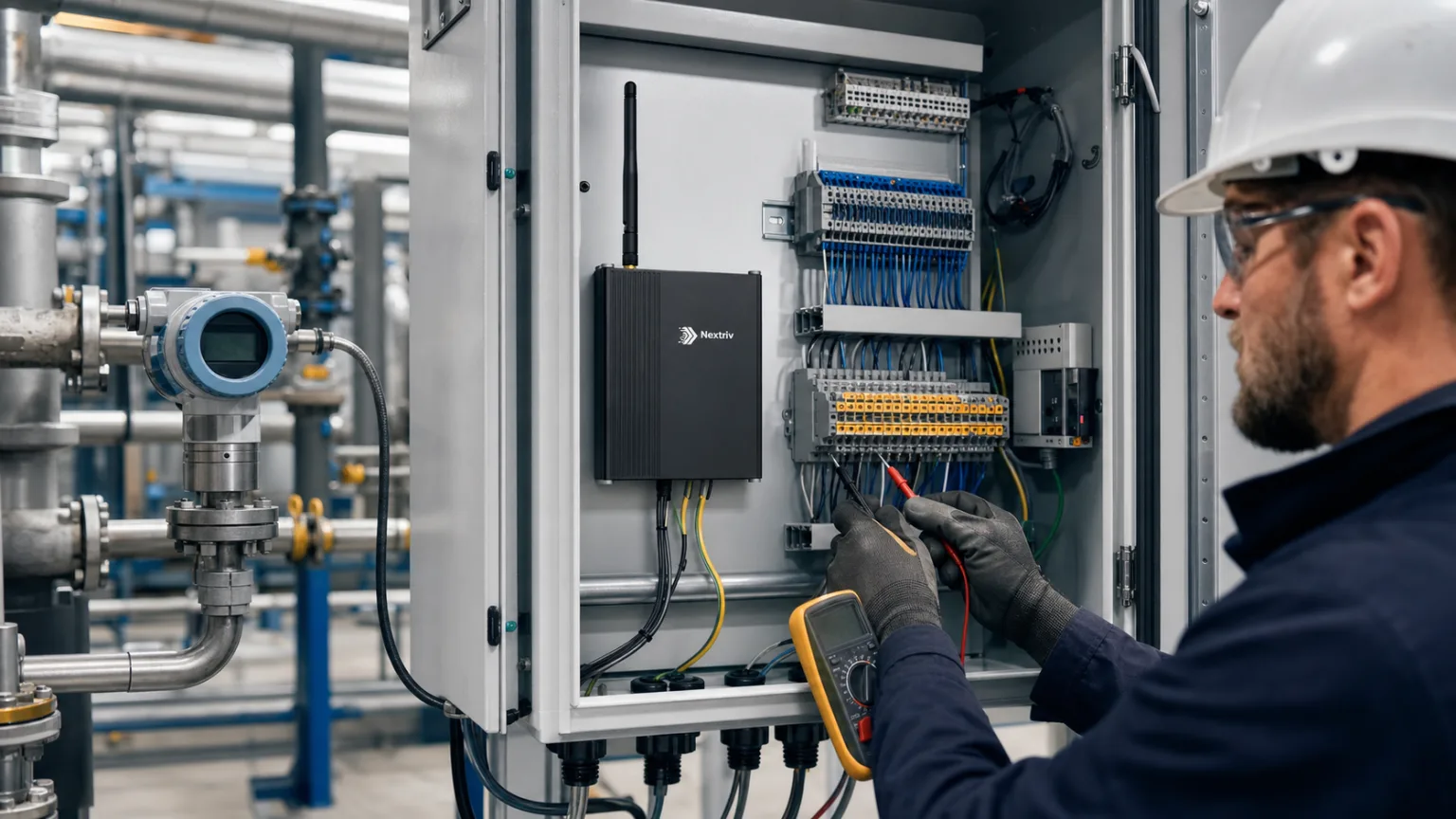
Silo and tank level measurement — ultrasonic, no climbing to the top
Silo level measurement without climbing to the top: how an ultrasonic sensor works, roof mounting, min/max thresholds and stock alerts in the app.
Zespół Nextriv4 min read
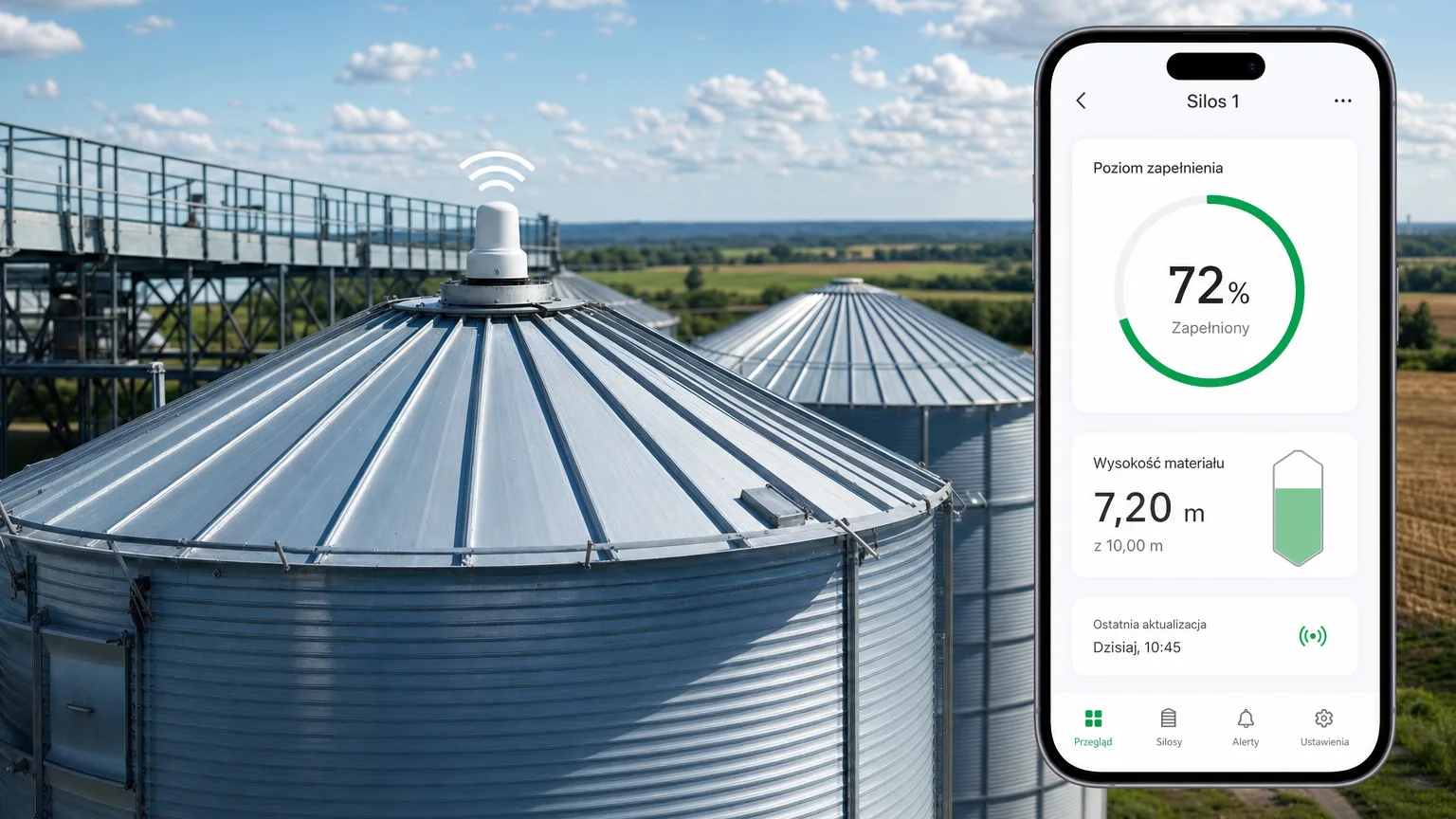
In many plants and farms, silo level measurement looks the same today as it did thirty years ago: someone climbs a ladder to the top, opens the hatch and peers in, taps the walls or lowers a tape with a weight. The result is approximate, the measurement happens once per shift (or once a week), and every such climb is work at height with the full catalogue of safety risks. An ultrasonic level sensor handles it differently: it measures from above the surface, without touching the material, and reports the stock to the app at a steady rhythm — for years, on a single battery.
The most expensive measurement in the plant: climbing to the top
A manual level check costs on three levels at once:
- Safety. A ladder slippery after rain or iced over in winter, an open hatch and dust from bulk material — all just to "take a look". This is exactly the kind of routine task during which accidents happen.
- Accuracy. Eyeballing through the hatch and tapping the walls are notoriously wrong — bulk material can form bridges and funnels, so the level at the wall says nothing about the real stock.
- Frequency. A once-a-day measurement won't catch a sudden loss, nor the fact that consumption has accelerated and the delivery ordered "as usual" will arrive too late. An empty feed silo or raw material tank means stopped production — and an express delivery at a rate nobody likes.
Ultrasonic silo level measurement — how it works
A head mounted on the tank roof emits an ultrasonic pulse and measures the time it takes the echo to return from the material surface or the liquid level. Time of flight becomes distance — with 1 mm resolution and an accuracy of ±1% of range — and, subtracted from the tank geometry, becomes the fill level and stock percentage. Temperature compensation stabilises the reading in full sun and across daily swings, so the sensor can work on an exposed roof all year round.
The mounting rules are simple: the head looks perpendicularly at the measured surface, the measurement beam spans a cone of about 60°, so keep roughly 30 cm of clearance from the walls and avoid the vicinity of the inlet, where the material stream disturbs the echo. Also mind the dead zone right in front of the head (0.3–0.5 m depending on the variant) — the sensor is mounted so the maximum level never comes closer.
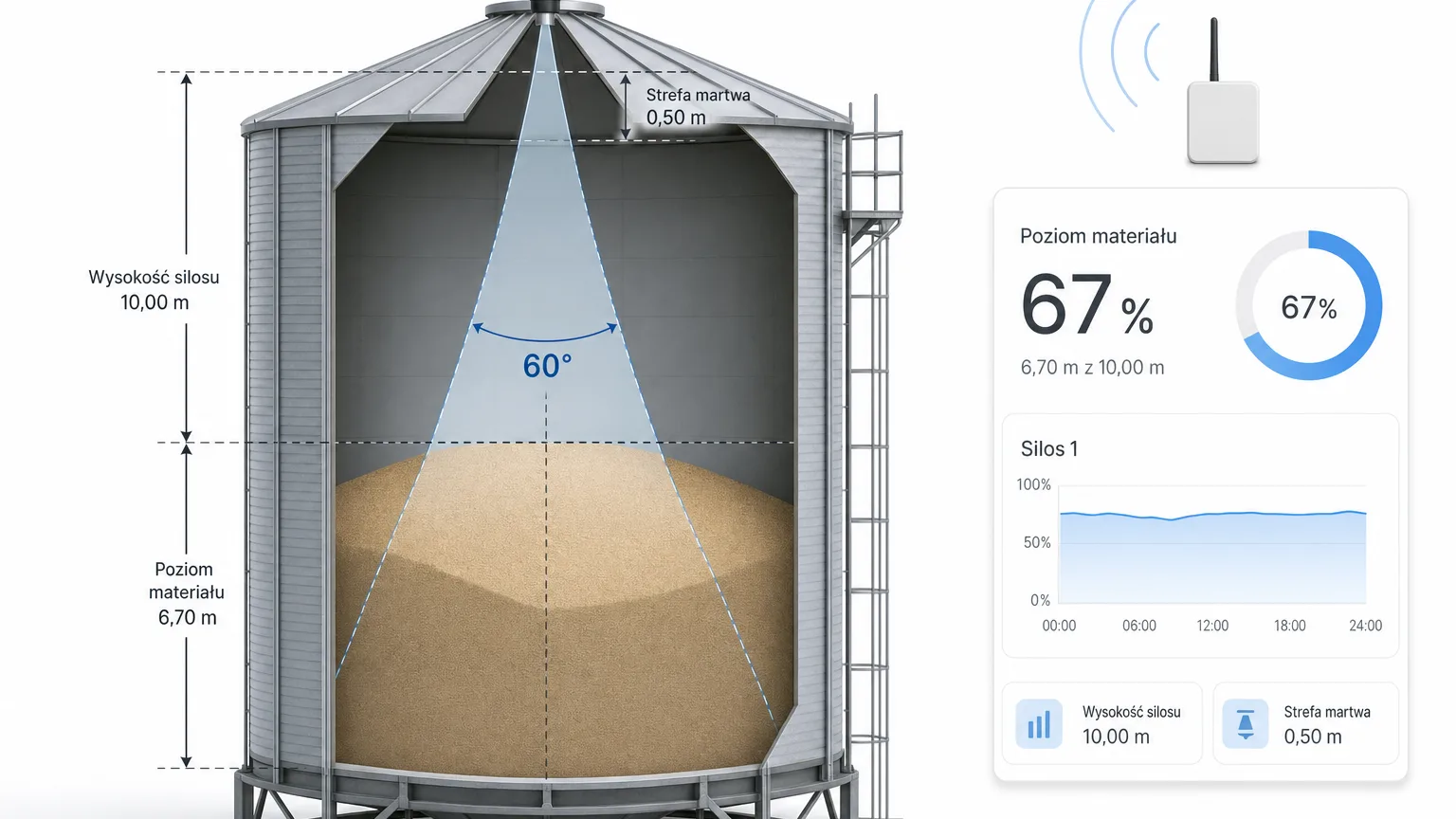
The most important property of this method: nothing touches the medium. No component corrodes in liquid fertiliser, gets caked over in grain or needs cleaning — the problems of immersion probes simply drop off the list.
Two sensors, the full range of tanks
For tall silos and large tanks — from feed and grain to liquid fertilisers, fuels and water — there is the full-range variant.
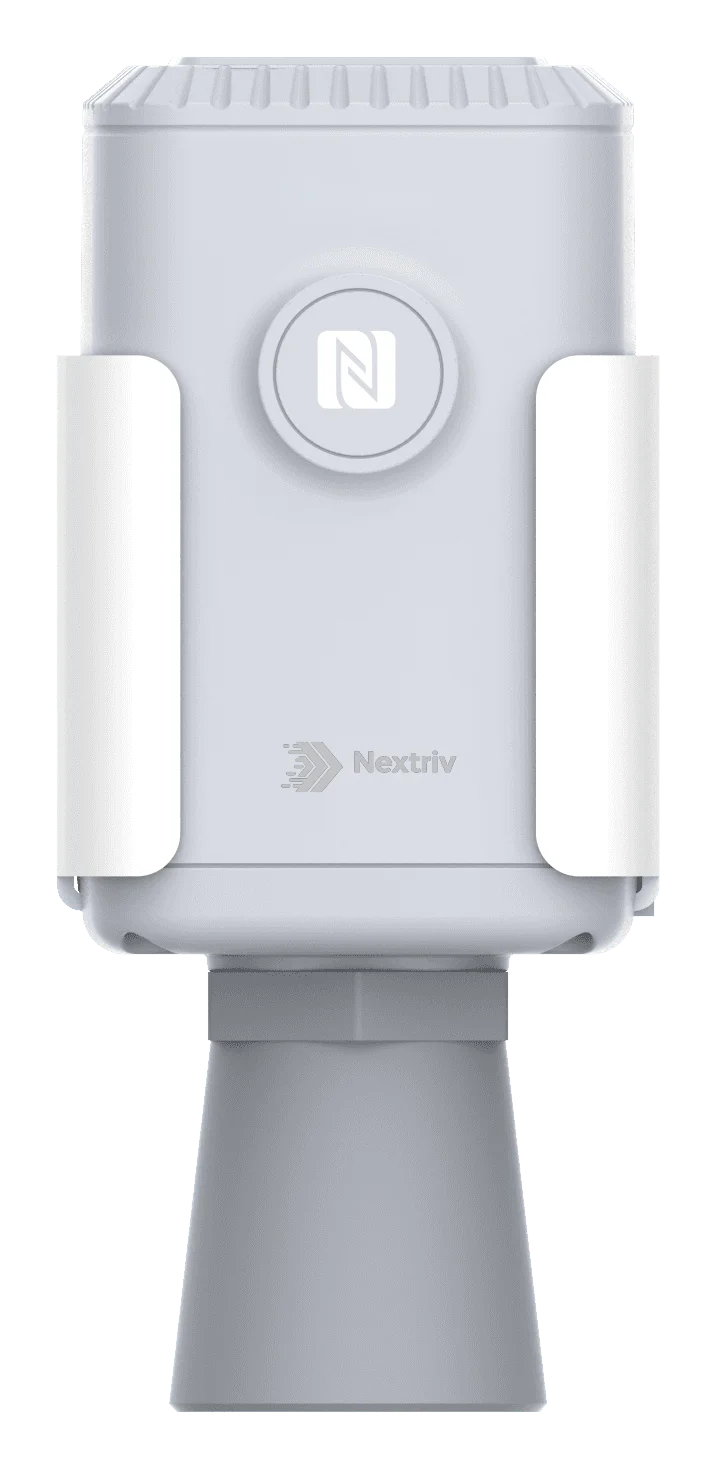
Nextriv Probe Ultrasonic comes in 5 m and 10 m variants, in a UV-resistant IP67 housing, with a 19,000 mAh battery for up to 10 years of operation. Beyond thresholds it has a sudden-change alarm — a rapid loss in the tank (failure, leak) generates an immediate notification regardless of the regular reporting rhythm, and the ±1% accuracy also catches slow losses.
For line-side hoppers, chutes and smaller tanks a compact sensor with a range of up to 4.5 m is enough.
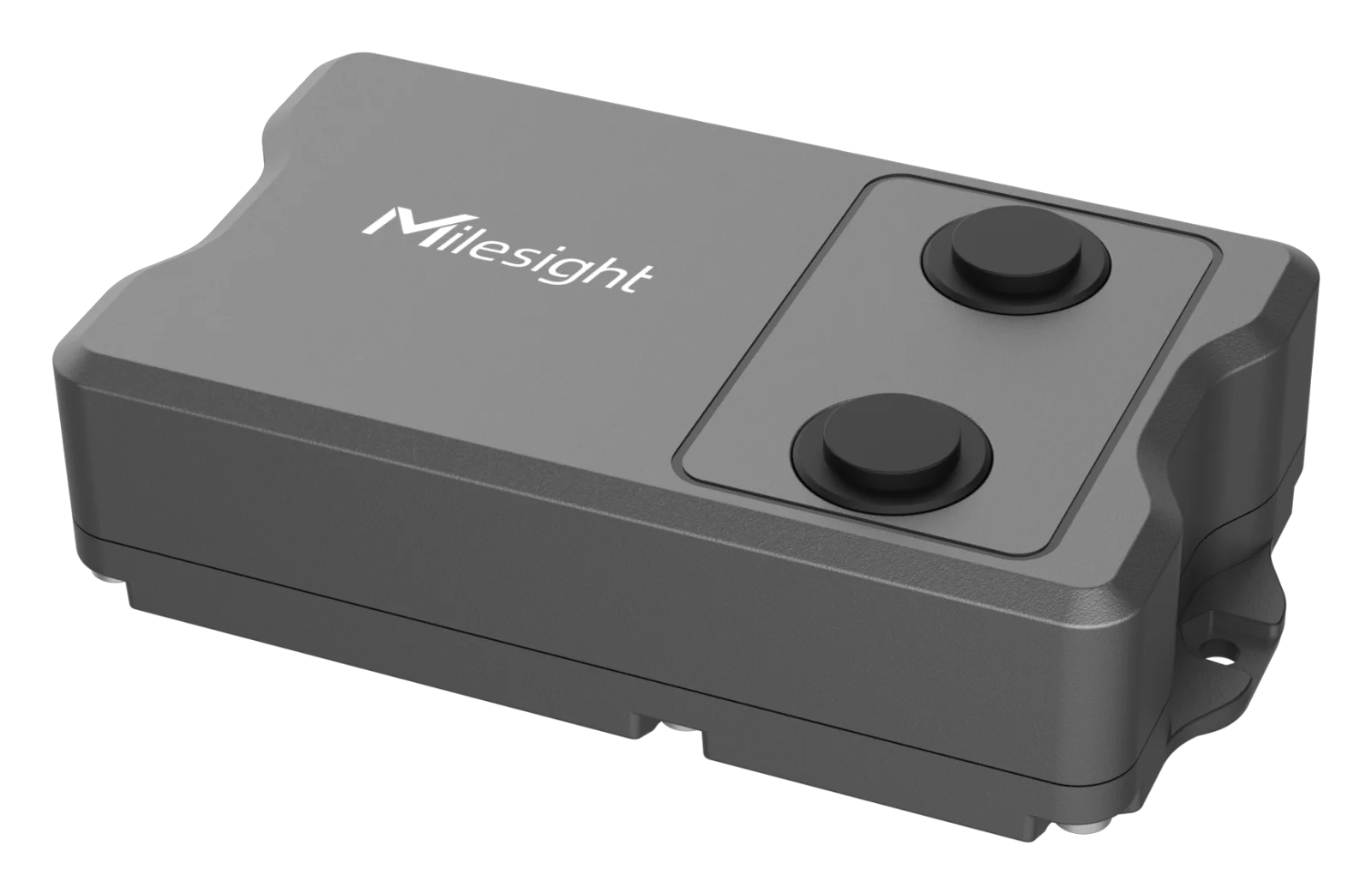
Nextriv Sense Range measures from 3 cm to 450 cm, and watches two more things along the way: an accelerometer detects tilt (a toppled container, an open lid), and a thermistor with a range up to 125 °C — an unnatural temperature rise inside. Two replaceable batteries last over 10 years, so the servicing bill practically doesn't exist.
Min/max thresholds: stock reorders itself
A number on a chart won't order anything by itself — thresholds make the difference. Every metric in the Nextriv platform has up to four of them, which for fill level falls into a natural scenario:
| Threshold | What it means | What happens |
|---|---|---|
| Lower warning | a few days of stock left | notification to purchasing — time to order |
| Lower critical | risk of stopping production or feeding | SMS + escalation until someone acknowledges |
| Upper warning | tank almost full | a heads-up during filling |
| Upper critical | risk of overfilling | immediate alarm |
Notifications go out through whatever channel works for the team: email, SMS, web push, Microsoft Teams, Discord, an audible alarm in the app — and the webhooks integration passes the event straight into an ordering system, so crossing the minimum threshold can immediately create a ticket with the supplier. Every event has an ALM code, a status and a handling history.
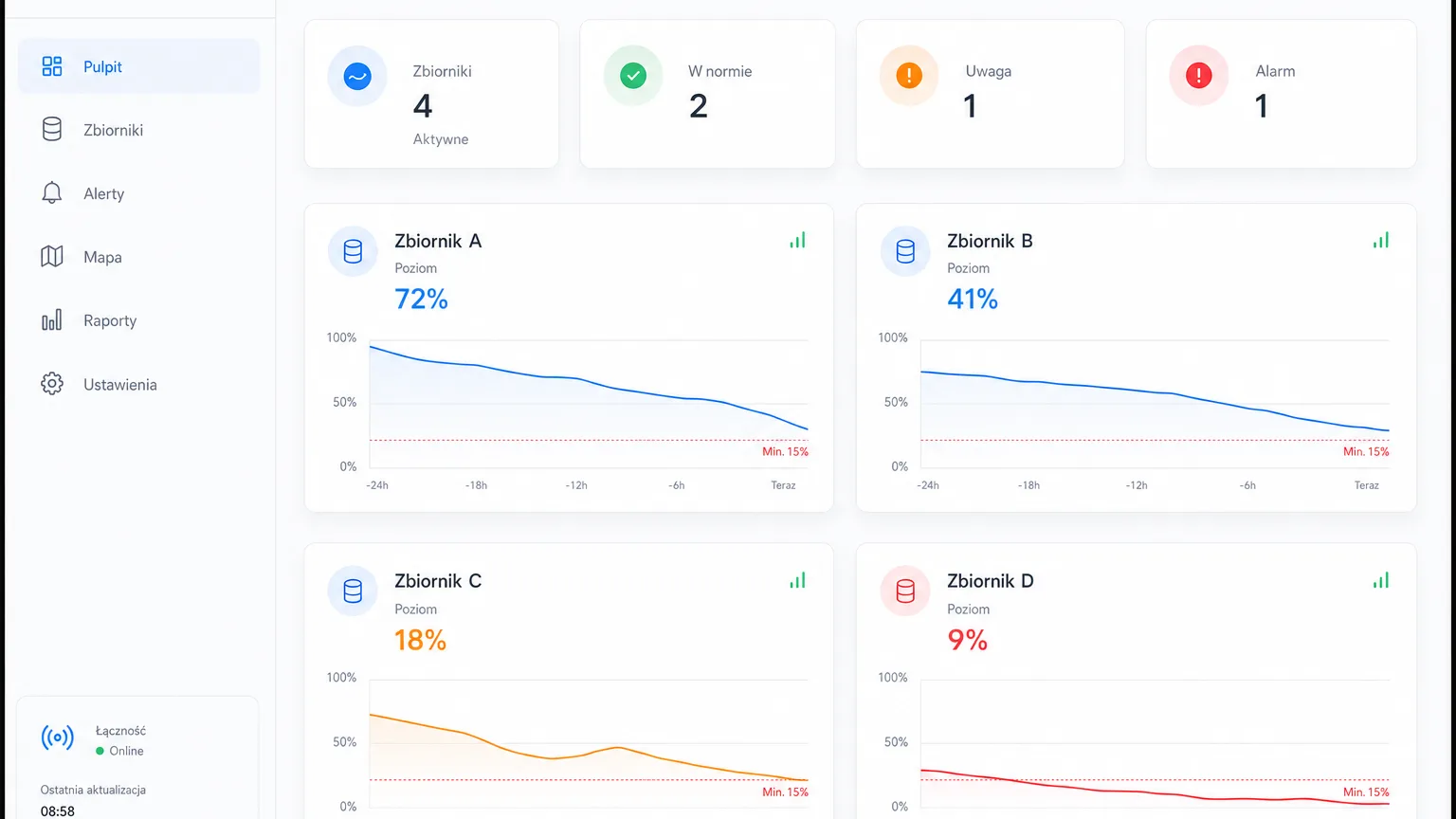
Trends for many tanks on a single dashboard show consumption rates and seasonality — that's where you see one silo emptying twice as fast as planned, before it becomes a problem. PDF reports and XLSX/CSV exports close the loop on stock reconciliation.
Rollout: no power, no cables, no integrator
Silos and tanks usually stand far from the server room — which is exactly why the sensors communicate over long-range radio: up to about 2 km in built-up areas and about 15 km in open terrain. One gateway covers the raw material yard, the tank farm and the buildings, and a measurement point needs neither power nor a signal cable. Configuration happens over NFC from a phone, the platform detects a new device automatically within 30–180 seconds, and a local measurement buffer backfills the data after any connectivity outage.
How level measurement fits into the bigger picture of a site is shown on our solutions pages: for warehouses — bulk and liquid stocks alongside temperature zones, and for agriculture — feed silos, post-harvest grain and liquid fertiliser tanks in one panel with the rest of the farm.
Count what climbing the silo costs
Two climbs a day across three silos is dozens of working hours per month — plus a risk you won't see in a spreadsheet until the first accident. A pilot takes one sensor and a gateway: the FREE plan covers 10 sensors and a full year of history, so getting started costs nothing beyond the hardware. You'll find the details in the pricing, and we'll show how thresholds and trends work on live data in a short demo.