
Industry solutions
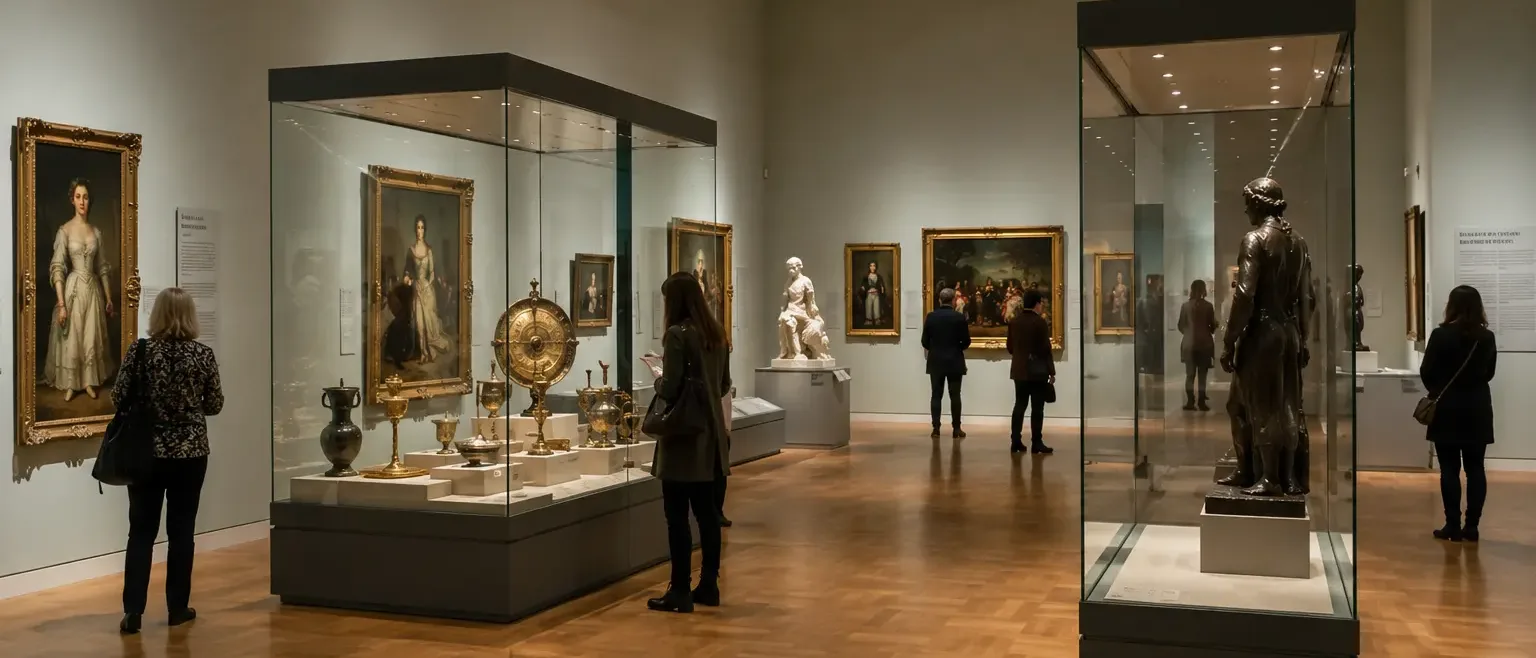
Climate monitoring in museums and archives
Stable temperature and humidity, light control and leak detection for collections — with the documentation conservators and insurers expect.
Sound familiar?
Fluctuations destroy more slowly than fire, but just as surely
Swelling and shrinking cycles caused by humidity swings delaminate wood, crack paint layers and cockle paper — irreversibly.
Light adds up quietly
Fading depends on the cumulative dose of lux-hours. Without measurement you don't know how much light an exhibit really received over the exhibition season.
Water will find the most precious shelf
A burst riser or a leaking roof above the collection store is a scenario usually discovered the next morning — when only a loss report remains.
The insurer asks for evidence, not impressions
Fine art policies and inter-museum loans require documented conditions. A drum thermohygrograph and a notebook of readings no longer suffice.
How Nextriv solves it
Discreet supervision of halls, cases and stores
Compact, wireless sensors (from 68 mm wide, screenless variants available) work in exhibition halls and stores with no wall chasing or cabling.
Conservation bands instead of a single threshold
Four thresholds per metric map your bands: safe, warning and critical ranges — separately for the temperature and humidity of every hall and store.
Light control with ±3% accuracy
Illuminance measurement from 0 to 100,000 lx shows the real light exposure of objects — a hard basis for exhibit rotation and display limits.
Leaks detected at the first drops
Spot probes react to as little as ~5 mm of water — under risers, by air conditioning, in stores. The alarm arrives at night, not with the morning coffee.
Calibration under control
A calibration registry for every sensor: date, next due date, certificate and notes — with automatic reminders. Data credibility that's easy to defend before an auditor.
Documentation for the conservator and the insurer
PDF reports with charts, cryptographically signed (SHA-256 + QR code), measurement history up to 5 years and a full audit trail of events.
Recommended products
Nextriv hardware picked for this industry — up and running with the platform in minutes.
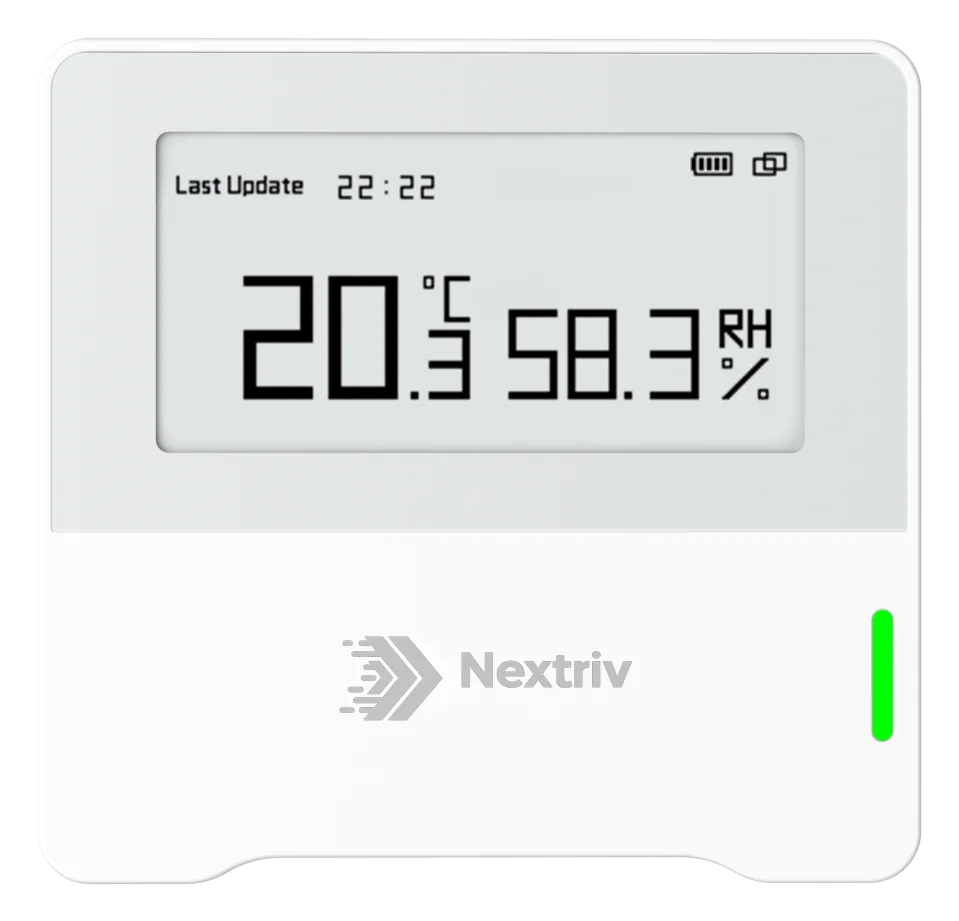
Nextriv Sense Display
A discreet temperature and humidity sensor (±0.2°C) with an e-ink screen — gallery staff see conditions on the spot while data flows to the platform.
View product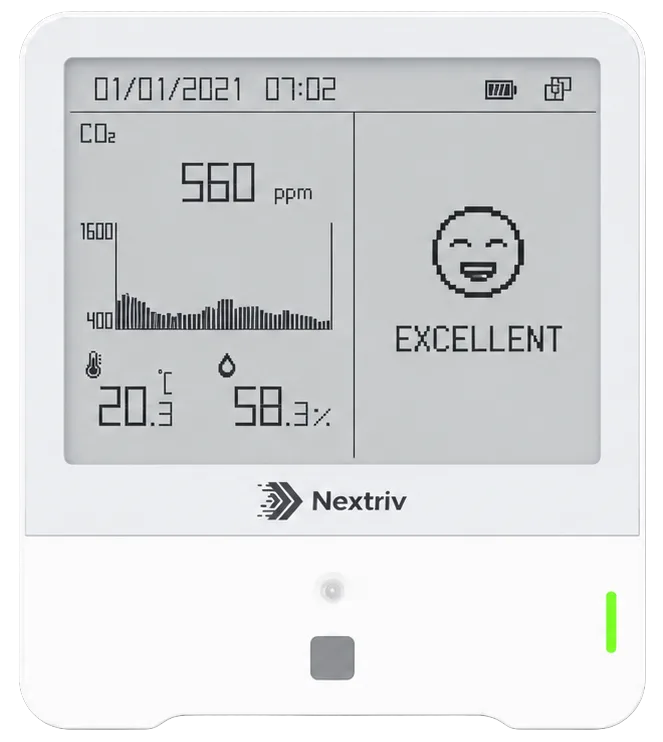
Nextriv Sense IAQ
Seven measurements in one: temperature, humidity, CO₂, TVOC, pressure, light and occupancy — a complete picture of an exhibition hall's climate and footfall.
View product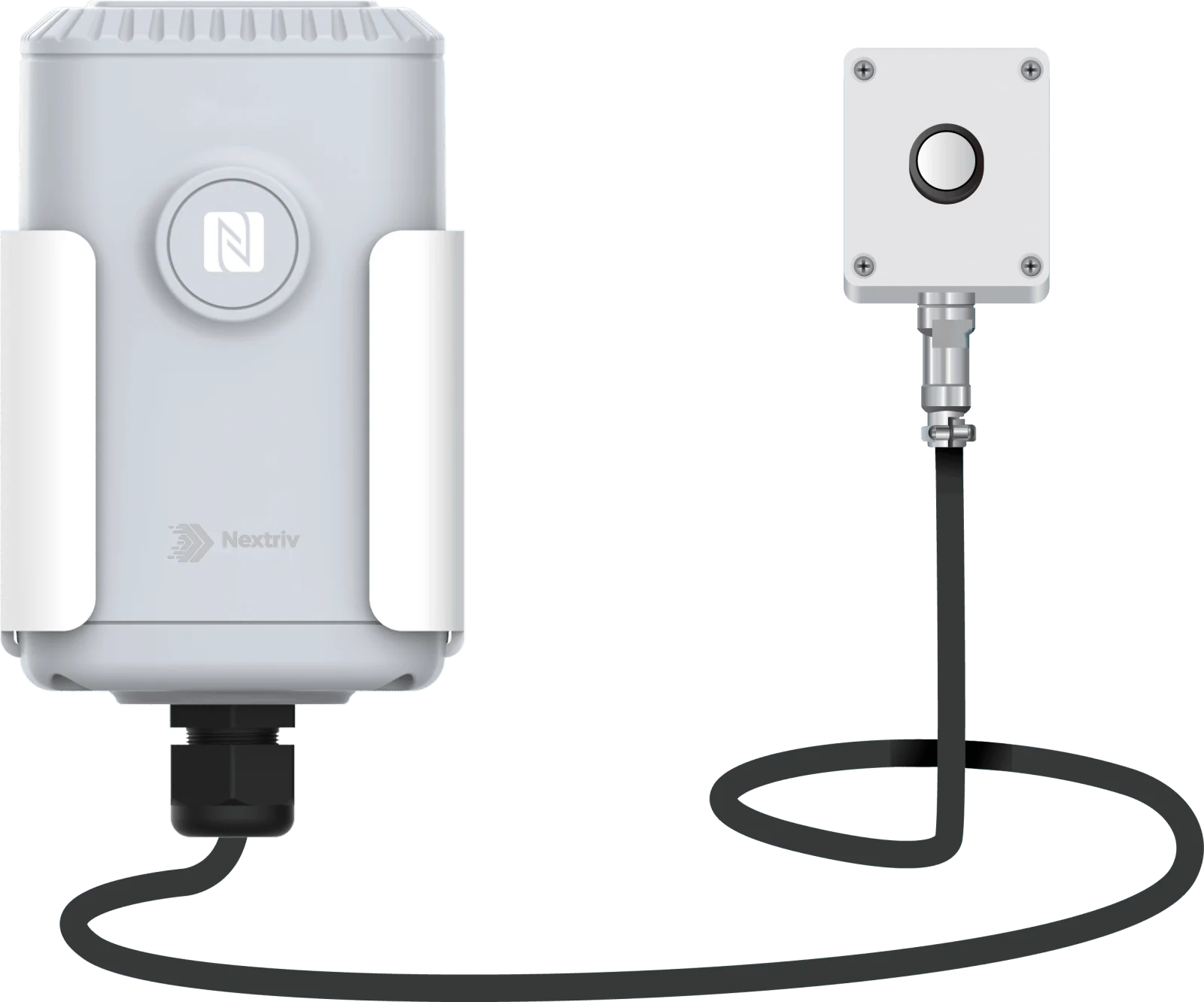
Nextriv Sense Lux Pro
Illuminance from 0 to 100,000 lx with ±3% accuracy and ~1 s response — control of the light dose falling on the most sensitive objects.
View product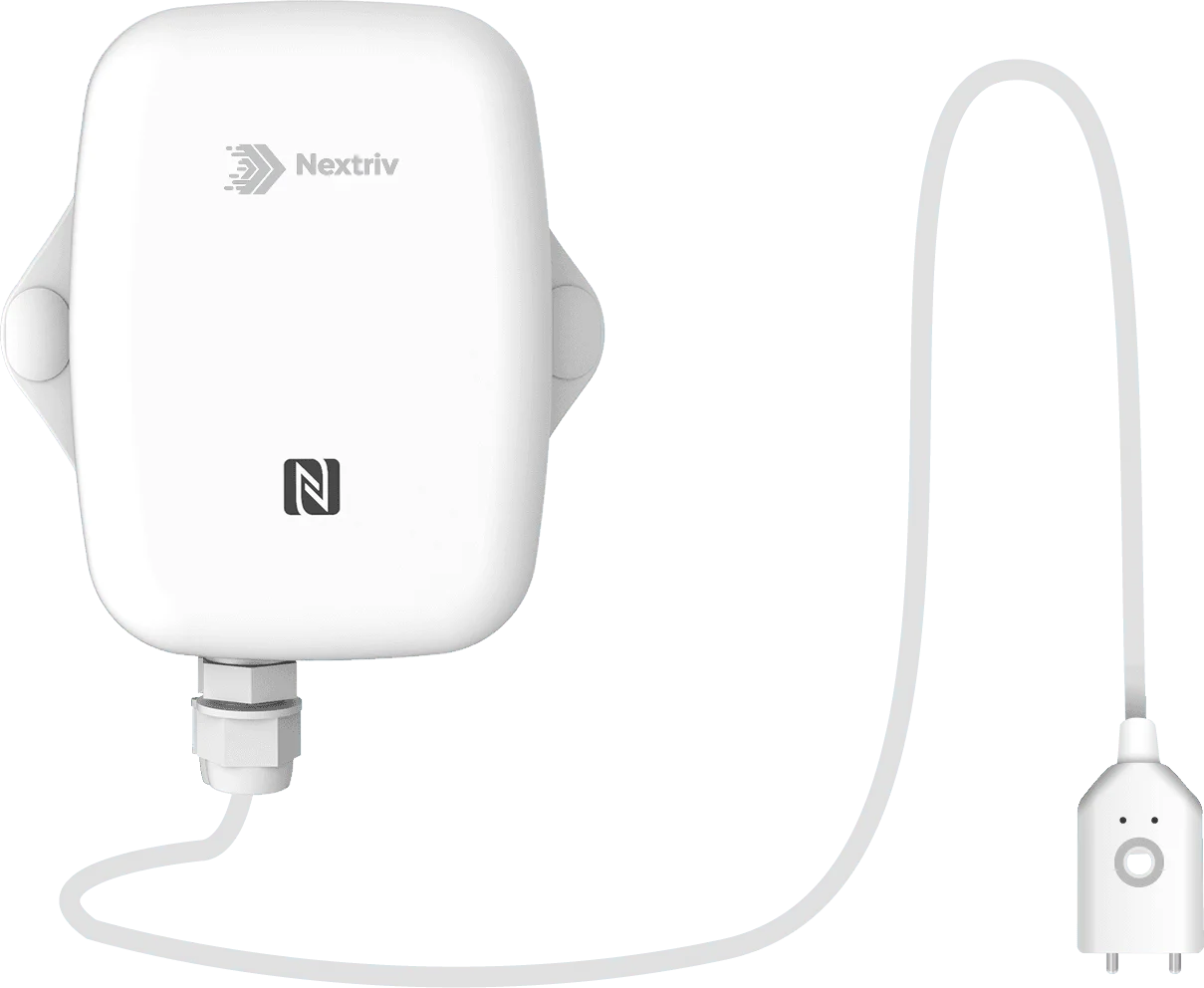
Nextriv Sense Leak Spot
Spot leak detection (reacts at ~5 mm of water) plus ambient temperature and humidity — under water risers and in collection stores.
View product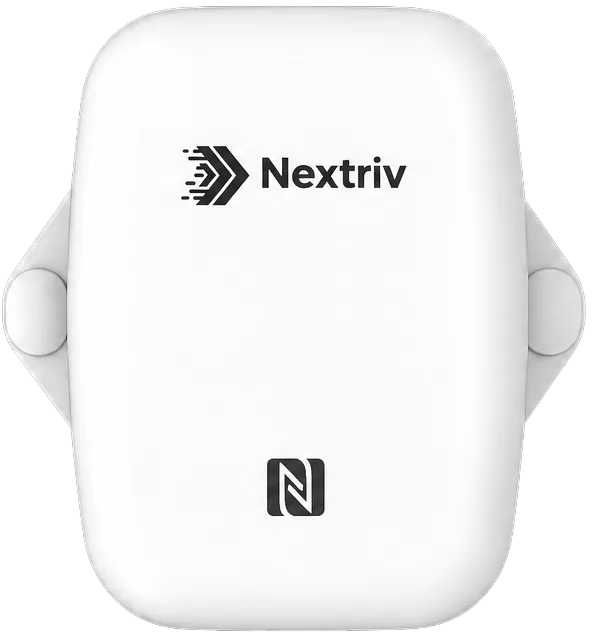
Nextriv Sense Essential
Temperature and humidity in a sealed IP67 enclosure — for stores, basements and rooms without air conditioning, including historic buildings.
View product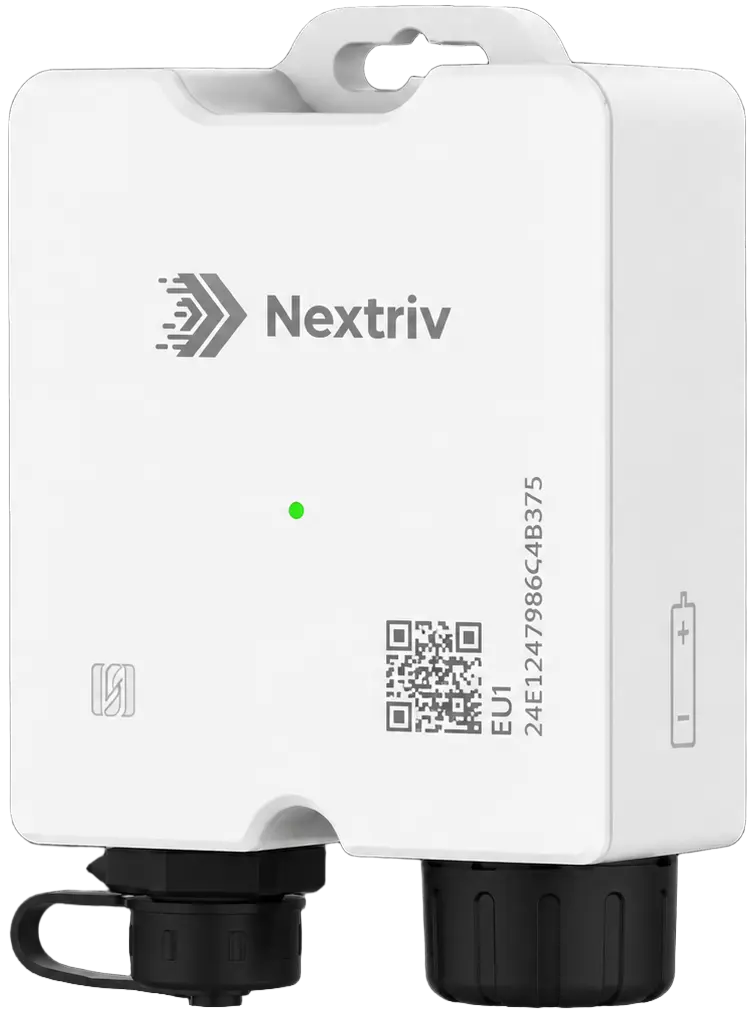
Nextriv Probe Duo
Two independent probes for simultaneous temperature and humidity measurement at two points — e.g. a display case and the room, or two collection store zones.
View productScenario: humidity drifting in the print store
A weekend, a humidifier failure in the HVAC system. The sensor in the paper collection store reports every few minutes — nobody needs to be in the building.
- If
Relative humidity in the store exceeds 55% RH — the upper warning threshold of the band agreed with the conservator.
- Then
An event with an ALM code is created, and the conservator on duty receives a web push and an email with a trend chart.
- Escalation 1
No acknowledgement within 30 minutes — an SMS to the head of conservation according to the escalation policy.
- Escalation 2
At 65% RH (critical threshold) the alert rises to critical severity — an SMS and in-app siren for the technical team, and the full event timeline (readings, times, acknowledgements) stays in the history for the insurer.
Compliance and standards
ISO 11799
The storage standard for archive and library materials: a stable store climate and condition monitoring. Nextriv provides a continuous measurement record and alarms on deviations.
EN 16893
The European cultural heritage conservation standard for collection storage spaces — it requires deliberate climate management; measurement data underpins the required analyses.
Conservation lighting guidelines
Conservation practice caps illuminance at around 50 lx for the most sensitive objects and tracks the cumulative dose. Continuous measurement documents the real exposure.
Collection insurers' requirements
Fine art policies and loan agreements increasingly require documented environmental monitoring. Signed reports and a multi-year measurement history settle the matter.
Frequently asked questions
What temperature and humidity are right for museum and archive collections?
It depends on the material: for paper collections usually 14–18°C and 30–50% RH, for mixed exhibitions around 18–21°C and 40–55% RH. Stability matters more than the exact value — daily fluctuations within ±2°C and ±5% RH. In Nextriv you map this with four thresholds per metric, separately for each hall and store.
How many lux is acceptable for exhibit lighting?
Conservation practice recommends about 50 lx for the most sensitive objects (paper, textiles, watercolours) and about 200 lx for oil paintings. What matters most is the cumulative dose (lux-hours) — continuous measurement shows the real seasonal exposure, not a single lux meter reading.
Will the sensors be visible in exhibition halls?
The sensors are compact (Sense Display measures 68 × 65 × 20.5 mm), white and fully wireless — no cables, no wall chasing, no interference with the arrangement. Screenless variants are practically unnoticeable, and tape mounting doesn't damage historic fabric.
How do I prepare condition documentation for an insurer or a loan?
The platform generates PDF reports with charts for any period; reports can be cryptographically signed (SHA-256 with a QR verification code), measurement history reaches up to 5 years, and every alarm event has an ALM code and a complete timeline: who acknowledged it and when it was resolved.
Do the sensors require periodic calibration?
For data credibility it's worth calibrating sensors periodically, especially when documentation goes to an insurer. Nextriv keeps a calibration registry for every device — the date, next due date, certificate and notes — and automatically reminds you of upcoming deadlines.
Start monitoring today
FREE plan to start: 10 sensors, 1 gateway, alerts and PDF reports — no credit card required.