
Temperature Monitoring in Transit — Maintaining Cold-Chain Continuity
How to plan temperature monitoring in transit: route risk assessment, logger placement, alarms, data handover and controlled excursion handling.
Zespół Nextriv5 min read

Controlled temperature in transit is not a feature of the refrigerated vehicle alone. It is the outcome of an entire process: preparing the shipment, operating reliable cooling equipment, loading correctly, managing stops and door openings, handing the goods to the recipient, and creating a trustworthy record. Temperature monitoring should therefore answer more than “what was the air temperature in the vehicle?” It should show whether the conditions of each shipment can be reconstructed and whether a quality decision can be made from complete evidence.
In pharmaceutical distribution, this logic is organised by Good Distribution Practice. In food logistics, the exact obligations depend on the product and type of carriage, with specific rules applying to areas such as quick-frozen food. Whatever the sector, the principle is the same: a set point without evidence that it was maintained is only a declaration.
Start with a route-specific risk assessment
There is no universal configuration for every delivery. Vaccines in a qualified passive shipper, frozen food in a refrigerated trailer, and multi-drop last-mile distribution all present different risks. Before choosing a logger, describe:
- the permitted range stated in the product label, specification or approved procedure;
- journey duration, season and expected outdoor conditions;
- the number of transfers, stops and cargo-space door openings;
- how refrigeration remains powered during stops;
- where responsibility passes between shipper, carrier and consignee;
- how quickly a notified person can realistically intervene;
- how an excursion will be assessed and who may release or quarantine the shipment.
This assessment determines the number of measuring points, recording interval, need for remote transmission and required battery and memory autonomy. A short interval cannot correct poor probe placement, and a vehicle location cannot replace evidence of the temperature around the goods.
Five layers of defensible monitoring
1. A qualified package or cargo space
The monitoring system does not control refrigeration. First, the vehicle, container or passive package must be shown to maintain conditions for the intended duration and load. A sound study considers summer and winter variants, realistic stop durations and demanding load arrangements. The logger confirms what happened on a particular journey; it does not replace qualification of the transport solution.
2. A calibrated, fit-for-purpose measurement point
Operating range, accuracy, resolution, response time and mechanical protection must match the application. A probe hanging directly in the supply-air stream mainly shows how the refrigeration unit cycles, not necessarily conditions representative of the load. A sensor by the door will react strongly to every opening. In a large cargo space, one point may be inadequate; the choice should be informed by mapping or a temperature-distribution study for the intended arrangement.
Placement matters in passive packages too. A logger beside a coolant pack may read lower than the product environment, while one against the outer wall may read higher. The point should represent product risk, and the packing method should be repeatable.
3. A record that survives connectivity loss
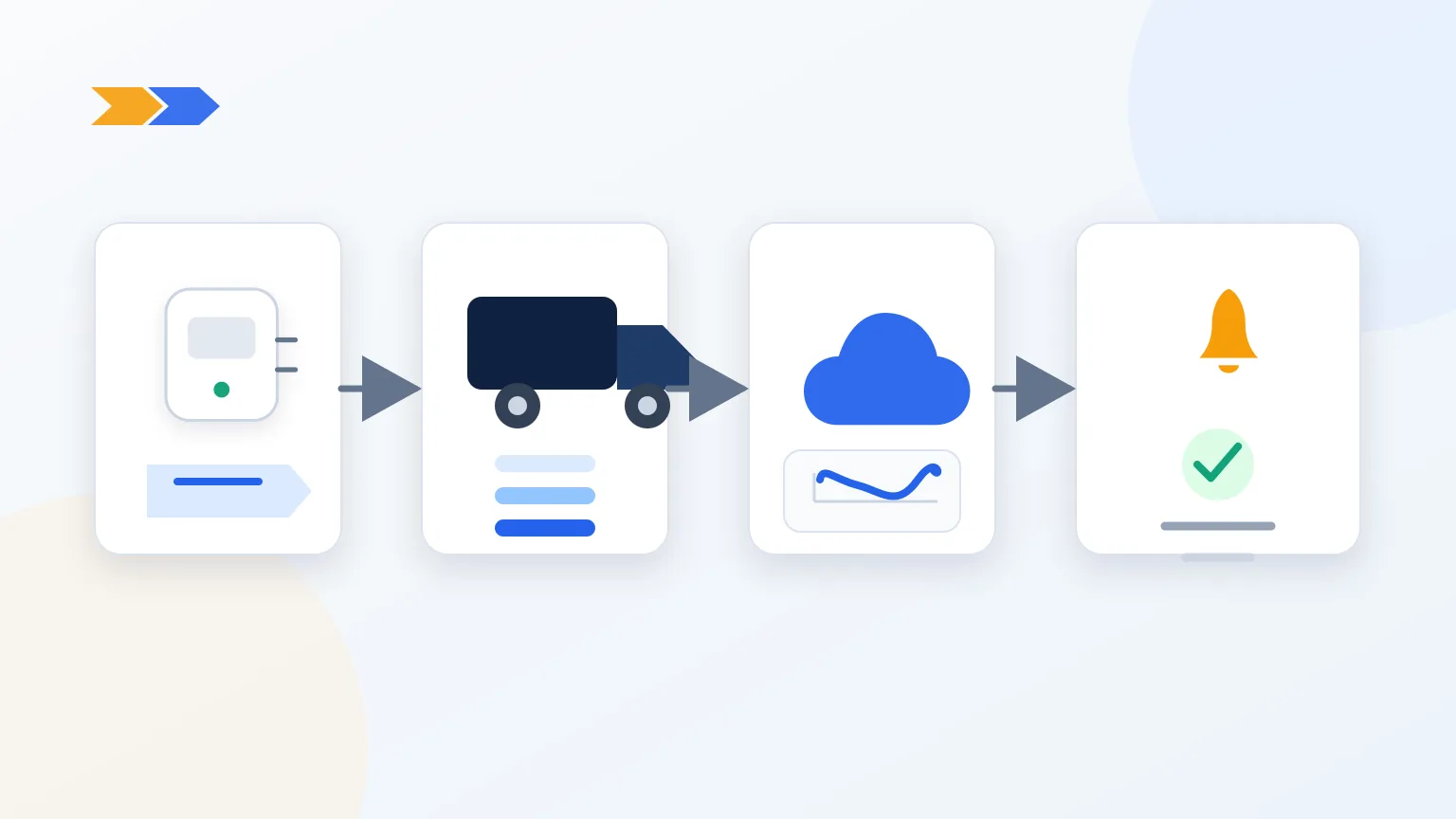
Routes cross areas with uneven coverage. The device should therefore store measurements locally and transmit the backlog after communication returns. Loss of internet access must not create a hole in the history. Correct time, device identity and a reliable association between the record, shipment, vehicle and route leg are equally important.
4. An alarm that leads to a real response
An alarm threshold does not always need to be a simple copy of the product specification limit. A brief door opening can change air temperature without a comparable change in product temperature. On the other hand, an unjustified duration filter can hide a developing refrigeration failure. Thresholds, any duration logic and escalation should reflect the load, packaging, route and realistic ability to act. A standard Nextriv rule evaluates every reported result immediately; the time between escalation steps determines when another recipient is notified after an event exists, not when the alarm is created.
The procedure should define who receives an alarm, what they check first and when they escalate. A useful model separates an early warning, which creates time to investigate, from a critical alarm that starts protective action. Our guide to pharmaceutical temperature excursions explains how to assess the resulting event.
5. An intelligible handover to the consignee
The evidence chain is not complete until the consignee can associate the report with the correct delivery, verify that the record is complete and document a decision. A file without a shipment reference, time zone, device identifier and start time can be difficult to defend. Agree in advance on the report format, responsibility for retrieving data and the process for an incomplete record. A structured approach to cold-chain documentation makes this handover easier.
Choosing the recording interval
There is no single correct number of minutes. A shorter interval reveals change sooner but increases the amount of data and energy use. A longer interval may be adequate in a stable, qualified package, yet miss a brief transfer event. The decision should consider:
- how quickly temperature can change in the chosen system;
- the thermal inertia of the product and packaging;
- the shortest event that matters to product quality;
- the time available for intervention;
- journey duration, memory capacity and battery life.
Test the setting during qualification or a representative trial route. If the graph cannot distinguish normal refrigeration cycling from an important event, revise the configuration.
Air temperature is not product temperature
These are different signals. Air responds quickly to door openings and cooling cycles, making it useful for early fault detection. The product has greater thermal inertia and may remain within its permitted range during a short air-temperature spike. A probe in a thermal buffer can approximate slower product behaviour, but it is not automatically equivalent to the product itself.
The excursion procedure should explain how the available signals are interpreted and what context is required: duration, maximum or minimum value, product characteristics, transport stage and conditions after the event. An alarm algorithm alone should not make the final disposition decision.
What shipment location adds
Associating a measurement with an approximate location can help determine whether an event happened during a stop, transfer or a particular route segment. It can also support contact with the driver and an estimate of the remaining journey. Location is not proof of temperature, however, and a network-derived estimate need not have the precision of a navigation system.
Nextriv Track GPS sends temperature, humidity and an approximate cellular-network location without requiring a route gateway. Its local memory protects the measurement history on sections without communication.
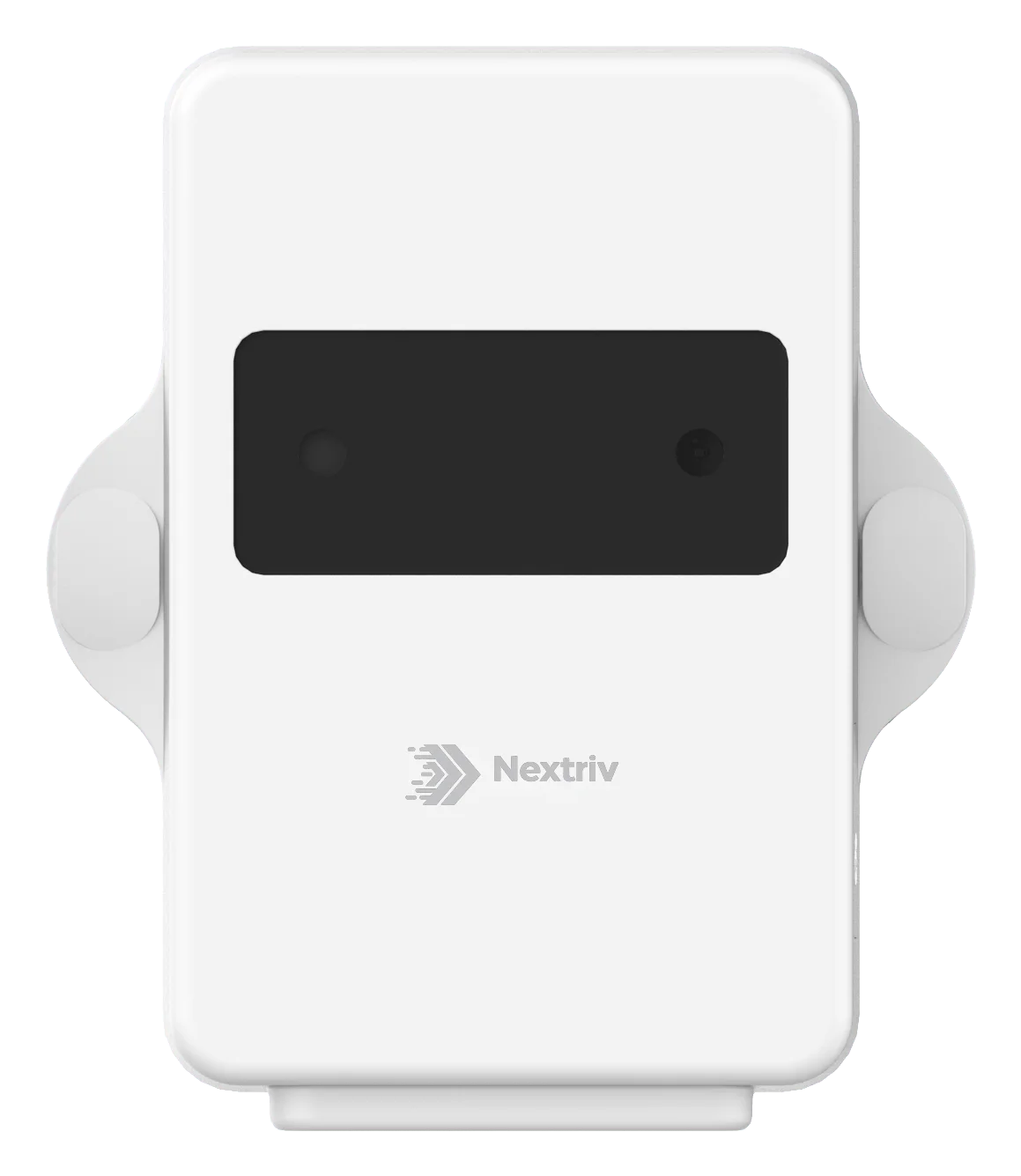
This supports route supervision, but still requires a documented risk assessment, correct placement and an agreed response procedure. In pharmaceutical use, it should form part of a wider pharmaceutical monitoring approach, not be treated as a stand-alone declaration of compliance.
Checklist before the first shipment
- Does the permitted range come from an approved product specification?
- Has the vehicle, container or package been assessed for the expected conditions?
- Do the devices have an appropriate range and current calibration?
- Does the measurement point represent the load rather than the air outlet or wall?
- Are readings retained locally when communication is unavailable?
- Can every report be unambiguously linked to a delivery?
- Do alarm recipients know the action sequence and cover arrangements?
- Is it clear who evaluates an excursion and documents the decision?
Mature monitoring is not the act of adding a logger immediately before the doors close. It is a designed flow of information from packing to receipt. When every measurement has context, an owner and a response procedure, the temperature record protects the product instead of merely becoming another transport attachment.


