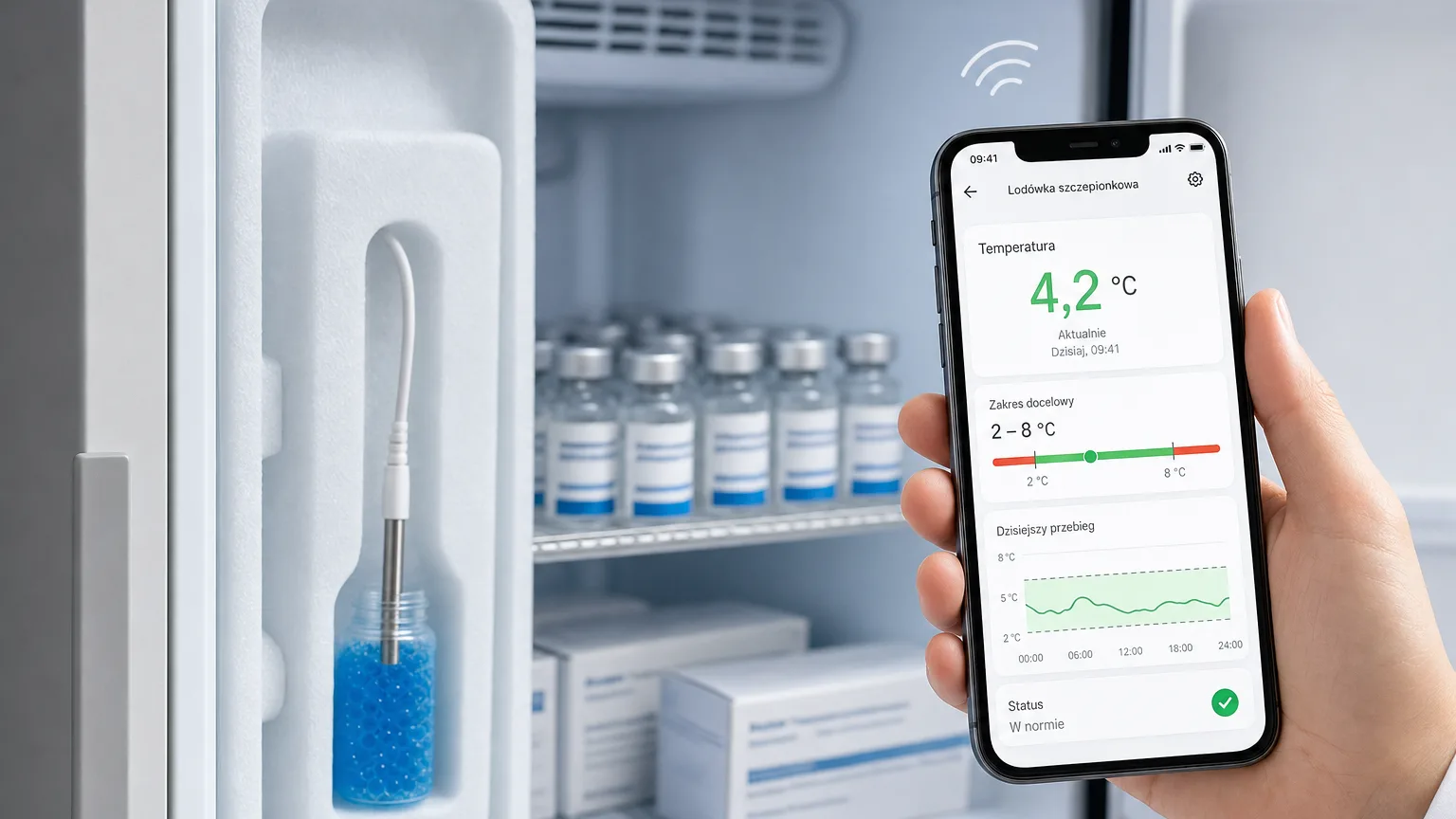
GDP and Temperature Monitoring — What Pharmacies and Wholesalers Must Record
GDP temperature monitoring in practice: what pharmacies and wholesalers must record — continuous logging, mapping, alarms, calibration and 5-year records.
Zespół Nextriv4 min read

GDP and temperature monitoring are an inseparable pair in pharma: Good Distribution Practice requires that the storage and transport conditions of medicines be not only maintained but, above all, documented. The inspector doesn't ask "was it cold" — they ask for the record: continuous, trustworthy and complete. In this article we break down exactly what a pharmaceutical wholesaler and a pharmacy must record, where the paper logbook stops being enough, and what monitoring that passes an audit with no findings looks like.
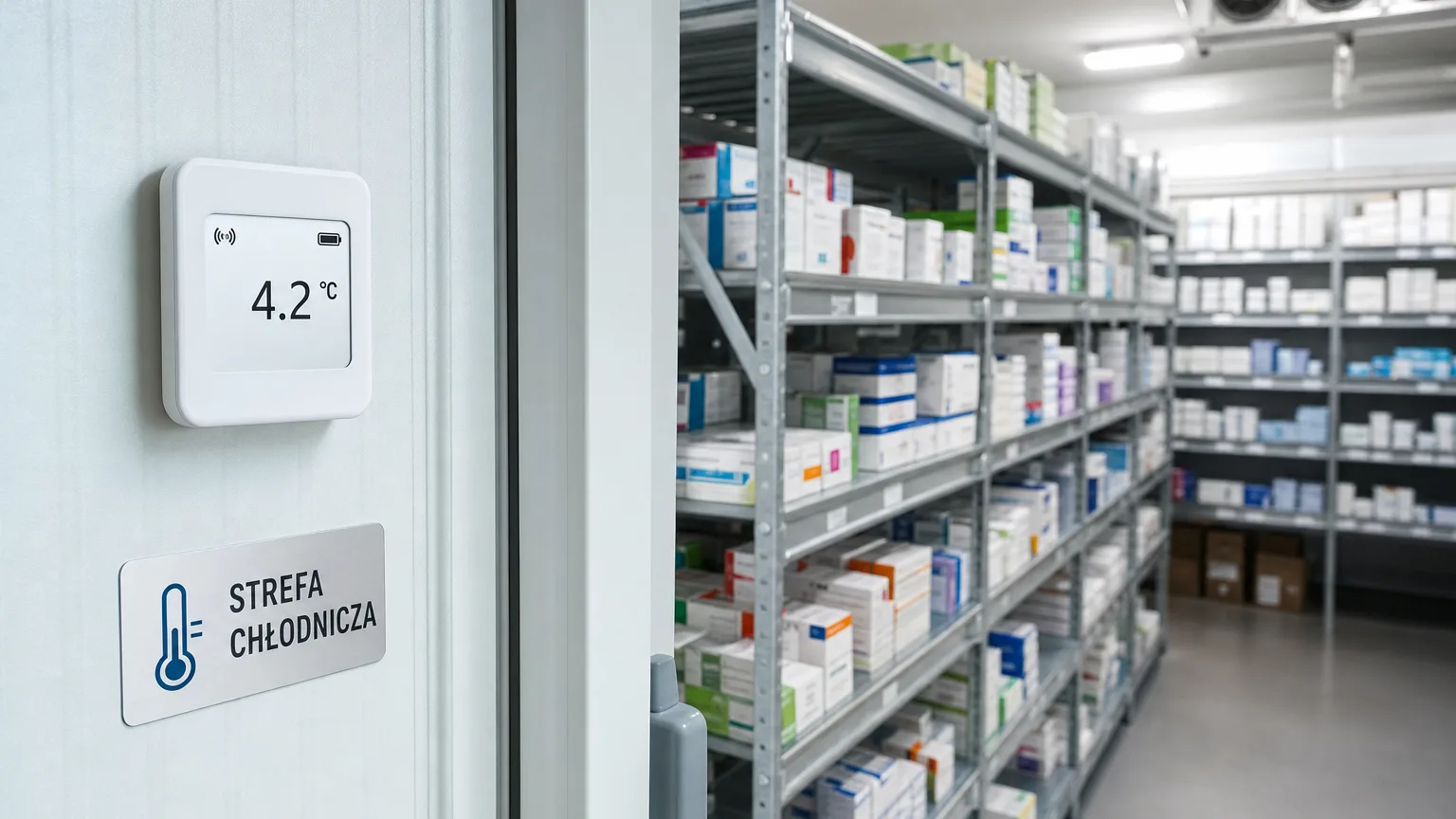
Who GDP applies to, and to what extent
The GDP (Good Distribution Practice) guidelines apply directly to pharmaceutical wholesalers — any entity engaged in the wholesale of medicines must demonstrate that products were stored and transported under the conditions specified by the manufacturer. Pharmacies formally fall under national requirements: Polish regulations oblige them to control temperature and humidity in their rooms and refrigeration equipment.
In practice the difference is smaller than the paragraphs suggest. A pharmacy inspection and a GDP audit at a wholesaler expect the same evidence:
- a temperature record covering the entire storage period, not spot readings,
- a documented response to deviations — who, when and what they did,
- measuring equipment that is functional and calibrated,
- documentation available on demand, without rummaging through binders.
Temperature monitoring under GDP — what the record must contain
1. Continuous logging in every storage zone
A manual thermometer reading twice a day is not a continuous record. Between the 3 p.m. reading and 8 a.m. the next morning, 17 hours pass — a fridge failure at 8 p.m. goes unnoticed, while the medicines were formally "being monitored". Logging must cover every zone with distinct requirements: 2–8 °C fridges, the 15–25 °C warehouse, the goods-in area.
2. Temperature mapping
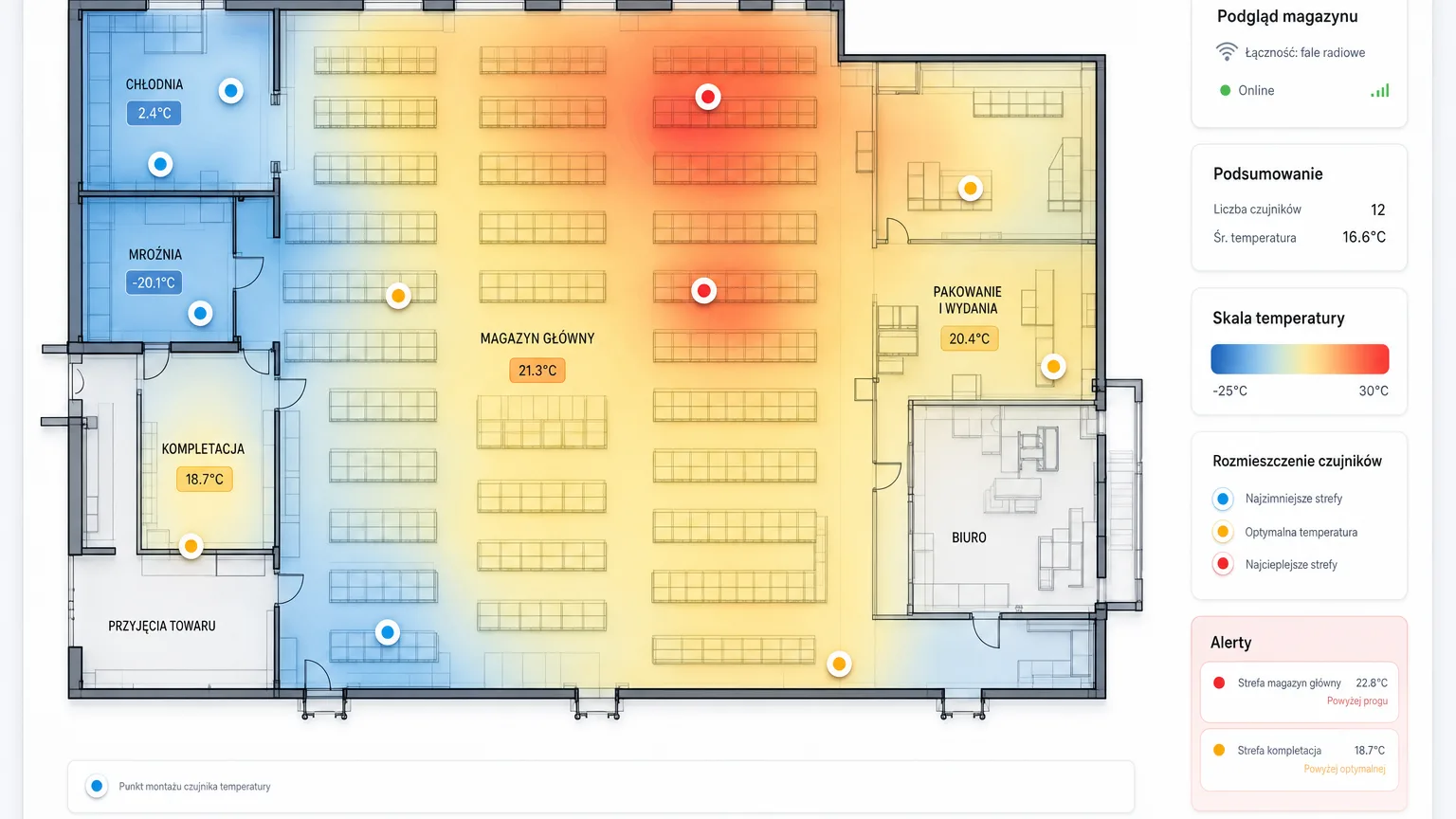
The GDP guidelines require mapping the temperature distribution in storage rooms before they enter service — and repeating it according to risk analysis. Mapping identifies the warmest and coldest points; that's where the permanent monitoring sensors should go. Without mapping, it's hard to defend the claim that a single thermometer by the door represents conditions across the whole warehouse.
3. Deviations and the response to them
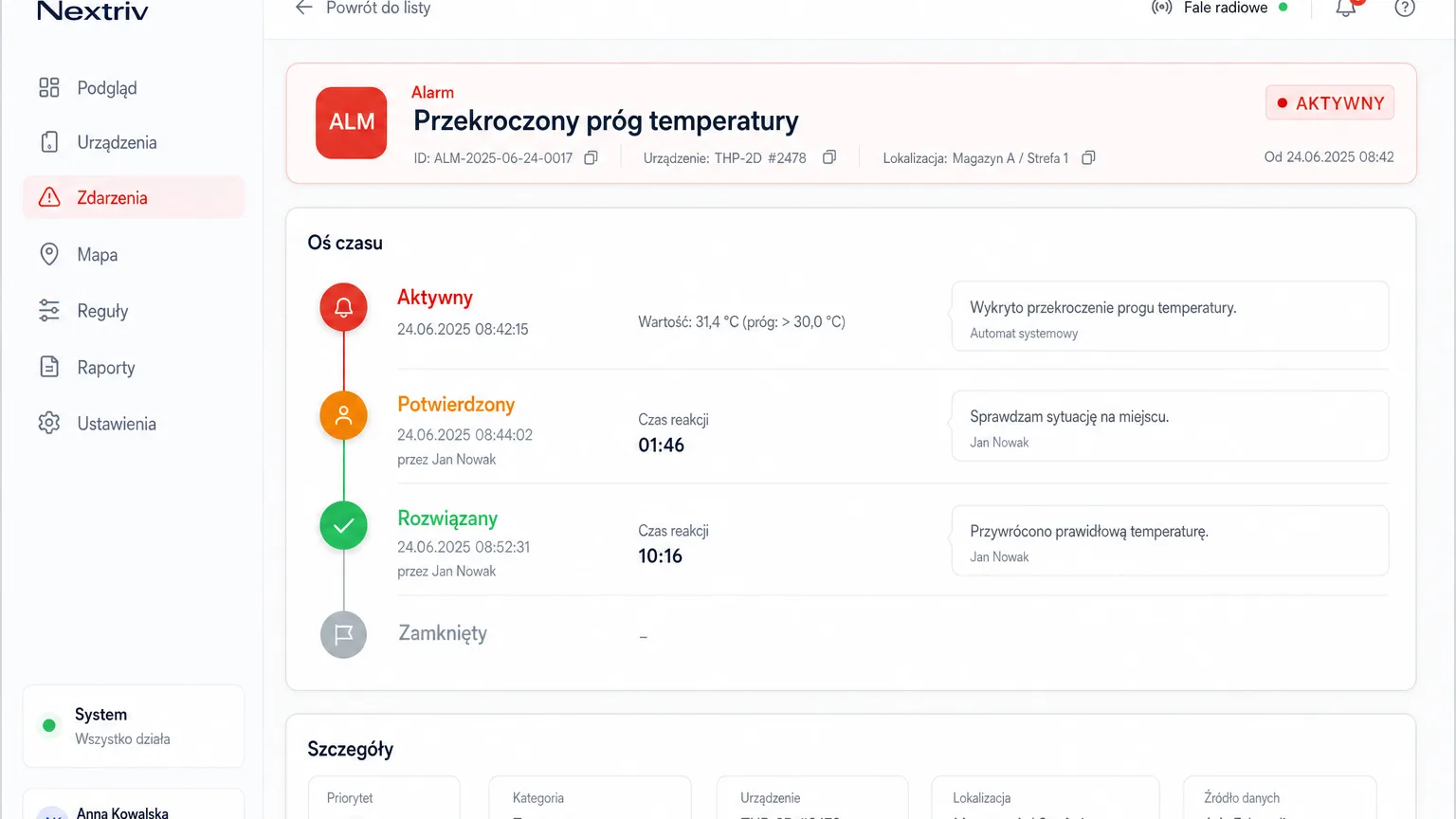
Recording the excursion alone isn't enough. The auditor wants to see: when the system detected the deviation, who was notified, when the event was acknowledged and what actions were taken. That's why modern platforms run alarm events with statuses (active → acknowledged → resolved), codes and comments — the full response history stays in the system.
4. Calibration of measuring equipment
Every measurement point needs periodic calibration, and the certificates must be current. An expired calibration certificate is a classic audit finding — and one of the easiest to avoid if the deadlines are tracked by the system rather than a spreadsheet.
5. Documentation retention — at least 5 years
GDP requires keeping documentation for the period set by national regulations, no less than 5 years. That includes temperature records. Paper printouts fade and get lost; the system must retain the data for that entire period in a form that can be produced.
Pharmacy vs wholesaler — the scope in practice
| Area | Pharmacy | Pharmaceutical wholesaler |
|---|---|---|
| 2–8 °C fridges | yes — thermolabile medicines, vaccines | yes — cold rooms and fridges |
| 15–25 °C rooms | dispensary, back room | entire warehouse zones |
| Humidity | yes — national requirement | yes — per manufacturer requirements |
| Temperature mapping | good practice | GDP requirement |
| Response to deviations | documented | documented, with CAPA |
| Record retention | multi-year | min. 5 years |
Why the paper logbook loses against an audit
Three scenarios every pharmacy manager and quality officer knows:
- Night-time failure. The fridge loses cooling at 11 p.m.; in the morning the temperature returns to normal after the door is opened. In the paper logbook — two correct readings. In reality — several hours out of range and medicines of uncertain quality.
- A gap in the record. Holidays, cover staff, a public holiday — no entry. Every hole in the history is an auditor's question with no good answer.
- Preparing for an inspection. Compiling 12 months of paper records from several measurement points can take days. Printing a report from the system — minutes.
How Nextriv keeps this record
The environmental monitoring platform for pharma automates exactly the obligations an audit asks about:
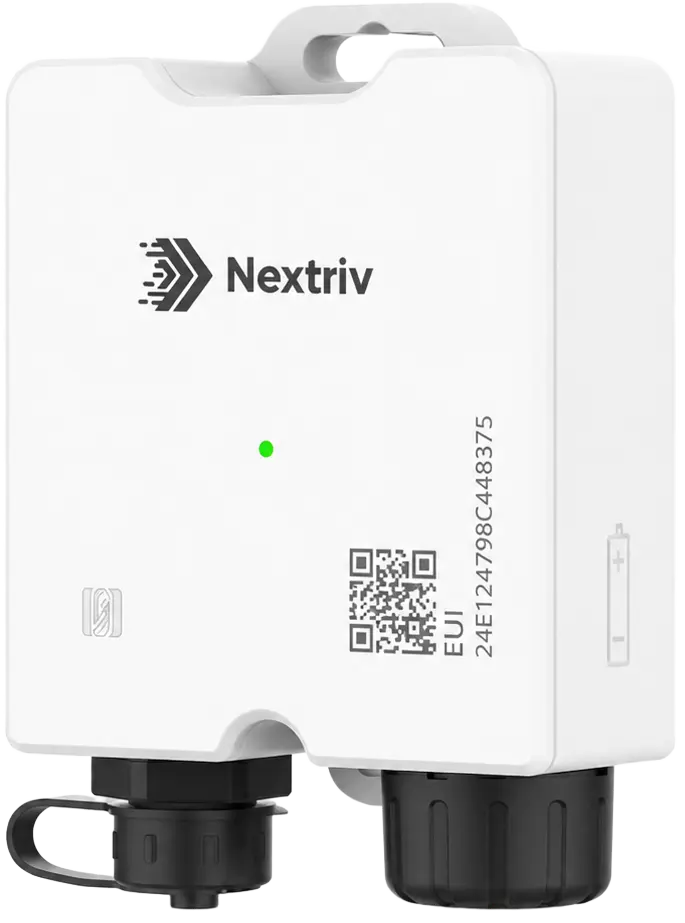
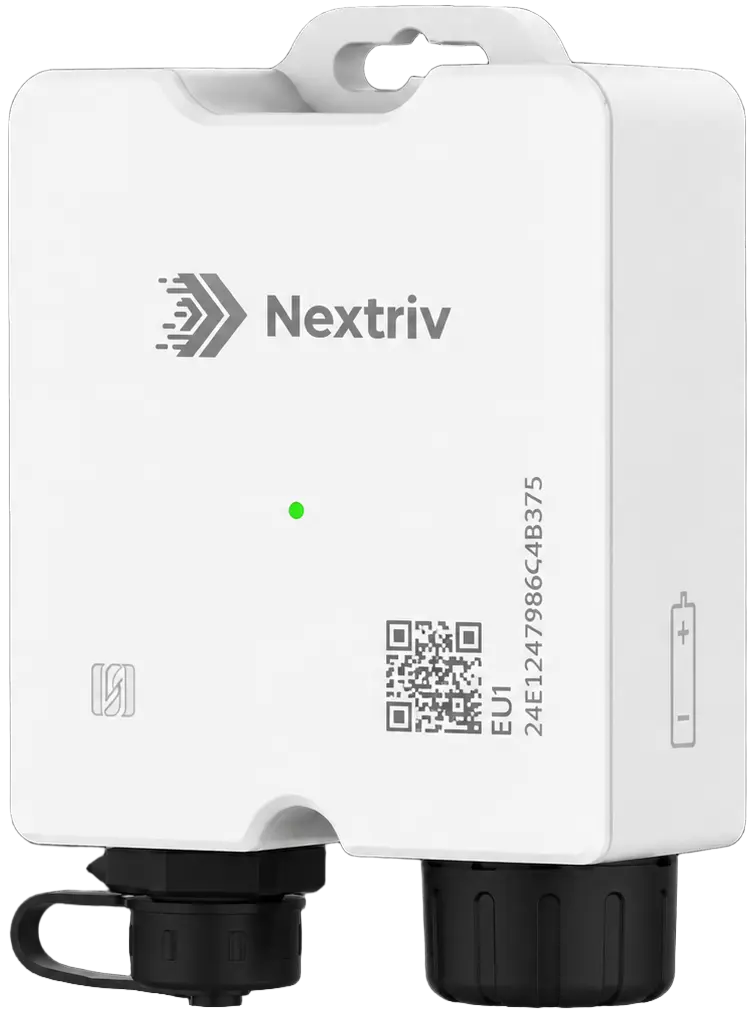
- Continuous logging without gaps. The Nextriv Probe Solo (temperature, EN 12830 certification, detachable probe for calibration) and Nextriv Probe Duo (temperature ±0.2 °C and humidity ±2% RH with a single probe — for 15–25 °C warehouses) data loggers buffer 4,000 measurements locally and backfill them after a connectivity outage. An internet failure leaves no hole in the history.
- 4 thresholds on every metric. Warning and critical, lower and upper — the system warns at 7.5 °C before things turn critical at 8 °C. Notifications go out by email, SMS, web push, Microsoft Teams, Discord or an in-app audible alarm, and escalation policies keep notifying the next people in line until someone acknowledges the event.
- Events with a full response history. Every alarm has a code, a status (active → acknowledged → resolved), comments and timestamps — exactly the trail an inspection expects.
- Signed PDF reports. Reports receive a SHA-256 checksum, a QR code and a verification URL — the auditor can check for themselves that the document hasn't been altered. A schedule sends the report weekly, automatically.
- 5 years of raw data and an audit trail. The platform retains measurements for up to 1,825 days, and the audit trail logs every action in the system for the same period — in line with the minimum retention required by GDP.
- Calibration register. Calibration date, next due date, certificate and a reminder before the certificate expires.
Pre-inspection checklist
- Does every zone with distinct requirements have its own measurement point at the location indicated by mapping?
- Is the record continuous — at night, on weekends and during a network outage too?
- Do deviations have a documented response: notification, acknowledgement, action?
- Are the calibration certificates of all sensors current?
- Can you produce the measurement history from the last 5 years within minutes?
If the answer to any of these questions is "not quite" — it's easier to fix before the audit than after. Book a Nextriv demo or check the pricing: starting with 10 sensors is free, and the PRO plan with 5-year history costs 99 PLN net per 30 days (excl. VAT).