GDPR and environmental sensor data — what the administrator needs to know
GDPR and environmental sensor data: when a reading becomes personal data, plus retention, audit trails and deletion — a practical guide for administrators.
Zespół Nextriv4 min read

GDPR and environmental sensor data is a topic that at first glance looks like a misunderstanding — what does personal data protection have to do with the temperature in a cold room? Quite a lot, though not where most people look. Environmental measurements themselves usually aren't personal data, but the system that collects them already processes it: user accounts, phone numbers for SMS alerts, a register of who changed what. The "administrator" in the title is really two roles at once: the system administrator who configures the platform, and the data controller in the GDPR sense who is accountable for the processing. This article sorts out where personal data actually appears in environmental monitoring and what to require from a platform so it supports compliance instead of getting in its way.
Is environmental sensor data personal data under the GDPR?
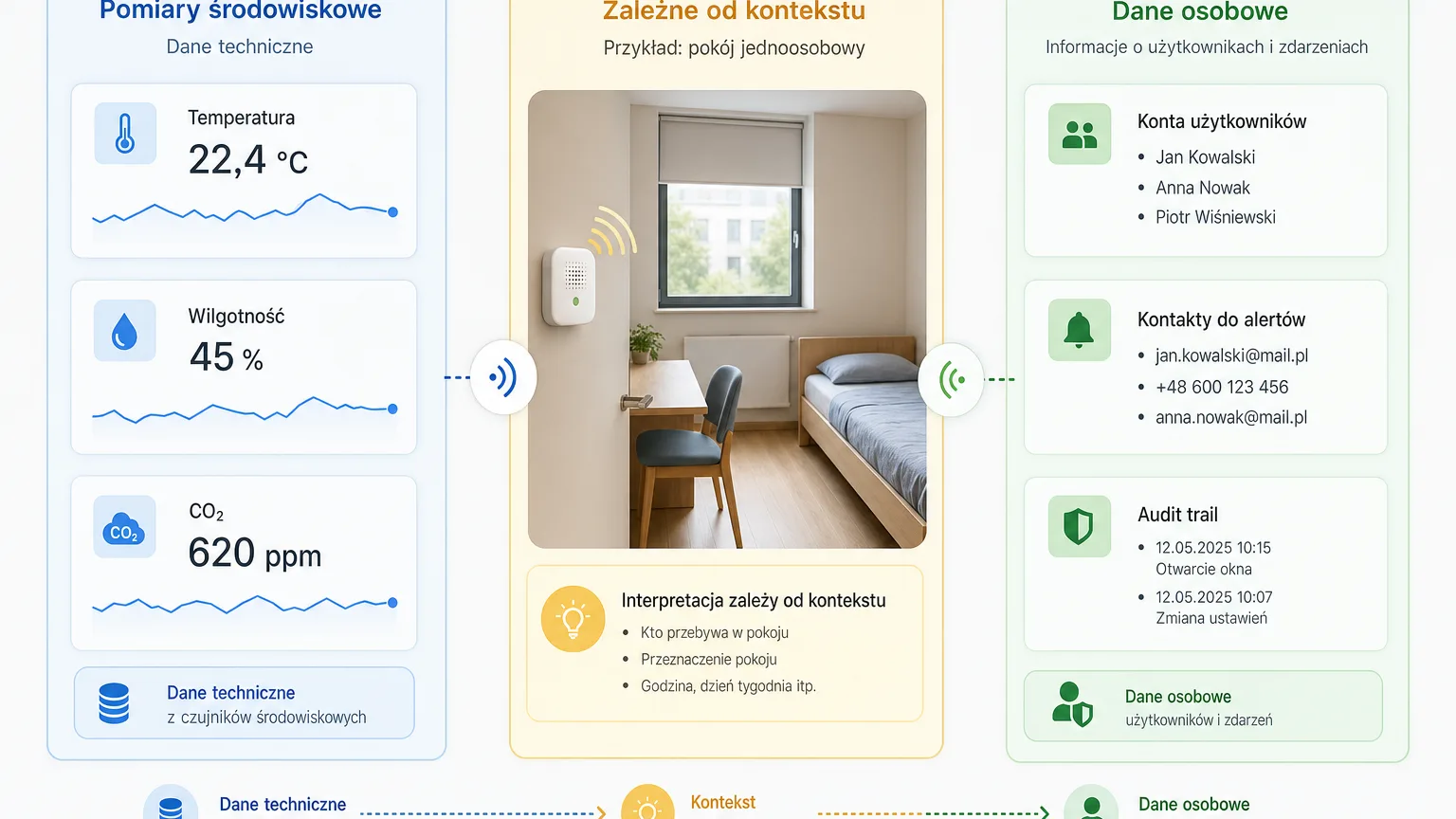
The starting point is the definition: personal data is information about an identified or identifiable natural person. The temperature of a cold room, the humidity of a warehouse or the CO₂ concentration in a conference room say nothing about any specific person by themselves — and in typical deployments they remain purely technical data.
Context can change that, though, and it's exactly this assessment that's worth carrying out consciously. A door sensor in a single-person office indirectly describes a specific person's work rhythm; readings from an individual desk can sometimes be linked to whoever sits at it. The closer a measurement gets to the behaviour of a specific human being, the more carefully it should be treated. The good practice is simple: when designing a deployment, ask "can anything about an identifiable person be read out of this data?" — and write the answer down, because accountability starts with a documented assessment.
Where a monitoring platform definitely holds personal data
Even if all the measurements are anonymous physical quantities, a monitoring platform processes personal data in a layer that's easy to forget:
- user accounts — first and last names, email addresses, phone numbers for SMS notifications;
- alert recipient contacts — including people outside the organisation, if an escalation policy is supposed to ring "an external number";
- activity registers — the audit trail and security event log by their nature tie actions to specific people: who changed a threshold, who acknowledged an alarm, who downloaded a report.
It's for this data that the controller needs a basis for processing, access control and a retention plan — regardless of how "impersonal" the measurements themselves are.
Technical measures a platform should have out of the box
The GDPR requires technical and organisational measures adequate to the risk — it doesn't name specific technologies, but in audit practice a certain set has become the standard. In Nextriv it looks like this:
- Encryption in transit (TLS) — data between the gateway, the cloud and the browser travels encrypted.
- Per-organisation data isolation (multi-tenant) — every row of data belongs to one organisation and every operation in the system runs strictly within that organisation's context; the isolation is locked in by automated tests and independent security audits.
- Roles and least-privilege access (RBAC) — four permission levels, from full administration down to view-only; everyone sees only what they need for their work.
- 2FA and account hygiene — a TOTP second factor with backup codes, a password policy, invitations valid for 7 days, a session overview and global sign-out from all devices.
We take the architecture of this puzzle apart — from the data path to isolation — in the article on sensor data security, and the full set of mechanisms is described on the Nextriv security page.
It's worth remembering that protection starts before the cloud. Sensors connect to the gateway over long-range radio, so they aren't devices on the corporate network — the only element plugged into the IT infrastructure is the gateway. Nextriv Hub Compact is a fully fledged network device in this respect: a firewall, VPN support (including WireGuard) and multi-level administrative permissions let you cover it with the same policies as the rest of the infrastructure.
Accountability: who, what and when
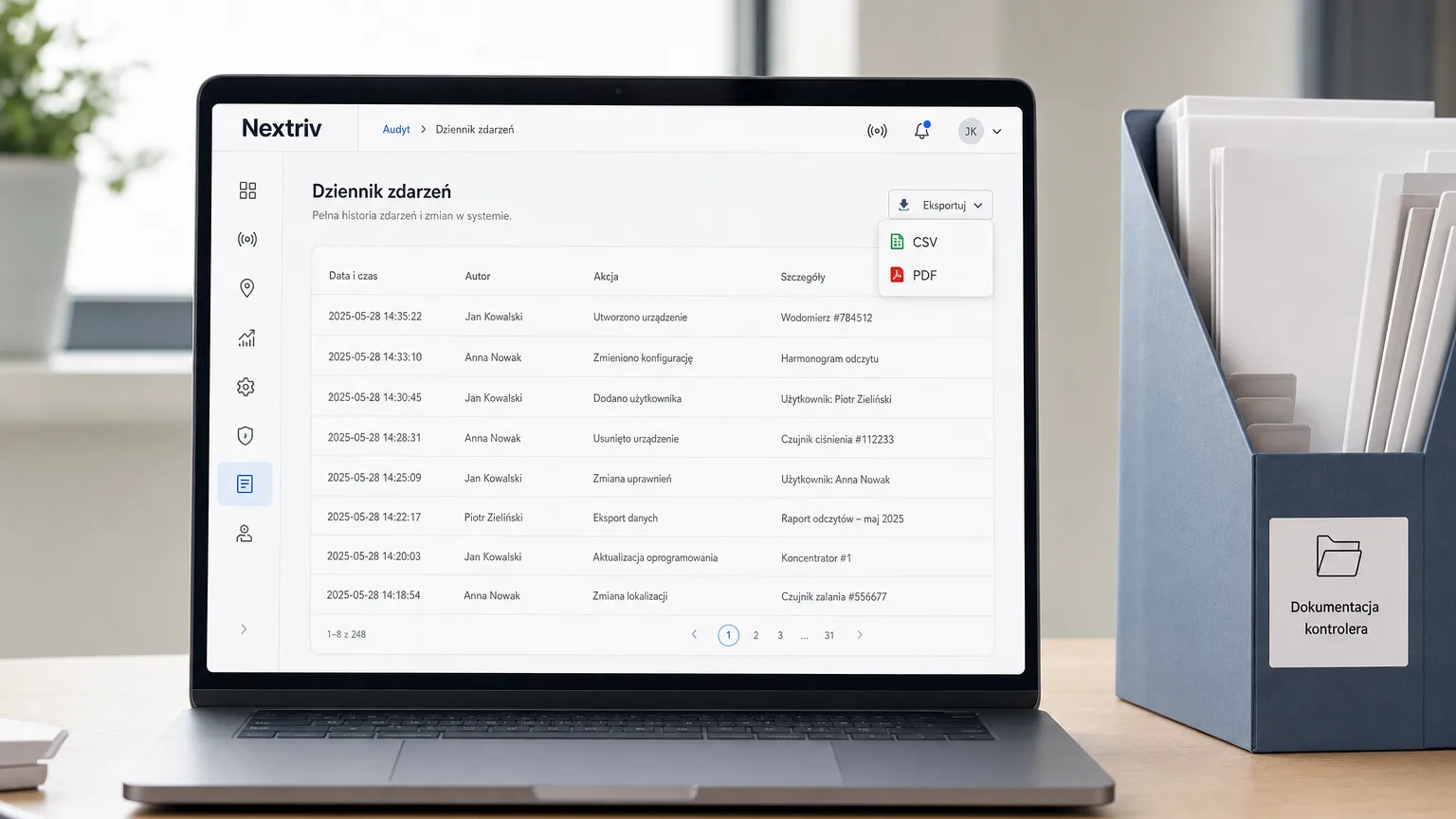
The accountability principle says compliance must be demonstrable. In practice that means two registers the platform keeps by itself: the audit trail (threshold changes, alarm acknowledgements, report generation and downloads) and a separate security event log (sign-ins, permission changes). Both are kept for 5 years and exportable to CSV/PDF — when the question "who had access to this data?" comes up, the answer is a printout, not an investigation.
Retention and the right to erasure
Two GDPR principles pull in opposite directions here. Minimisation says: don't keep data longer than needed. Industry documentation duties say: keep it — because measurement history is required by the sanitary inspectorate, an auditor or an insurer, as in the HACCP regime. There's only one way out: retention must be a conscious, written policy, not an accident. The platform defines storage periods explicitly — measurement history up to 5 years, reports and notifications correspondingly shorter — so the retention policy is backed by the system's mechanics, not just by a document.
The flip side is deletion. Nextriv supports erasing data on request in line with the GDPR — all the way to self-service deletion of the entire organisation along with its data, without writing to support. Add exports in open formats (XLSX, CSV, PDF): an organisation's data can be taken along, which closes the question of control over it at every stage.
There's also the opposite scenario to deletion: sharing. Instead of creating an account for everyone who just needs to "glance at the readings", you can use a public widget — a read-only view with selected sensors, no sign-in and no new sets of user data. Minimisation in practice.
The administrator's checklist
To finish, a set of questions worth walking through with every environmental monitoring deployment:
- Can any measurement be linked to an identifiable person? If so — is that assessment documented?
- What personal data does the platform itself process (accounts, alert contacts, activity registers), and on what basis?
- Is access role-based, and is revoking a former employee's access a single operation?
- Is transmission encrypted, and is the organisation's data isolated from other customers?
- Is there an audit trail, and how long is it kept?
- Is measurement retention defined and consistent with industry requirements?
- Can the data be deleted on request — and exported before deletion?
If you answer "yes" to most of these, environmental monitoring will be an ally in your GDPR rollout, not a risk. And the quickest way to verify it is in practice: book a demo — we'll show the roles, the audit trail and data deletion on a live system.
This article is for information purposes and does not constitute legal advice. It's worth consulting a lawyer or data protection officer on the assessment of a specific deployment.