
HACCP in Practice — Automated Temperature Monitoring
HACCP temperature monitoring without paper logs and walk-rounds: sensors record 24/7, alert on deviations and build a digital log for inspections.
Zespół Nextriv4 min read

HACCP temperature monitoring in most commercial kitchens still looks the same: a notebook by the fridge, a walk-round two or three times a day, a thermometer reading and a signature. The problem is that such a system measures not so much temperature as people's diligence — and in the middle of the season, with staff shortages and a full dining room, diligence is the first casualty. A control point someone checks once every eight hours lives its own life the rest of the time.
In this article we show how to move the temperature log from paper to a system that measures by itself: what to measure and with what, how to set alarm thresholds, and what the inspector will see during an inspection.
Why the paper log fails
Before we get to the solution, it's worth naming the problems familiar to anyone who has kept HACCP records by hand:
- Measurement is sporadic. Three readings a day are three points on a 24-hour timeline. A compressor failure between walk-rounds — especially at night or on a weekend — goes unnoticed until someone opens the chamber.
- Entries get made "from memory". At peak hours the walk-round drops to the bottom of the list, and the columns get filled in later. Every internal audit sooner or later finds such entries.
- No real-time response. Even an honest entry of "8 °C in fridge no. 2" alerts no one if the notebook sits in the back room and the manager has the day off.
- Documentation is scattered. The temperature history of the past weeks is a pile of notebooks and loose sheets — compiling them at an inspector's request can take half a day.
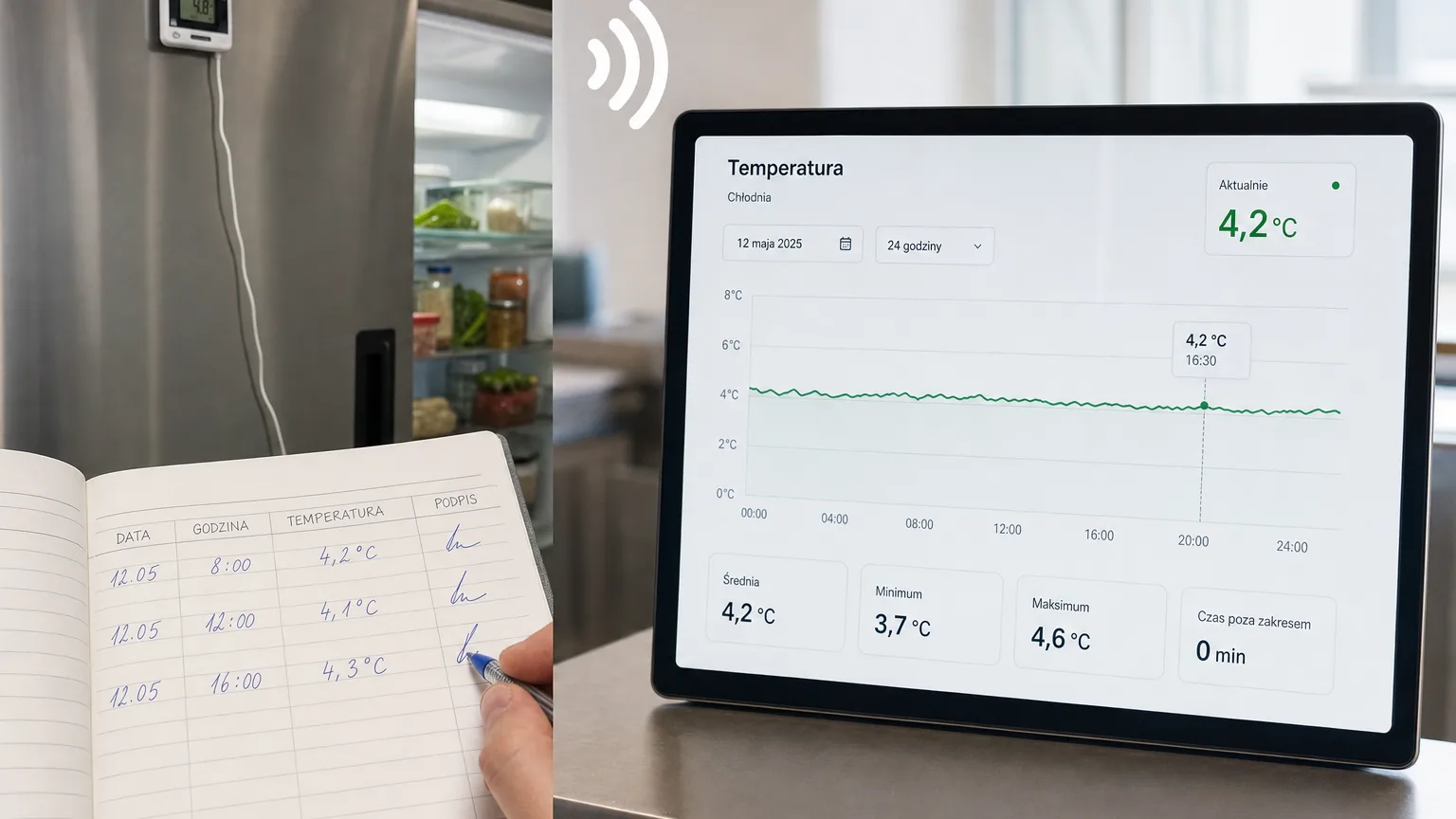
How automated HACCP temperature monitoring works
The principle is simple: at every control point (fridge, counter, freezer, dry store) a battery-powered sensor measures the temperature cyclically — typically every 10–30 minutes — and sends the reading over long-range radio to a single gateway. The range reaches about 2 km in urban environments and up to 15 km in open terrain, so one gateway covers the entire premises, basement and storeroom included.
Deployment requires no cabling and no integration with the refrigeration equipment. Sensors are discovered automatically: from plugging in the gateway to the first measurements usually takes 30 to 180 seconds per device. Crucially for record continuity — the sensors buffer measurements locally (the Probe Solo data logger holds 4,000 timestamped entries) and backfill them after a connectivity outage. An internet failure leaves no hole in the log.
Hardware for the control points
A typical kitchen needs just two kinds of device:
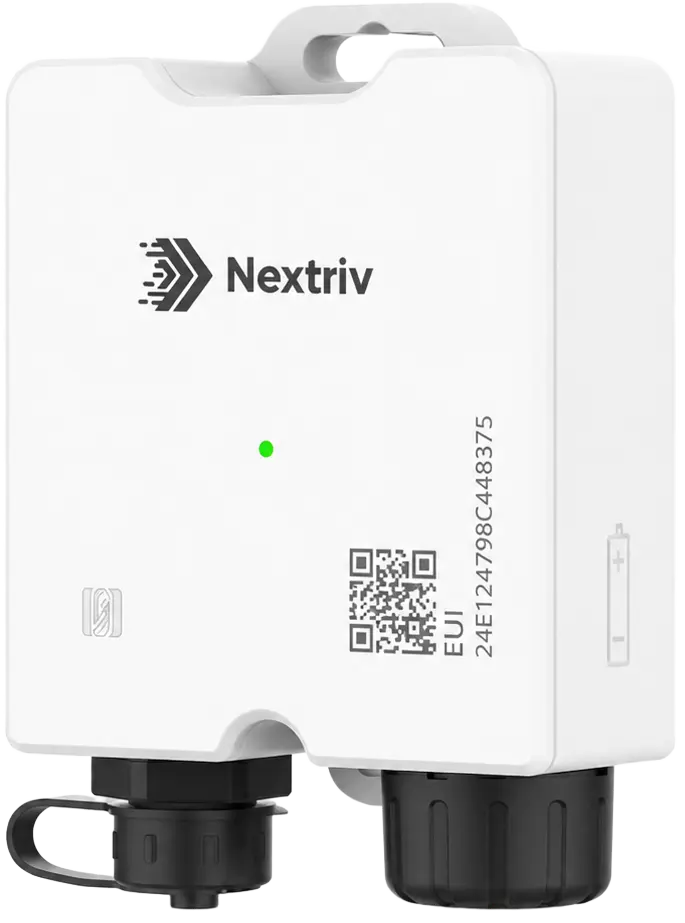
- Nextriv Probe Solo — a data logger with a detachable corded probe and EN 12830 certification. The probe (food-grade 316 stainless steel, −40…+125 °C range) goes inside the fridge, counter or chamber, while the transmitter stays outside — the metal enclosure doesn't break connectivity. The probe can sit in a thermal buffer so it mirrors product temperature rather than air — no more false alarms every time the door opens.
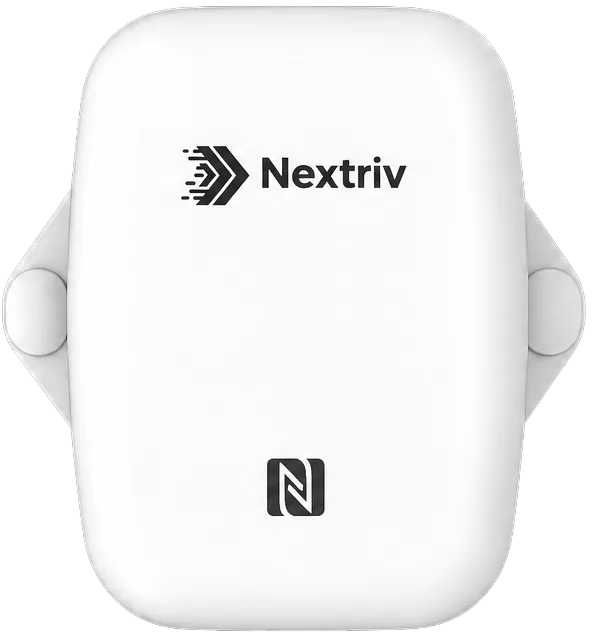
- Nextriv Sense Essential — a temperature and humidity sensor in an IP67 housing, also EN 12830 certified. The natural choice for the dry store, the back room and any space where humidity matters alongside temperature.
Both devices run for years on one set of batteries (the Probe Solo about 8 years at a 10-minute reporting interval), and you configure them with your phone via NFC.
Thresholds and alarms instead of walk-rounds
The heart of the system is alert rules. On each metric you set up to four thresholds: warning and critical, lower and upper. For a fridge run at 0–4 °C, a typical configuration is a 5 °C warning threshold and an 8 °C critical one — a brief swing after a delivery raises at most a warning, and only a real problem elevates the event to critical.
Every crossing opens an event with a unique ALM code and moves through a clear cycle: active → acknowledged → resolved. Deduplication ensures one active event per sensor and metric — instead of an avalanche of repeated notifications you get a single thread with a full timeline and team comments.
Notifications reach you where you actually work: email, SMS, web push on your phone, Microsoft Teams, Discord and an in-app audible alarm — six channels in total. On top of that, escalation policies: if the first person doesn't acknowledge the alarm within the set time, the notification moves up the chain — until someone does.
Documentation you can show the inspector
The automatic record supports documenting your HACCP system at control points — and does it better than a notebook, because there are no gaps:
- Measurement history: raw data available for a full year even on the free plan, and up to 5 years (1,825 days) at most.
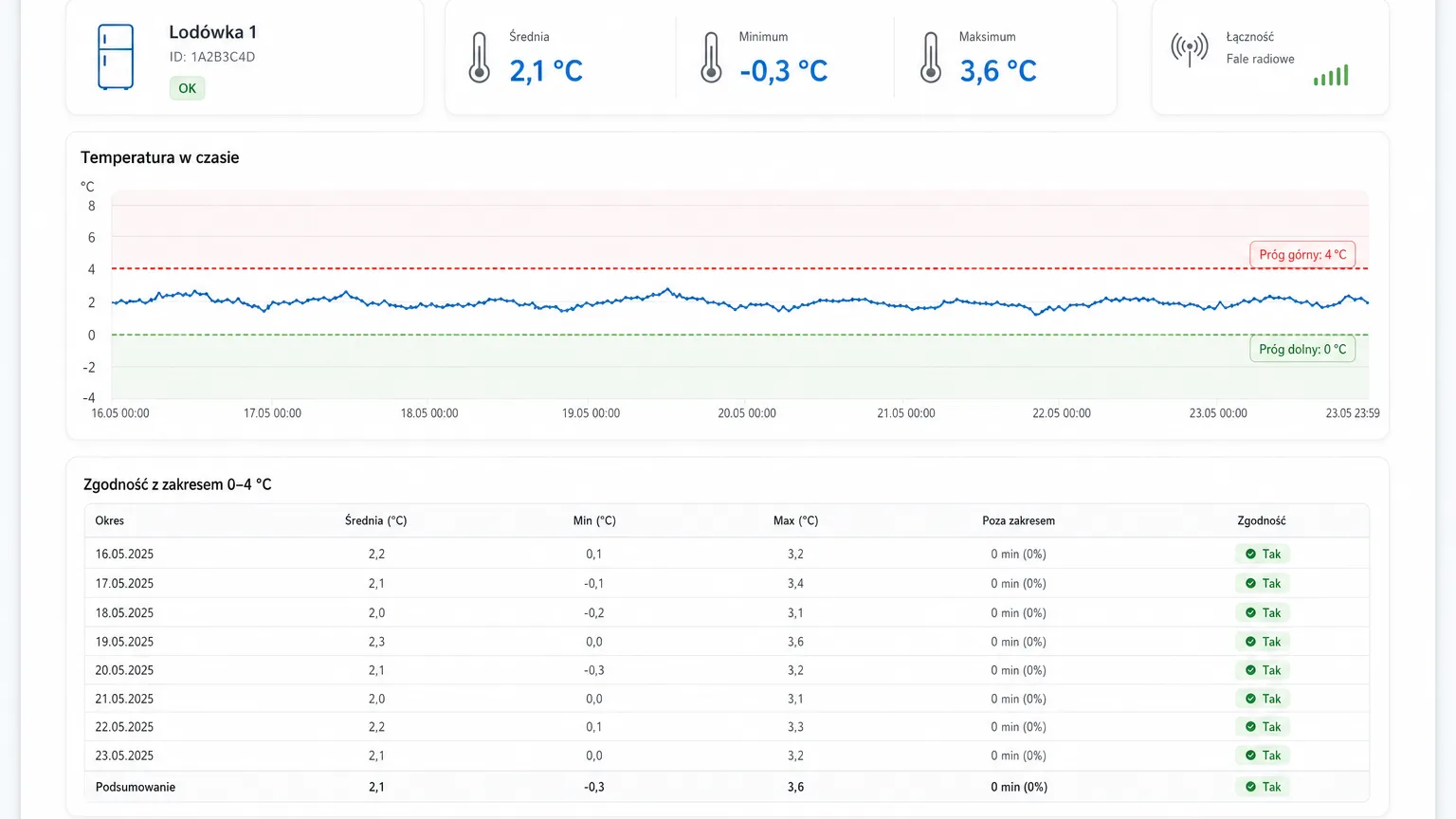
- PDF reports: a summary and charts, plus statistics, percentiles, a threshold compliance section and a daily or weekly report schedule.
- Signed documents: reports receive a SHA-256 signature with a QR code and verification URL — anyone can check the document hasn't been altered since generation.
- XLSX and CSV exports — for when the auditor wants to run their own numbers.
Alarm events with comments serve as the record of corrective actions: you can see when the threshold was crossed, who acknowledged the alarm and when the temperature returned to normal.
Deployment step by step
- Map your control points. List the equipment and rooms where your HACCP plan requires temperature oversight: fridges, counters, freezers, dry store.
- Place the sensors. Probe-equipped data loggers for refrigeration equipment, ambient sensors for rooms. Mounting means tape, screws or a magnetic bracket — no electrician needed.
- Set the thresholds per your HACCP plan. Your critical limits are already defined in your own documentation — transfer them into rules, adding a warning threshold with margin to react.
- Configure notification recipients. Who gets the warning, who gets the critical alarm, on which channel — and what happens when nobody reacts.
- Run both logs through a transition period. A week or two of parallel records is enough to verify the thresholds and convince the team that the notebook walk-rounds can be retired.
The full scenario for food service venues — from the pain of the paper log to an example escalation of a night-time alarm — is described on our HACCP monitoring for food service page.
How much does it cost?
Starting is free: the FREE plan covers 10 sensors, 1 gateway, 2 users, 5 alert rules and a full year of measurement history — for a small venue that's often everything you need. The PRO plan (99 PLN net per 30 days or 990 PLN net per year, excl. VAT) removes the limits and adds escalations, scheduled signed reports and 5 years of history, among other features.
Compare both plans in detail in the pricing section — or book a short demo, where we'll show a HACCP log running on live data.


