
Hub gateways
Nextriv Hub CompactDIN-rail industrial radio gateway
SKU: NX-GW-CPT
Industrial indoor radio gateway in a metal housing with DIN-rail mounting. Handles approx. 2,000 sensors and feeds data into your BMS over BACnet/IP and Modbus.
€422net
VAT is added to the price.
Description
- Industrial DIN-rail gateway
- Signal reaches across three floors
- BACnet and Modbus straight into the BMS
- Triple backhaul with automatic failover
- Over-the-air sensor updates
What it is for
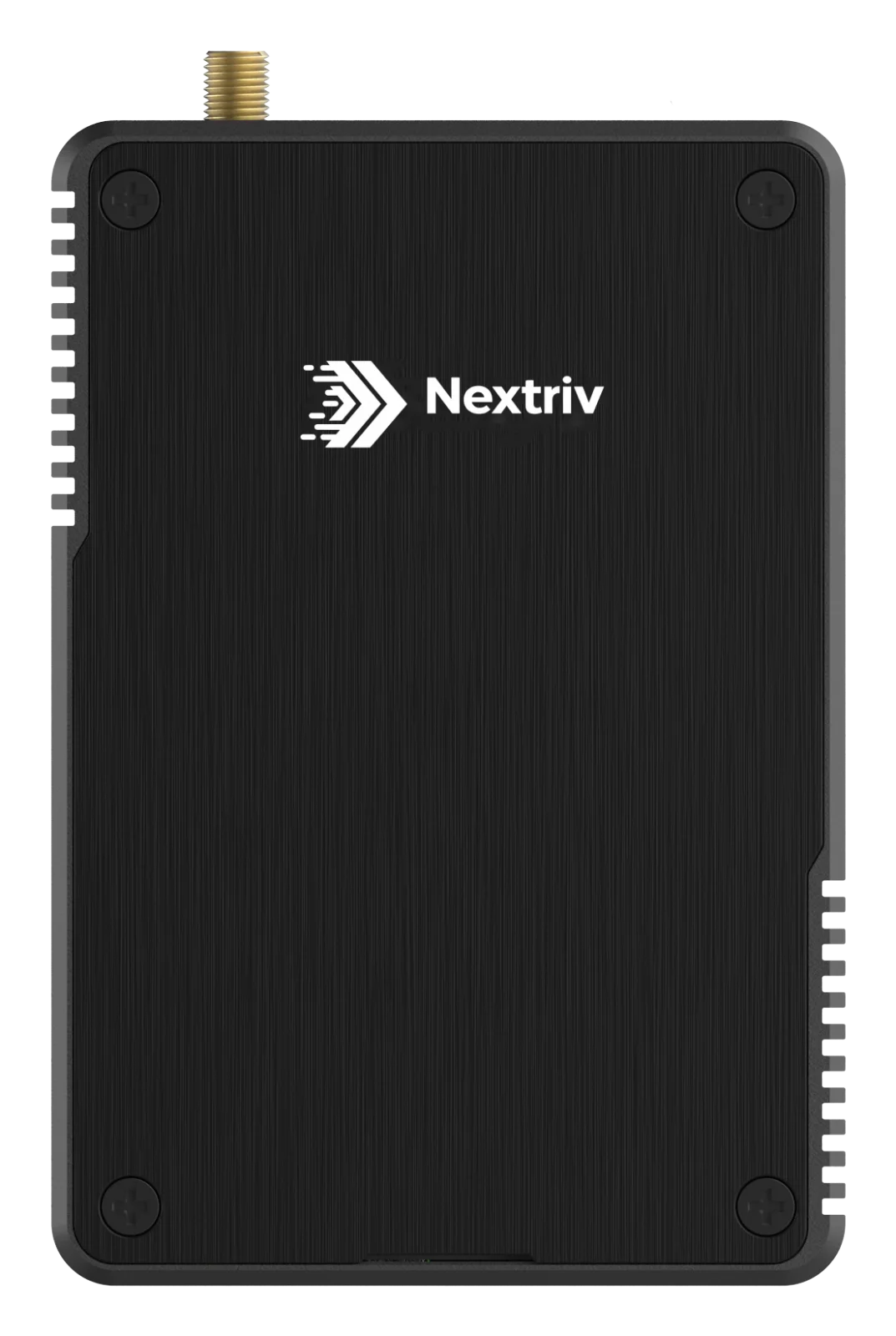
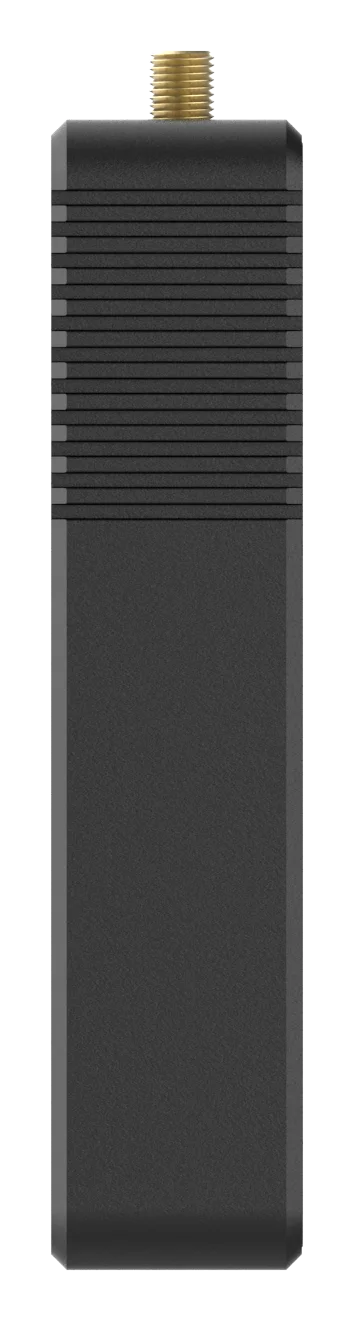
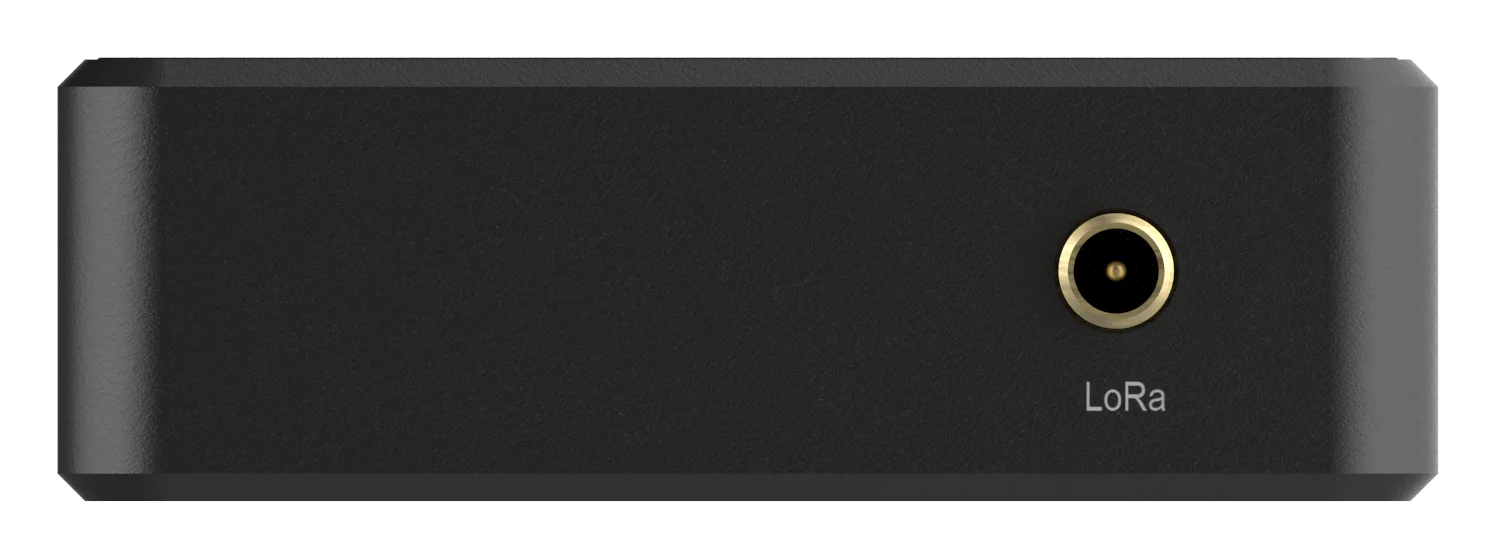
The Nextriv Hub Compact is the industrial heart of a Nextriv network in a format barely larger than a postcard: a 110 × 75 mm metal housing, DIN-rail mounting and a quad-core industrial-grade processor. Behind the headline sits a concrete fact: the gateway's signal punches through three floors up and down, and a single unit handles around 2,000 sensors. In practice — one gateway in a telecom cabinet can cover an entire office building.
What sets the Compact apart from simple gateways happens on the inside. A built-in network server with a codec library, multicast and over-the-air sensor firmware updates (FUOTA) lets you manage the network locally. Gateway fleet mode brings infill gateways — say, Mini units in parking garages — under one parent gateway: one console, one network, many access points.
The strongest argument for integrators is building-automation integration. With BACnet/IP, BACnet/SC and Modbus TCP, data from wireless sensors appears in an existing BMS or SCADA as ordinary points — with no changes to the existing installation and no extra middleware hardware. It is the bridge between the world of battery-powered sensors and classic automation.
There is headroom for the future too: a Python SDK and Node-RED let you run your own logic directly on the gateway, a radio noise analyser helps pick clean channels in crowded airspace, and triple backhaul — Ethernet with PoE, Wi-Fi and optional 4G — with automatic failover keeps the link alive even when the primary connection fails.
Usage scenarios
- Class A office building: the gateway sits on a DIN rail in the technical floor's distribution board; climate sensors, meters and buttons from the whole building flow into the BMS over BACnet/IP. The integrator doesn't change a single line of the existing system's configuration.
- Manufacturing plant: the metal housing hangs in a control cabinet next to the drives. Shop-floor data reaches SCADA over Modbus TCP and, in parallel, the Nextriv platform — maintenance and management look at the same numbers.
- Hotel: one gateway in a technical riser serves room sensors across several storeys (signal passes three slabs in both directions). Housekeeping gets humidity alerts; the front desk hears about windows open while the air conditioning runs.
- Site with no fixed line: a big-box store on the outskirts — 4G backhaul as the primary link; once fibre arrives, the gateway switches to Ethernet by itself, with 4G in reserve.
- University campus: the Compact as the parent gateway, with Mini gateways reporting in to extend coverage in library basements and sports halls — one console, one network.
- Metering system modernisation: a waterworks ties in pulse meters via radio sensors; data retransmission guarantees that after an internet outage the readings arrive complete.
Key features
- Industrial metal housing and DIN-rail mounting — a gateway designed for the telecom cabinet, not the shelf.
- Range across three floors up and down; approx. 2,000 sensors on a single unit.
- Quad-core industrial processor (1.3 GHz, 512 MB RAM, 8 GB storage + SD card slot) — performance headroom for years and local data processing.
- Built-in network server: codec library, multicast (one command to many devices), over-the-air sensor firmware updates (FUOTA).
- Gateway fleet mode — infill gateways managed centrally from the parent gateway.
- Building-automation integration: BACnet/IP, BACnet/SC, Modbus TCP, Modbus RTU over TCP — wireless sensors visible in the BMS/PLC with no changes to existing infrastructure.
- Triple backhaul with automatic failover: Ethernet (PoE powered), Wi-Fi, optional 4G.
- Radio noise analyser — channel scanning and selection of the cleanest frequencies in a congested radio environment.
- Enterprise-grade security suite: VPN (including WireGuard), firewall, IP/domain filtering, multi-level permissions.
- Developer environment on board: Python SDK and Node-RED — your own edge logic with no extra hardware; management via web UI, SSH, SNMP and API.
In the Nextriv system
For the Nextriv platform, the Hub Compact is the entire site's point of entry: sensors join automatically (new-device discovery usually takes 30–180 seconds), the platform recognises their model and metadata on its own, and pushes time-zone synchronisation and clock changes out remotely. Gateway status lands on a dedicated dashboard widget; if the gateway stays silent for 15 minutes, the platform marks it offline and notifies the administrator immediately — by email, SMS, web push, MS Teams, Discord or an audible in-app alarm.
Power draw from 1.8 W means a gateway fed by a single PoE cable costs about as much energy as an LED — and once deployed it requires virtually no site visits: firmware updates for the gateway and the sensors happen remotely, and the data flows to dashboards, four-threshold alerts and PDF reports exactly as it does from any other point on the Nextriv network.
Typical deployments
- Office buildings: the gateway in the floor distribution board, the whole building's sensors visible in the BMS over BACnet/IP — more in our smart building solutions.
- Manufacturing plants: mounted in the control cabinet, data in parallel to SCADA (Modbus TCP) and the Nextriv cloud — see our manufacturing solutions.
- Hotels: one technical riser serves rooms across several storeys — explore our hospitality solutions.
- Campuses and schools: a parent gateway with a fleet of infill gateways in one centrally managed system — details in our school solutions.
Specification
| Radio | 8 channels (half-duplex), -140 dBm sensitivity, up to 27 dBm output; 868 MHz band (EU) |
|---|---|
| Capacity | approx. 2,000 devices (at one uplink every 10 min) |
| Processor | 4-core 1.3 GHz ARM, 512 MB RAM, 8 GB eMMC + micro SD slot |
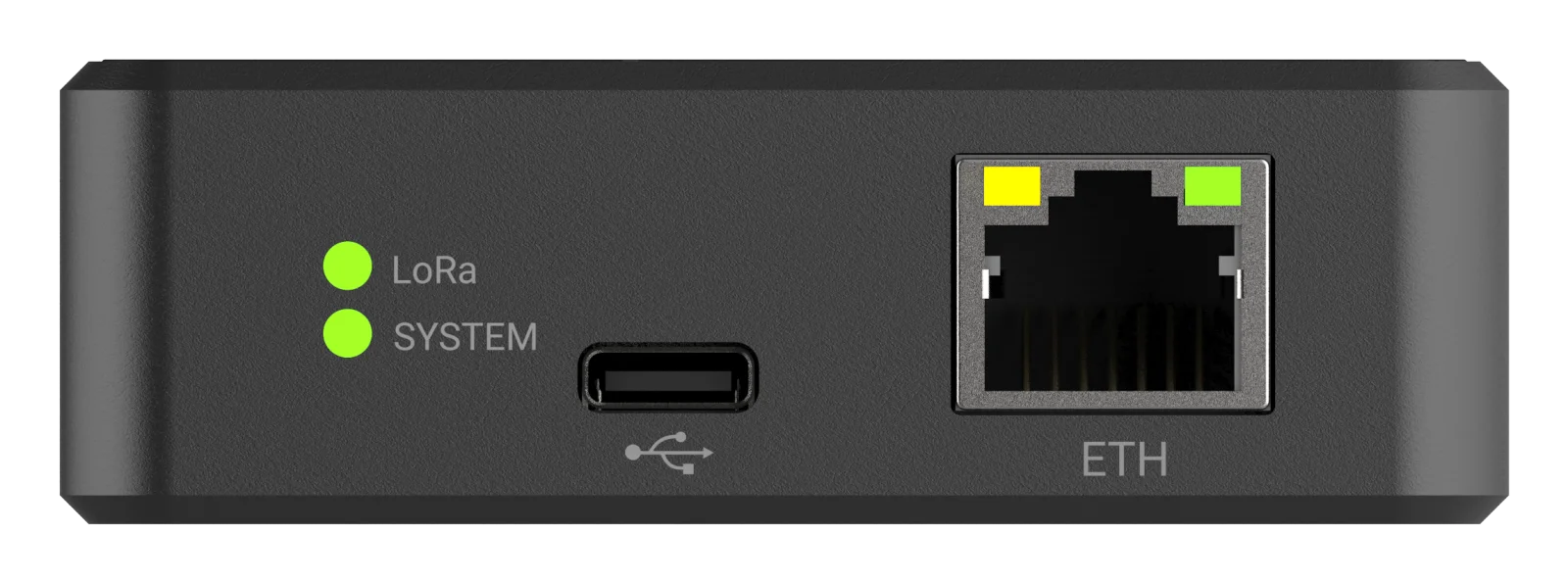
| Backhaul | 10/100 Ethernet (PoE PD), 2.4 GHz Wi-Fi (AP/client), optional 4G LTE; automatic WAN failover |
| Integrations | MQTT(s), HTTP(s), BACnet/IP, BACnet/SC, Modbus TCP, Modbus RTU over TCP |
| Network server | built-in: codec library, multicast, FUOTA, gateway fleet mode |
| Security | VPN (OpenVPN/IPsec/WireGuard and more), firewall, multi-level permissions |
| Power supply | PoE 802.3af or USB-C 5 V/2 A; typical draw 1.8 W |
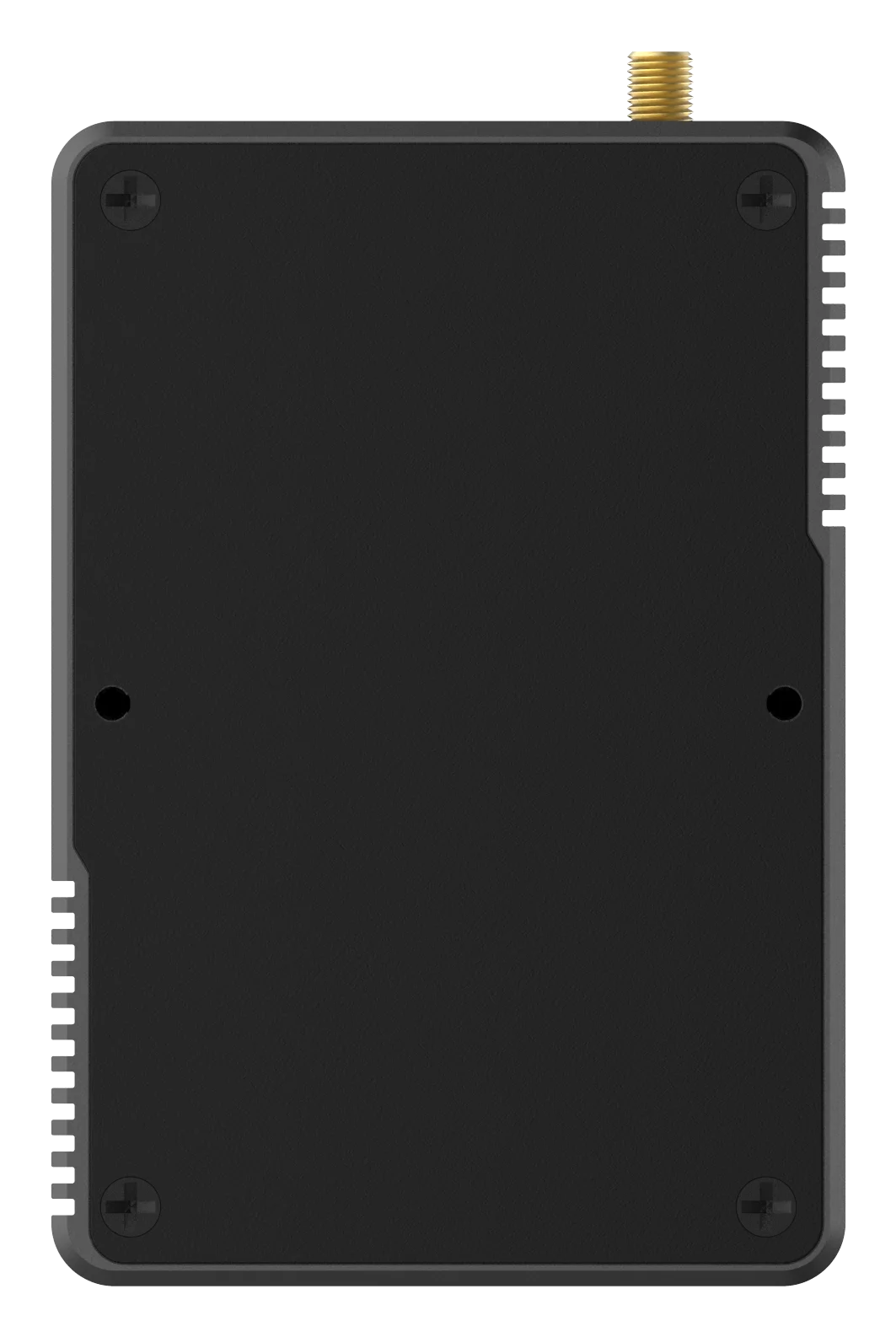
| Housing | metal, 110 × 75 × 24 mm, 186 g, IP30 |
| Operating conditions | -20…+60°C, 0–95% humidity, non-condensing |
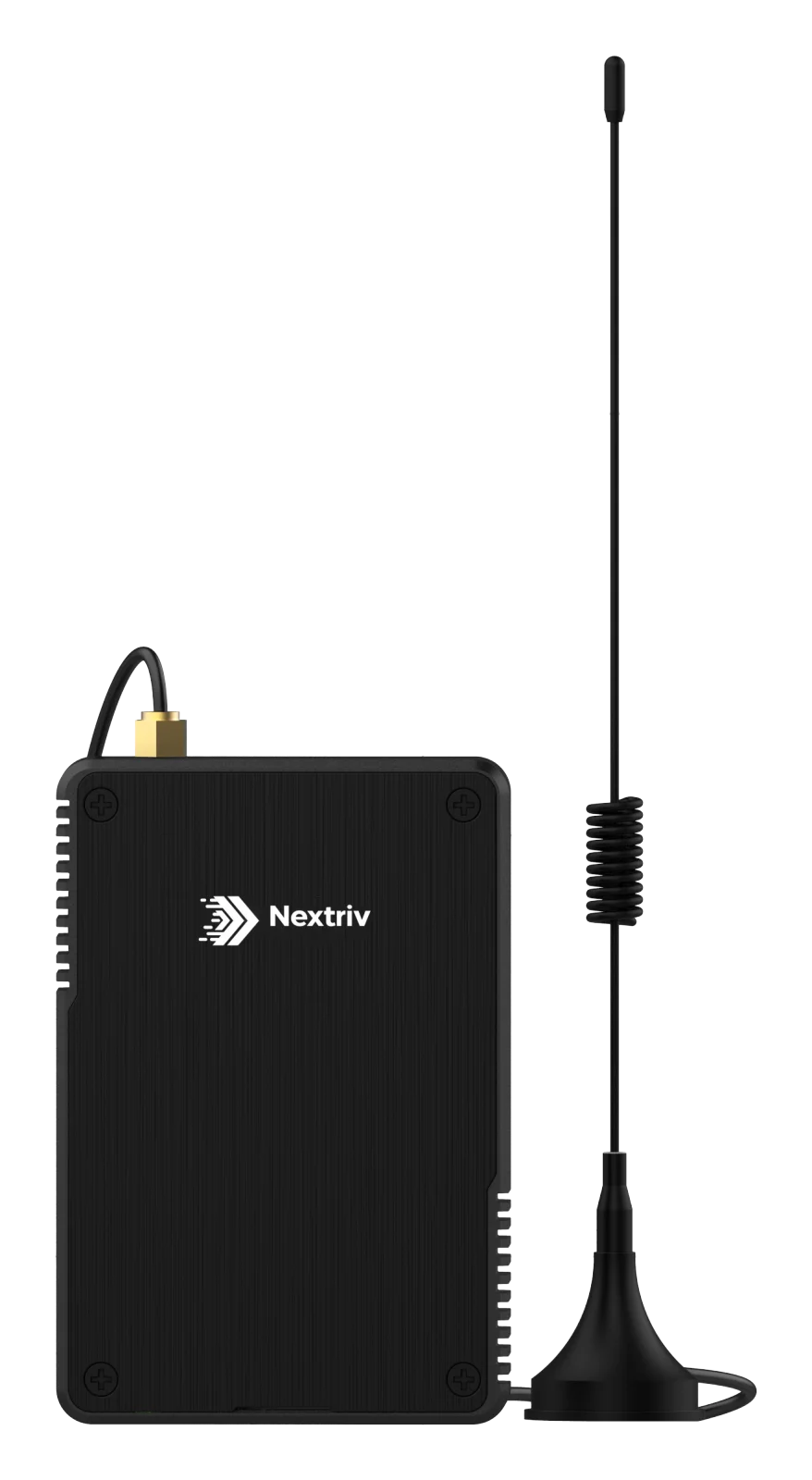
| Mounting | desk, wall or DIN rail; external magnetic antenna (SMA) |
Related products
Other devices from the same family.
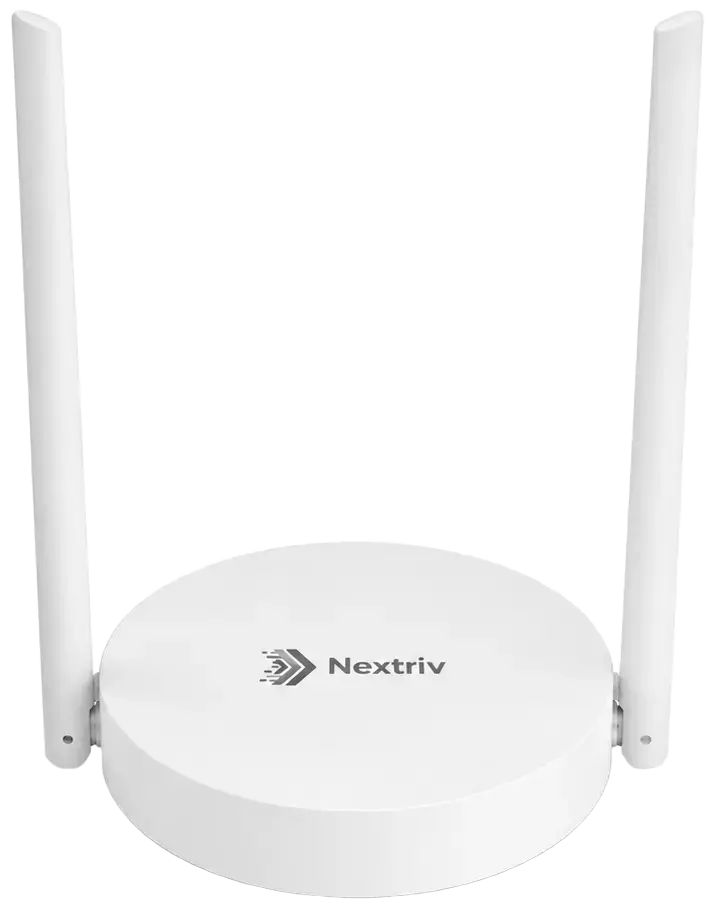
Nextriv Hub Mini
SKU: NX-GW-MINI
Lightweight 8-channel indoor radio gateway — the simplest way to start a Nextriv network. Discreet housing, USB-C or PoE power, optional 4G modem; handles up to approx. 2,000 devices.
€204 netView product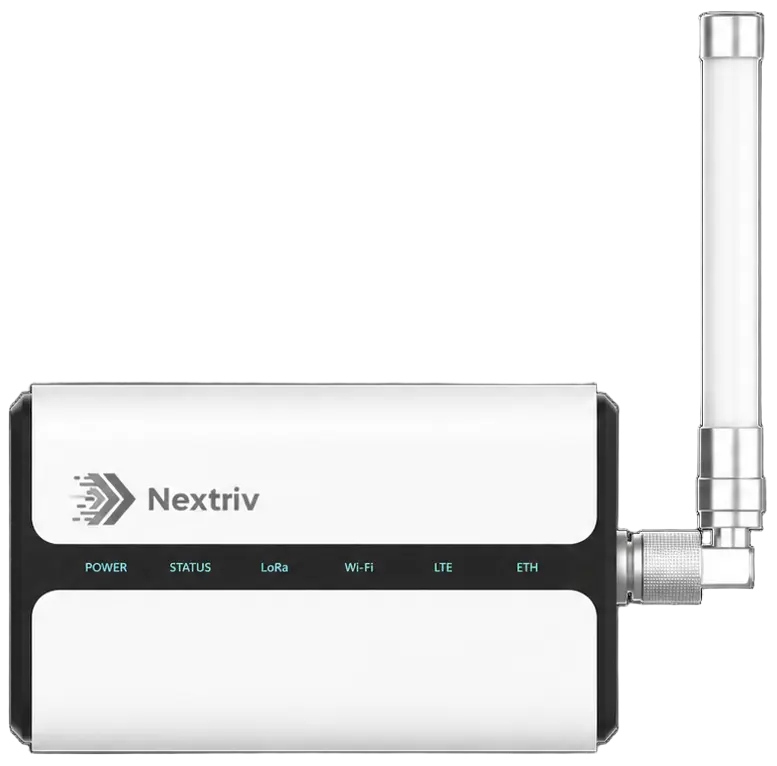
Nextriv Hub Pro
SKU: NX-GW-PRO
Semi-industrial radio gateway with IP65 ingress protection and a -40…+70°C operating range — for indoor and sheltered outdoor spots. Gigabit Ethernet with PoE, Wi-Fi and optional 4G with failover.
€511 netView product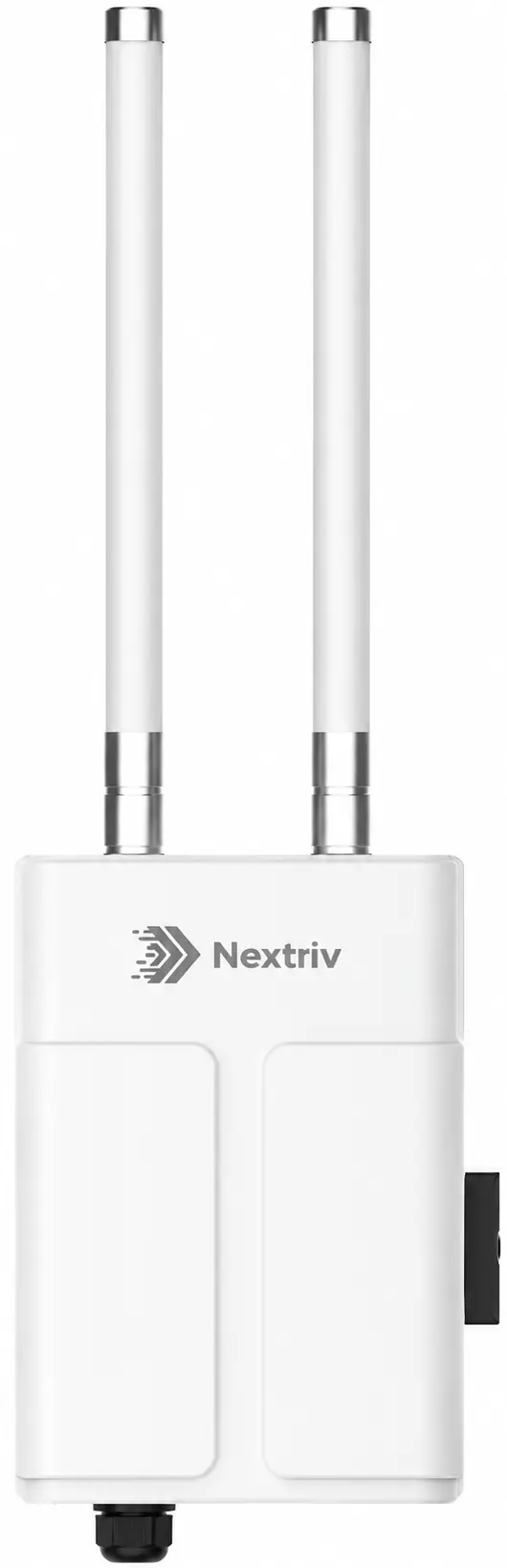
Nextriv Hub Outdoor
SKU: NX-GW-OUT
Fully outdoor IP67 radio gateway with a GNSS receiver and a range of up to 15 km line of sight. The foundation of a Nextriv network in open terrain: agriculture, industry, infrastructure.
€844 netView product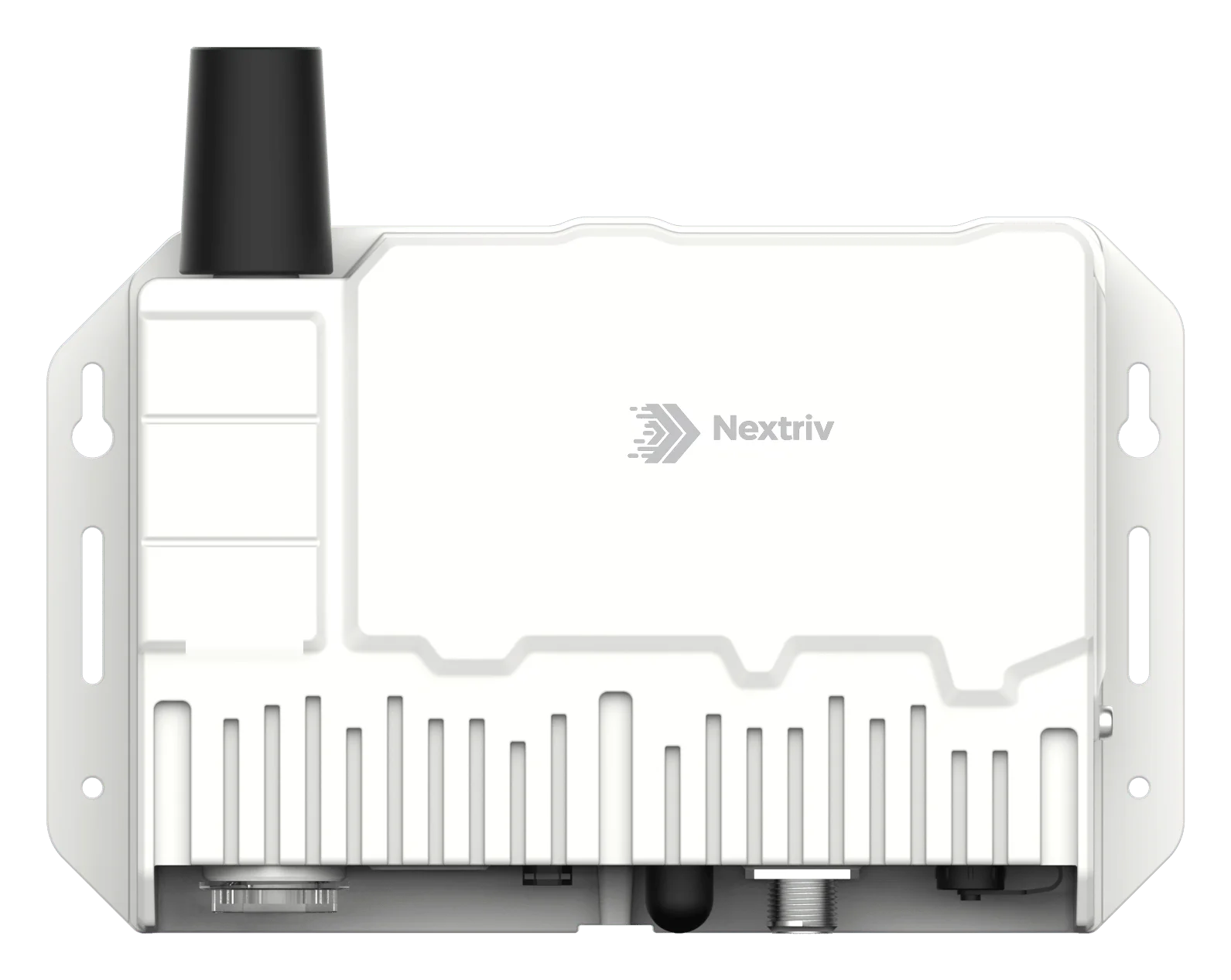
Nextriv Hub Solar
SKU: NX-GW-SLR
Autonomous radio gateway powered by a solar panel, transmitting over 4G — a Nextriv network where there is no mains power or Ethernet. A 25 Ah battery gives up to 4 days of operation without sun.
€933 netView product
Not sure which set to choose?
Tell us about your facility and we'll match sensors and a gateway to the exact rooms you need to monitor — no unnecessary hardware.