
Production line energy monitoring — where the power goes
Production line energy monitoring without an electrician: kWh metering machine by machine, night-time vampire loads, schedules and overload alerts.
Zespół Nextriv4 min read

Production line energy monitoring sounds like a quarter-long project: sub-meters in the switchboard, a certified electrician, downtime while everything is wired up, and a binder of documentation nobody ever opens again. Yet the questions that start it all are mundane: which machine costs the most, what draws power at night when the hall is idle, and does the old compressor really "pull" as much as maintenance suspects. The invoice from the energy supplier answers none of them — it shows one number for the whole plant. Measurement at the specific device does. And it can be up and running within an hour, without touching the switchboard.
Production line energy monitoring starts at the socket
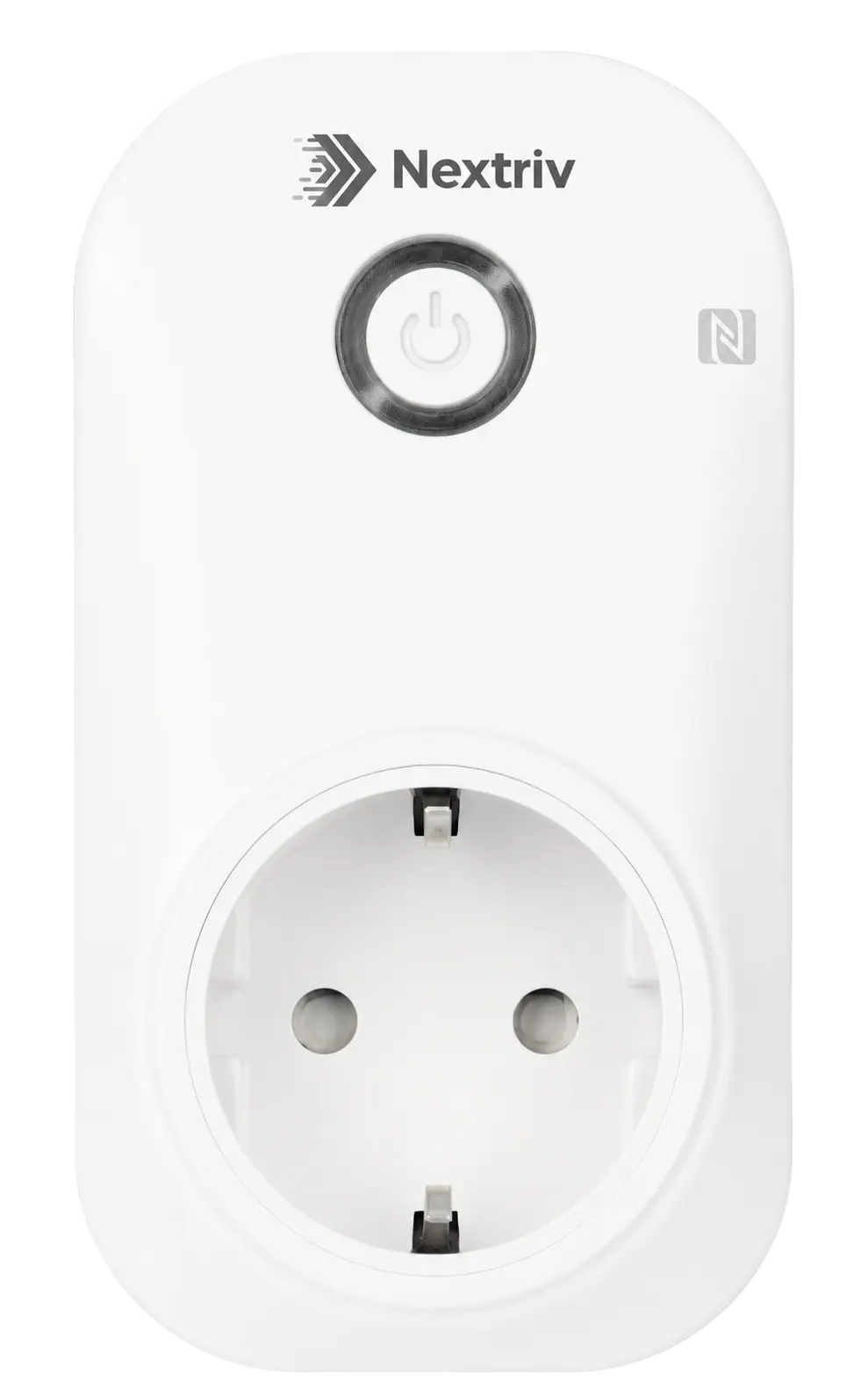
The simplest measurement point is a smart plug: you insert it between the socket and the device, and from that moment you have a full sub-meter — voltage, current, active power, power factor and accumulated kilowatt-hours, reported for each load separately. The European variant handles loads up to 16 A at 250 VAC, so a heat sealer, a heater or a refrigerated display case will not faze it. Configuration comes down to a tap of the phone (NFC), and the data flows to the platform over long-range radio — up to roughly 2 km in built-up areas and 15 km in open terrain, so a single gateway covers the entire hall along with the back rooms.
The plug is mains-powered and listens for commands continuously: an "off" command from the platform executes almost instantly, not at the next transmission window. That is the difference between passive reporting and real automation — and why the same device that measures can also act.
Honestly about the method's limits: machines fed three-phase straight from the switchboard are a different league, and socket-level measurement is out of the question there. But in light manufacturing and around the line itself, single-phase loads up to 16 A — assembly stations, stationary power tools, peripheral equipment, point-of-use refrigeration, staff facilities — often make up the majority of the fleet and a surprisingly large share of the bill. The audit starts where it can be done right away.

Where the power goes: three findings from the first month
The night-time baseline. The first 24-hour chart is usually worth half the audit: the hall is "idle", but the meter is not. Standby modes, heaters, workstation fans, auxiliary lighting, a compressor kept up "just in case" — pennies individually, together a fixed cost paid every night and every weekend. Only per-device measurement shows exactly what that baseline consists of and which items can be switched off without risk.
Heating and cooling outside hours. A heater switched on on Friday "for a moment" can run the whole weekend. Without measurement nobody sees it; with measurement it is visible on the chart on Monday morning — to the hour and to the penny. After two such weekends the schedule writes itself.
Ageing equipment. Rising power draw for the same work is the classic early symptom of wear: a clogged filter, a failing bearing, a chiller losing efficiency. A power trend over a few weeks works like an ECG for the machine — it gets ahead of the failure and buys time for planned servicing instead of a midnight rescue operation, and you go to the service talk with a chart, not a hunch.
From chart to savings: schedules and alerts
Measurement alone does not save anything — the response does, ideally an automatic one:
- Schedules. The plugs switch selected devices off after the last shift and on before the first — no human involved and no "I forgot". Group control switches off an entire zone with a single command.
- Four thresholds per metric. Power draw gets warning and critical thresholds: a rising load first generates a warning for maintenance, and only later an alarm. A current overshoot triggers an overload alarm before anything overheats.
- Power-loss alert. The plug reports that the circuit has lost power — for a refrigerated display case or a fridge full of reagents, this is the cheapest early-warning system against losing stock. We expand on refrigeration oversight in our article on cold zone monitoring.
- Notifications where the team works. Email, SMS, web push, Microsoft Teams, Discord or an audible in-app alarm — every event carries a code and a severity level, so in communication with the technical services there is no doubt which alarm is being discussed.
Power escapes beyond the sockets too — ventilation running at full speed in an empty building is the classic case. How to tie its operation to actual room usage is covered in our article on CO₂-controlled ventilation.

Data that holds up in cost accounting
Accumulated kWh per device flow into PDF reports and XLSX and CSV exports — ready-made material for the departmental cost sheet, for billing tenants of the floor space, or for a conversation with the CFO about what the equipment replacement actually delivered. On the dashboards you can put machines side by side using nearly 20 widget types — KPIs, trends, device comparisons — and the raw measurement history covering a full year on the free plan spans an entire seasonal cycle, winter heating and summer cooling included. Energy is just one of the hall's parameters anyway, next to process temperatures, noise and air quality — how it all comes together in a single system is covered in our manufacturing solution.
Start with three plugs
The pilot needs no project plan and no budget: one plug on the most suspect machine, one on a peripheral workstation, one on a refrigeration unit — and a month of data collection. The free plan includes 10 sensors, a gateway, 2 users and a full year of measurement history, so you run your first energy audit with no software costs, and the results themselves will point to where the next measurement points should go.
Plan details are on the pricing page, and if you would rather see a live machine's power chart and an overload alert in action — book a short demo.


