
Industry solutions
Environmental condition monitoring for manufacturing
From a PT100 probe in a furnace to dust in a cleanroom: Nextriv watches process parameters, NH₃ and H₂S gases and machine energy — with alerts and audit-ready history.

Sound familiar?
Processes beyond ordinary sensors
Furnaces, autoclaves, electroplating baths or blast freezers require measurements from −200 to +800 °C. Manual readings from loggers mean data gaps and late reactions.
Quality audits pieced together on paper
ISO 9001 and your customers demand proof of stable conditions. Collecting printouts and notebooks before an audit costs days of work — and gaps still slip through.
Odours and gases reported by nose
You learn about ammonia or hydrogen sulphide levels in utility areas from employee complaints, not from measurements.
Machine energy as a black box
You know how much power the plant uses, but not which line, compressor or welder. Without per-device data there is no conversation about savings.
How Nextriv solves it
Probes for special duty
Probe PT100 measures from −200 to +800 °C with ±0.5 °C accuracy. The IP67 transmitter with years of battery life mounts right at the machine — no signal cabling across the hall.
Cleanroom under constant watch
Sense IAQ Pro reports PM2.5/PM10, temperature, humidity and pressure. A continuous particulate trend between formal ISO 14644 classification measurements — deviations show immediately.
Gases measured, not sniffed
Sense Gas monitors NH₃ (0–10 ppm) and H₂S (0–5 ppm) with a local buzzer and LED signalling. Set alert thresholds with a safe margin below occupational exposure limits.
Energy per machine
Control Plug measures voltage, current, power and kWh of each socket-powered device and lets you switch it off remotely — including scheduled shutdowns after hours.
An alarm that reaches maintenance
Four thresholds per metric, ALM codes and escalation policies: if the operator does not acknowledge the alarm, it goes up the chain — SMS, email, Teams or a webhook to your CMMS.
History no auditor can question
Raw measurements for up to 5 years, PDF reports with an SHA-256 signature and QR code, XLSX/CSV exports and an audit trail of every change in the system.
Recommended products
Nextriv hardware picked for this industry — up and running with the platform in minutes.
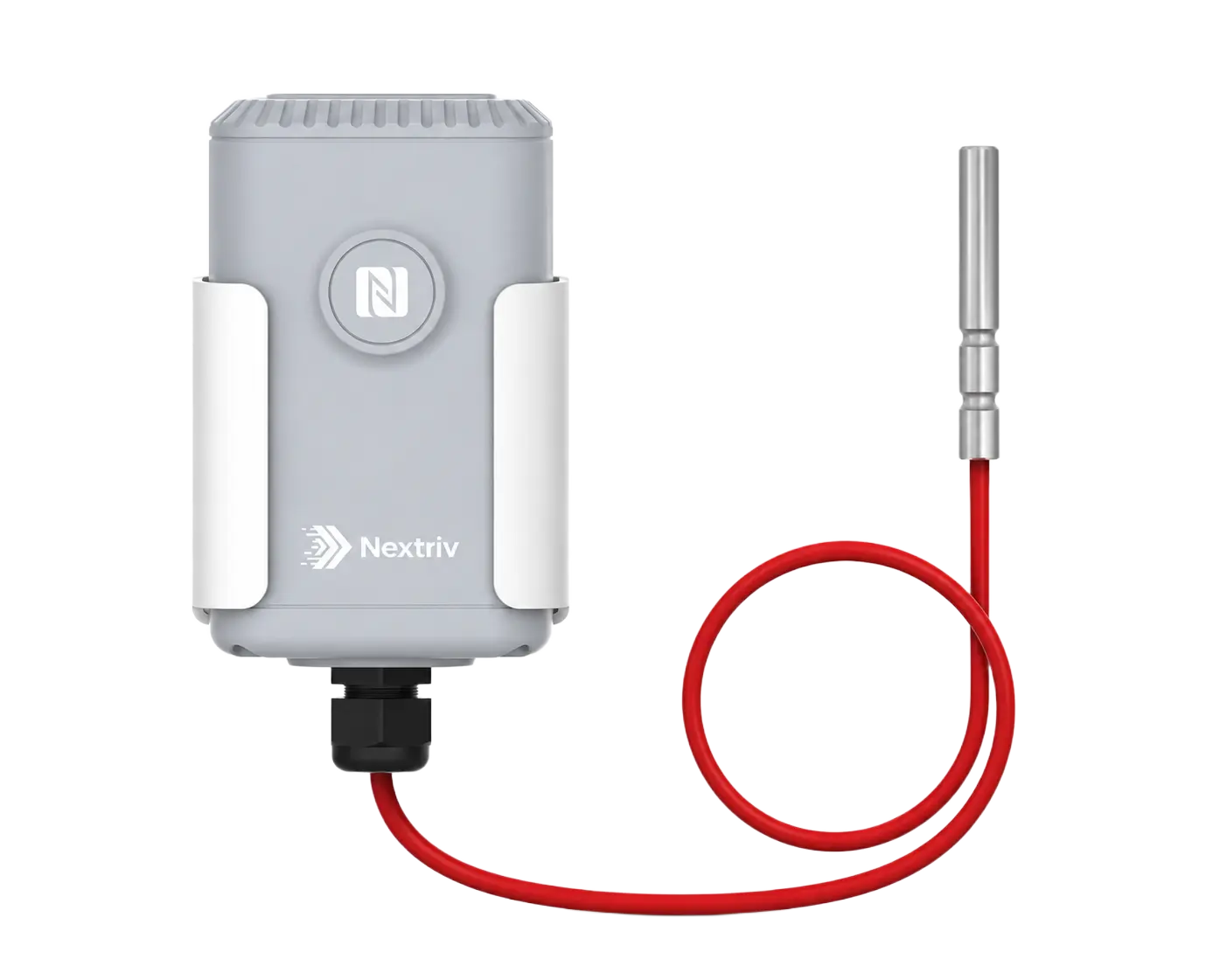
Nextriv Probe PT100
Four range variants (from −200 to +800 °C), ±0.5 °C accuracy — for furnaces, thermal processes and industrial refrigeration.
View product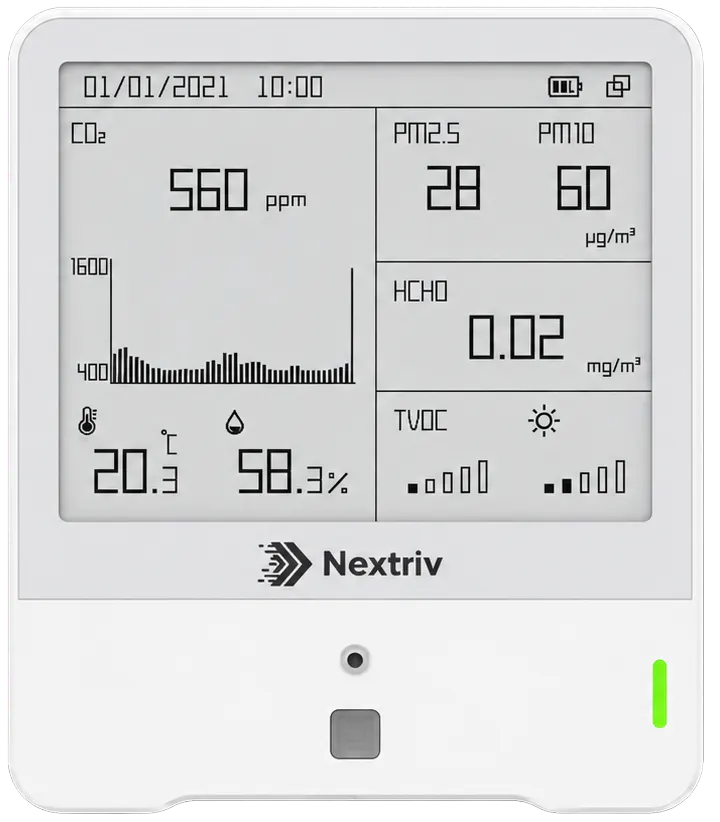
Nextriv Sense IAQ Pro
A 9-in-1 station: PM2.5/PM10, CO₂, TVOC, temperature, humidity, pressure — trend supervision in cleanrooms and at workstations.
View product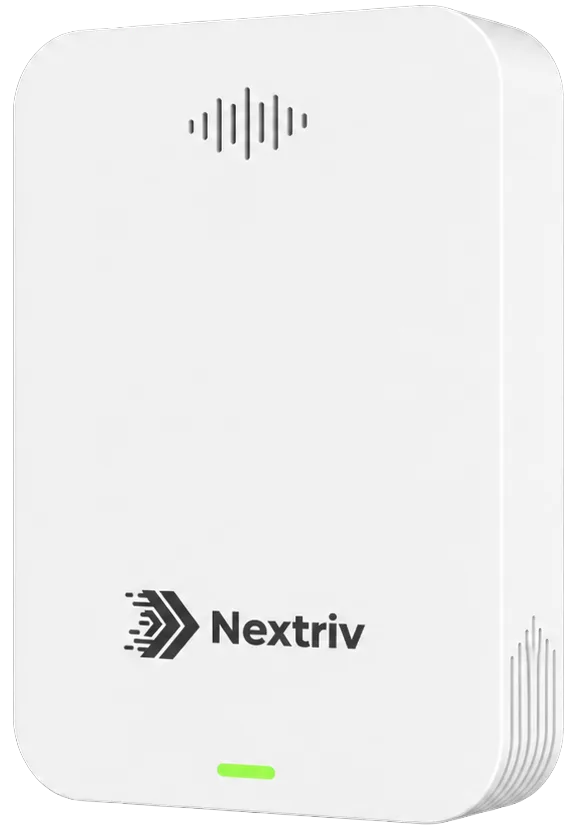
Nextriv Sense Gas
NH₃ + H₂S + temperature and humidity in one device, with an on-site buzzer and LED signalling — utility area hygiene under control.
View product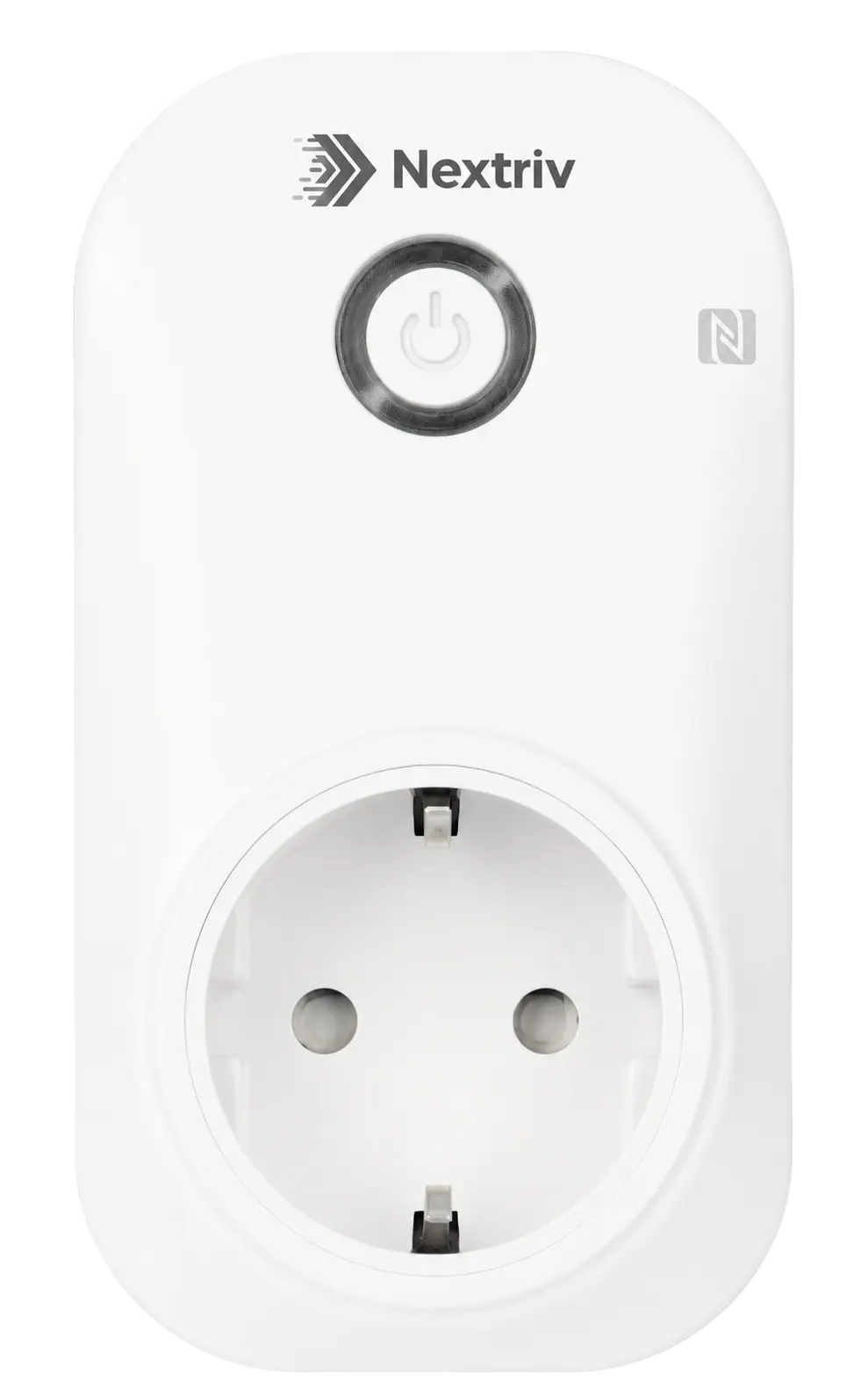
Nextriv Control Plug
Energy measurement and remote control of individual devices (up to 16 A) — data for optimisation and automatic after-hours shutdowns.
View product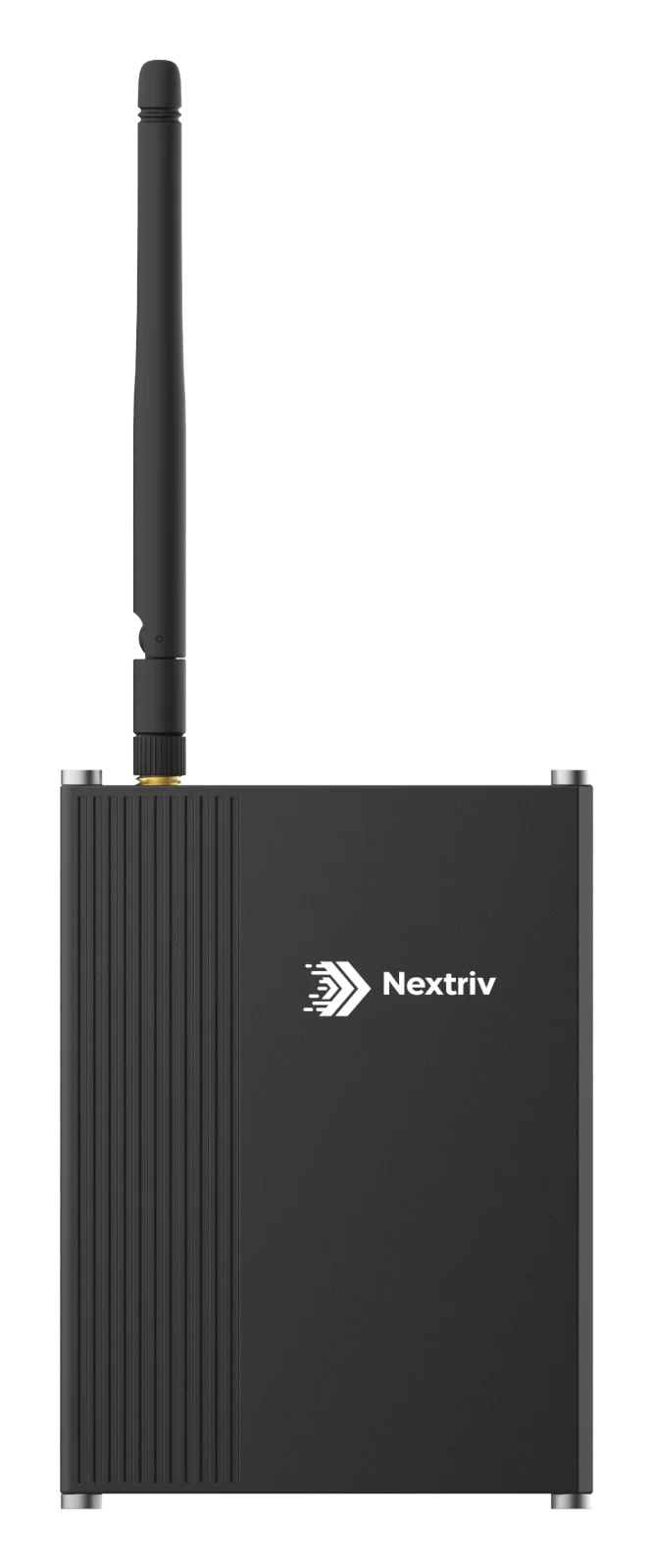
Nextriv Control Industrial
An industrial controller with 4–20 mA / 0–10 V analogue inputs, digital inputs, relay outputs and a serial port — bring existing wired sensors and machine signals into the platform through a Nextriv gateway.
View product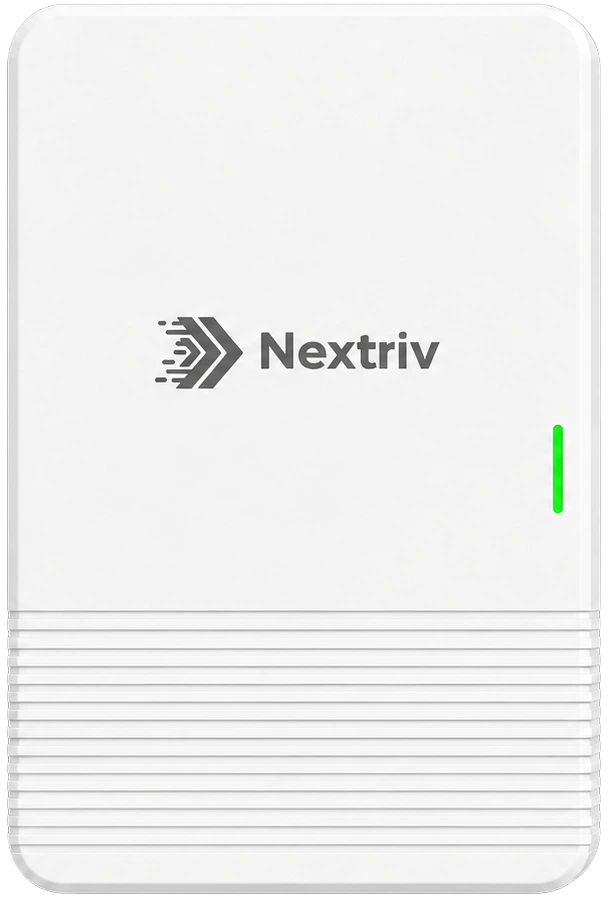
Nextriv Sense Industrial
Temperature and humidity in a sealed IP67 enclosure — for machine-side stations, paint shops and rooms with aggressive vapours or dust.
View product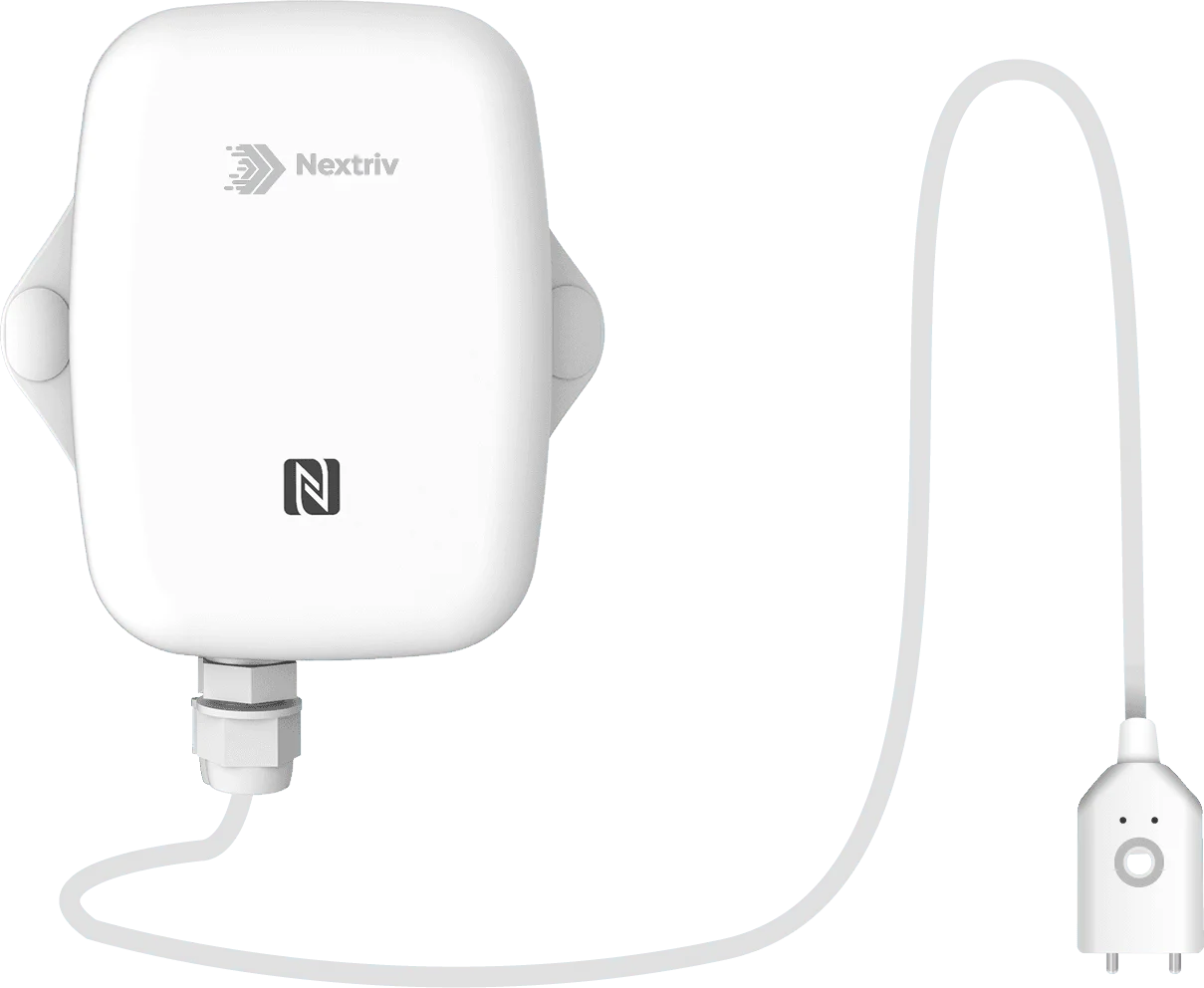
Nextriv Sense Leak Spot
Spot leak detection under hydraulic systems and next to liquid-cooled machines — reacts at ~5 mm of water before a line failure can develop.
View productProcess bath temperature drop on the night shift
Alert rules in Nextriv have four thresholds each (warning and critical, min/max), and escalation policies make sure no alarm gets stuck in someone's inbox. Once the parameter returns to normal, the system sends a recovery notification on its own.
- If
The PT100 probe in the process tank reports 57.8 °C — below the 60 °C warning threshold required by the process specification.
- Then
The platform opens event ALM-7C31QD and notifies the line operator: web push, email and an audible alarm on the shop-floor panel.
- Escalation 1
No acknowledgement within 10 minutes — an SMS goes to the maintenance technician, per the “if not acknowledged” escalation policy.
- Escalation 2
Temperature falls to 55 °C (critical threshold) — severity rises to critical, the shift manager is notified, and a webhook opens a work order in the CMMS.
Compliance and standards
ISO 9001
A quality management system requires supervision of the process environment. Continuous measurements, alerts and reports provide objective records for audits.
ISO 14644
Cleanroom particulate classification is done by accredited measurements — Nextriv supports ongoing PM trend supervision in between and alarms on deviations.
Occupational exposure limits
NH₃ and H₂S measurement supports control of harmful agents at workstations. This is hygiene monitoring — it does not replace certified explosive gas detection systems.
ISO 50001
Per-machine energy data from Control Plug is ready-made material for energy reviews and demonstrating efficiency improvements.
HACCP / GMP
Producing food or GMP-regulated goods? The same sensors document conditions in raw material storage and production zones — with SHA-256-signed reports.
Frequently asked questions
Will the sensors survive shop-floor conditions?
Probe family transmitters have IP67 housings resistant to UV and vibration and operate in −30…70 °C, while the PT100 probe itself measures from −200 to +800 °C (depending on variant). Choose IP67 versions for wet and dusty zones; IAQ devices (IP30) are meant for indoor rooms.
How far from the gateway can sensors be?
Long-range radio provides a range of up to ~2 km in built-up areas and up to 15 km in open terrain — in practice one gateway covers a typical hall together with its warehouses. During temporary connectivity loss, sensors buffer measurements locally and resend them once the network returns.
Will Sense Gas replace a gas detection system?
No — it is a hygiene and comfort monitoring sensor (NH₃ 0–10 ppm, H₂S 0–5 ppm) with a local alarm and platform notifications. Explosion safety and industrial gas detection systems are designed separately, in line with regulations.
Can I measure the energy cost of a single machine?
Yes. Control Plug reports voltage, current, power and cumulative kWh of socket-powered devices (up to 16 A), and the dashboard shows usage and its trend over time. Large three-phase loads require separate metering solutions.
What does deployment look like and how long does it take?
You plug the gateway into power and the internet, and mount sensors with tape, screws or cable ties. Auto-discovery detects devices in 30–180 seconds, and the model is recognised automatically from the first data packets. A typical pilot wraps up in a single day.
Start monitoring today
FREE plan to start: 10 sensors, 1 gateway, alerts and PDF reports — no credit card required.