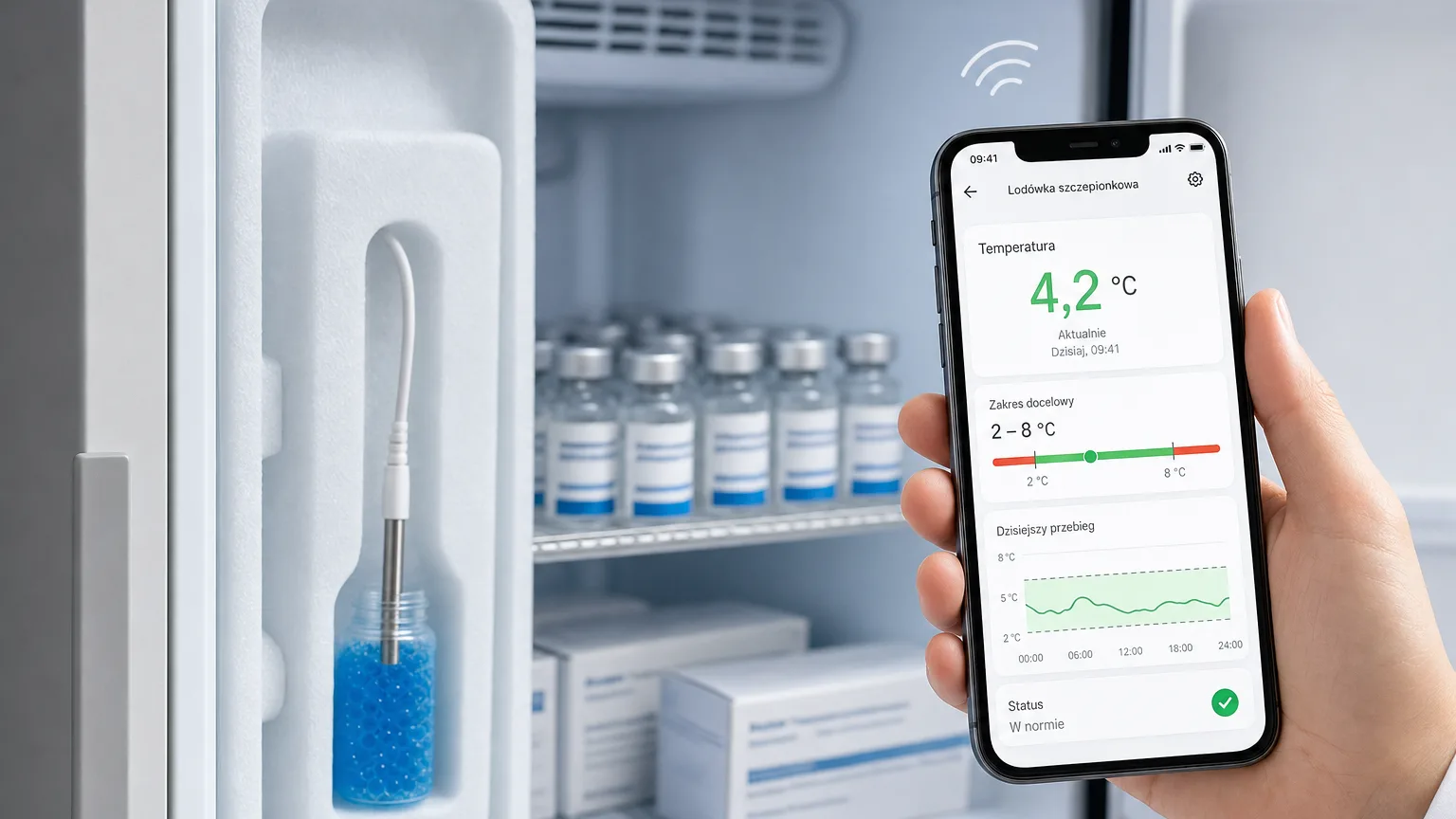
Monitoring pharmacy fridges at 2–8 °C — a guide
Pharmacy fridge monitoring at 2–8 °C step by step: where to place the probe, how to set four alarm thresholds and what documentation inspectors expect.
Zespół Nextriv4 min read

Monitoring a pharmacy fridge is one of those tasks that look trivial — a thermometer, a notebook, two entries a day — until the fridge breaks down on a Saturday at 10 p.m. Thermolabile medicines and vaccines must be stored at 2–8 °C at all times, not just at reading hours. This guide shows how to build monitoring that genuinely protects the stock: from where to mount the probe, through setting the alarm thresholds, to the documentation an inspection will demand.
Why 2–8 °C, and what happens outside the range
The 2–8 °C range is the standard storage condition for most refrigerated medicines, defined by the manufacturers. Leaving the band cuts both ways:
- Above 8 °C — accelerated degradation of the active substance; the longer and the warmer, the greater the loss of potency.
- Below 2 °C — risk of freezing, which for many preparations (vaccines among them) is irreversible, even if the temperature quickly returns to normal.
The problem is that both scenarios usually play out with no witnesses: at night, at the weekend, over holidays. Manual readings will not catch them — only continuous recording with automatic alarms will.
Pharmacy fridge monitoring in practice: probe, buffer, transmitter
Good measurement starts with physics, not software. Three installation rules:
Transmitter outside, probe inside
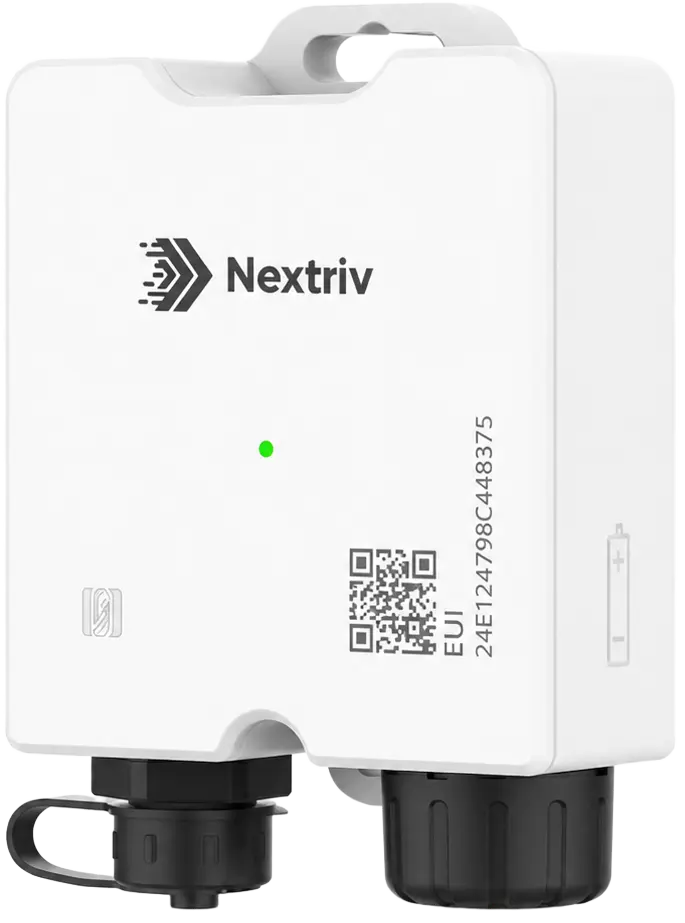
A metal cabinet and low temperature attenuate the radio signal and shorten battery life. That is why a logger like Nextriv Probe Solo has a probe on a 1.5 m cable: only the stainless steel probe goes into the chamber, while the transmitter stays outside, within network range. Connectivity stays reliable and the battery lasts for years.
Probe in a thermal buffer, not in the air
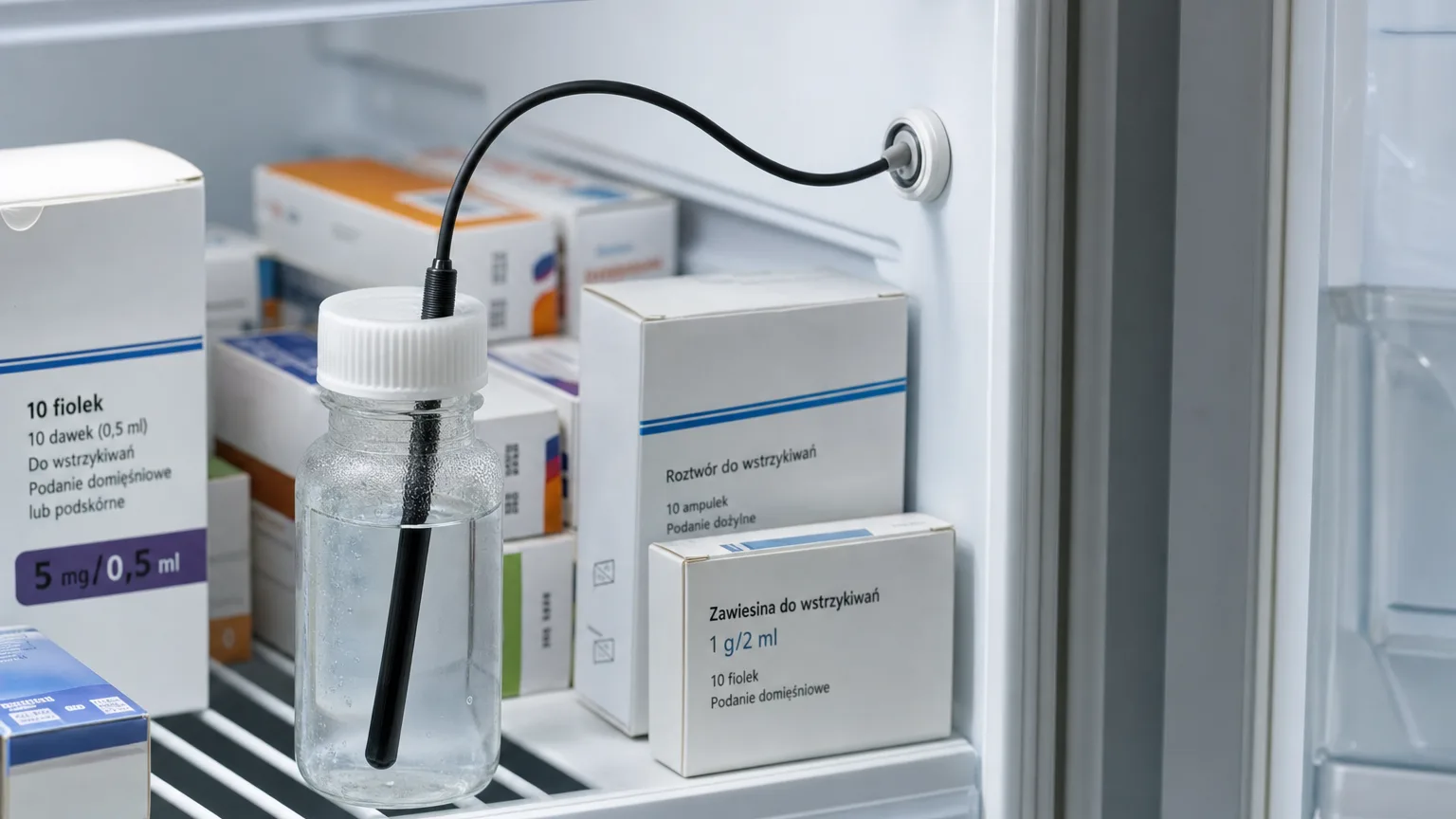
The air temperature in a fridge jumps with every door opening — and returns to normal within a minute. A probe immersed in a thermal buffer (e.g. a bottle filled with glass beads) reproduces the thermal inertia of the product, not the air. The effect: no more false alarms every time someone reaches for a medicine, and a real alarm when the stock is genuinely at risk.
Measure where it is worst
The warmest spot in a fridge is usually around the door and the top shelf; the coldest — the back wall by the evaporator (freezing is the risk there). If the fridge is larger or heavily loaded, a second measurement point is worth considering.
Four thresholds instead of one alarm
A single "above 8 °C" threshold reports the problem when it is already too late. In Nextriv every metric has four thresholds — two warning and two critical. A proven configuration for a pharmacy fridge:
| Threshold | Value | What it means |
|---|---|---|
| Critical low | 2 °C | freezing risk — act immediately |
| Warning low | 2.5 °C | temperature approaching the lower limit |
| Warning high | 7.5 °C | the fridge is losing its cooling — check before it gets critical |
| Critical high | 8 °C | range exceeded — start the deviation procedure |
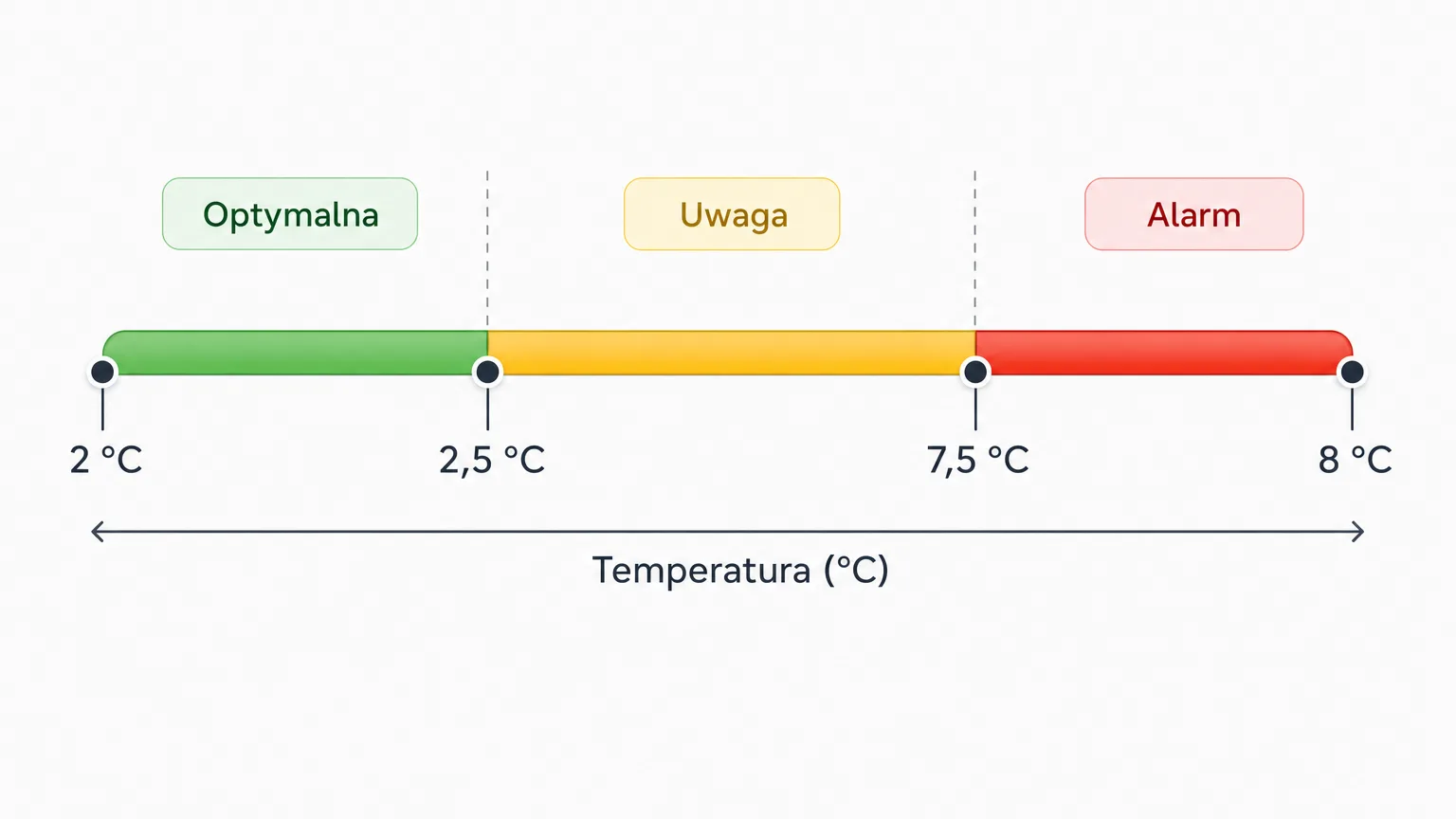
A warning at 7.5 °C buys time to react before the medicines are genuinely at risk. The system deduplicates events (one active event per sensor and metric), assigns them readable ALM codes and walks them through statuses: active → acknowledged → resolved. When the temperature returns to range, an all-clear notification arrives.
Night, weekend, holiday — escalation instead of chance
An alarm nobody picked up is no different from no alarm at all. That is why, alongside thresholds, the key element is the escalation policy — an automatic notification path that does not let go:
- The temperature exceeds 8 °C — the platform opens a critical event and immediately sends an email and a web push to the pharmacist on duty.
- No acknowledgement within 10 minutes — an SMS to the pharmacy manager (the "if not acknowledged" condition).
- After a further 15 minutes the notification goes to the "Quality" recipient group and to the external refrigeration service.
- The whole event — with times, comments and acknowledgements — stays in the history for the audit.
Six notification channels are available: email, SMS, web push, Discord, Microsoft Teams and an audible in-app alarm. Quiet hours and rate limits make sure the team responds to the signal instead of learning to ignore the noise.
The documentation an inspection will demand
An inspection at a pharmacy or healthcare facility expects evidence, not assurances. From a continuous monitoring system you can pull it in minutes:
- Measurement history — up to 1,825 days (5 years) of raw data, with no aggregation and no loss of detail; a full year comes free.
- PDF reports — a summary and charts, plus statistics, percentiles and a threshold compliance section; the report can be signed with a SHA-256 checksum, a QR code and a verification address. A schedule can send the report automatically every week.
- XLSX/CSV exports — for when the auditor wants the source data.
- Calibration register — calibration date, next due date, a certificate attached to each sensor and a reminder before expiry. The Probe Solo probe is detachable (M12 connector) — only the probe travels to the calibration laboratory, with no need to dismount the transmitter.
- A record with no gaps — the logger buffers 4,000 measurements locally and backfills them after a connectivity outage.
Implementation checklist in 7 steps
- Map the critical points: which fridges, how many measurement points, where the probe goes.
- Mount the transmitter outside and the probe in a thermal buffer inside the chamber.
- Set the four thresholds: 2 / 2.5 / 7.5 / 8 °C.
- Configure the escalation path: who is first, who after 10 minutes, who after a further 15.
- Enable all-clear notifications — they complete the picture of the event.
- Schedule a weekly PDF report for the manager and the quality officer.
- Enter the calibration dates into the register and let the reminders do their job.
Monitoring built this way meets the expectations placed on pharmacies and pharmaceutical wholesalers and on healthcare facilities — from a vaccination clinic to a central hospital pharmacy.
Want to see it on live data? Book a short demo — we will show you an alarm, an escalation and a report on a real sensor. And if you would rather just get started: the FREE plan includes 10 sensors and a year of history — details on the pricing page.