
Long-range radio or WiFi CO₂ sensor — which to choose
Long-range radio or WiFi CO2 sensor? A factual comparison: in-building range, years of battery life instead of days, infrastructure and upkeep costs.
Zespół Nextriv4 min read

A long-range radio CO₂ sensor and a WiFi sensor measure the same thing — they differ in everything that happens after the measurement. The choice of radio decides whether you can hang the device anywhere in the building or only where the network and a power socket reach; whether you replace batteries once every few years or charge them like a phone; and whether deploying 50 sensors takes an afternoon or a series of meetings with the IT department. Below is a factual comparison of the two technologies — without claiming one is "better", because each has its place.
What actually separates the two technologies
WiFi (2.4/5 GHz) was designed to move large amounts of data quickly over short distances: streaming, laptops, video calls. High throughput has a price — heavy power draw and the limited range of a single access point.
Long-range radio works the other way round: it transmits in the sub-GHz band (868 MHz in Europe) and sends packets of a few dozen bytes. For a CO₂ sensor that is exactly what's needed — a concentration, temperature and humidity reading every 10 minutes is a handful of bytes, not megabytes. In return, sub-GHz radio penetrates walls and floor slabs far better, and the transmitter only wakes up for the moment of transmission.
So this is not a "newer versus older" choice, but matching the tool to the job: WiFi for data, long-range radio for telemetry.
Range: one gateway versus a map of access points
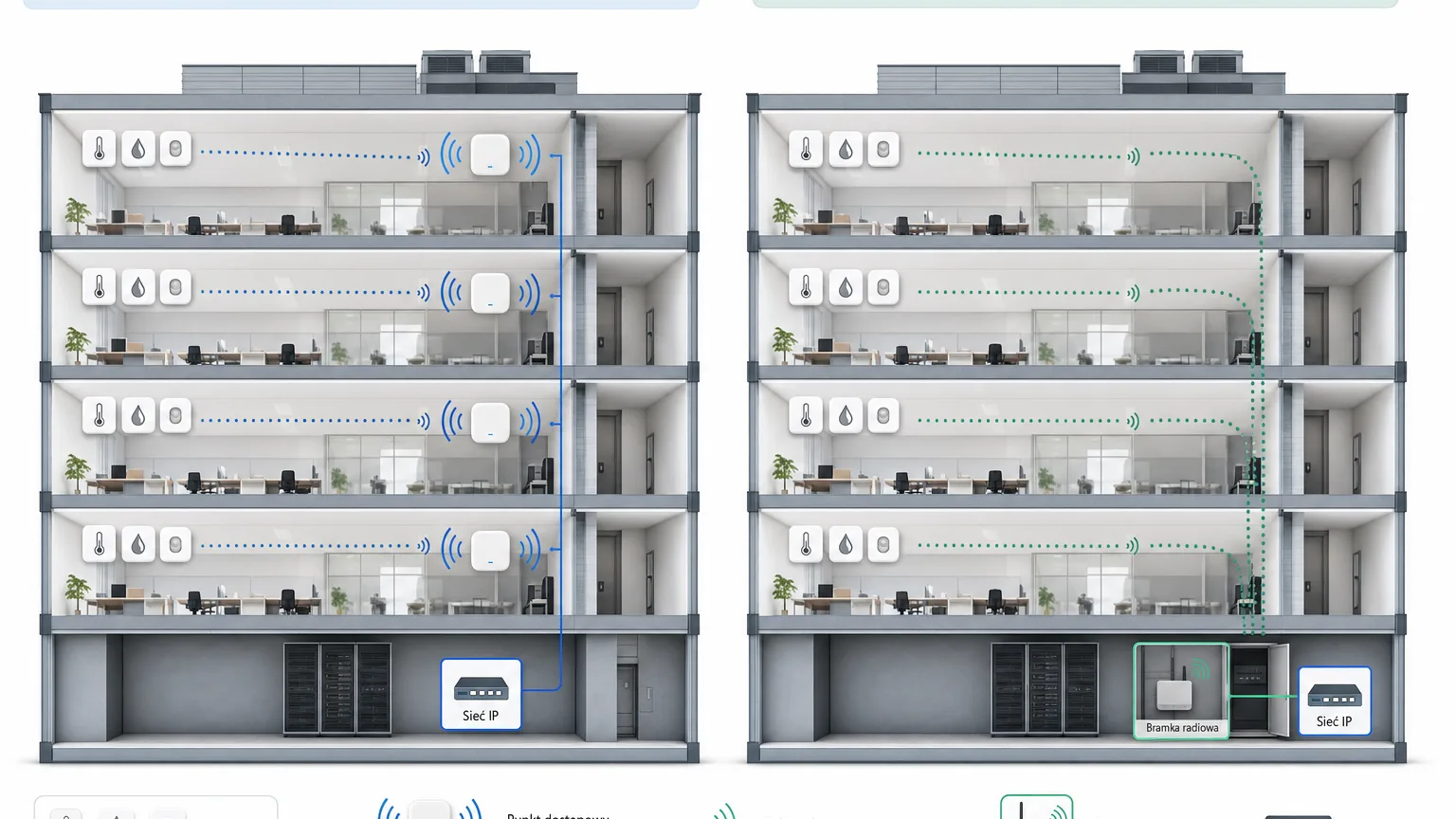
A WiFi sensor works where the corporate network reaches — in practice a dozen to a few dozen metres from an access point, and every reinforced-concrete wall, lift shaft or high-bay racking can cut that range short. Basements, stairwells, plant rooms and warehouses are the typical blind spots.
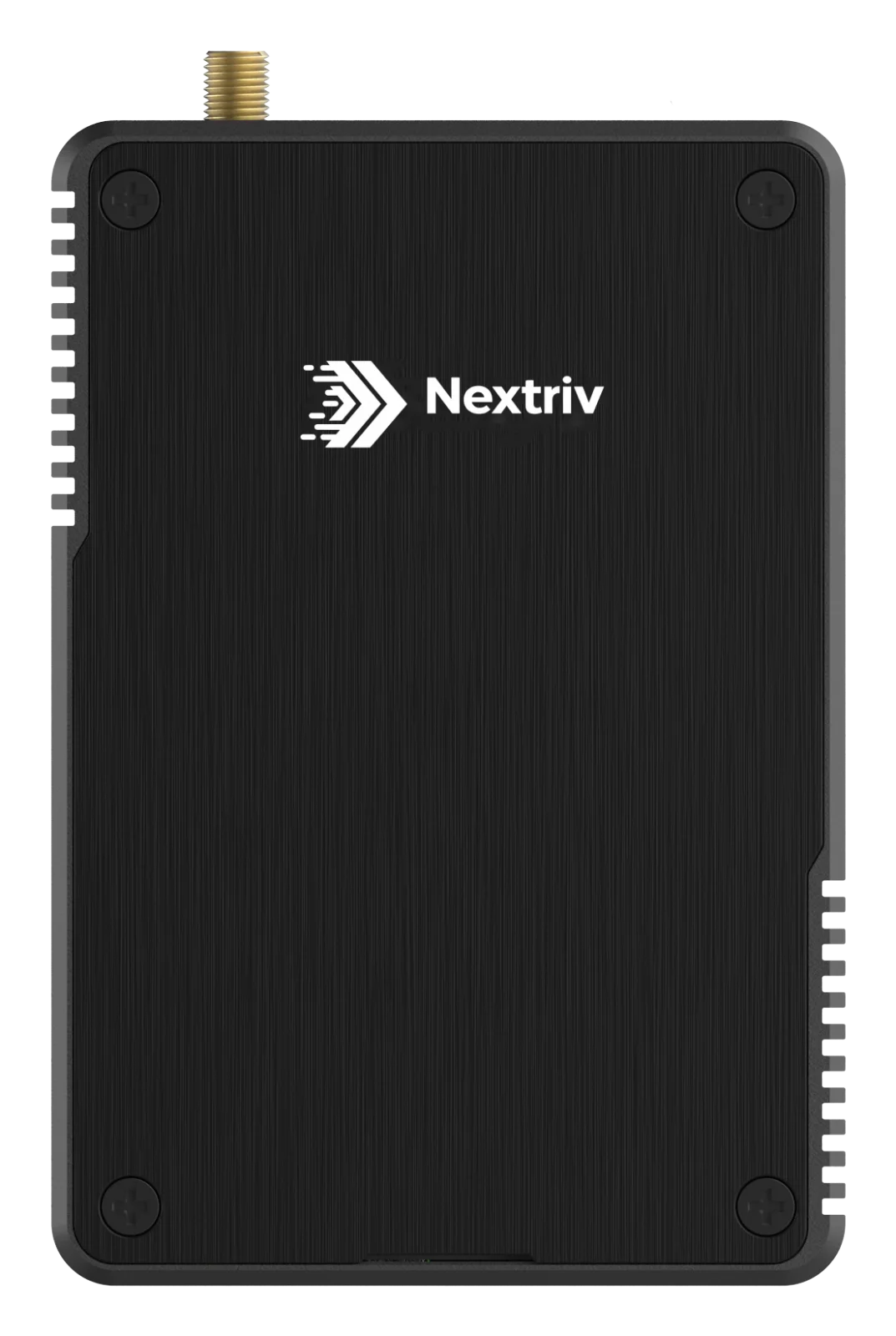
Long-range radio carries about 2 km in urban surroundings and up to about 15 km in open terrain. Inside a building this usually means one gateway for the whole site — basement and attic included. A gateway in the class of Nextriv Hub Compact handles around 2000 devices, so an office building, a school or a hotel fits into a single aggregation point mounted in a comms cabinet.
Battery: years versus days
This is where the difference is most brutal. A WiFi radio draws so much power that a battery-powered WiFi sensor reporting every few minutes lives from a few days to a few weeks — in practice most WiFi sensors are designed for mains or USB power from the outset. That in turn restricts mounting to spots near sockets and adds cabling where there is none.
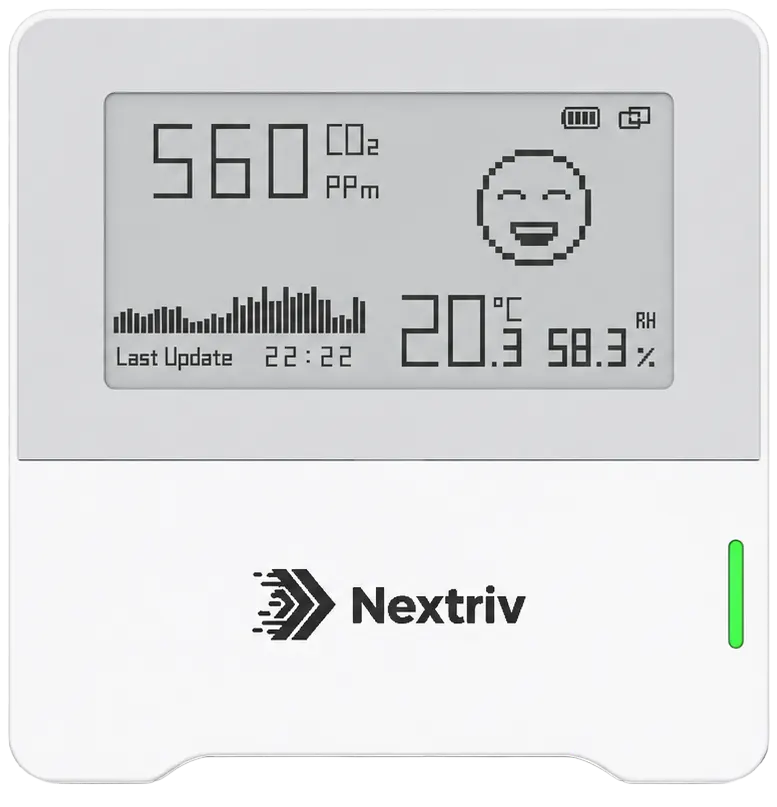
A radio sensor wakes up, sends its packet and goes back to sleep. Nextriv Sense CO₂ runs on two replaceable lithium batteries for roughly 3–5 years at a 10-minute measurement interval — with an e-ink display likewise designed around power saving. With 50 sensors the difference looks like this: a battery swap once every few years versus 50 power adapters, 50 sockets and a standing charger patrol.
Infrastructure and IT: who maintains it
A WiFi sensor formally requires no "new infrastructure" — it uses the existing network. In practice, though, that means: IT sign-off, a separate SSID or VLAN for IoT devices, dozens of devices plugged into the corporate network, and after every WiFi password rotation — the risk that the sensor fleet goes silent and every device needs reconfiguring from scratch. In sites with no network of their own (a warehouse, a heritage building, a production hall) add the cost of building one.
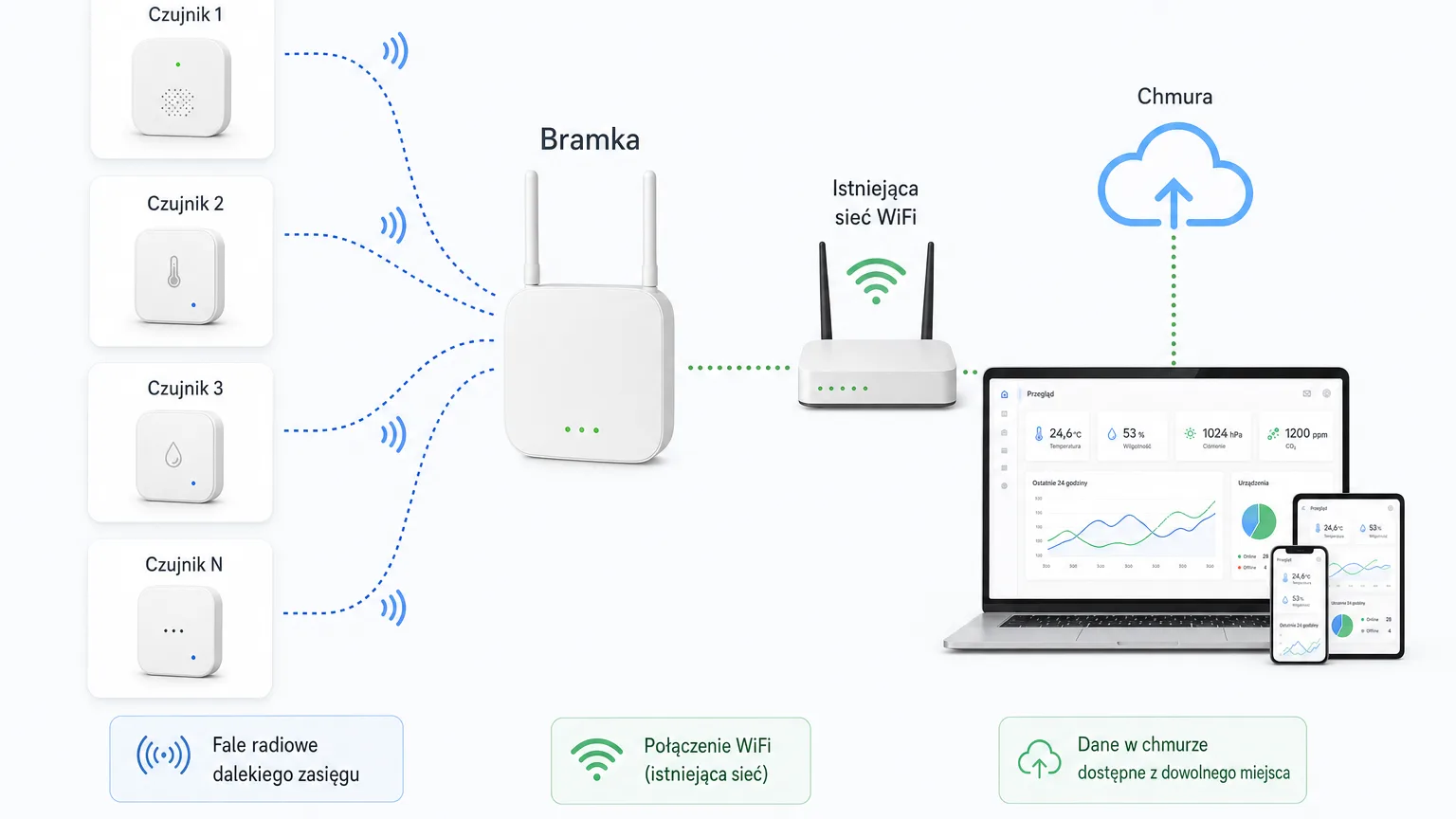
Long-range radio requires one decision: hanging a gateway. The sensors talk to it over their own radio, entirely outside the corporate network — IT usually accepts this without a fight, because a single device (the gateway) plugs into the LAN rather than fifty. In the Nextriv system a sensor joins the network automatically within 30–180 seconds of activation, and the platform recognises the device model from its first data — the whole path from measurement to alert is described on the how it works page. If cloud connectivity drops for a while, the sensors buffer measurements locally and resend them once the link is back, and the gateway can have a backup link (e.g. 4G) with automatic failover.
The comparison in a nutshell
| Criterion | Long-range radio CO₂ sensor | WiFi CO₂ sensor |
|---|---|---|
| Range | approx. 2 km in town, up to 15 km in open terrain; good wall penetration | access point range; trouble with basements and thick walls |
| Power | batteries, approx. 3–5 years of operation | usually mains/USB; days to weeks on battery |
| Infrastructure | 1 gateway per site (approx. 2000 devices) | WiFi coverage at every mounting point |
| IT involvement | the gateway as a single LAN device | every sensor on the corporate network, SSID/VLAN, password rotations |
| Throughput | small telemetry packets — enough for CO₂ | high, but unnecessary for a sensor |
| Scaling to 50+ sensors | no infrastructure changes | growing network and maintenance load |
When WiFi still holds its own
Honestly: there are scenarios where a WiFi sensor is a sensible choice. A single device in a small office with a good network and a socket within reach doesn't justify standing up a gateway. The same goes where the sensor needs permanent power anyway and the network is stable and managed. The dividing line runs along scale and dispersion: the more measurement points, the harder the radio environment and the fewer the sockets, the faster the maths tips towards long-range radio.
There is also a third way worth knowing about: a radio gateway can use WiFi as its internet backhaul. The sensors talk to the gateway over long-range radio — with all the range and battery benefits — and the gateway ships the collected data to the cloud over the existing network. The two technologies then cooperate instead of competing.
What to choose in practice
For building-scale CO₂ monitoring — meeting rooms, classrooms, open-plan offices — long-range radio is the standard today for a simple reason: sensors go where the people are, not where the coverage and sockets are. One gateway, multi-year batteries and automatic device onboarding mean a 20-sensor deployment takes hours, not weeks. Which alarm thresholds to set on the platform side is covered in our article on CO₂ standards in meeting rooms.
Want to run the numbers for your own site? Check the pricing — the FREE plan covers 10 sensors and a gateway, so you can start a pilot with no platform fees — or book a demo where we'll show the whole path from sensor reading to a live alert.


