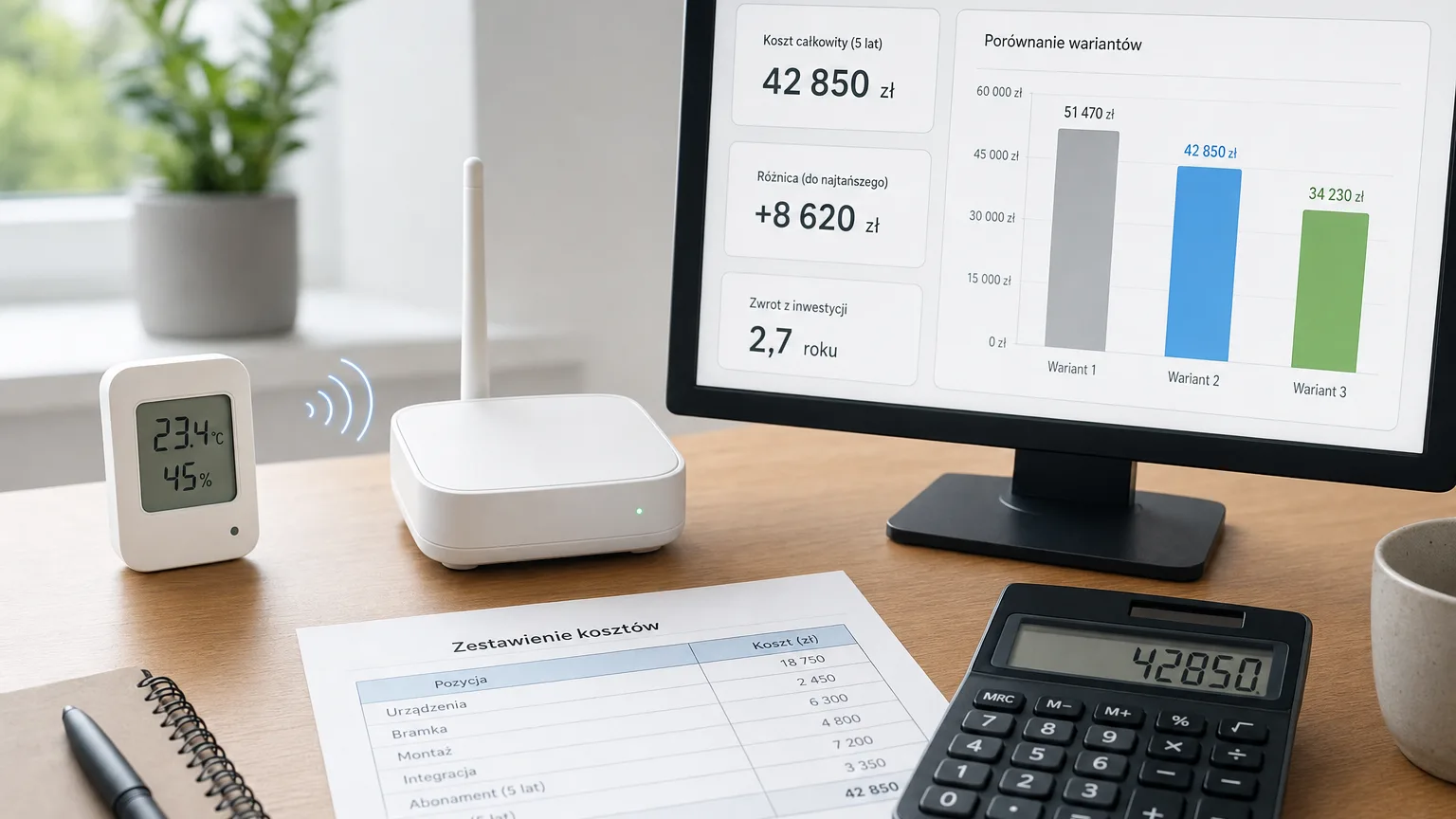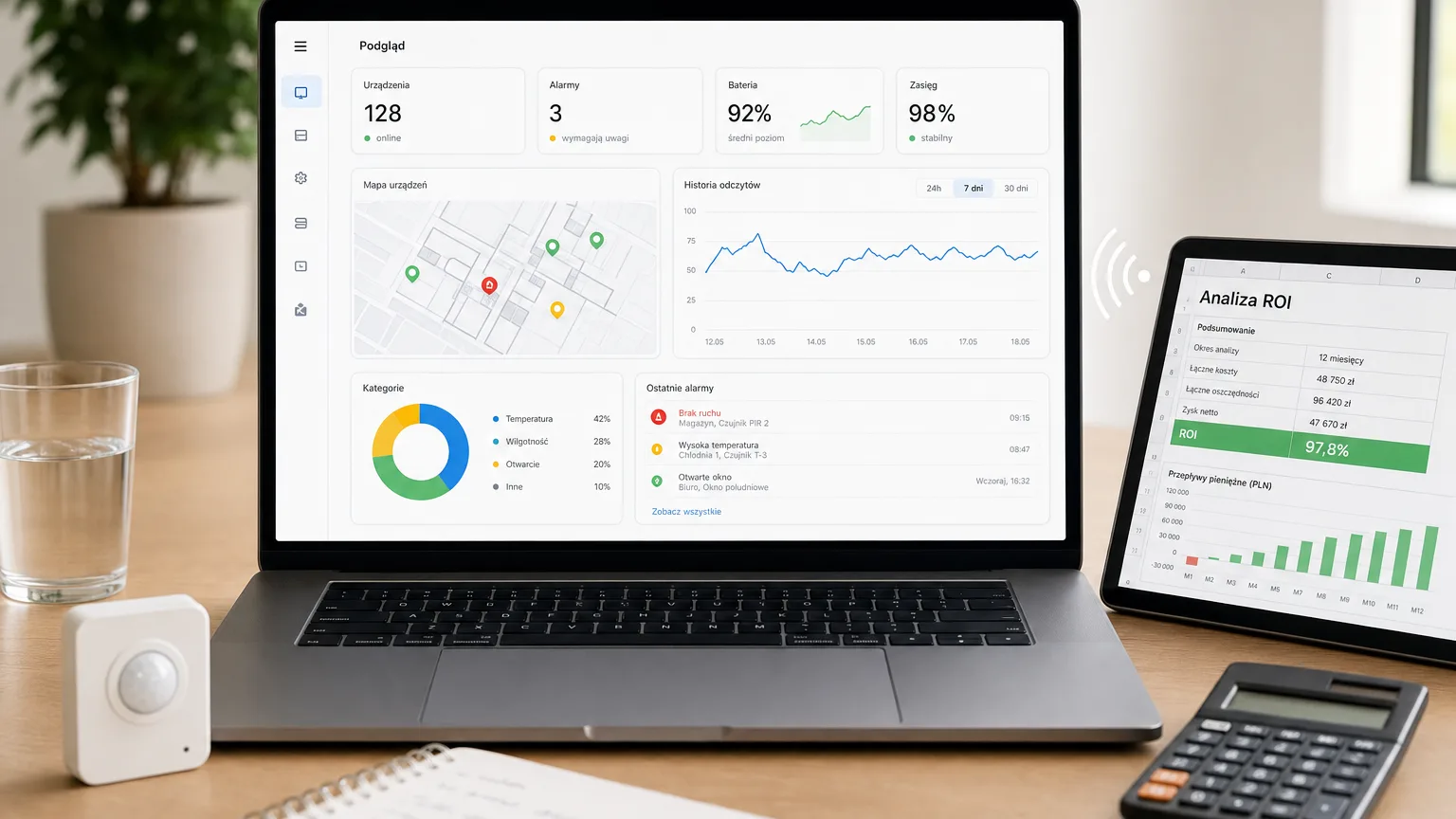
Self-hosted or SaaS monitoring — an honest comparison of costs and risks
Self-hosted or SaaS monitoring? We tally the full cost of both models — servers, admin hours, subscription — and name the risks without scaremongering.
Zespół Nextriv5 min read
In this article
- Two models, the same hardware layer
- Self-hosted or SaaS monitoring: the full bill, not the list price
- The risks of self-hosted — named, not inflated
- The risks of SaaS — also named
- When self-hosted genuinely makes sense
- When SaaS wins
- The middle path: SaaS as a data source for your systems
- Arithmetic instead of religion
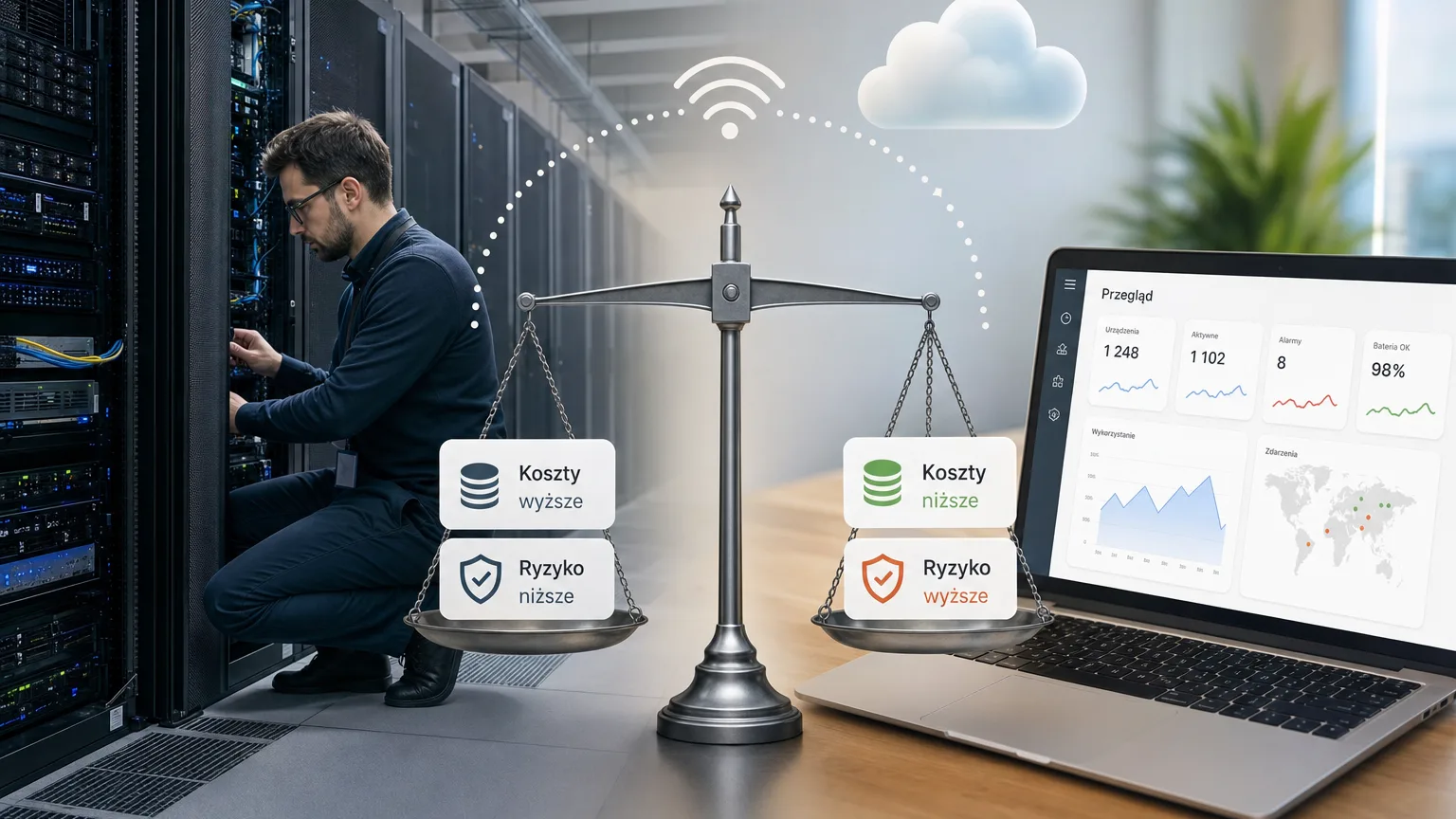
Self-hosted or SaaS monitoring — in IT departments this question can sound almost religious. Some cannot imagine their data outside their own server room; others refuse to maintain a single extra server. Both sides have good arguments and both like to gloss over the weak points of their own model. This piece attempts something different: to run the full bill and name the risks plainly — in both directions, without scaremongering. Because the right answer is not universal; it depends on what team and what requirements you have on your side.
Two models, the same hardware layer
Let us start by tidying up the terms. In environmental monitoring, the hardware layer looks identical in both models: sensors report over long-range radio to a gateway, and the gateway passes the data on. The difference is where the software runs: self-hosted means the application and database on your server, maintained by your team; SaaS — a platform at the vendor's, paid by subscription. Nextriv operates as SaaS, but the question itself is worth settling at the level of principles, not affection for any particular product.
Self-hosted or SaaS monitoring: the full bill, not the list price
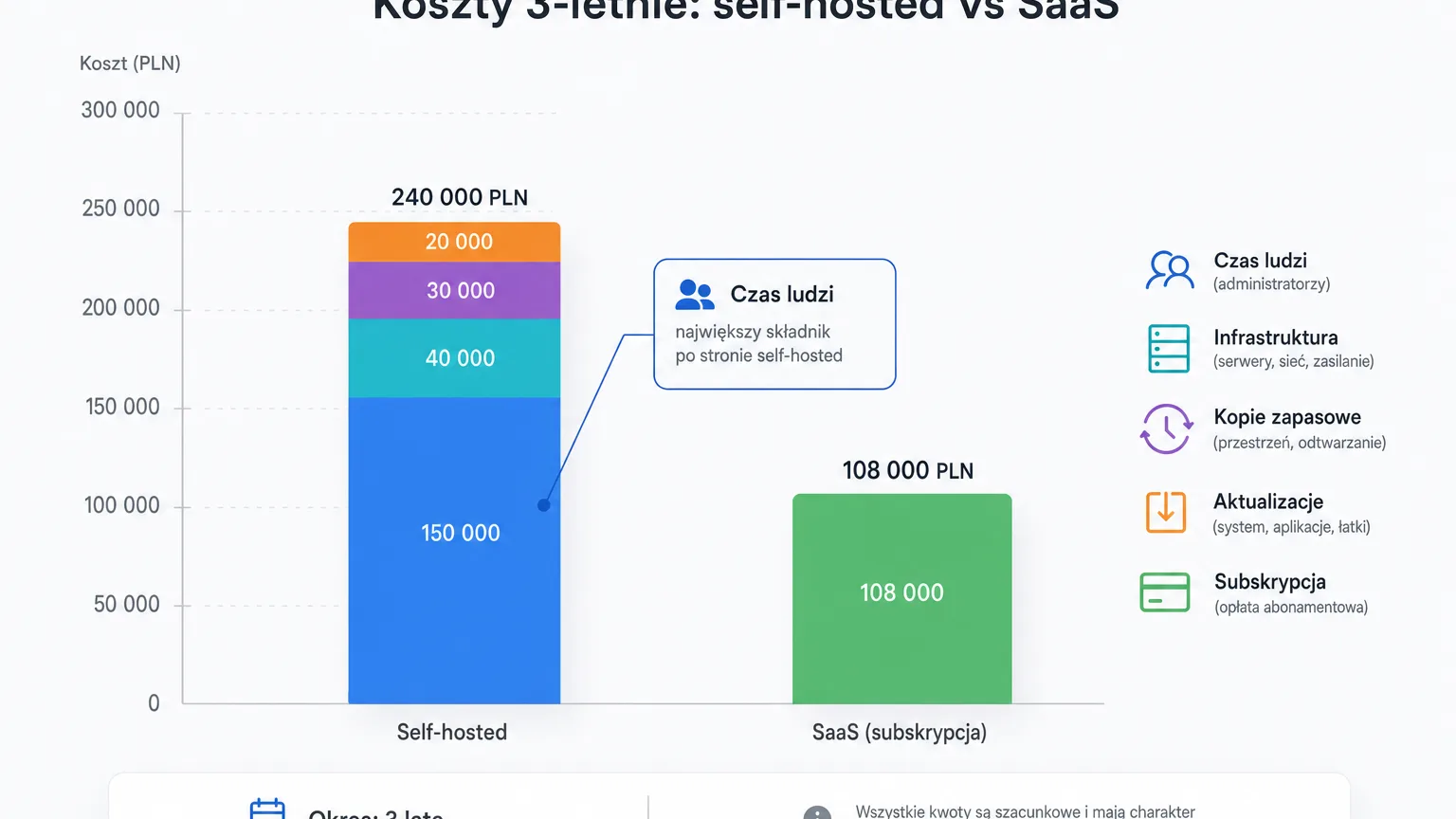
The most common mistake in this debate is comparing the subscription price with the price of a server. The self-hosted bill has more line items:
- Infrastructure: a server or virtual machine, a database with room for years of measurements, backups in a second location.
- Maintenance: system and application updates, security patches, certificates, disaster recovery — not once, but every month, for the entire life of the system.
- People's time: the most expensive and most often omitted item, because "we have an administrator anyway". Hours spent on the monitoring system are hours taken from other projects — in the budget they should carry a price.
The SaaS bill is shorter: the subscription. With Nextriv, the free plan costs 0 PLN and includes 10 sensors, a gateway, 2 users and a full year of measurement history; the paid plan is 99 PLN net per 30 days or 990 PLN net per year (excl. VAT) — with no limit on sensors, users or locations. This bill is boring and predictable to the last złoty — and that is its chief virtue. Always compare three-year totals; how to translate the system's cost into avoided losses is something we calculated separately in our article on the ROI of environmental monitoring.
The risks of self-hosted — named, not inflated
Who monitors the monitoring? An alarm system that went down on Friday evening will not send an alarm about its own failure. Detecting the problem requires a second layer of oversight — and someone who watches it at the weekend too.
Security updates. An application with access to company data, exposed to the internet and updated "when there's a moment", is a risk that grows with every month of backlog.
Knowledge in one head. An installation configured by a single administrator can become untouchable after they leave. Documentation rarely gets written, because there is never time for it.
And honestly in the other direction: for a team with a working operational practice — tested backups, on-call rotas, infrastructure oversight — none of these risks is a bogeyman. They are known costs, priced and managed. Such a team usually also monitors the conditions in its own server room and knows exactly what it costs to keep a service running around the clock.
The risks of SaaS — also named
Vendor dependency. What happens when the vendor raises prices or disappears from the market? The mitigation is mundane: before signing, check whether you can export the complete dataset. In Nextriv the measurement history comes out as XLSX and CSV, reports as PDF, and full data export is a feature of the system, not a service on request — the data is there for the taking at any moment.
Where the data lives. A legitimate question, legally and operationally. The answer should be concrete: infrastructure in the European Union, data isolation between organisations at the database level, a permanent data deletion mechanism compliant with GDPR and self-service deletion of the organisation's account.
The internet. SaaS needs a link. A connectivity outage does not have to mean a hole in the data, though: Nextriv sensors buffer measurements locally and backfill them once the network returns, and business-class gateways have a backup 4G link with automatic failover. To be fair: during a total connectivity outage, alerts will not go out — which is why in critical facilities you should treat the gateway's second link as part of the alarm system, not an option.
You pay the subscription forever. After a few years the sum of subscriptions may exceed the price of a server. Except that a server without people, backups and updates is not a system — compare total sums, not the cheapest line on the invoice.
When self-hosted genuinely makes sense
- Company policy or a regulator requires data exclusively on your own infrastructure, or the facility is deliberately cut off from the internet.
- You have an operations team with on-call rotas and procedures — the marginal cost of maintaining one more service is low for you.
- You already run your own data and analytics stack, and monitoring is meant to be part of it, not a separate system.
In these situations self-hosted is not an indulgence — it is a requirement. It just has to be written into the budget as headcount and infrastructure, not hidden in the administrator's overtime.
When SaaS wins
- You have no dedicated IT team — which is the reality for most pharmacies, food-service businesses, warehouses and manufacturing companies.
- Time matters: a gateway, sensors and an account instead of an implementation project; automatic device detection within 30–180 seconds of power-on.
- Updates, backups and platform security are supposed to be someone's job, not your evening.
- The cost is supposed to be predictable to the złoty for years ahead.
The middle path: SaaS as a data source for your systems
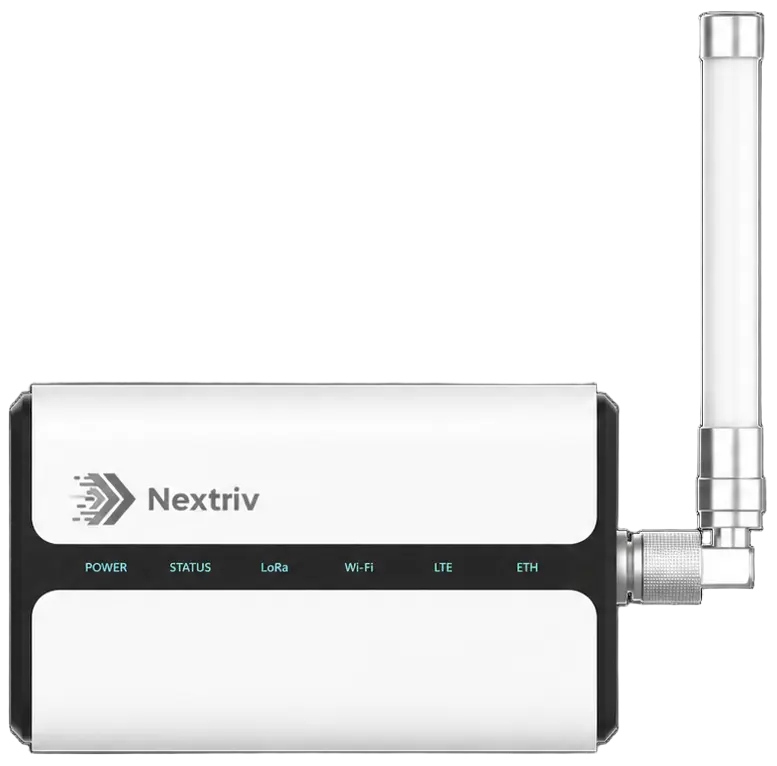
Choosing SaaS does not mean the data lives only in someone else's cloud. The Nextriv platform pushes measurements and events out to customer systems via webhooks and an API, and exports feed your own analyses and data warehouses. At facility level, the Nextriv Hub Pro gateway exposes data locally to building automation over BACnet and Modbus — the BMS uses the measurements without the cloud as an intermediary, and the IT department treats the gateway as a fully fledged network device, with VPN and a firewall. In practice this answers most of the needs that push companies towards self-hosted: the data is with you, and you maintain no servers.
Arithmetic instead of religion
Self-hosted or SaaS monitoring is not a question of worldview but of a three-year bill and of who on your side will keep the system alive. Run the full costs of both variants, name the risks and check whether the SaaS vendor lets you leave with your data — and the decision will make itself. Full prices and plan limits are on the pricing page, and if you want to see the exports, the webhooks and the gateway at work on a live system — book a short demo.