
Weather stations
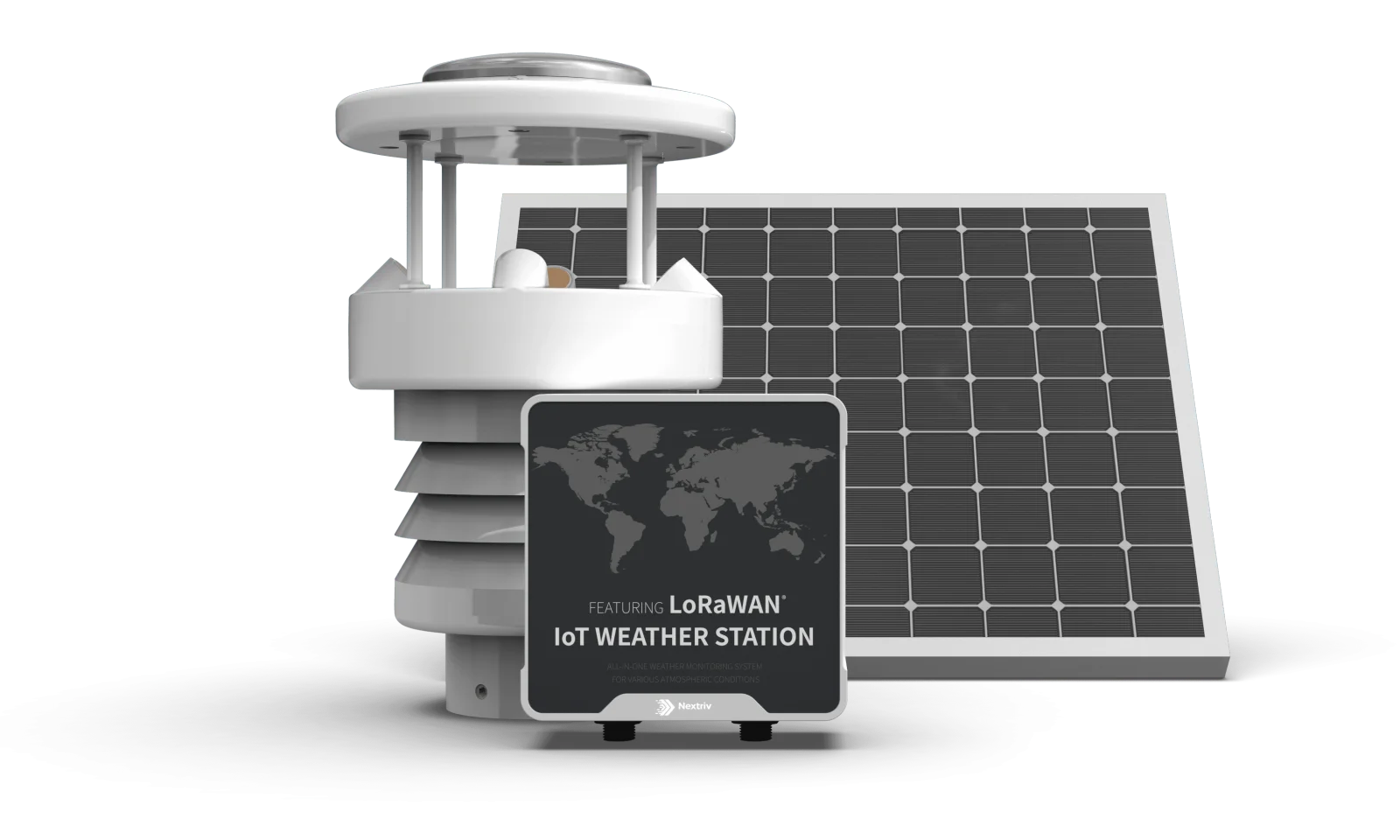
Nextriv Weather Prowireless 6-in-1 weather station
SKU: NX-WE-WEATHER6
Professional wireless 6-in-1 weather station: temperature, humidity, wind, pressure and rainfall measured by a piezoelectric sensor with 0.01 mm resolution. Aluminium housing and solar power.
€2,940net
VAT is added to the price.

Description
- Six parameters, rainfall included
- Piezoelectric rain gauge — nothing to clog
- Aluminium housing built for years of service
- Research-grade accuracy
- Solar autonomy, a week without sun
What it is for
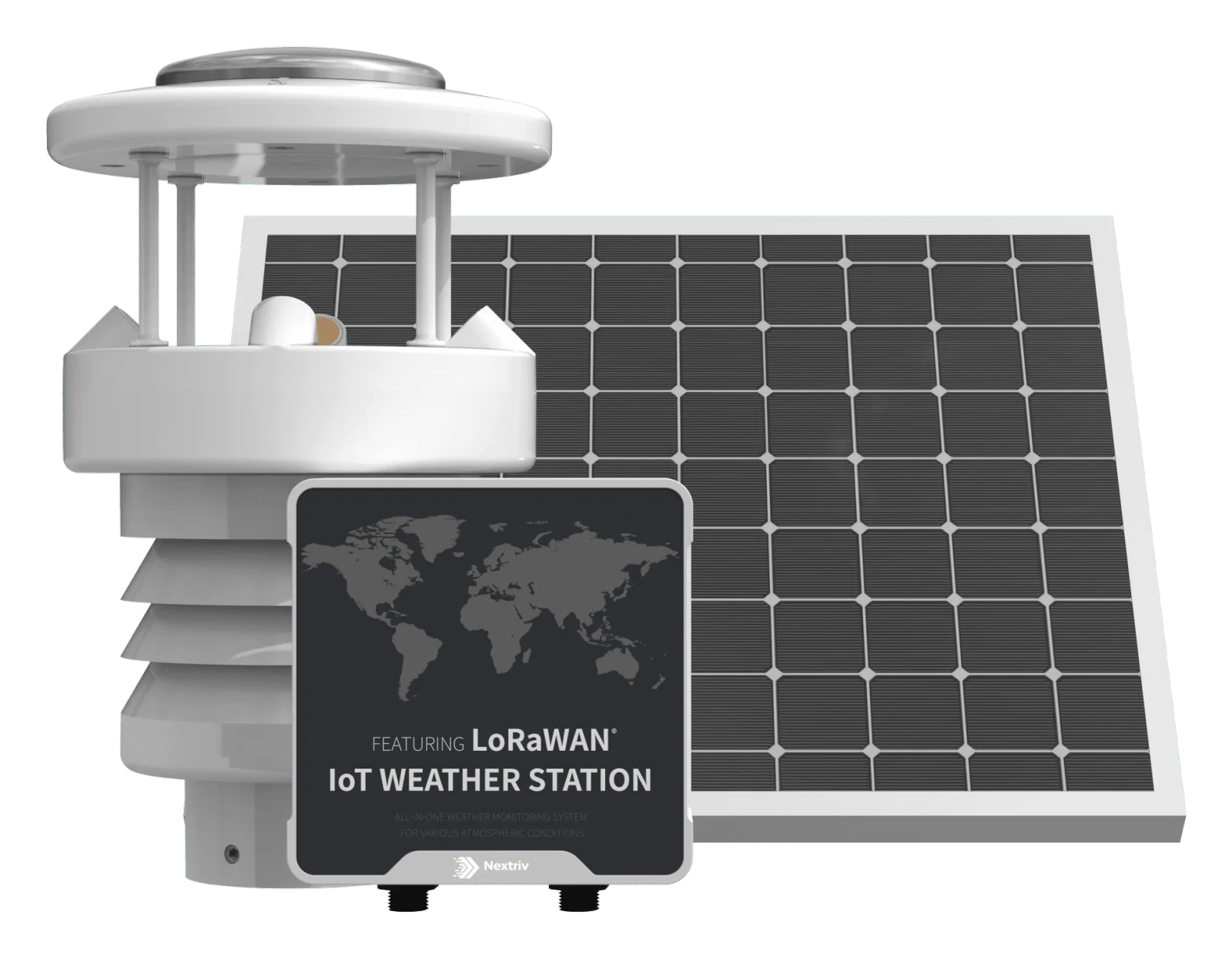
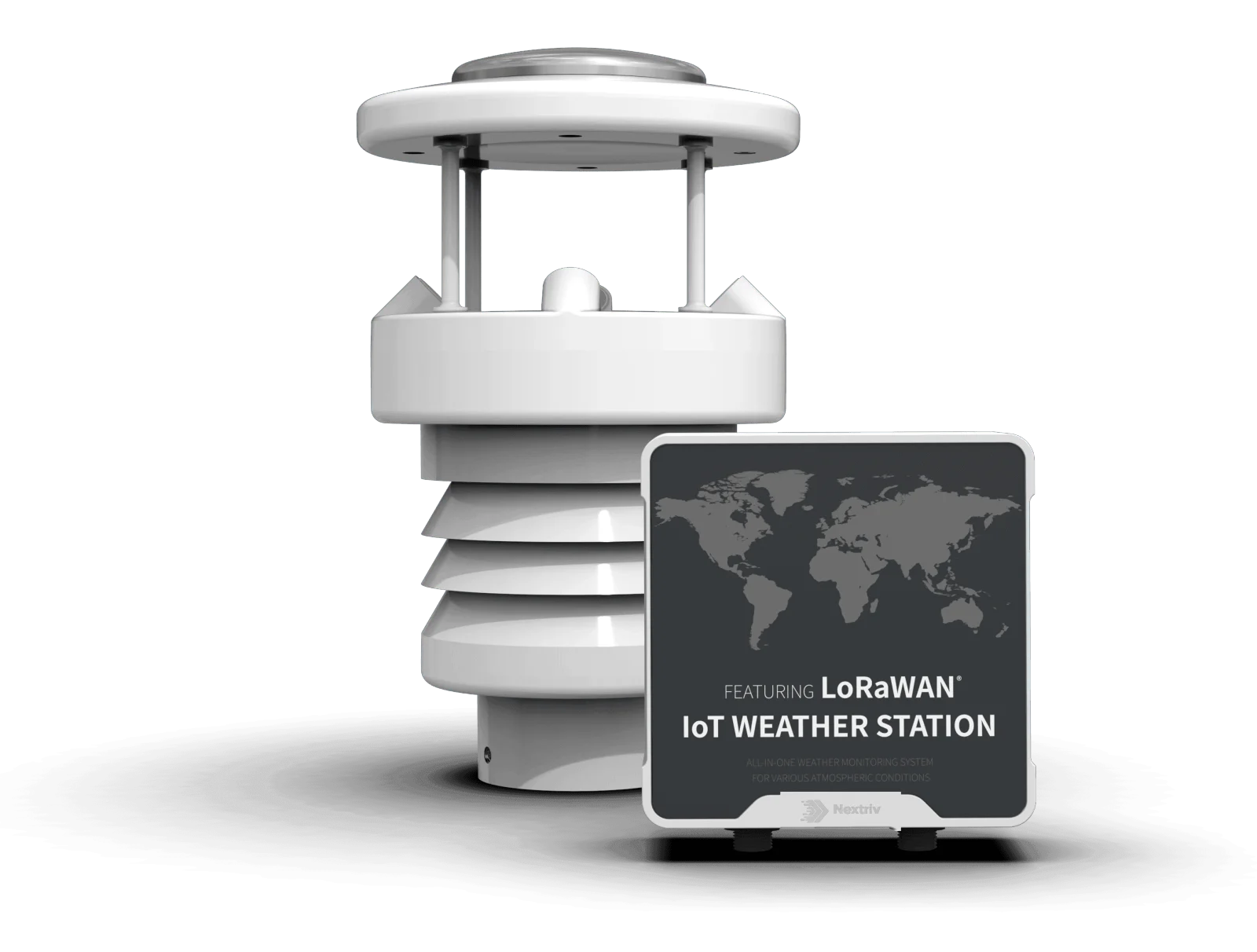
Nextriv Weather Pro is a full-scale 6-in-1 meteorological station for those to whom weather is not a curiosity but a process parameter: temperature, humidity, wind (speed and direction), pressure and — the key difference from the Compact variant — rainfall. It is not a gadget with a display, but a source of a continuous stream of research-grade data that feeds dashboards, alert rules and reports in the Nextriv platform. The difference between "we have some data" and "we have our data".
The most interesting element of the design is the piezoelectric rain gauge: rainfall is measured at 0.01 mm resolution by a vibration sensor, with no tipping bucket. Classic rain gauges clog with leaves and need regular cleaning — here there is nothing to clog. That sensitivity captures even the drizzle relevant to crop disease models, while also measuring the intensity of short, violent downpours within their first minutes — which makes the station a practical component of local flash-flood warning systems.
Durability was taken as seriously as measurement: the sensor module has an aluminium-alloy housing resistant to rust, corrosion and oxidation, and wind is measured ultrasonically, with not a single moving part. The result is a station designed for years of service in a field, on a quay or by the tracks — with maintenance reduced practically to zero, including operation down to -40°C with no heaters and no winter servicing.
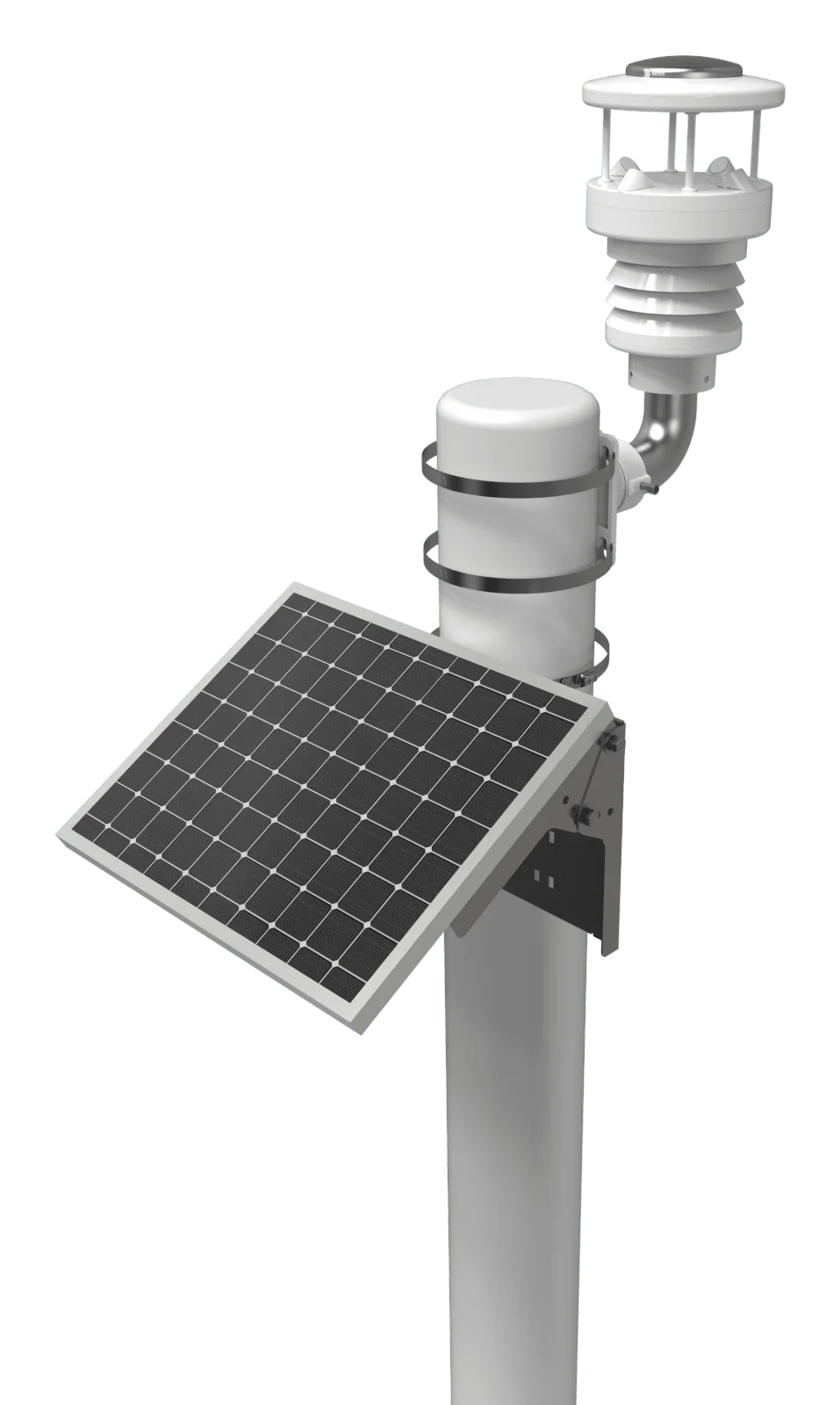
The whole unit is energy self-sufficient — a 15 W solar panel plus buffer batteries give at least a week of operation without sun — and the data travels over long-range radio. The mounting location is therefore dictated by measurement needs, not the availability of a power socket: the station can stand in the middle of a field with the gateway back at the buildings.
Usage scenarios
- Vineyard: rainfall totals and humidity are the inputs to disease models (powdery mildew, grey mould). A station between the rows lets you cut spraying down to what is genuinely needed — saving product and making certification easier to maintain.
- Municipality at risk of flash floods: a rain gauge with 0.01 mm resolution detects a violent downpour in the catchment within its first minutes. A rule in the Nextriv platform sends a warning to the emergency services before the water reaches the culverts.
- Road authority and railways: crosswind on bridges and rainfall on critical sections monitored point by point. Winter maintenance is dispatched on local data, not a phone call from a patrol.
- Large-scale farm: several stations across different fields show that the rain "here" only fell on half the acreage — irrigation and fertilisation are managed per field, not per farm.
- Research and education: a university deploys a network of reference stations across campus; research-resolution data flows straight into student theses and publications, without building its own measurement infrastructure.
- Renewable energy: a station at a wind or PV farm correlates output with actual conditions and supplies hard data for conversations with the insurer after weather damage.
Key features
- Six atmospheric parameters in one device, rainfall included — a complete meteorological dataset without assembling a system from parts.
- Piezoelectric rainfall measurement (0.01 mm resolution, 0–1000 mm range) — no bucket, no clogging, no cleaning; it also measures the intensity of violent downpours.
- Aluminium-alloy housing on the sensor module — resistant to rust, corrosion and oxidation; rugged-class rather than plastic.
- Higher accuracy than the Compact variant: humidity ±3% RH, pressure ±0.5 hPa, wind ±0.3 m/s, direction at 0.1° resolution.
- Ultrasonic wind measurement up to 60 m/s with no moving parts — zero mechanical wear, immune to icing.
- Energy autonomy: a 15 W solar panel + buffer batteries; at least a week of operation without sun.
- Memory of over 19,000 records and retransmission once connectivity returns — continuity of the measurement series guaranteed.
- Configuration over NFC from a phone or USB-C from a computer; commissioning without specialist knowledge.
- Sealing: sensor module IP65, base unit IP67; resistant to UV and salt spray — fit for the coast and for industry.
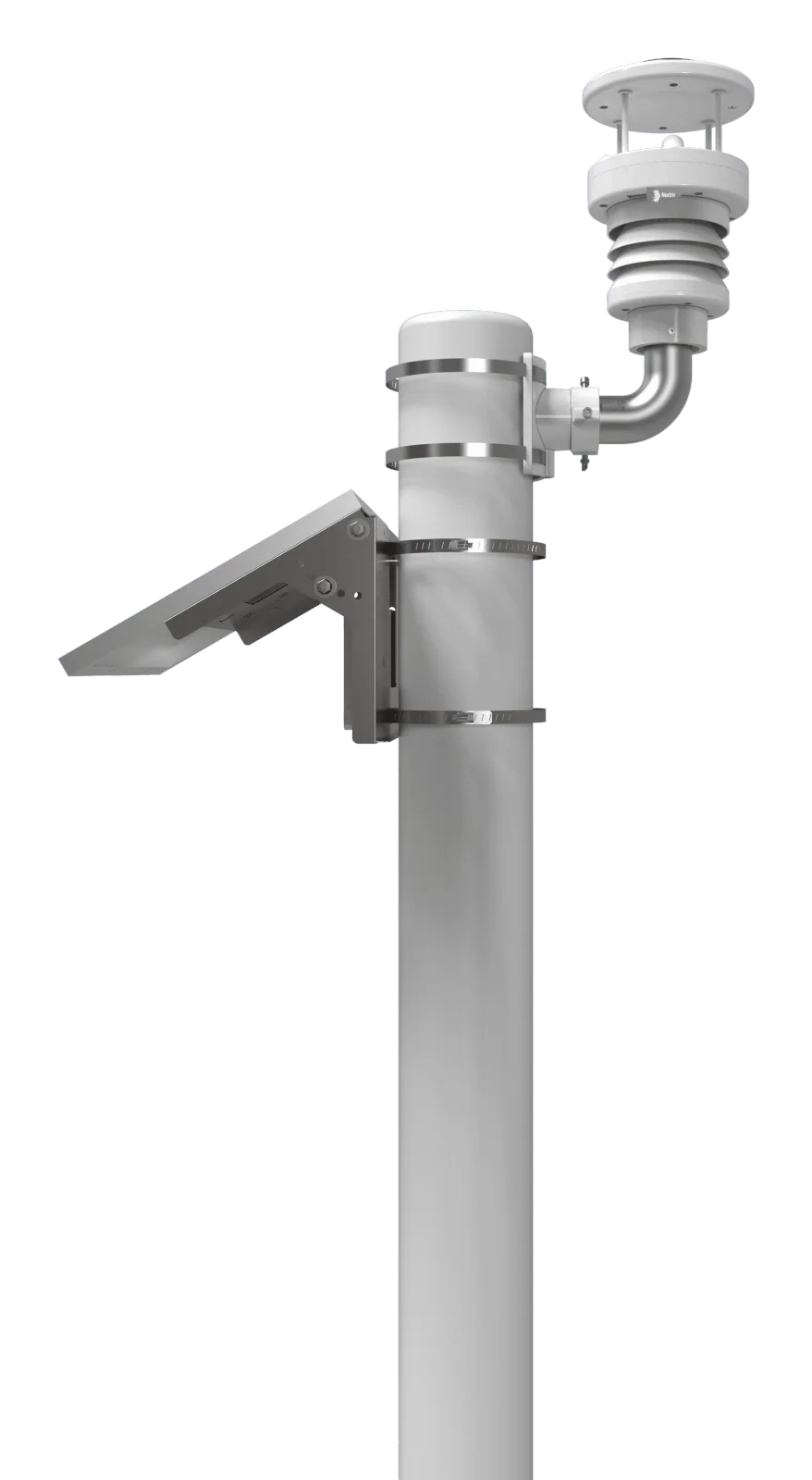
- Mast mounting with the bracket included; it pairs naturally in the platform with the soil and water-level sensors from the Nextriv catalogue.
In the Nextriv system
All six metrics arrive in the Nextriv platform as separate measurement series — each with its own four alarm thresholds (warning and critical min/max). Intense rainfall can therefore first send a warning to the duty officer and, once the critical threshold is crossed, an alarm to the whole team through any of six channels: e-mail, SMS, web push, MS Teams, Discord or an audible alarm in the app — while the webhooks integration forwards the event to external systems. Every event has a code, a status and a history — ready material for a post-incident report.
Dashboards with nearly 20 widget types put wind, rainfall and pressure on shared multi-series charts, and years of measurement history — with automatic data-resolution selection over large time ranges — feed PDF reports and XLSX/CSV exports for agronomic models and your own analyses.
Typical deployments
- Precision agriculture and vineyards: rainfall, wind and humidity per field as inputs to spraying and irrigation decisions — see solutions for agriculture.
- Infrastructure and open areas: local warning of violent rain and wind for roads, bridges and facilities — more in the solutions for smart buildings.
- Industry and energy: correlating weather conditions with production and operational safety across the site — check the solutions for manufacturing.
- Campuses and education: a reference station as a source of teaching data and local weather alerts — details in the solutions for schools.
Specification
| Measured parameters | temperature, humidity, wind speed and direction, barometric pressure, rainfall (6-in-1) |
|---|---|
| Temperature | -40…+85°C, accuracy ±0.3°C, 0.1°C resolution |
| Humidity | 0–100% RH, accuracy ±3% RH |
| Wind (ultrasonic) | speed 0–60 m/s, ±0.3 m/s or ±3%; direction 0–360°, ±3°, 0.1° resolution |
| Barometric pressure | 500–1100 hPa, accuracy ±0.5 hPa |
| Rainfall (piezoelectric) | 0–1000 mm, ±0.5 mm (<10 mm) / ±5% (>10 mm), 0.01 mm resolution |
| Connectivity | Long-range radio — ~2 km urban / ~15 km open terrain |
| Local memory | over 19,000 records with retransmission after a connectivity gap |
| Power | 15 W solar panel + 2 × 2550 mAh buffer; at least a week of operation without sun |
| Housing | aluminium-alloy sensor module, IP65, operation -40…+85°C; base unit IP67 |
| Kit and mounting | sensor module + base unit + solar panel; mast mounting |
Not sure which set to choose?
Tell us about your facility and we'll match sensors and a gateway to the exact rooms you need to monitor — no unnecessary hardware.