
Industry solutions
CO₂ and air quality monitoring for schools
CO₂ sensors in classrooms show when to air the room — before student concentration drops. Alerts, reports for the principal and a FREE plan to start with no budget.
Sound familiar?
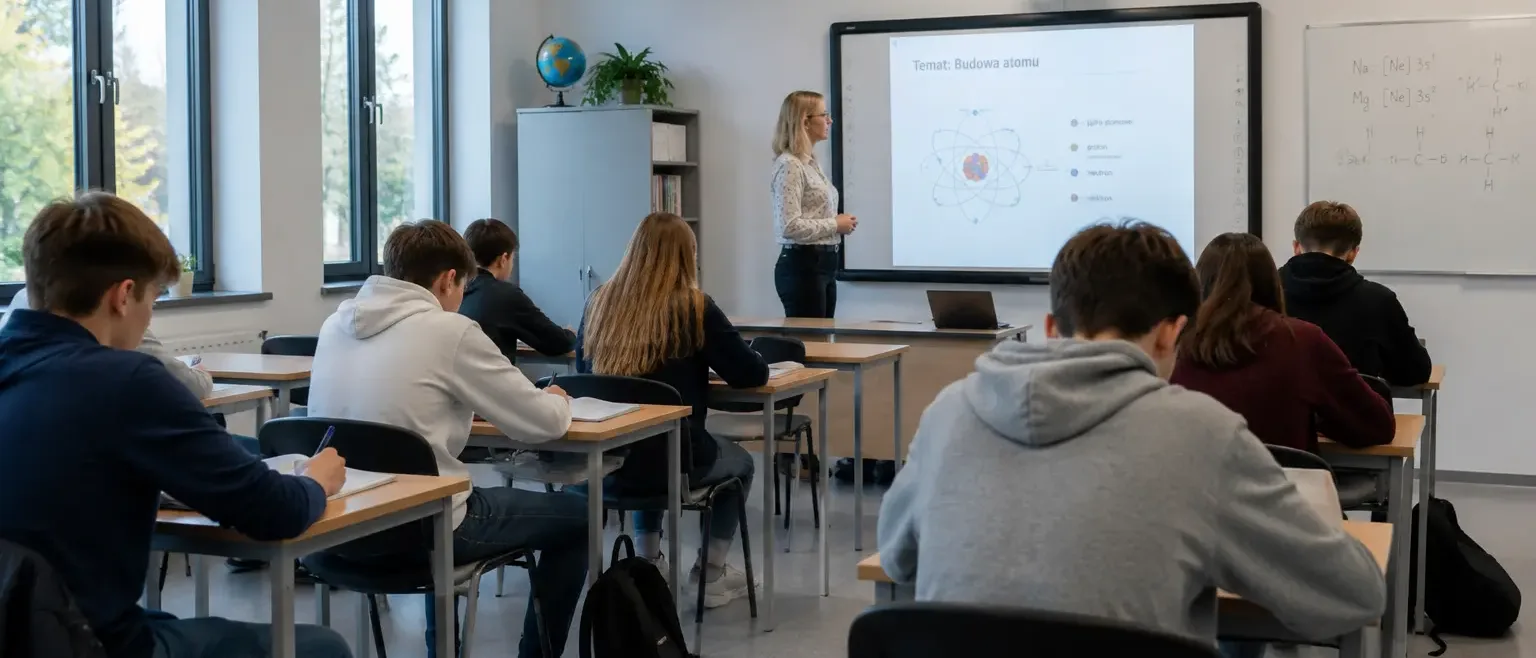
Stuffy classrooms after 20 minutes
With a full classroom, CO₂ can exceed 2000 ppm long before the bell rings. Concentration drops, fatigue grows — and nobody can see it.
Airing by gut feeling
In winter, windows opened too long chill the room and inflate heating bills; opened too briefly — they change nothing. Without measurement there is no good decision.
No data for parents or the governing body
Questions about air quality and classroom conditions come back every year. “We make sure to air the rooms” is not enough when no measurement stands behind it.
Rooms used unevenly
Some classrooms stand empty while others burst at the seams. Without occupancy data it is hard to plan lessons, cleaning and renovations.
How Nextriv solves it
A CO₂ sensor in every classroom
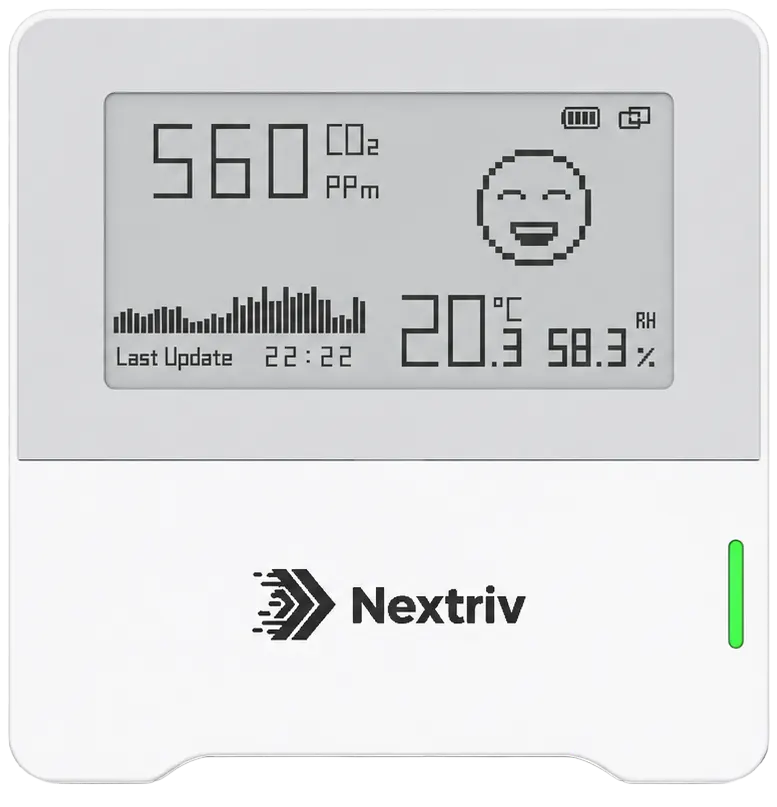
Sense CO₂ measures carbon dioxide (NDIR), temperature and humidity. The e-ink screen with a green, yellow or red emoticon — the teacher sees the signal to air the room without any app.
The 1000 ppm threshold under control
Four thresholds per metric: a warning at 1000 ppm, critical at 1400 ppm. Notifications reach the school office and caretaker, and quiet hours can mute comfort notifications at night and on weekends — while the system keeps measuring and logging around the clock.
Reports you can actually show
Recurring PDF reports with per-room charts, with an SHA-256 signature and QR code — a credible document for the principal, parents and the governing body.
Occupancy and energy savings
Sense Motion shows the real usage of rooms and helps switch off lights in empty spaces. Less energy used and a better lesson plan.
One panel for the whole school
A dashboard with readings from all rooms, battery state and connectivity status. When a sensor stops reporting, the platform detects it on its own and notifies you.
Start with no budget
The FREE plan: 10 sensors, 1 gateway, full alerts and PDF reports — enough for a pilot in the busiest classrooms. Scale up once you see the results.
Recommended products
Nextriv hardware picked for this industry — up and running with the platform in minutes.
Nextriv Sense CO₂
CO₂ (NDIR), temperature and humidity with an e-ink screen — the emoticon tells the class when to air the room. Years on batteries, tape or screw mounting.
View product
Nextriv Sense IAQ Lite 5-in-1
A budget 5-in-1: CO₂, temperature, humidity, light and occupancy — around 6 years on batteries, ideal for equipping many classrooms at once.
View product
Nextriv Sense Motion
A motion and light sensor for classrooms, corridors and washrooms — space utilisation data and the basis for lighting automation.
View product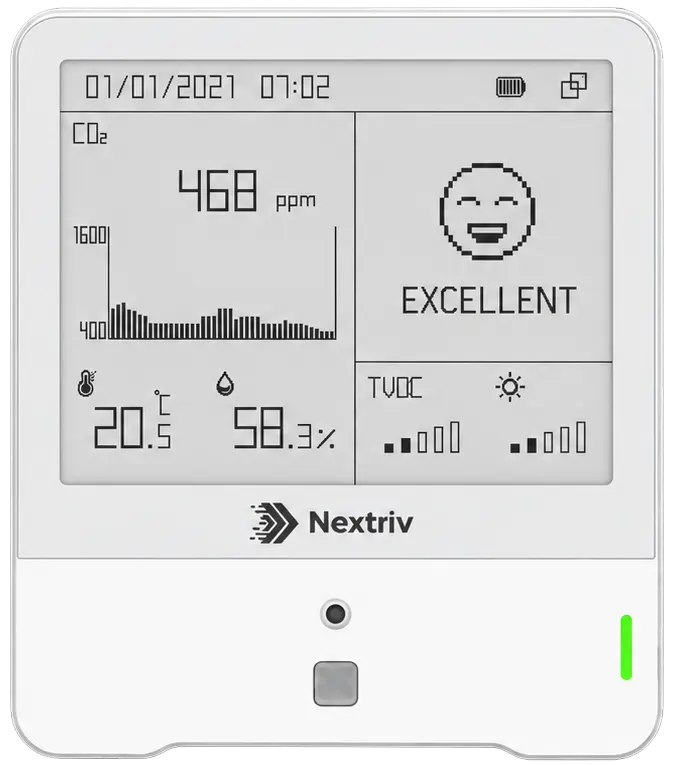
Nextriv Sense IAQ Comfort
8-in-1: CO₂, PM2.5/PM10, TVOC, temperature, humidity, pressure and occupancy — a versatile sensor for multi-purpose halls, gymnasiums and libraries.
View product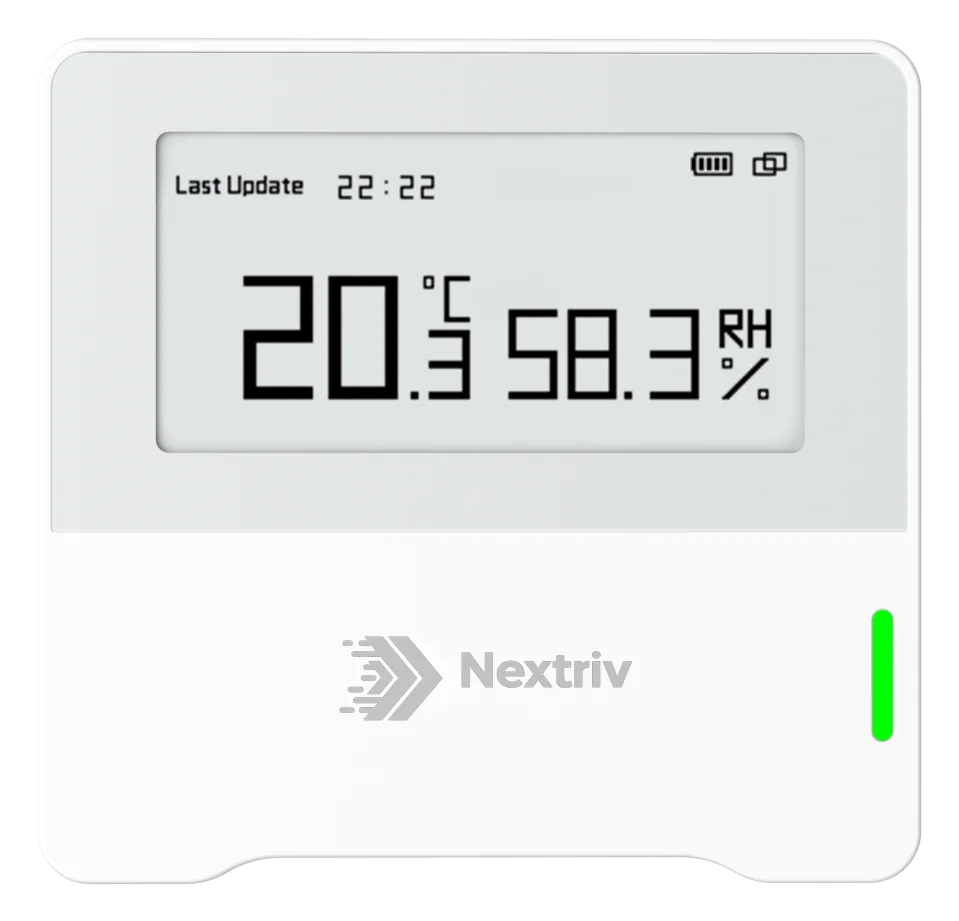
Nextriv Sense Display
An e-ink screen showing current CO₂, temperature and humidity readings — informs pupils and teachers at a glance without any app login.
View product
Nextriv Sense Noise
Noise level measurement (dB, Leq, Lmax) in corridors and the canteen — detection of noisy events and data for acoustic comfort analysis.
View productThird lesson, room 12, windows closed
Nextriv watches the classrooms automatically: four thresholds per metric, event deduplication and escalation if nobody reacts. Once the room is aired, the system sends a back-to-normal notification.
- If
The sensor in room 12 reports 1050 ppm CO₂ — the 1000 ppm warning threshold is exceeded.
- Then
The platform opens event ALM-9K2M3F: the school office gets a web push notification and an in-app sound alarm, and the sensor's LED changes colour — the class sees the signal too.
- Escalation 1
Concentration rises to 1400 ppm (critical threshold) — an email with the chart goes to the caretaker and the deputy head.
- Escalation 2
No acknowledgement within 15 minutes — an SMS goes to the principal per the escalation policy; the event waits in the panel with an “active” status until someone takes it over.
Compliance and standards
CO₂ < 1000 ppm
A hygiene guideline (the Pettenkofer number) used as the reference point for educational spaces. You can set alert thresholds to exactly this value.
EN 16798-1
The European indoor environmental standard — air quality categories defined among others by CO₂ concentration above the outdoor level.
School health and safety (min. 18 °C)
School health and safety regulations require at least 18 °C in classrooms. Continuous measurement documents conditions and alerts before lessons have to be cancelled.
Frequently asked questions
What CO₂ level is acceptable in a classroom?
1000 ppm is most commonly taken as the comfort limit (the Pettenkofer number). Above 1400–1500 ppm students visibly lose concentration. Fresh outdoor air is around 420 ppm — hence 1000/1400 ppm thresholds are a good starting point in Nextriv.
Does the teacher have to operate the system?
No. The sensor's e-ink screen shows an emoticon — green means “all good”, red means “air the room”. Alerts and reports are handled by the school office or caretaker from a single panel; the teacher does not need an account.
How much does it cost for a small school?
The FREE plan includes 10 sensors, 1 gateway, 2 users, alerts and PDF reports — no fees and no credit card. Larger schools choose PRO at 99 PLN net/30 days or 990 PLN net/365 days (excl. VAT), with unlimited sensors and 5 years of measurement history.
Does installation require renovation or cabling?
No — sensors run on batteries (roughly 3 to 6 years depending on model and configuration) and communicate over long-range radio, which covers the whole building from a single gateway. Mounting with double-sided tape or screws, configuration via NFC with a phone.
Do the sensors violate students' privacy?
No. The sensors measure only air parameters, and the occupancy sensor reports just a motion status — no cameras and no identification of individuals. The data concerns rooms, not specific students.
Start monitoring today
FREE plan to start: 10 sensors, 1 gateway, alerts and PDF reports — no credit card required.