
Control switching
Nextriv Control Industrialindustrial DIN-rail I/O controller
SKU: NX-CT-IND
Industrial DIN-rail I/O controller: digital inputs with pulse counters, relays, 4–20 mA and 0–10 V channels and PT100 — connected to the cloud over long-range radio. 16 local IF-THEN rules keep working even without connectivity.
€215net
VAT is added to the price.

Description
- Relays, analog channels and counters in one box
- 16 local rules — automation works offline
- PT100, 4–20 mA and 0–10 V on board
- Kilometres from the nearest network cable
- Continuous listening instead of transmission windows
- RS232 and RS485 ports for integration
What it is for
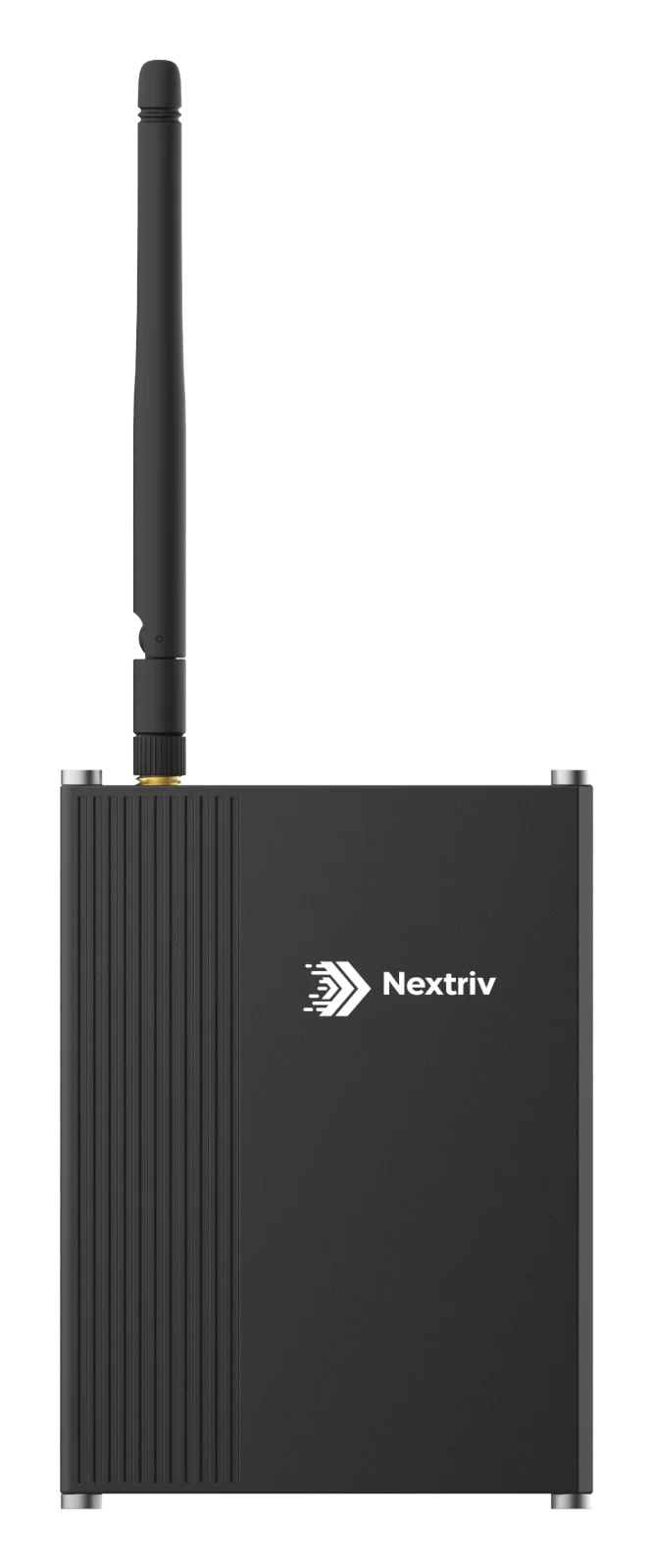
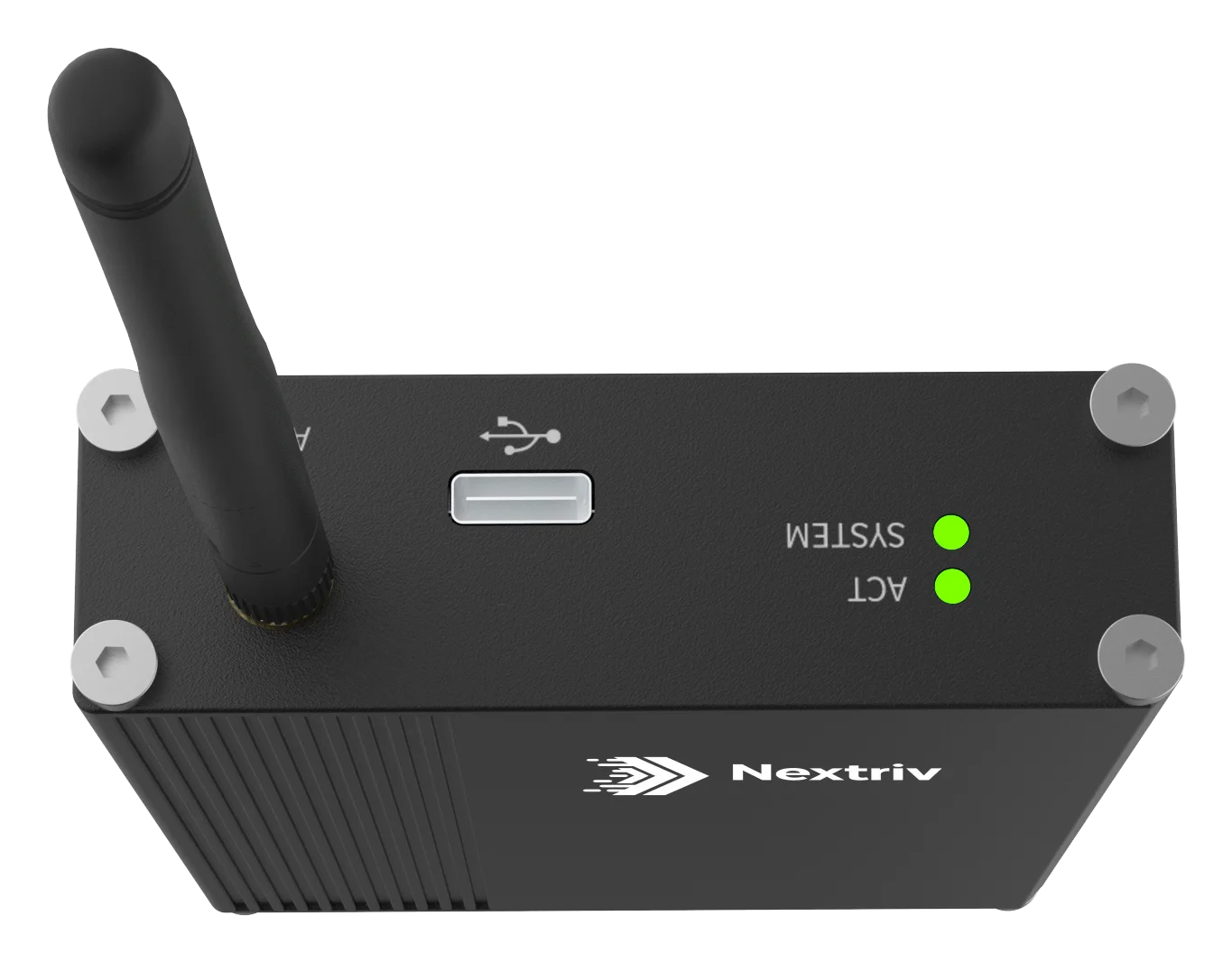
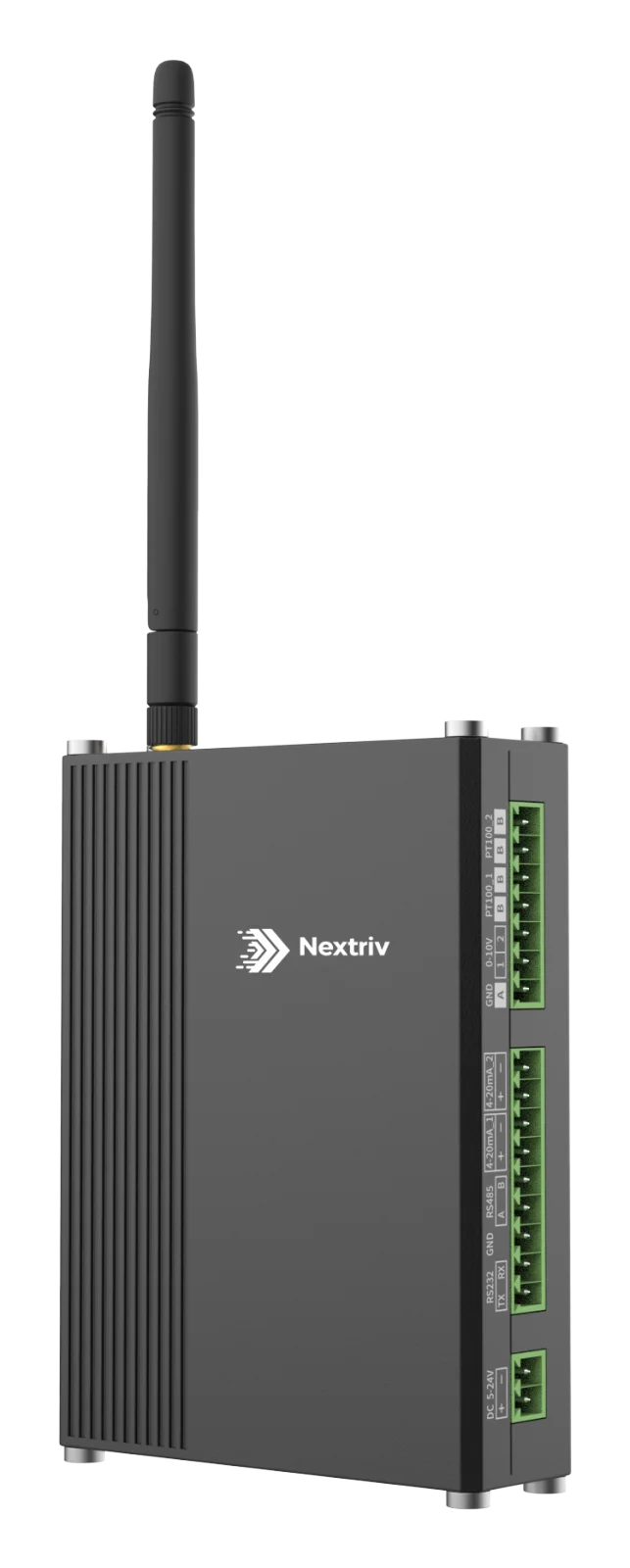
The Nextriv Control Industrial is an industrial input/output controller — a device that brings wired field signals into the Nextriv platform in places where nobody will ever run Ethernet: plant rooms, pumping stations, deep wells, control cabinets out in the field, remote production halls. Four digital inputs with pulse counters, two relays, 4–20 mA and 0–10 V analog channels, two PT100 inputs and serial ports — all in a metal DIN-rail housing, connected to the cloud over long-range radio: up to around 2 km in built-up areas and up to 15 km in open terrain.
Technical facilities speak the language of signals, not IP protocols: a pressure transmitter has a 4–20 mA output, a temperature sensor is a PT100 resistor, a water meter sends pulses, a pump reports duty through a contact, and a float switch closes a circuit. The Control Industrial collects these signals directly — no intermediate converters, no switch, no industrial PC — and turns them into telemetry the Nextriv platform treats like any other measurement. All it needs to get started is 5–24 V DC power and radio coverage from a gateway.
The other half of the name is control. Two SPDT relays up to 3 A and 16 local IF-THEN rules that execute on the device, not in the cloud: a rule like "leak on a digital input → close the valve" or "pressure below threshold → start the pump" keeps working even when connectivity goes down. Mains power also enables continuous listening — the controller doesn't wake up in transmission windows; it stays ready to react at all times — and a data buffer with retransmission watches over measurements during connectivity gaps.
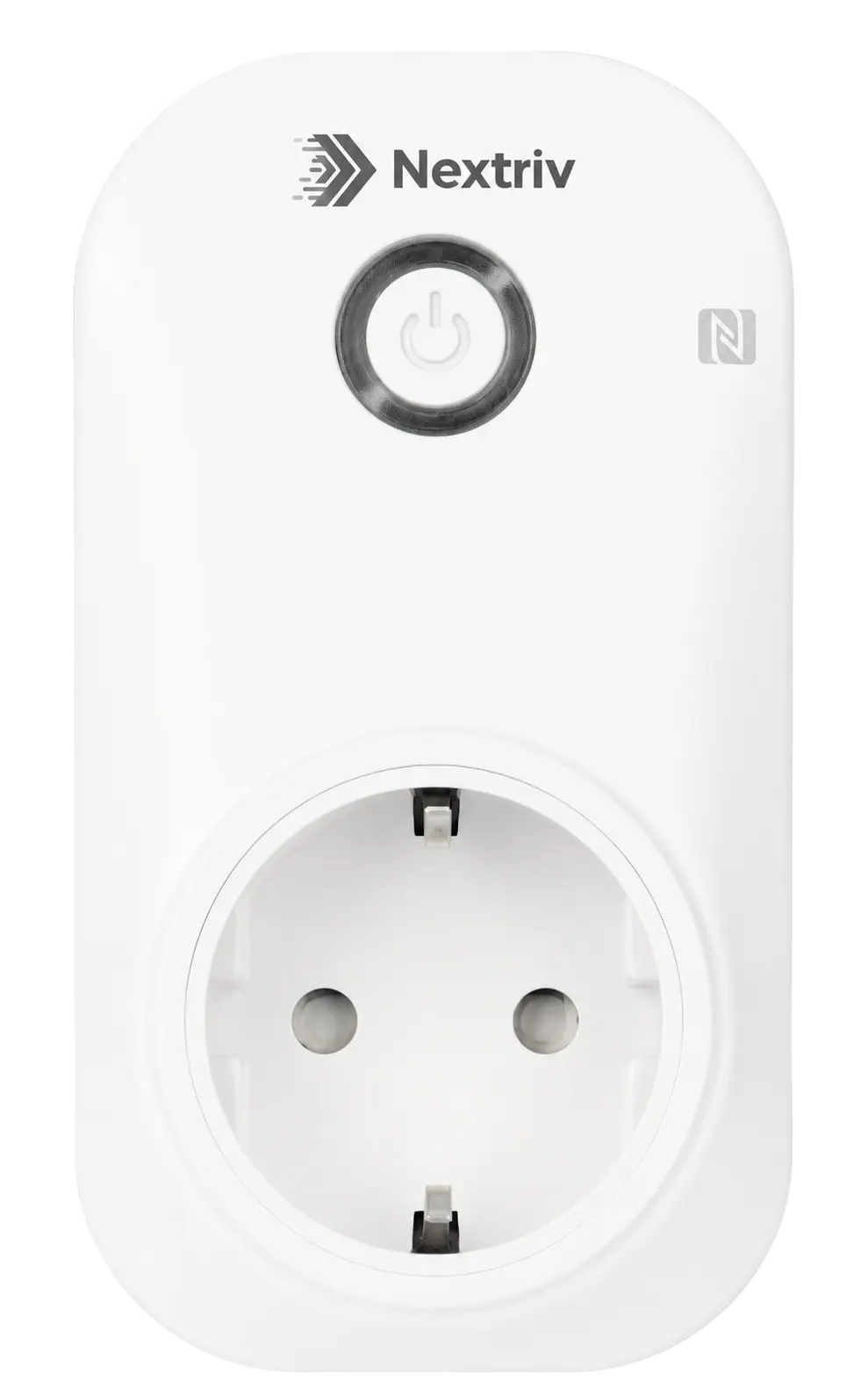
It's worth getting the catalog roles straight. The Control Industrial is not a gateway: it is an end device of the Nextriv network that connects to the platform through a gateway — unlike the Nextriv Hub Edge, a network node that requires Ethernet, Wi-Fi or LTE. What separates it from the Control Plug is scale and audience: the Plug is a single socket and zero installation, while the Industrial is a tool for integrators and maintenance teams — multiple I/O channels in a distribution cabinet, kilometres from the nearest network cable.
Usage scenarios
- Pumping stations and water management: a pressure transmitter on the 4–20 mA input, a water meter on the pulse counter, float switches and pump contacts on the digital inputs. Local rules start the standby pump and protect against dry running, while the platform gets the full picture of a site kilometres away.
- Leak detection and shut-off valves: a leak sensor closes a digital input, a local rule shuts the solenoid valve via the relay — before anyone even reads the notification. The alarm still reaches the platform, but the water stops flowing immediately.
- Irrigation in agriculture: relays open the irrigation section valves, the pulse counter accounts for water use, and PT100 and analog channels supervise conditions — all out in the field, within radio range of up to approx. 15 km from the gateway.
- HVAC plant rooms and heat substations: PT100 on supply and return, 0–10 V signals from air handlers, pump and pressure-switch states on the digital inputs; relays switch equipment according to local rules, independent of the internet.
- Machine states in a remote hall: pulse counters up to 4000 Hz count production cycles, digital inputs read contactors, and the 4–20 mA channel reads current from a transducer. Maintenance sees downtime without walking the floor.
- Data-center back-of-house: dry contacts from the generator and UPS on the digital inputs, PT100 in the cooling loop, a leak sensor next to the precision cooling unit — telemetry from rooms that structured cabling never reached.
Key features
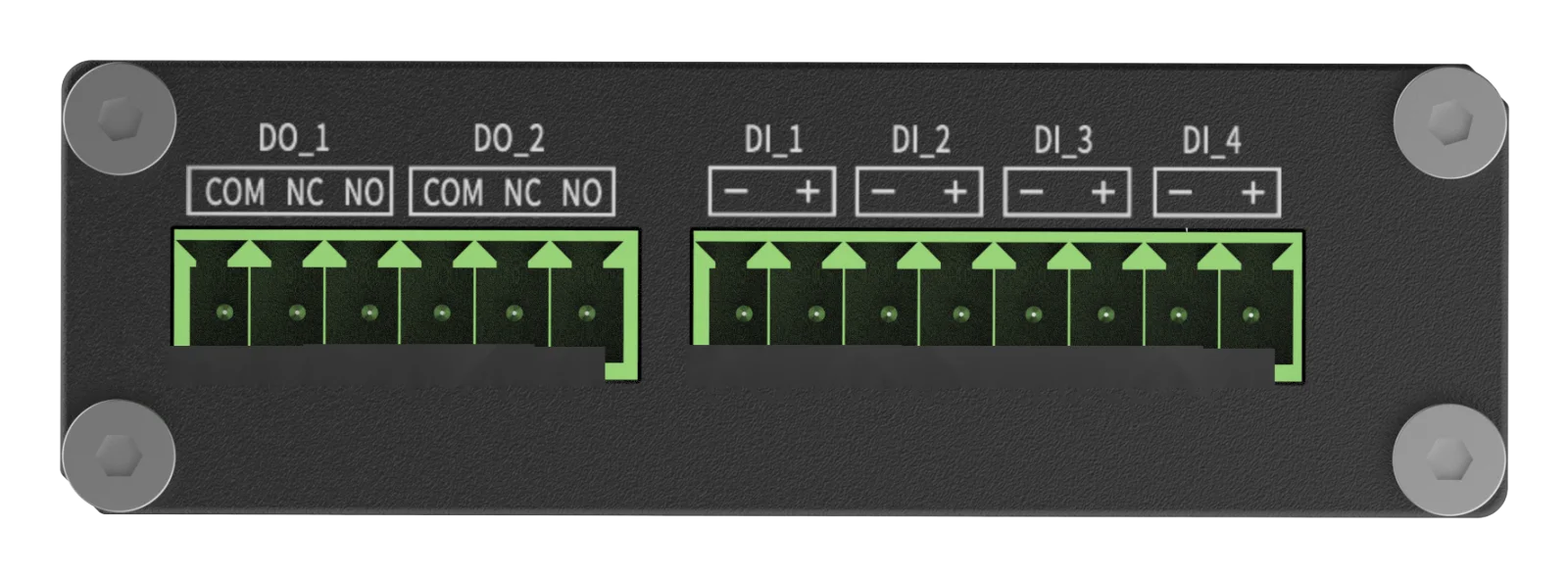
- 12 physical I/O points in one housing: 4 digital inputs, 2 relays, 2 × 4–20 mA, 2 × 0–10 V and 2 × PT100 — no expansion modules.
- Opto-isolated digital inputs, 3–24 V DC, each switchable to pulse-counter mode up to 4000 Hz — water meters, gas meters, machine-cycle counters.
- PT100 inputs in 2- or 3-wire configuration, -200…+800°C range — from freezer rooms to industrial furnaces.
- 12-bit analog channels: 2 × 4–20 mA and 2 × 0–10 V — direct connection of pressure, level, humidity or current transmitters.
- SPDT relays up to 3 A (30 V DC / 250 V AC) — valves, pumps, signalling devices, contactors.
- 16 local IF-THEN rules — edge automation executes on the device and keeps working without network connectivity.
- Continuous listening thanks to mains power — the controller is always ready to react instead of waiting for a transmission window.
- Direct device-to-device communication within the Nextriv network — an event on one device can trigger a reaction on another without going through the server.
- Data buffer with retransmission — measurements aren't lost during brief connectivity gaps.
- RS232 and RS485 (Modbus RTU) serial ports for integrating wired devices in the cabinet.
- Surge and reverse-polarity protection plus opto-isolated inputs — built for the realities of industrial installations.
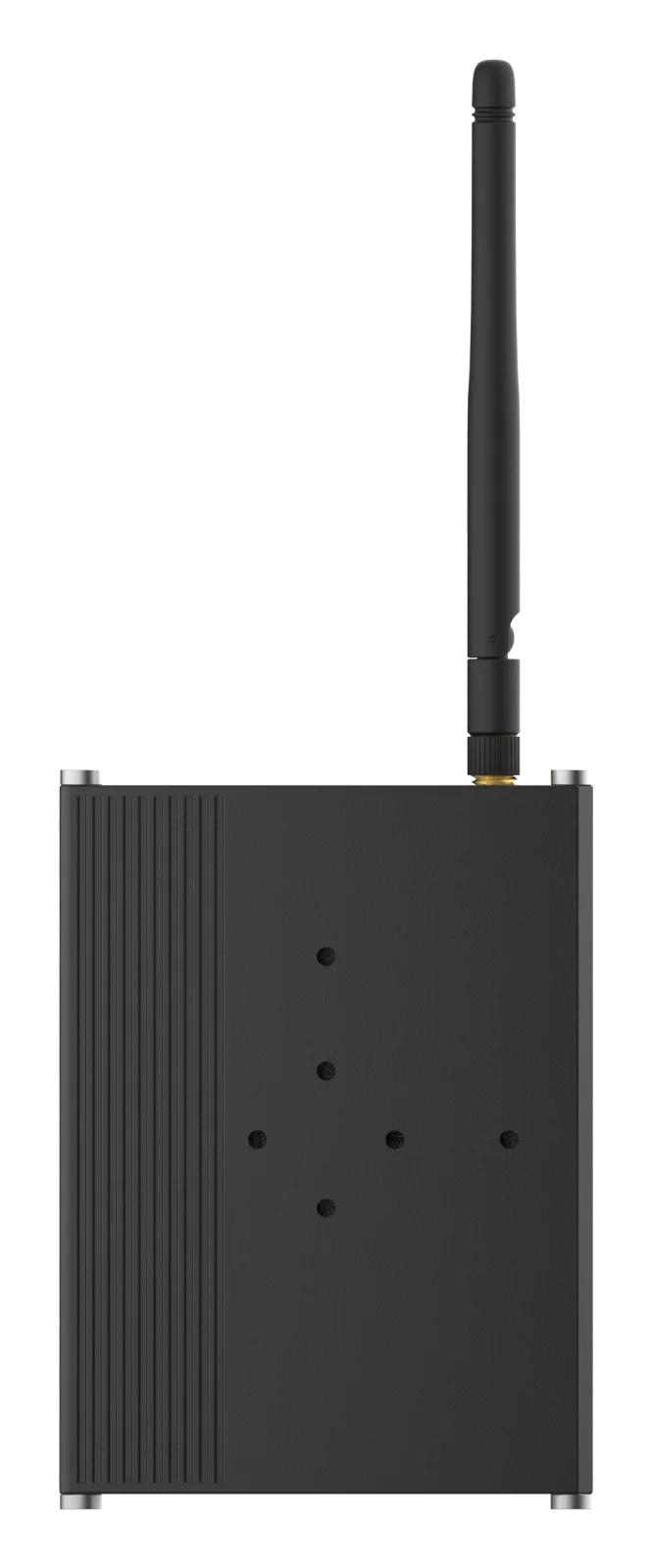
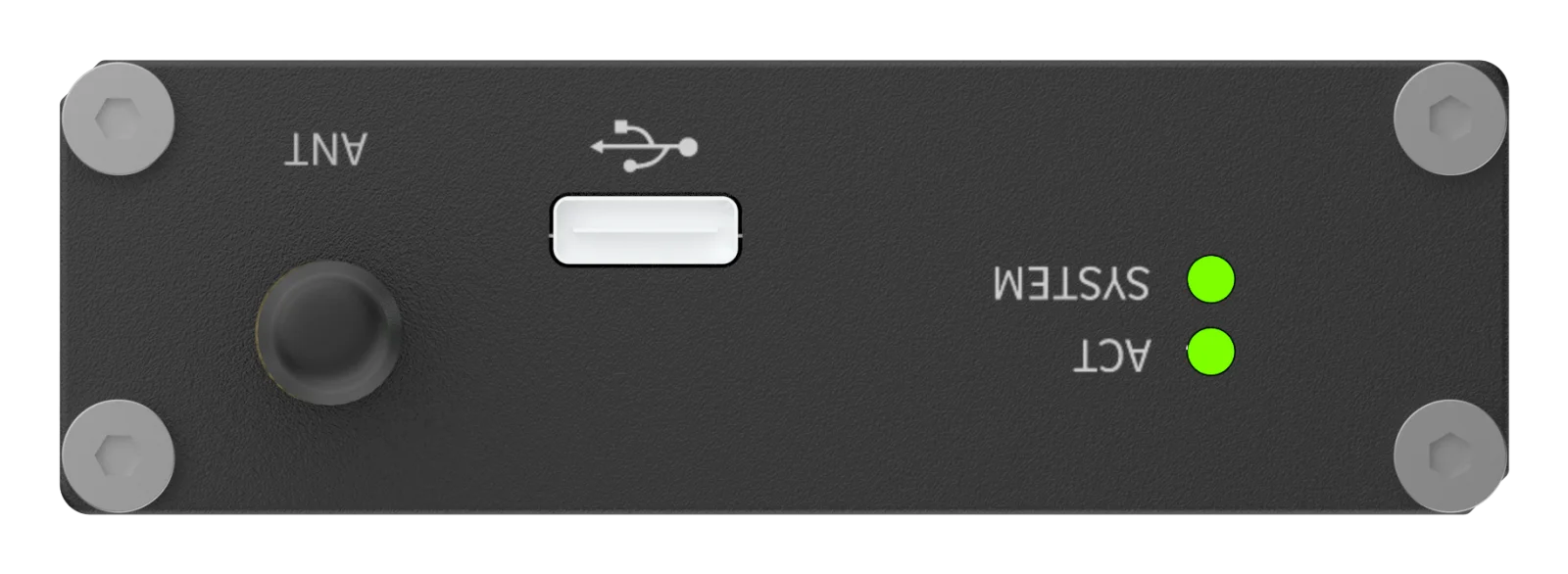
- Metal 93 × 70 × 22 mm DIN-rail housing, -20…+60°C operation; configuration via USB-C.
In the Nextriv system
Every channel of the controller is a first-class metric in the Nextriv platform: temperature from PT100, values from the 4–20 mA loops and 0–10 V inputs, digital input states and counters, relay positions. You build dashboards from nearly 20 widget types — KPIs, trend charts, floor plans — exactly as you would with radio sensors. Each metric supports four thresholds (warning and critical min/max), so a rising bearing temperature or falling system pressure first raises a warning and only later a critical alarm.
Notifications flow through six channels — email, SMS, web push, MS Teams, Discord and an audible in-app alarm — and measurement history lands in PDF reports and XLSX/CSV exports: ready-made material for audits, utility billing from pulse meters or downtime analysis. The controller itself is supervised like every Nextriv device: if it stops reporting, the platform raises an offline alert — which, for a site kilometres away, can be as valuable as the measurements themselves.
Typical deployments
- Manufacturing: machine states, cycle counters and utilities from remote halls without extending the IT network — more in our manufacturing solutions.
- Buildings and offices: leak detection with automatic valve shut-off, heat substations and plant rooms under supervision — see our smart building solutions.
- Agriculture and greenhouses: irrigation and pump control plus water accounting kilometres from the buildings — explore our agriculture solutions.
- Warehouses: pump rooms, docks and technical installations of large facilities in one platform — details in our warehouse solutions.
- Server rooms: generator, UPS and cooling in rooms beyond the reach of structured cabling — discover our data center solutions.
Specification
| Digital inputs | 4 × opto-isolated, 3–24 V DC; digital input or pulse counter mode up to 4000 Hz |
|---|---|
| Relay outputs | 2 × SPDT, up to 3 A at 30 V DC / 250 V AC |
| Analog inputs | 2 × 4–20 mA and 2 × 0–10 V, 12-bit resolution |
| Temperature inputs | 2 × PT100 (2- or 3-wire), -200…+800°C range |
| Serial ports | 1 × RS232, 1 × RS485 (Modbus RTU), 1200–115200 bps |
| Local automation | 16 IF-THEN rules executed on the device, independent of connectivity |
| Connectivity | Long-range radio (continuous listening), 868 MHz |
| Radio range | up to approx. 2 km in built-up areas, up to 15 km in open terrain |
| Power supply | 5–24 V DC (terminal block) or 5 V via USB-C; surge and reverse-polarity protection |
| Housing | metal, 93 × 70 × 22 mm, approx. 142 g; SMA 50 Ω antenna |
| Mounting and service | DIN rail, wall or desktop; configuration via USB-C, status LED |
| Operating conditions | -20…+60°C, 0–95% humidity, non-condensing |
Files
- Download
Nextriv Control Industrial — datasheet
pdfEN0.5 MBversion 1.0
Not sure which set to choose?
Tell us about your facility and we'll match sensors and a gateway to the exact rooms you need to monitor — no unnecessary hardware.