
Industry solutions
Temperature monitoring for server rooms and data centers
Temperature, humidity, leak and noise sensors across your racks. Alerts with escalation within seconds and 5 years of measurement history as proof of temperature SLA.
Sound familiar?
Hot spots invisible to the BMS
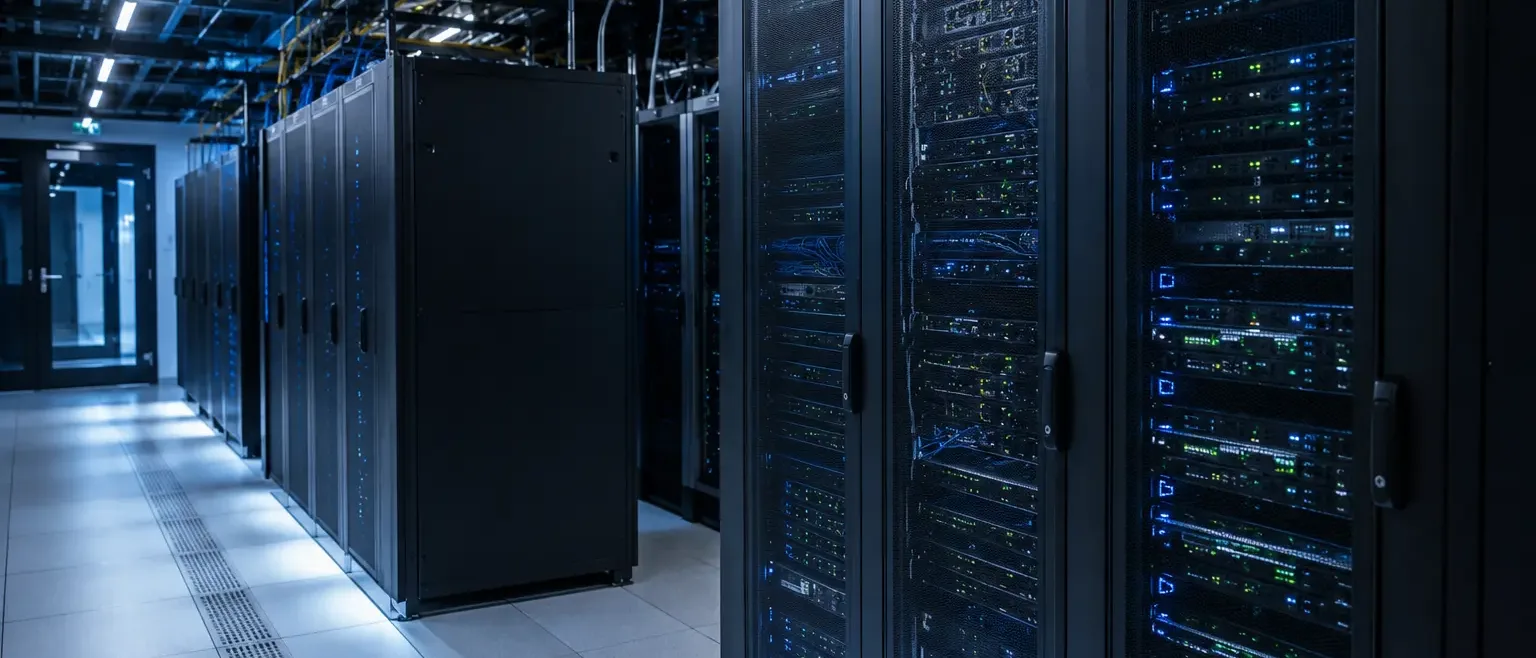
One sensor per room cannot see a single rack overheating. Differences between cold and hot aisles can exceed ten degrees — failures start locally.
SLA without hard evidence
A colocation customer asks about last quarter's environmental conditions, and the data is scattered across systems — with no report you can sign and hand over.
Cooling failure at night
When a cooling unit fails, room temperature climbs within minutes. Without alarm escalation you find out in the morning — together with your customers.
Water under the raised floor
Condensate from precision cooling and leaking pipework seeps for weeks in places nobody ever looks at.
How Nextriv solves it
Measure where problems start
Sensors at rack inlets in the cold aisle and PT100 probes at critical points. ASHRAE's recommended 18–27 °C enforced per rack, not per room.
4 thresholds and relentless escalation
Warning and critical thresholds for every metric. An unacknowledged alarm escalates to the next people in line — email, SMS, Teams, Discord or a webhook to your ticketing system.
SLA evidence in a single PDF
Scheduled reports with an SHA-256 signature and a QR verification code. Raw data retained for up to 5 years — audits and customer disputes stop being a problem.
Noise trend = early warning
A noise sensor next to cooling units measures SPL, Leq and Lmax. A week-over-week rise in fan and bearing noise shows on the chart before it ends in a failure.
Leaks caught at the first drops
A leak probe in the drip tray and under the raised floor reacts at roughly 5 mm of liquid. The alarm reaches the on-duty engineer before moisture gets to the cabling.
One metric instead of a hundred charts
Virtual sensors compute e.g. the average cold-aisle temperature as a standalone SLA metric. Plus a NOC dashboard and a public tile with live readings, no login required.
Recommended products
Nextriv hardware picked for this industry — up and running with the platform in minutes.
Nextriv Sense Essential
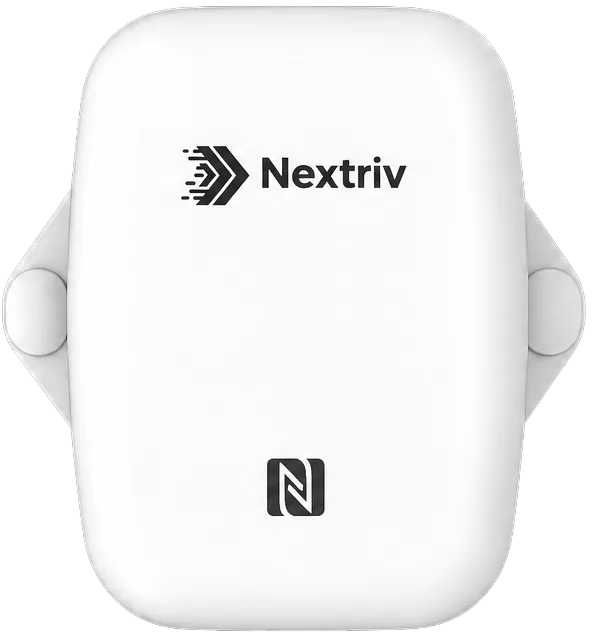
Temperature and humidity at the rack inlet. IP67 housing, years of battery life and a measurement buffer with retransmission — gap-free history even after connectivity loss.
View product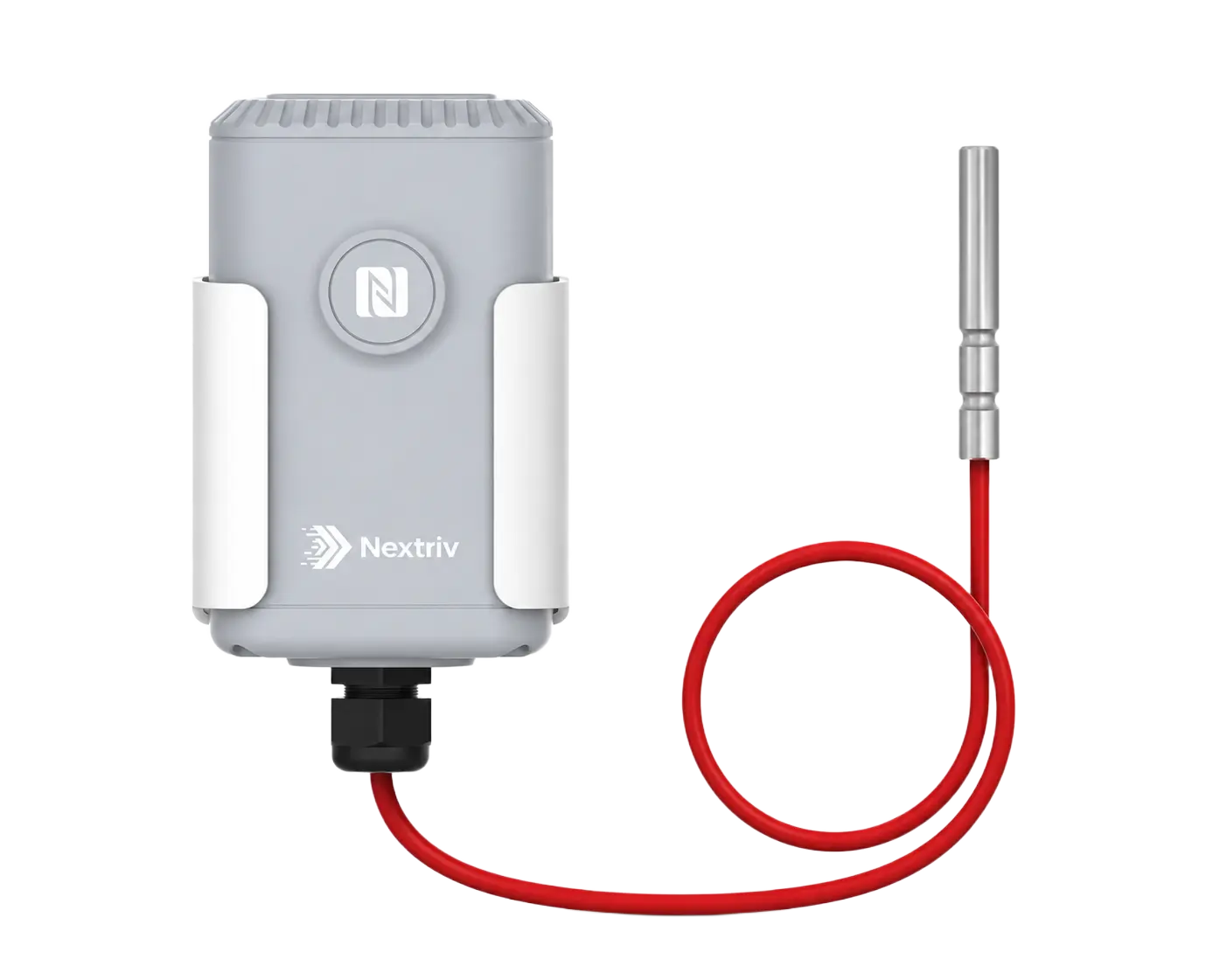
Nextriv Probe PT100
Industrial temperature probe with ±0.5 °C accuracy for critical points: heat exchangers, supply ducts, chilled water installations.
View product
Nextriv Sense Noise
Noise level (SPL, Leq, Lmax) next to cooling units and fans — a rising trend is an early signal of mechanical wear.
View product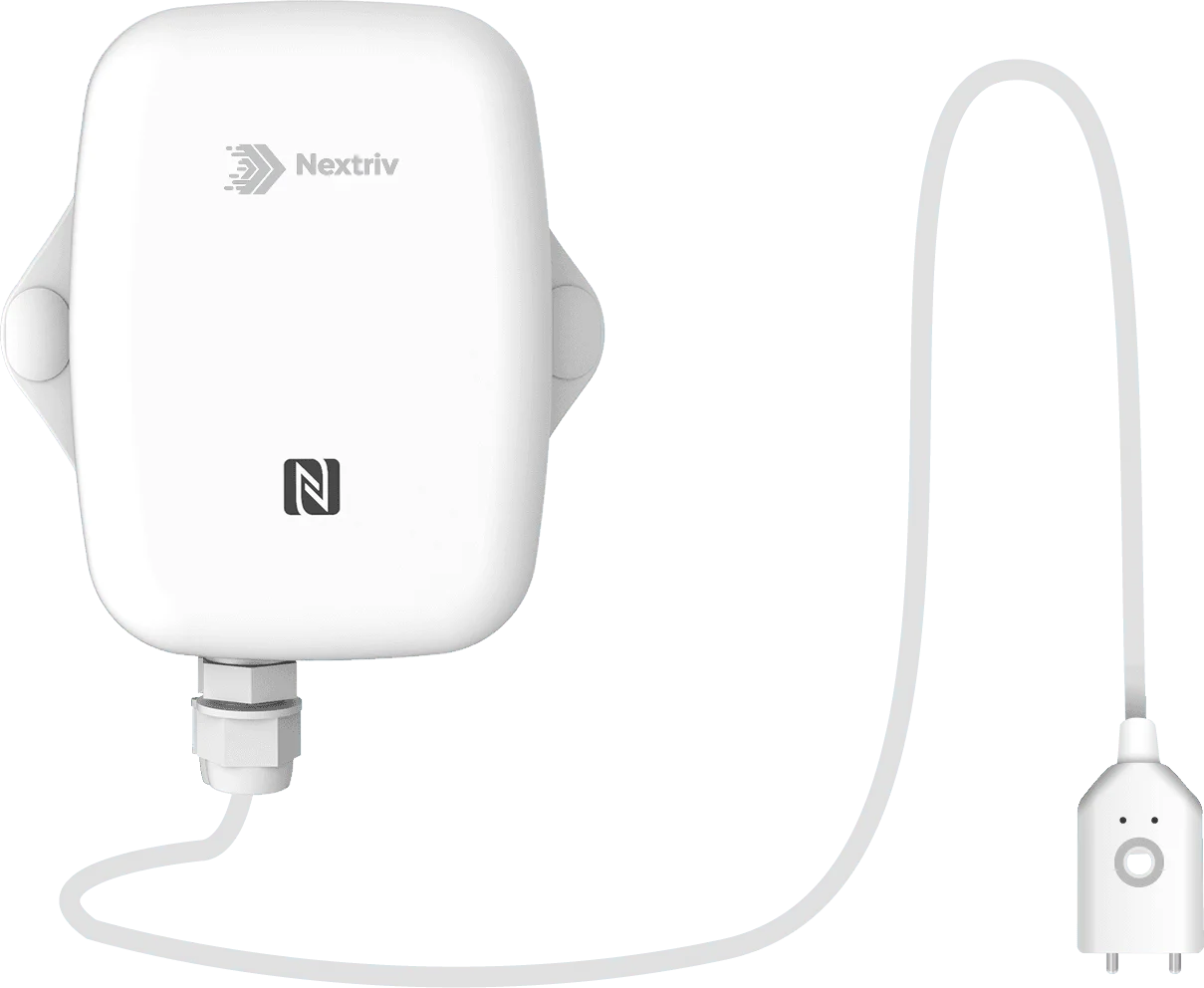
Nextriv Sense Leak Spot
Spot leak detection in drip trays and under raised floors. Also measures ambient temperature and humidity.
View product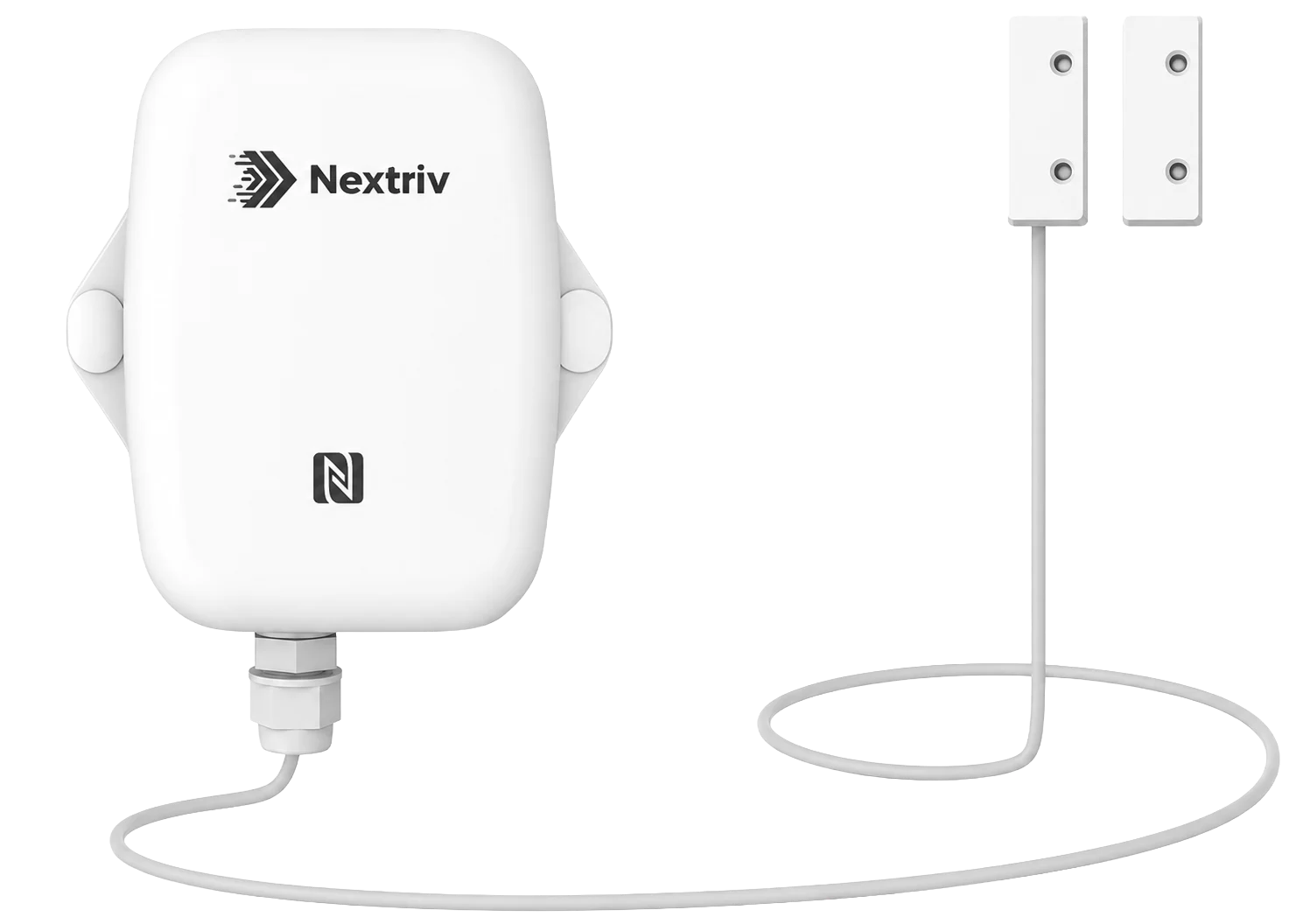
Nextriv Sense Contact
A contact sensor on server-room doors and rack cabinets — alerts on every unauthorised opening with an exact timestamp and event linkage.
View product
Nextriv Sense Leak Zone
A zone leak cable for monitoring large areas under raised floors and in cable runs — pinpoints exactly where water appears.
View productNight, cooling failure, nobody is watching the monitoring
This is how Nextriv handles overheating: four thresholds per metric, event deduplication and an escalation policy that does not let go until someone acknowledges the alarm. Once values return to normal, the system sends a recovery notification on its own.
- If
The sensor at rack R12's inlet reports 27.5 °C — the warning threshold (27 °C) is exceeded.
- Then
The platform opens event ALM-4F2K81 and sends an email and a Teams notification to the on-duty NOC engineer; an audible alarm sounds on the dashboard.
- Escalation 1
After 10 minutes without acknowledgement, an SMS goes to the duty engineer.
- Escalation 2
Temperature reaches 32 °C (critical threshold) — severity rises to critical, SMS and email go to the facility manager, and a webhook opens a ticket in your ITSM system.
Compliance and standards
ASHRAE TC 9.9
Environmental guidelines for data centers: recommended 18–27 °C at IT equipment inlets. Set alert thresholds directly to these ranges and document compliance.
EN 50600 / ISO/IEC 22237
Data center facility standards include supervision of environmental conditions. Continuous measurement and multi-year history support compliance with their requirements.
Colocation SLA
Signed PDF reports (SHA-256 + QR) and XLSX/CSV exports are hard evidence of meeting the environmental parameters written into your customer contracts.
ISO/IEC 27001
Physical and environmental security controls require server room supervision. The audit trail (5 years) documents who reacted to events and how.
Frequently asked questions
What temperature should a server room be?
ASHRAE TC 9.9 recommends 18–27 °C at IT equipment inlets (the allowable range is wider, depending on equipment class). In practice what matters is the measurement at each rack's inlet, not the room average — which is why Nextriv uses a sensor per rack with separate warning and critical thresholds matched to your SLA.
How many sensors do I need for a server room?
To start: a sensor at the inlet of every 3–4 racks in the cold aisle, one in the hot zone, and a leak sensor at every cooling unit. The FREE plan includes 10 sensors and 1 gateway — enough for a small server room at no cost.
Does installation require cabling?
No. Sensors communicate over long-range radio — the signal passes through ceilings and walls, and replaceable batteries last for years (up to around 10 years depending on model and configuration). You plug the gateway into power and network, mount sensors with tape or screws; auto-discovery detects them in 30–180 seconds.
How do I prove temperature SLA compliance to a customer?
With PDF reports generated on a schedule (daily or weekly) carrying an SHA-256 signature, a QR code and a verification URL. Raw measurements are kept for up to 1825 days (5 years) — enough for any audit or dispute.
Can I connect alerts to our ticketing system?
Yes — webhooks push alarm events to any system (ITSM, CMMS, your own API), alongside email, SMS, Teams, Discord and web push. Every event has a unique ALM code and a full status history: active → acknowledged → resolved.
Start monitoring today
FREE plan to start: 10 sensors, 1 gateway, alerts and PDF reports — no credit card required.