
Hub gateways
Nextriv Hub Edgeedge building gateway with BACnet and KNX
SKU: NX-GW-EDG
All-in-one edge building gateway: long-range radio, RS485/Modbus buses, BACnet and KNX, plus its own physical I/O. The bridge between field devices, the BMS and the Nextriv cloud.
€1,444net
VAT is added to the price.
Description
- Gateway, converter and controller in one
- 19 physical inputs and outputs
- RS485, BACnet and KNX on board
- Local logic — runs without the internet
- OLED screen for laptop-free servicing
What it is for
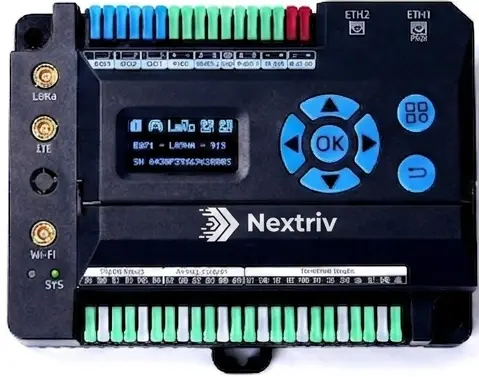
The Nextriv Hub Edge is the most ambitious device in the Nextriv Hub family — a universal node for modern building integration whose promise reads: faster, simpler and cheaper BMS modernisation. The idea is radical: instead of a separate radio gateway, a protocol converter, I/O modules and a freely programmable controller — one device on a DIN rail. It connects the Nextriv network's wireless sensors, wired buses (RS485/Modbus, BACnet, KNX) and its own physical inputs/outputs, and executes the logic locally, at the edge.
For an integrator, the arithmetic is what counts: fewer devices in the distribution board, less cabling, fewer points of failure. Plug-in connectors instead of screw terminals cut on-site wiring time by up to 70%, NFC lets you add wireless sensors with a tap of your phone, and the built-in OLED screen with buttons gives a service technician status views and basic diagnostics without a laptop — a rarity in this class of device. Underneath runs an industrial quad-core processor with 2 GB of RAM and 32 GB of storage, supporting up to 2,000 end devices and 20,000 data points.
The most important promise, though, concerns reliability: the control logic runs locally on the gateway, so the building reacts instantly and keeps working when the internet goes down. The cloud is a layer of supervision and analytics, not a single point of failure. The scenario "lead sensor fails → take over control from the backup sensor" will execute in the plant room even with the link severed.
For small and mid-sized sites, the Edge can play the role of a "mini-BMS": with its own dashboards built in Node-RED or Python (Docker is supported too), without the licence costs of a large supervisory system. It is also the simplest way to bring third-party analogue sensors into the Nextriv platform — it reads 4–20 mA and 0–10 V loops directly, with no separate transducers (the alternative is the Nextriv Control Industrial industrial controller, which connects to the platform through a gateway).
Usage scenarios
- Modernising a 2000s office building: the existing energy meters on RS485/Modbus stay where they are, new climate sensors come in wirelessly — everything meets in a single gateway, and the old BMS receives the full data set over BACnet/IP. No chiselling walls, no rewiring.
- HVAC plant room: universal inputs read PT1000 temperature sensors and 0–10 V signals from air handling units; relays and analogue outputs drive pumps and valves. Sensor-failover logic executes locally, even with the link down.
- Hotel chain: automatic BACnet device discovery (bus scanning) shortens commissioning; rooms report wirelessly, the boiler room over Modbus, and the chain's head office sees every property in the Nextriv cloud.
- Building with a KNX installation: the gateway reads KNX devices (up to 63 points) and joins the world of room automation with wireless telemetry — two installation eras in a single view.
- Small manufacturing plant as a "mini-BMS": instead of a full supervisory system — an Edge with a Node-RED dashboard: energy, hall climate, machine states from digital inputs (pulse counter up to 1 kHz), alerts to the maintenance team's phones.
- Campus and public office: two Ethernet ports (WAN/LAN) let you place the gateway between the technical and office networks; 4G failover keeps the building supervised when the fixed line fails.
Key features
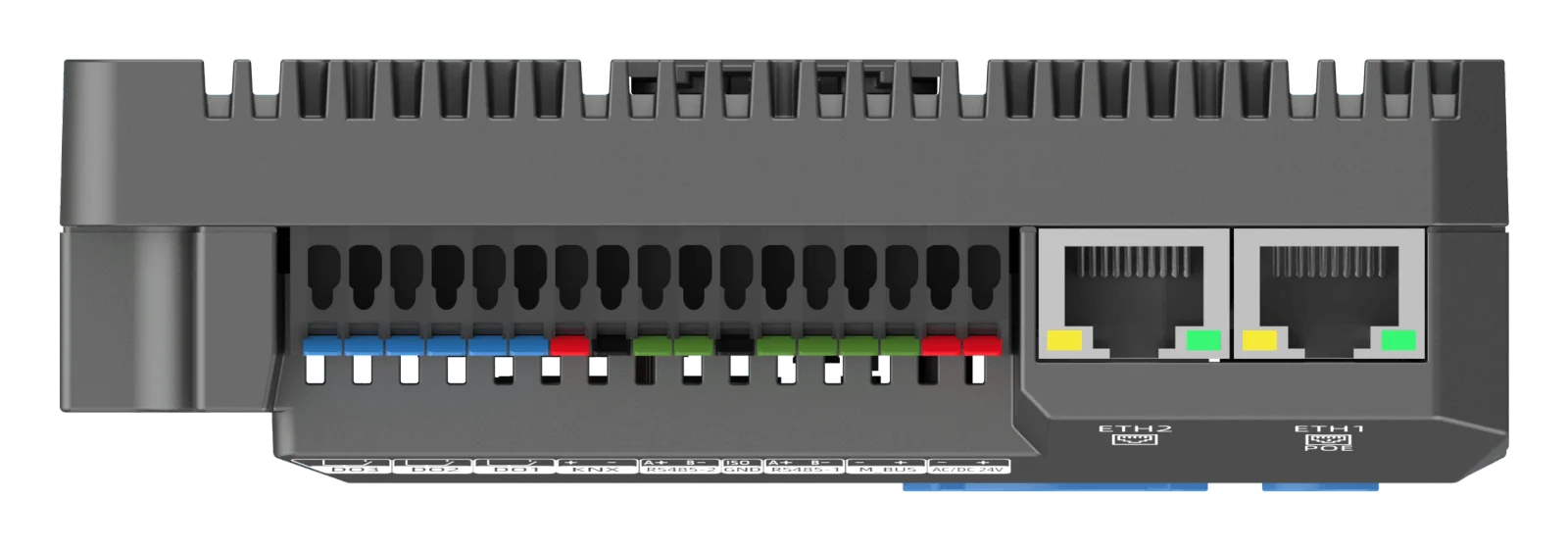
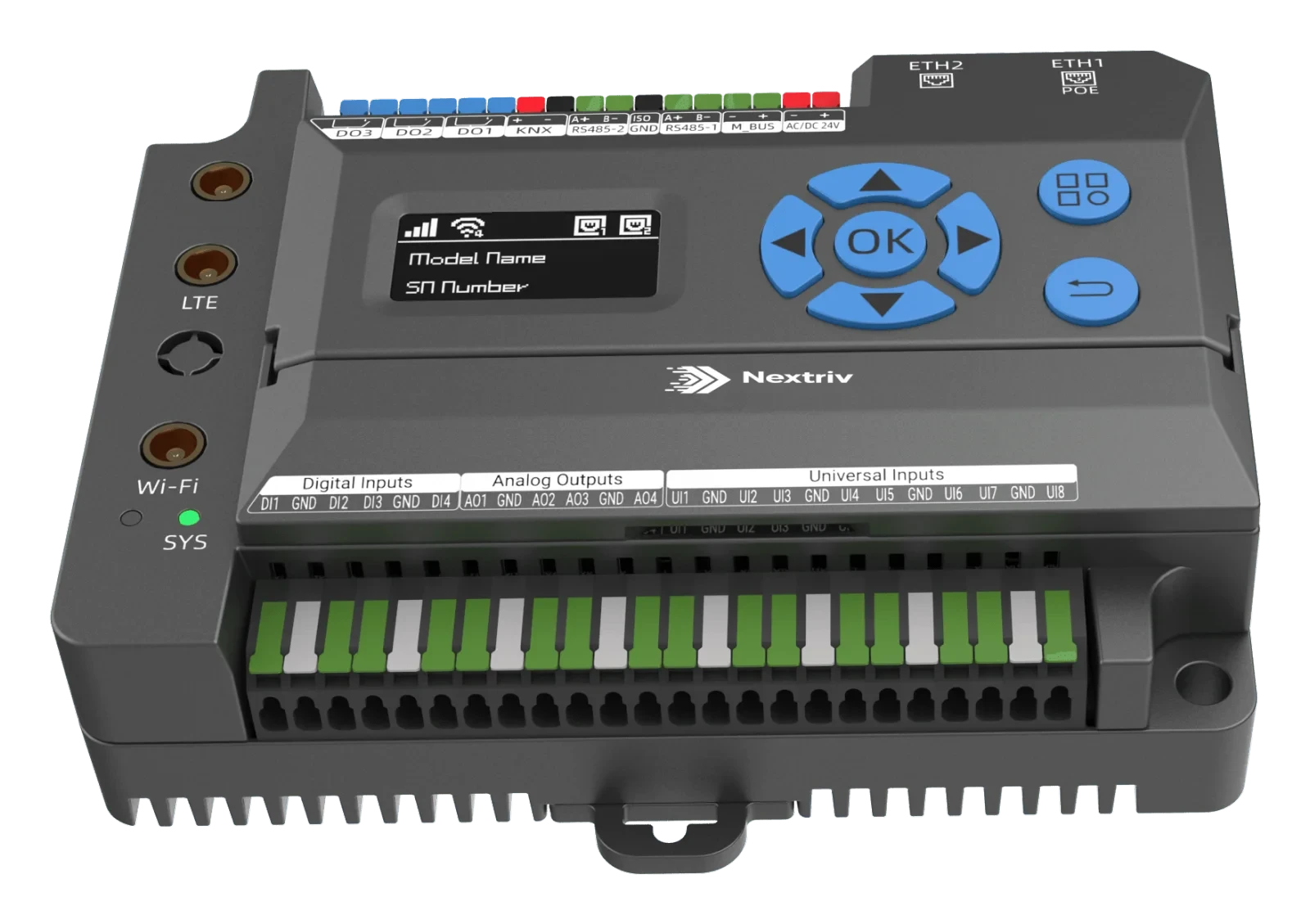
- All-in-one: long-range radio + 2 × RS485 + KNX + physical I/O + two Ethernet ports + Wi-Fi + 4G in a single DIN-rail housing — replaces several separate devices.
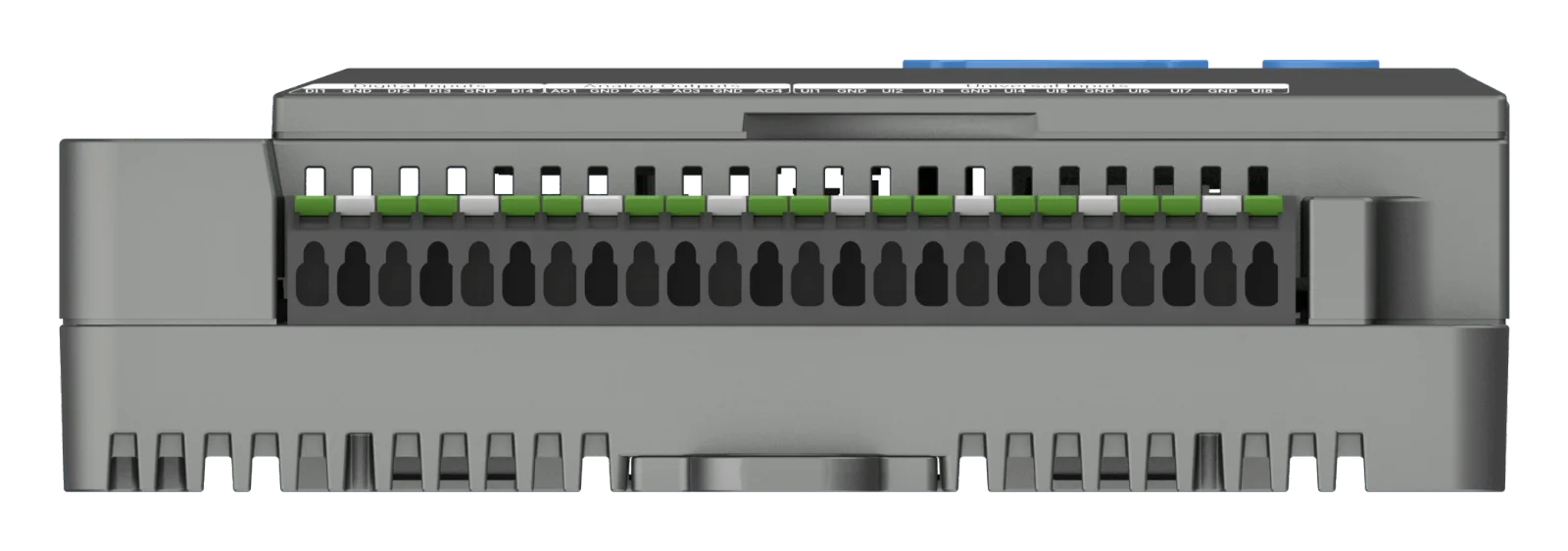
- 19 physical I/O points: 8 universal inputs (digital / 0–10 V / 4–20 mA / PT1000 / NTC — software-selectable), 4 digital inputs with pulse counters, 3 relays up to 3 A, 4 analogue outputs — no expansion modules.
- Two-way protocol conversion: acquisition over Modbus RTU / BACnet MS/TP / KNX/TP / BACnet/IP / Modbus TCP, data exposed to BMS/SCADA/cloud over BACnet/IP, Modbus TCP, MQTT or HTTP.
- Local logic at the edge: control works without the internet; the cloud is supervision, not a precondition.
- 1.3" OLED screen + 7 buttons — status, diagnostics and basic operation right at the distribution board, no laptop needed.
- NFC for instant wireless sensor pairing — add devices with a tap of your phone.
- Plug-in connectors instead of screw terminals — up to 70% shorter wiring time and fewer installation errors.
- Developer platform: Python SDK, Node-RED and Docker — your own applications, dashboards and integrations with no extra hardware.
- Industrial durability: declared MTBF above 500,000 hours, operation at -40…+60°C, PC + aluminium alloy housing; PT1000/NTC temperature channels accurate to ±0.5°C, 12-bit analogue inputs at ±1% of full scale.
- Automatic device discovery on the buses (including BACnet scanning) and a clear web panel: status, acquisition, forwarding — three tabs instead of a maze.
In the Nextriv system
The Hub Edge feeds the Nextriv platform with data no other gateway can collect: alongside wireless sensors, it reports Modbus meters, KNX points and third-party analogue sensors from its 4–20 mA / 0–10 V inputs. Everything lands on shared dashboards (nearly 20 widget types), gets the same four-threshold alerts per metric and flows into the same PDF reports and XLSX/CSV exports — regardless of whether the source was a radio sensor, a bus or a physical input.
Notifications about threshold breaches and failures travel over six channels — email, SMS, web push, MS Teams, Discord, an audible in-app alarm — and the gateway itself is supervised like every Nextriv gateway: status on a widget, an offline alert after 15 minutes of silence. In the other direction, the telemetry can feed a supervisory BMS over BACnet/IP or Modbus TCP, so the cloud and the building automation look at the same numbers.
Typical deployments
- Office building modernisations: legacy Modbus meters and new wireless sensors in one gateway, a complete data set for the BMS — more in our smart building solutions.
- Manufacturing plants: a mini-BMS for production halls — energy, climate and machine states with local control — see our manufacturing solutions.
- Hotels: the boiler room over Modbus, rooms wireless, the whole chain in one cloud — explore our hospitality solutions.
- Schools and campuses: existing automation (KNX, BACnet) joined with new telemetry without rebuilding the installation — details in our school solutions.
Specification
| Edge platform | 4 cores at 1.5 GHz (64-bit ARM), 2 GB DDR4, 32 GB eMMC + micro SD slot |
|---|---|
| Long-range radio | 8 channels, approx. 2,000 devices; multicast, FUOTA, noise analyser, gateway fleet |
| Buses | 2 × RS485 (Modbus RTU / BACnet MS/TP, up to 256 devices), 1 × KNX/TP (up to 63 devices); M-BUS (up to 20 devices) — in preparation |
| Inputs | 8 universal (digital / 0–10 V / 4–20 mA / PT1000 / NTC, 12-bit), 4 digital dry contact with pulse counter |
| Outputs | 3 relay (up to 3 A) + 4 analogue 4–20 mA / 0–10 V (12-bit) |
| Protocols | acquisition: Modbus RTU, BACnet MS/TP, KNX/TP, BACnet/IP, Modbus TCP; forwarding: MQTT(s), HTTP(s), BACnet/IP, Modbus TCP |
| Backhaul | 2 × Gigabit Ethernet (PoE PD on ETH1), 2.4 GHz Wi-Fi, 4G LTE Cat 1; automatic failover |
| Local operation | 1.3" OLED screen + 7 buttons; NFC for fast sensor onboarding |
| Security | VPN (OpenVPN/IPsec/WireGuard and more), firewall, multi-level permissions; Python SDK, Node-RED |
| Power supply | 24 V DC/AC, PoE 802.3af or USB-C; typical draw 8.2 W |
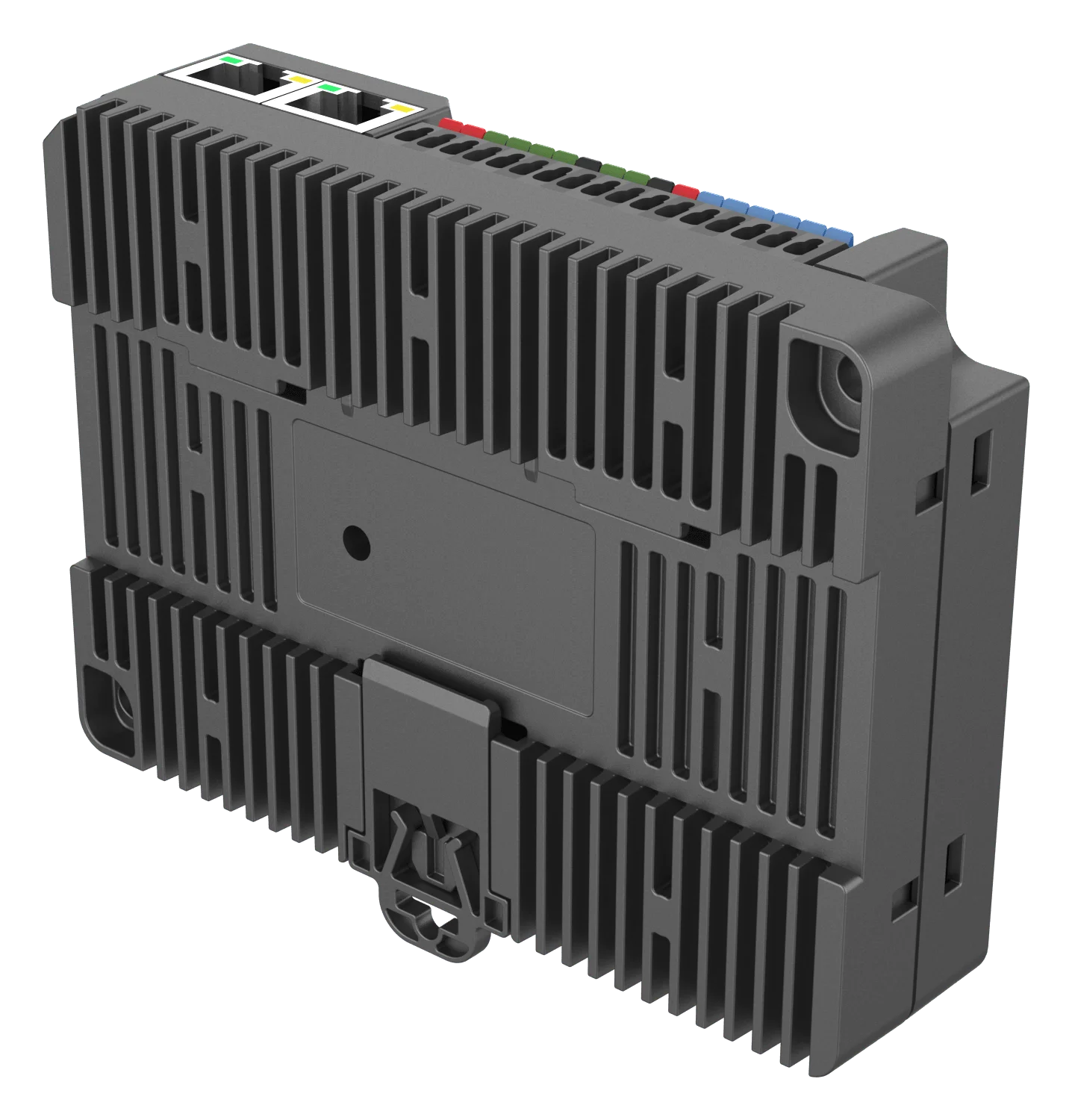
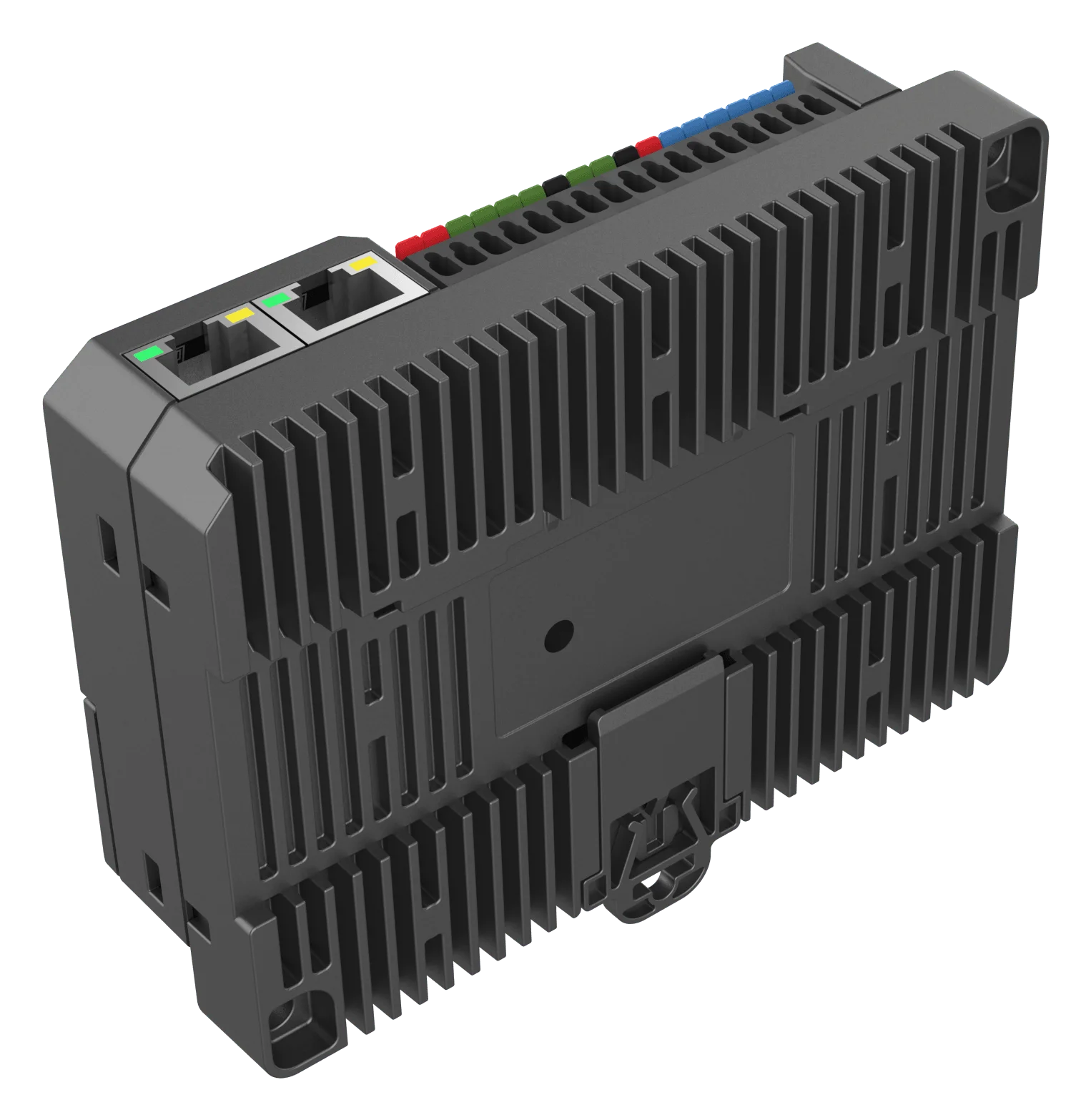
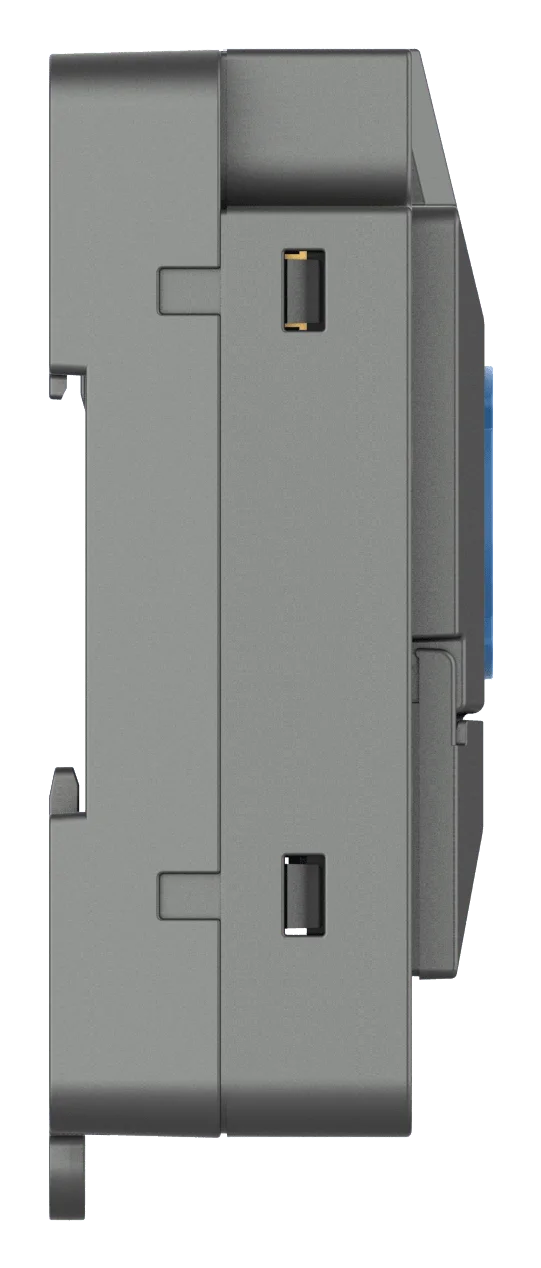
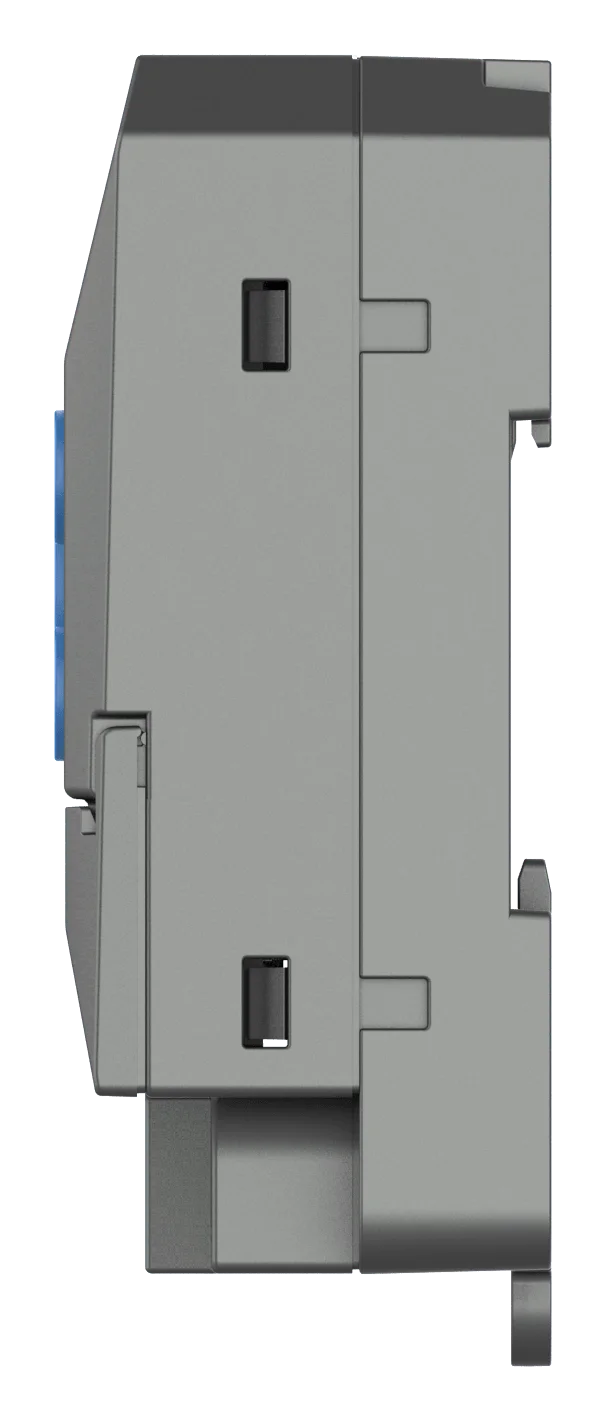
| Housing | PC + aluminium alloy, 123 × 90 × 36 mm, 376 g, IP30 |
| Operating conditions and mounting | -40…+60°C, 0–95% humidity; wall or DIN rail, antennas included |
Related products
Other devices from the same family.
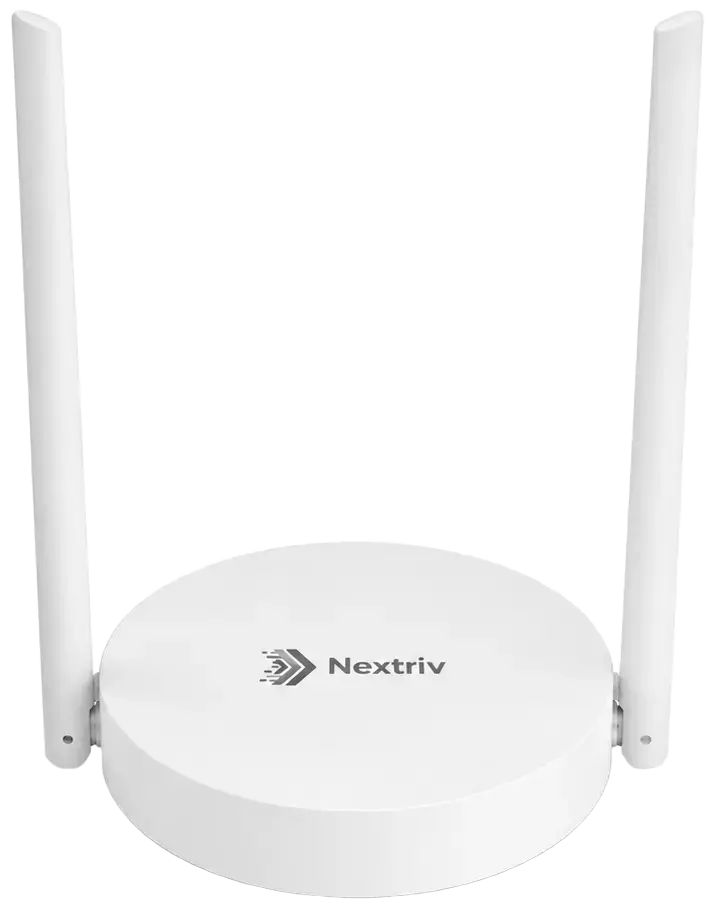
Nextriv Hub Mini
SKU: NX-GW-MINI
Lightweight 8-channel indoor radio gateway — the simplest way to start a Nextriv network. Discreet housing, USB-C or PoE power, optional 4G modem; handles up to approx. 2,000 devices.
€204 netView product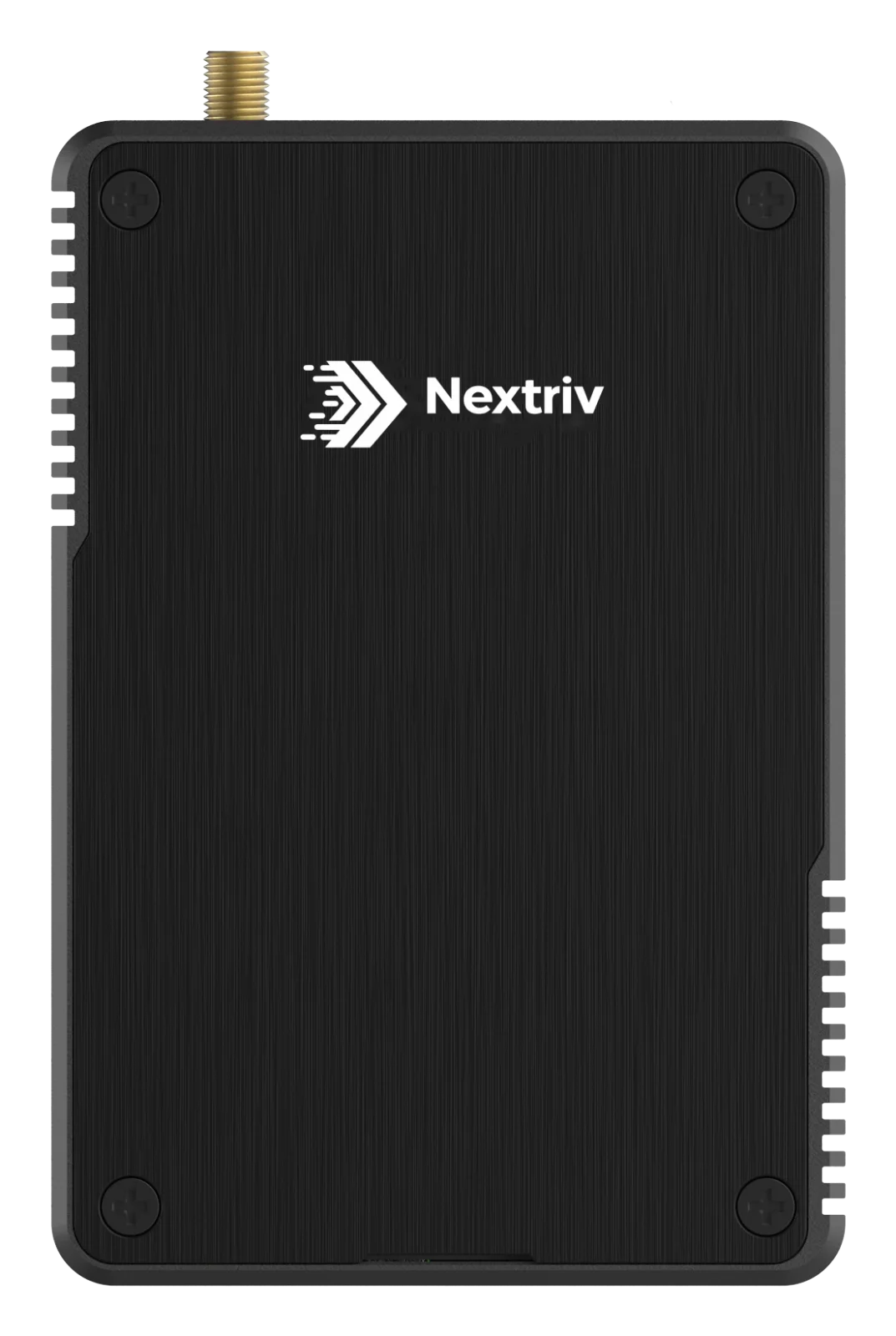
Nextriv Hub Compact
SKU: NX-GW-CPT
Industrial indoor radio gateway in a metal housing with DIN-rail mounting. Handles approx. 2,000 sensors and feeds data into your BMS over BACnet/IP and Modbus.
€422 netView product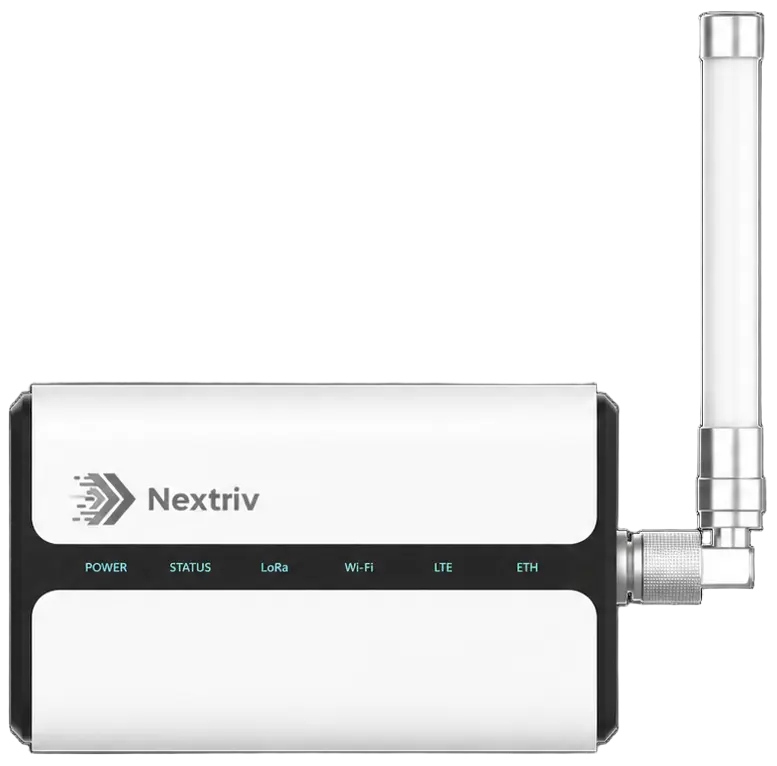
Nextriv Hub Pro
SKU: NX-GW-PRO
Semi-industrial radio gateway with IP65 ingress protection and a -40…+70°C operating range — for indoor and sheltered outdoor spots. Gigabit Ethernet with PoE, Wi-Fi and optional 4G with failover.
€511 netView product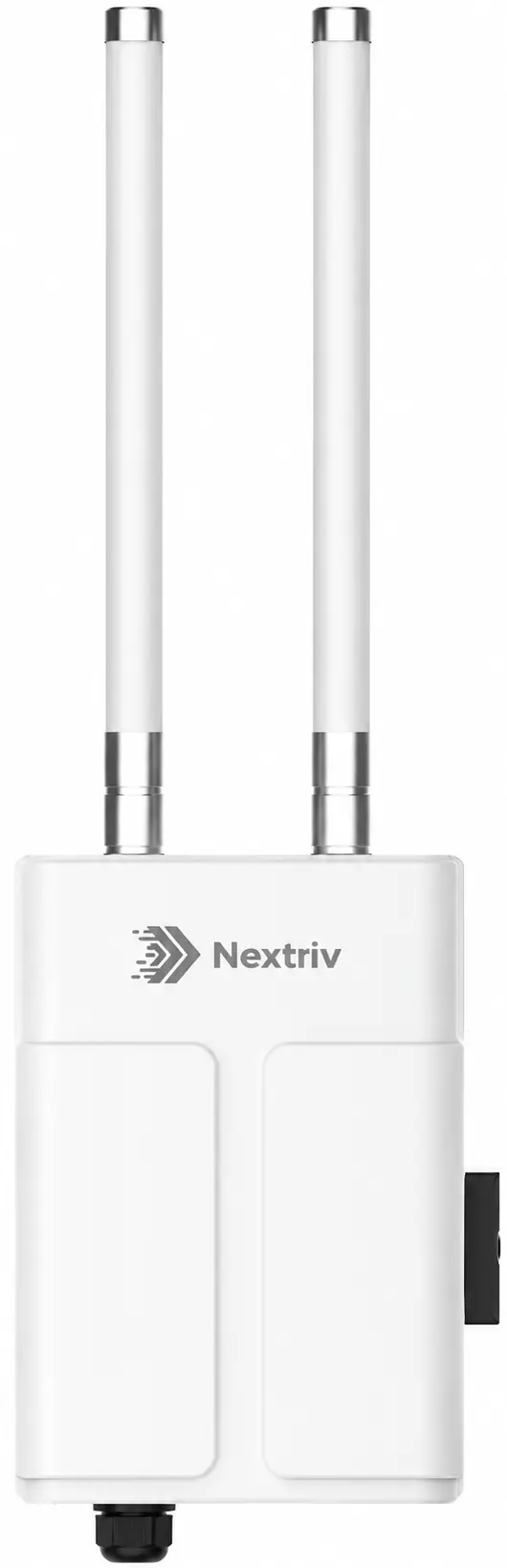
Nextriv Hub Outdoor
SKU: NX-GW-OUT
Fully outdoor IP67 radio gateway with a GNSS receiver and a range of up to 15 km line of sight. The foundation of a Nextriv network in open terrain: agriculture, industry, infrastructure.
€844 netView product
Not sure which set to choose?
Tell us about your facility and we'll match sensors and a gateway to the exact rooms you need to monitor — no unnecessary hardware.