
Probe measurement probes
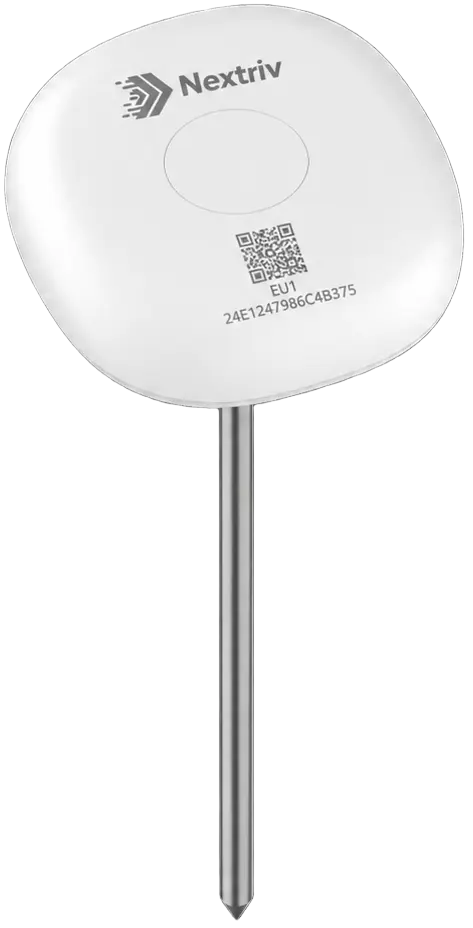
Nextriv Probe Foodspike temperature probe for bulk materials
SKU: NX-PR-FOOD
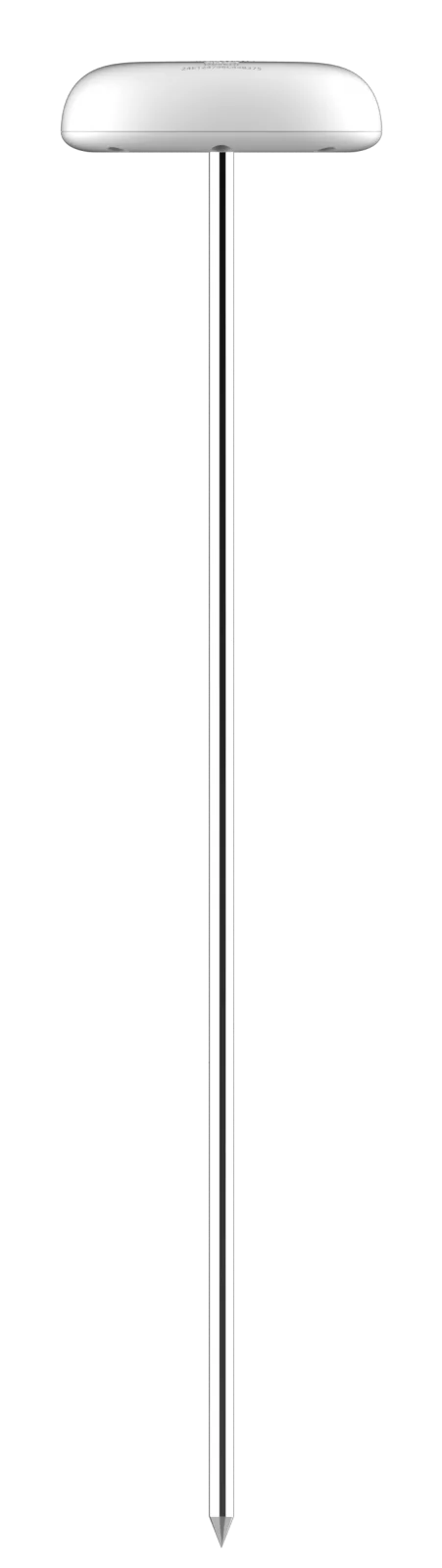
40 cm spike temperature probe driven into a heap, stack or bulk material — early detection of self-heating in grain, hay, tobacco and compost. Food-grade steel, IK10 impact-rated housing.
€144net
VAT is added to the price.
Description
- 40 cm spike measures inside the heap
- Detects self-heating by rate of rise
- Withstands phosphine and hammer driving
- Food-grade 316 stainless steel
- Up to 10 years on a replaceable battery
What it is for
A thermometer on the warehouse wall won't tell you what's happening a metre deep inside the heap. Grain, tobacco, hay and compost heat up from within — and by the time the problem shows on the surface it is usually too late: heat-damaged grain, mouldy tobacco or, in the worst case, a haystack catching fire on its own. The Nextriv Probe Food is a 40-centimetre stainless steel spike with a radio transmitter in a single, compact housing: drive it deep into the stored material and from that moment the internal temperature reports itself.
The construction is honestly field-grade: the housing's impact zone is rated IK10 and withstands driving with a rubber mallet, the probe and housing are made of food-contact-approved materials, and the whole unit resists the corrosive effects of phosphine — the gas used to fumigate grain and tobacco warehouses. That detail rules out most electronics: this sensor can stay in the stack during gassing.
The most important safety mechanism is the rapid temperature change alarm. Self-heating has a signature — a sudden, unnatural rise in the reading deep inside the material — and it is this dynamic, not just the absolute value, that the sensor uses to recognise trouble. The notification arrives before spontaneous combustion or quality losses measured in tens of tonnes.
For the user it's a "drive it in and forget it" philosophy: up to 10 years on a single replaceable battery, a local buffer of 1,200 readings with retransmission, and NFC configuration from a phone. One motion of the hand replaces years of manual probing.
Usage scenarios
- Tobacco warehouse: spikes distributed through the stacks report the internal temperature during curing. Phosphine resistance lets the sensors stay in place during fumigation, and the sudden-rise alarm protects lots worth hundreds of thousands of złoty.
- Flat grain store: instead of a weekly walk-round with a hand probe — continuous measurement at chosen points in the heap. A rising trend at one point is an early sign of self-heating or pest activity.
- Hay and straw storage: freshly harvested bales heat up most in the first weeks. An alarm threshold set below the critical temperature buys time to take the stack apart before the risk of spontaneous combustion appears.
- Composting site: the phases of composting — heating up, the hot phase, cooling — visible on a chart without a thermometer on every walk-round. Maintaining a sufficiently high temperature documents the sanitisation of the batch.
- Feed warehouse: temperature control inside heaps and big bags of feed components. A damp lot betrays itself with a temperature rise long before the musty smell.
- Food processing: food-grade 316 steel and IP67 sealing allow bulk raw materials to be monitored in silos and processing plant warehouses, with a measurement history for quality documentation.
Key features
- All in one: a 40 cm probe + radio transmitter in a single housing — no cables, boxes or installation work; installing it = driving it in.
- Food-grade 316 stainless steel probe (Ø7 × 400 mm); housing made of food-contact-approved plastic.
- Resistance to the corrosive effects of phosphine — the sensor can stay in the warehouse during fumigation.
- IK10-rated impact zone — designed to be driven in, even with a rubber mallet, and to work in rough surroundings.
- Rapid temperature change alarm + classic thresholds — detects self-heating by its dynamics, not just the absolute value.
- Local buffer of 1,200 readings with retransmission and backfill polling — a complete history even after connectivity gaps.
- Up to 10 years on a replaceable battery under favourable radio conditions; power on/off and configuration via NFC from a phone.
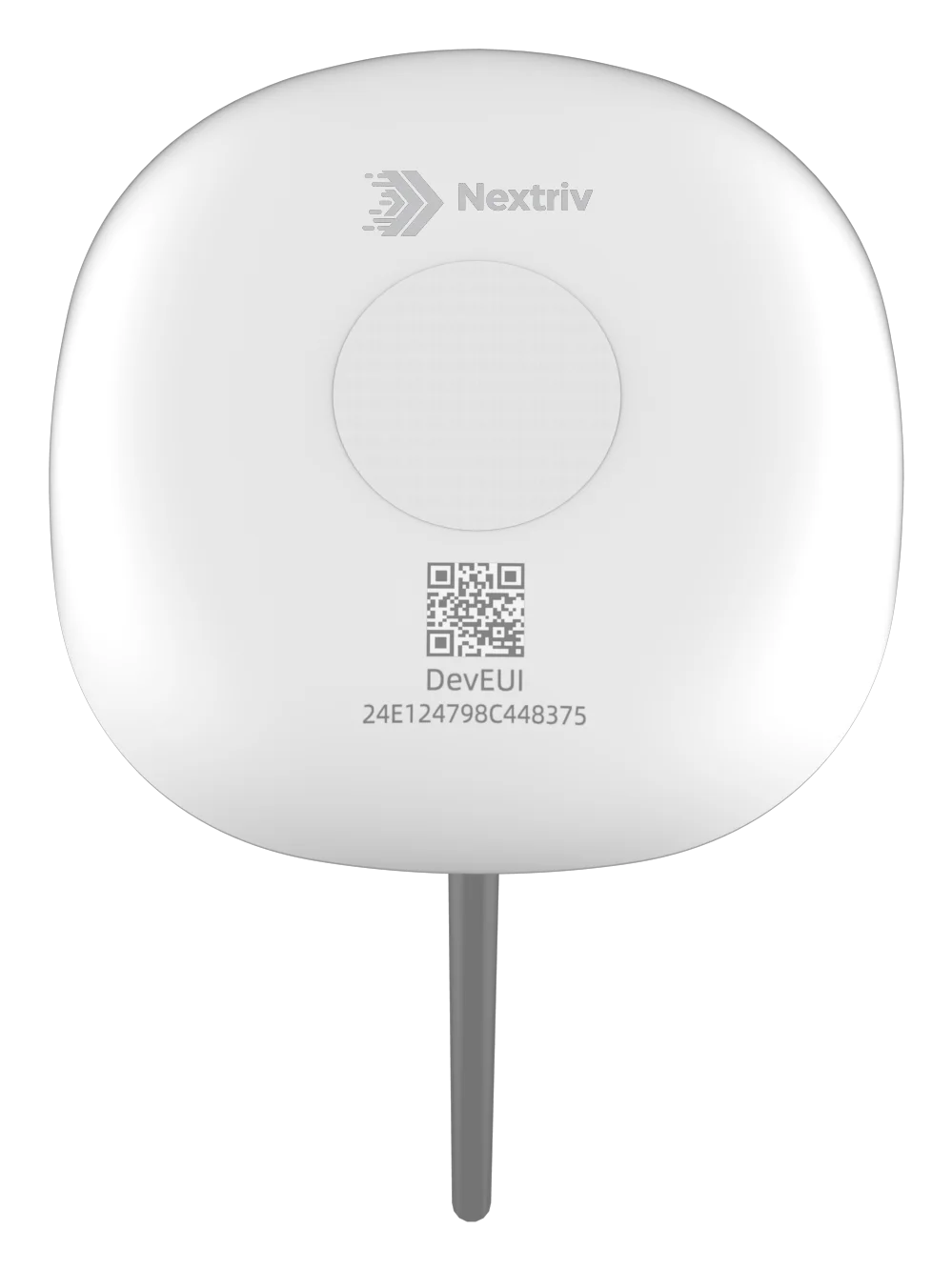
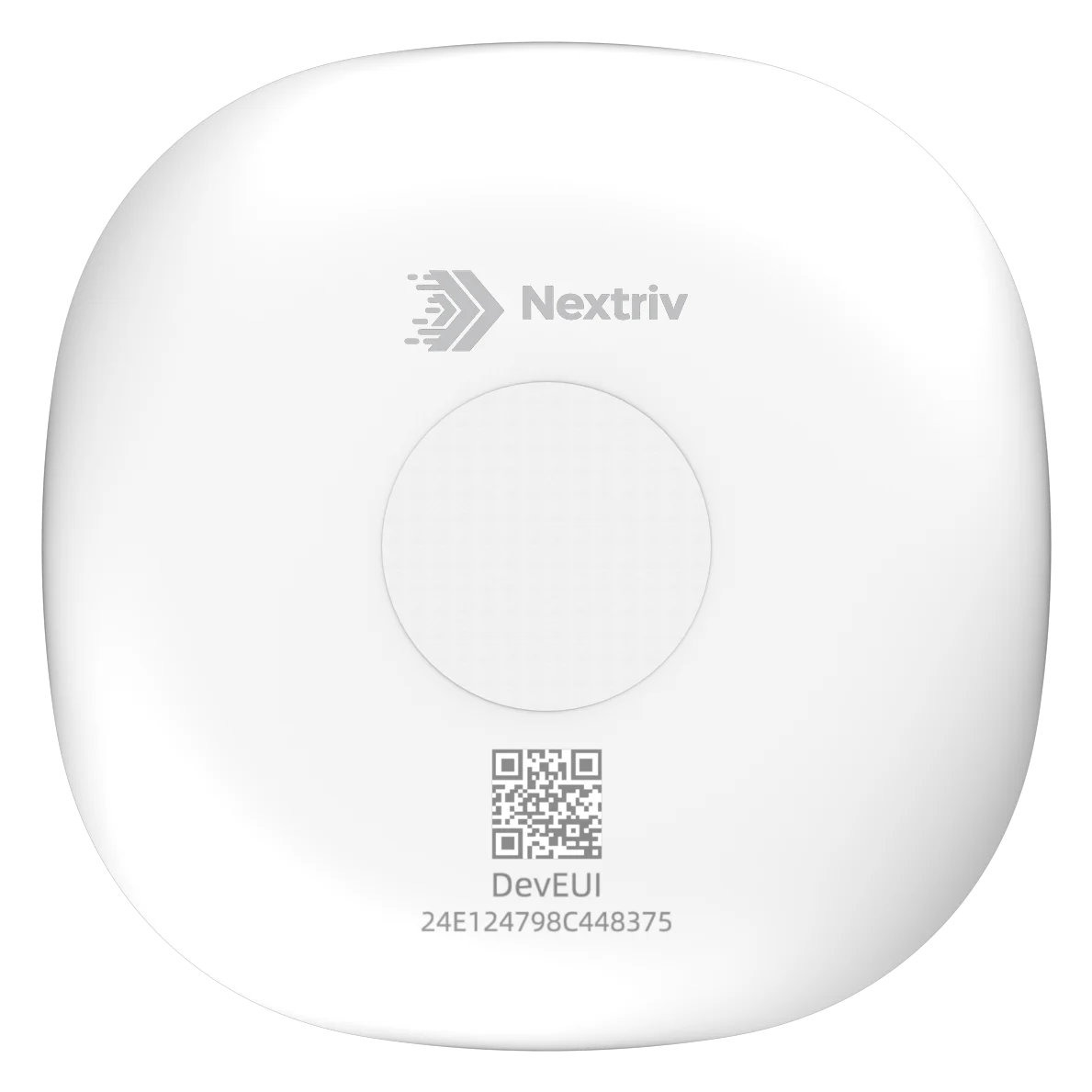
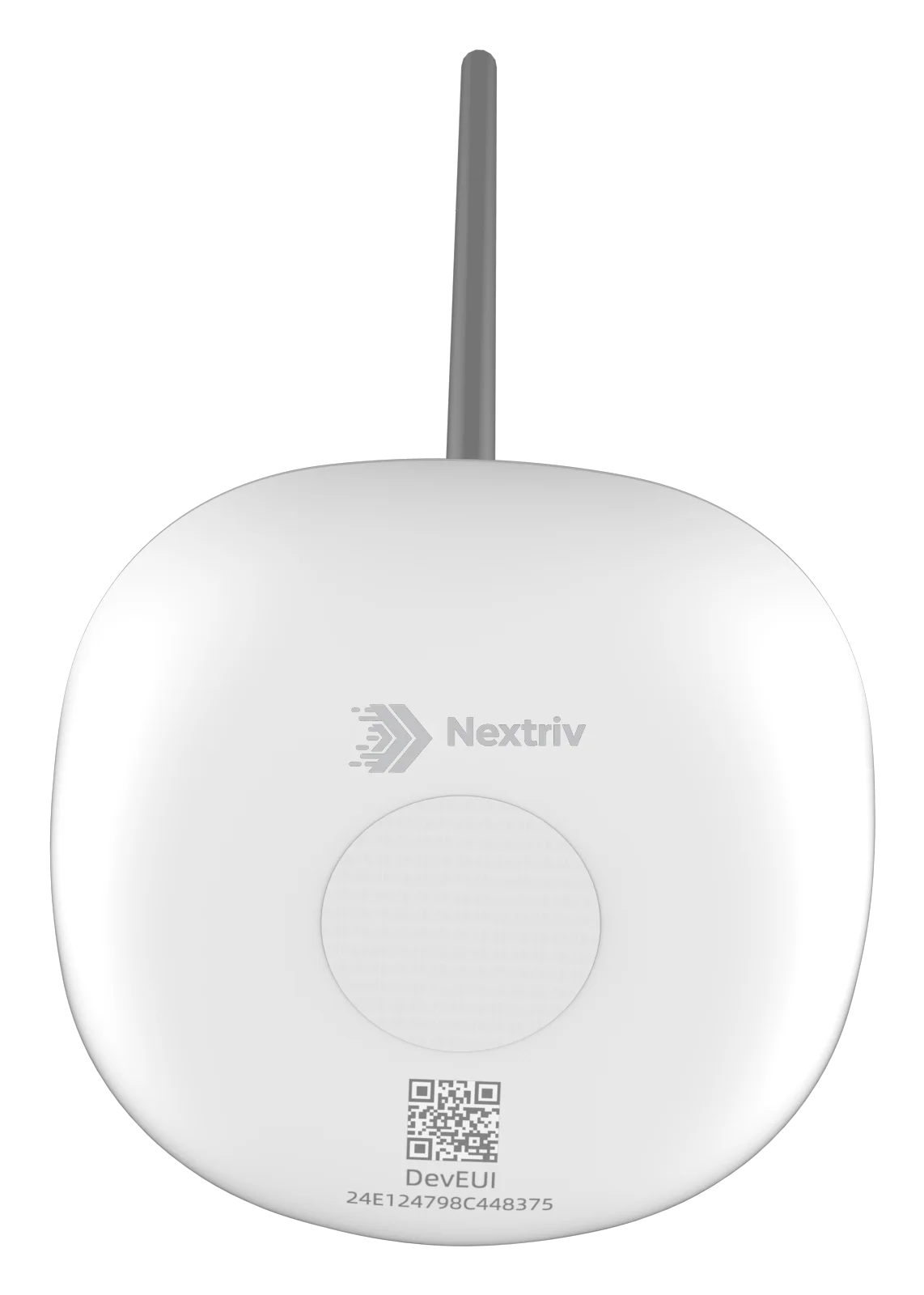
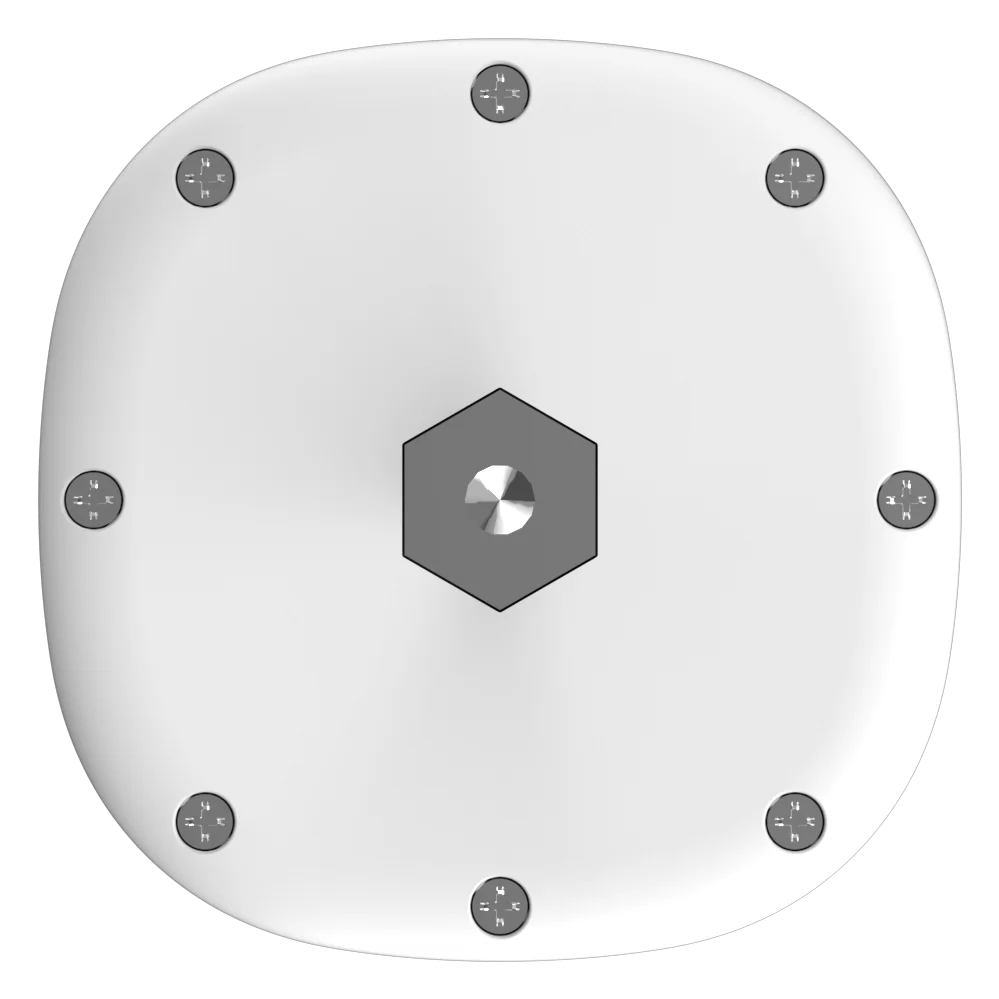
- IP67 sealing, operation at 0–95% humidity; the compact, disc-shaped transmitter (approx. 9 cm across) stays out of the way during handling.
In the Nextriv system
Four temperature thresholds separate process phases from threats: the composting technologist watches the sanitisation window, the grain storekeeper the warning level, and the critical alarm with escalation wakes the owner at three in the morning only when it truly must. Notifications via SMS, push, email, Microsoft Teams or Discord reach people in the field, and event statuses and comments document the response.
Trend charts from multiple spikes line up points in the heap side by side — the difference between them is often the first sign of trouble. PDF reports and XLSX/CSV exports complete the batch quality documentation, and the platform makes sure no spike drops off the network unnoticed.
Typical deployments
- Agriculture: grain, hay, straw and feed on farms — agriculture solutions.
- Warehouses: heaps, silos and flat stores — warehouse solutions.
- Livestock buildings: feed components and bedding — livestock building solutions.
- Food manufacturing: bulk raw materials in processing plants — manufacturing solutions.
Specification
| Measurement range | −30…+70 °C |
|---|---|
| Accuracy | ±0.5 °C (typical), 0.1 °C resolution |
| Probe | food-grade 316 stainless steel, Ø7 × 400 mm |
| Mechanical resistance | IK10 — the reinforced zone withstands driving (including with a hammer) |
| Chemical resistance | plastic resistant to the corrosive effects of phosphine (warehouse fumigation) |
| Alarms | thresholds + rapid temperature change alarm |
| Local memory | 1,200 entries, retransmission and backfill polling |
| Connectivity | Long-range radio — up to ~2 km in urban areas, ~15 km in open terrain |
| Power supply | 1 × 4,000 mAh lithium battery, replaceable |
| Battery life | up to 10 years under favourable radio conditions; approx. 4.8–5.5 years at maximum-range settings (1-h interval, 25 °C) |
| Ingress protection | IP67 |
| Transmitter dimensions | Ø92 × 26 mm |
Related products
Other devices from the same family.
Nextriv Probe PT100
SKU: NX-PR-PT100
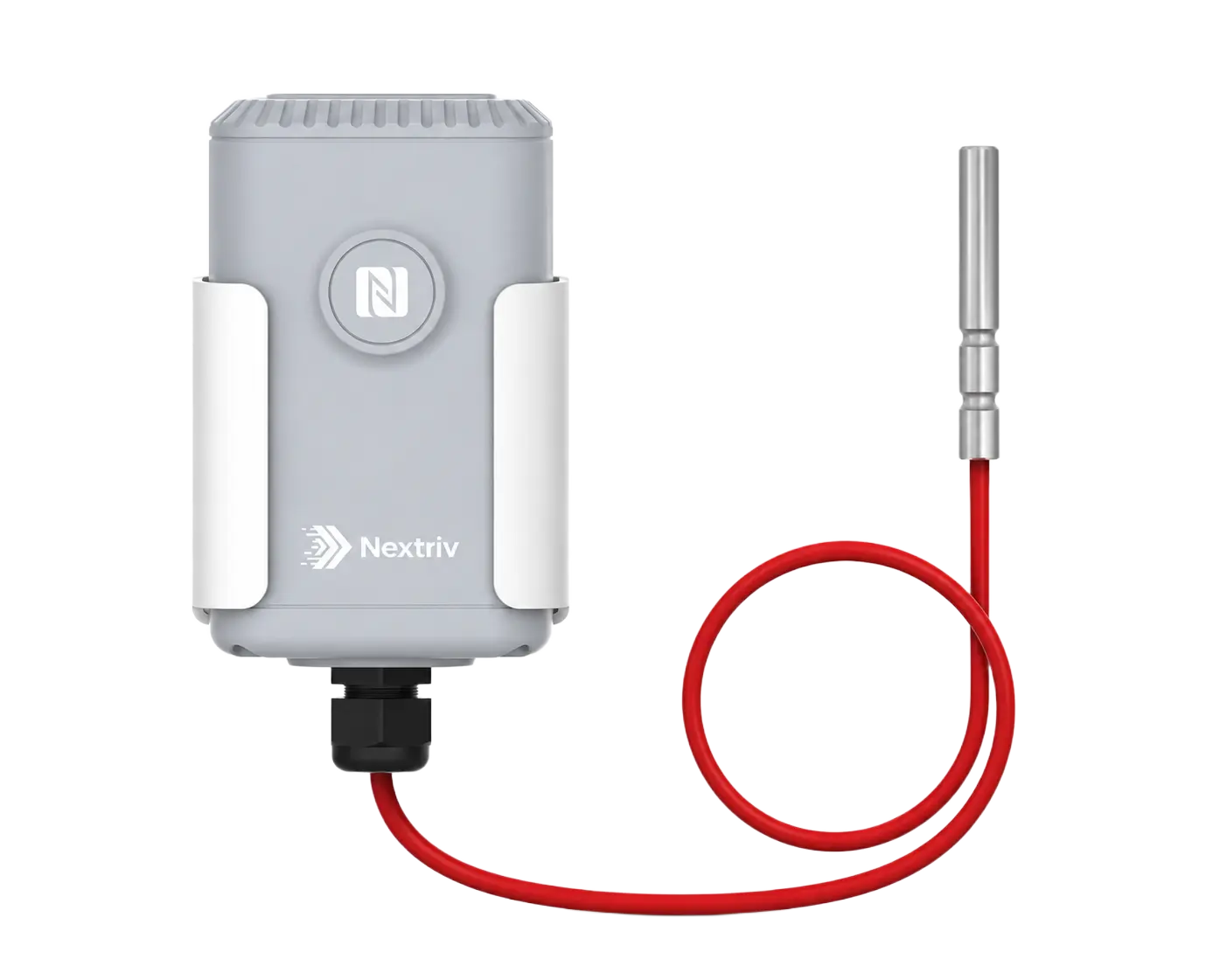
Industrial PT100 temperature probe with long-range radio transmission — range variants from −200 °C to +800 °C, ±0.5 °C accuracy, IP67 transmitter with a battery lasting years.
- Temperature
Nextriv Probe Pressure
SKU: NX-PR-PRES
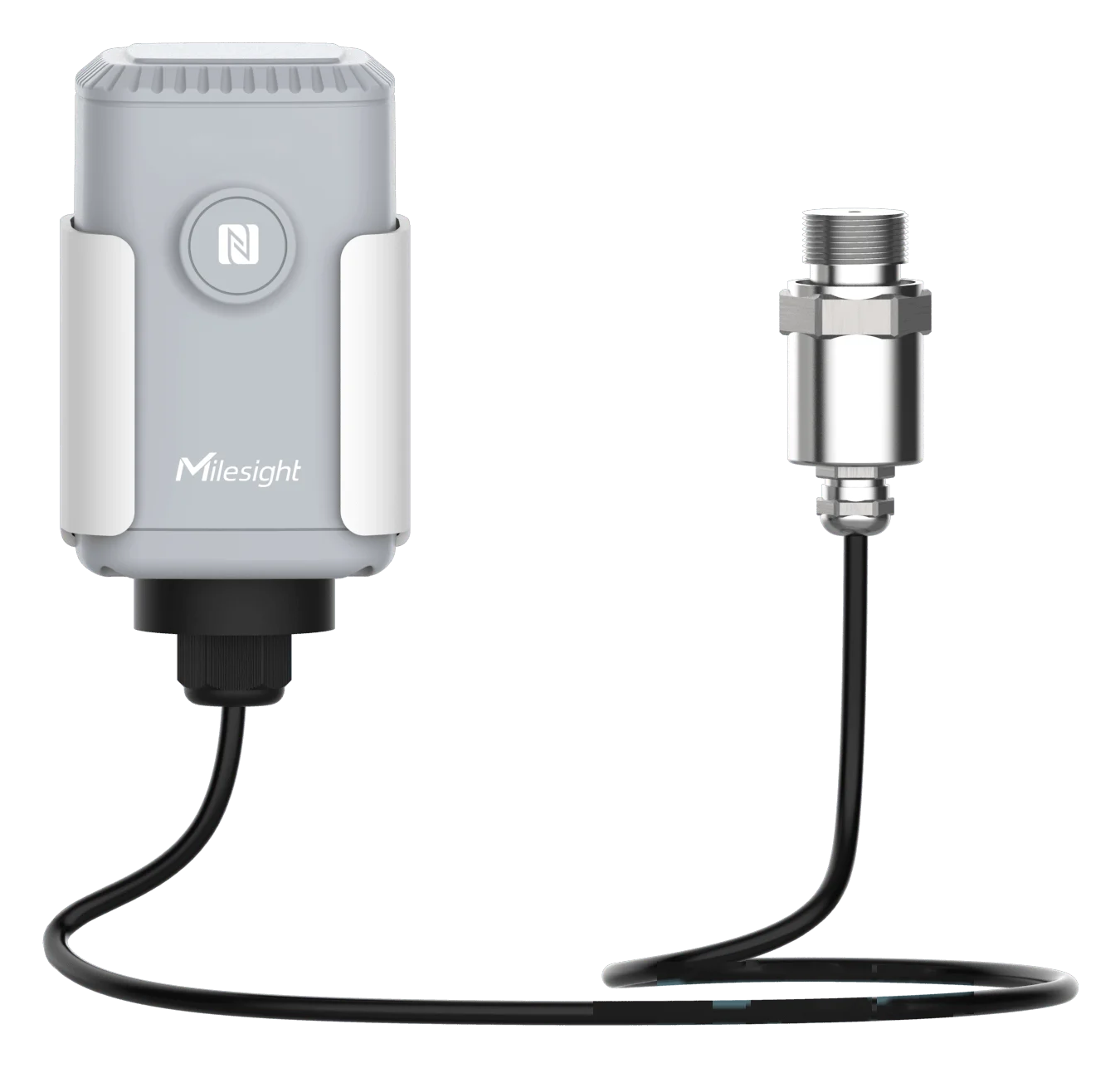
Wireless 0–16 bar pressure sensor for liquids and gases with a 316L stainless-steel transducer (G 1/2″ fitting) — supervising water mains, fire systems and compressed air without signal cabling.
- Pressure
Nextriv Probe Liquid Level
SKU: NX-PR-LQI
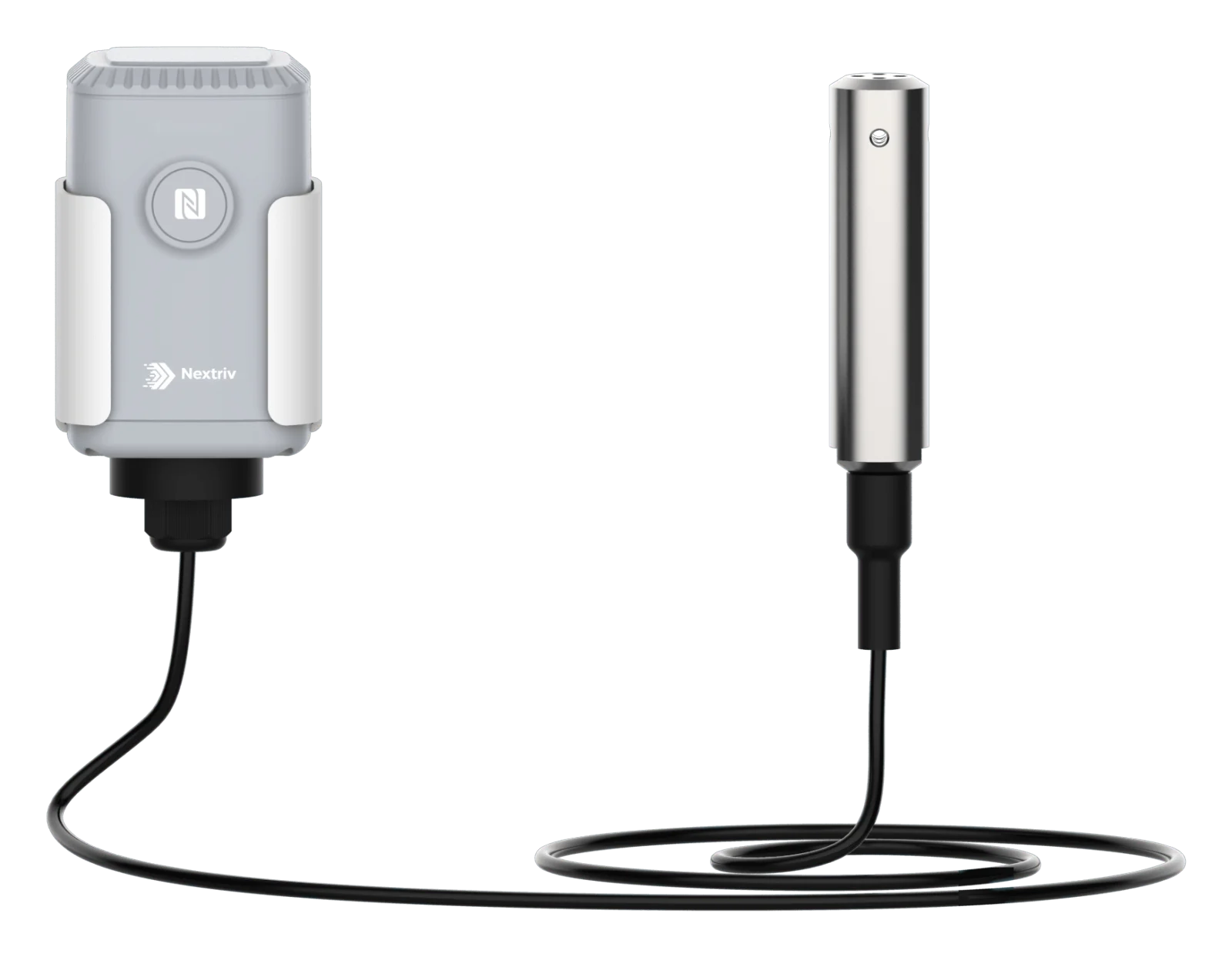
Hydrostatic submersible probe for liquid level measurement in tanks, wells and open water — immune to foam, waves and wind. Standard ranges 0–3 m and 0–5 m, others made to order.
- Fill level
Nextriv Probe Soil
SKU: NX-PR-SOIL
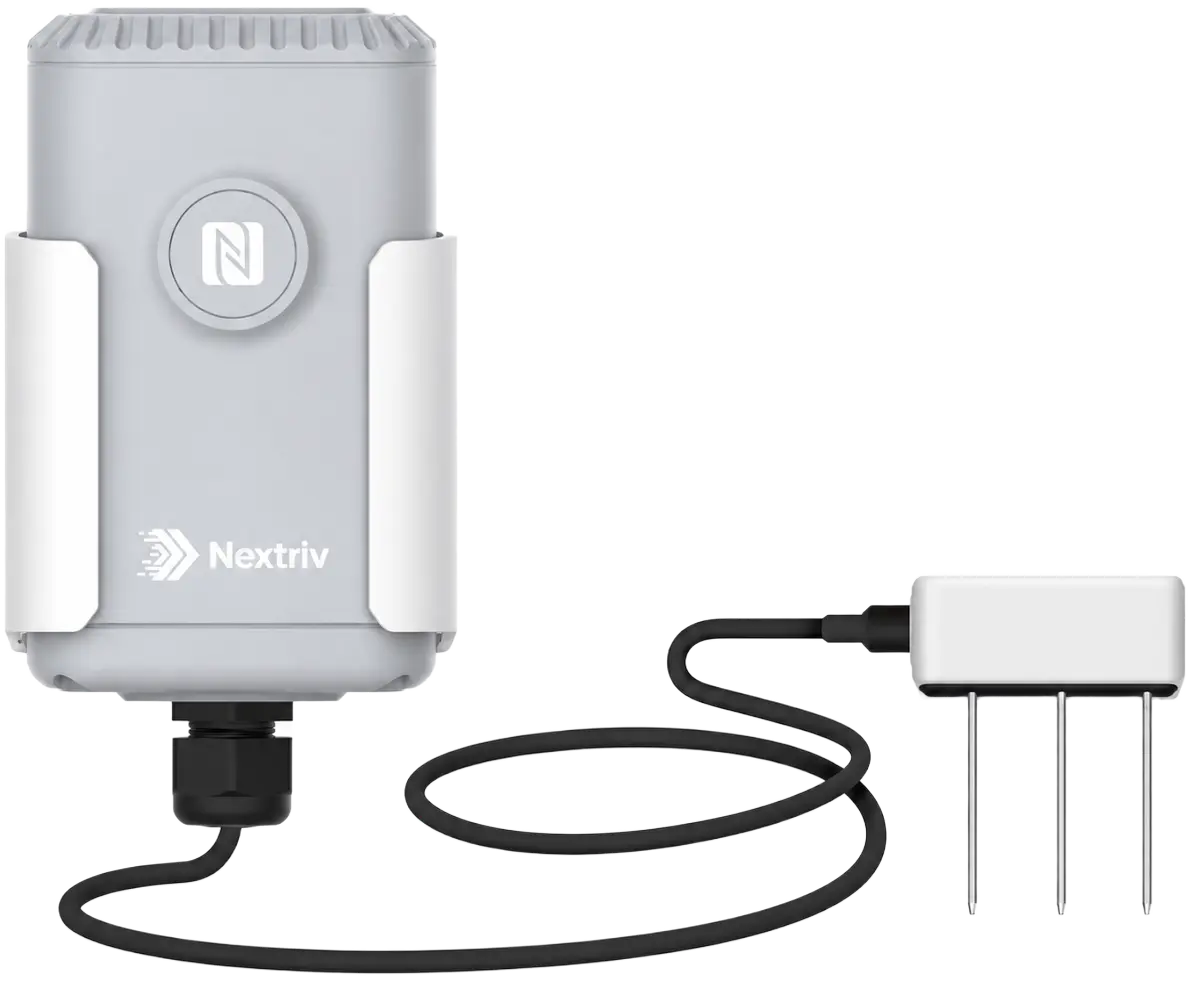
3-in-1 soil probe: moisture, temperature and electrical conductivity (EC) in the root zone — precision irrigation and fertilisation control based on data, not gut feeling.
- Soil parameters
Not sure which set to choose?
Tell us about your facility and we'll match sensors and a gateway to the exact rooms you need to monitor — no unnecessary hardware.