
Probe measurement probes
Nextriv Probe Pressurewireless 0–16 bar pressure sensor
SKU: NX-PR-PRES
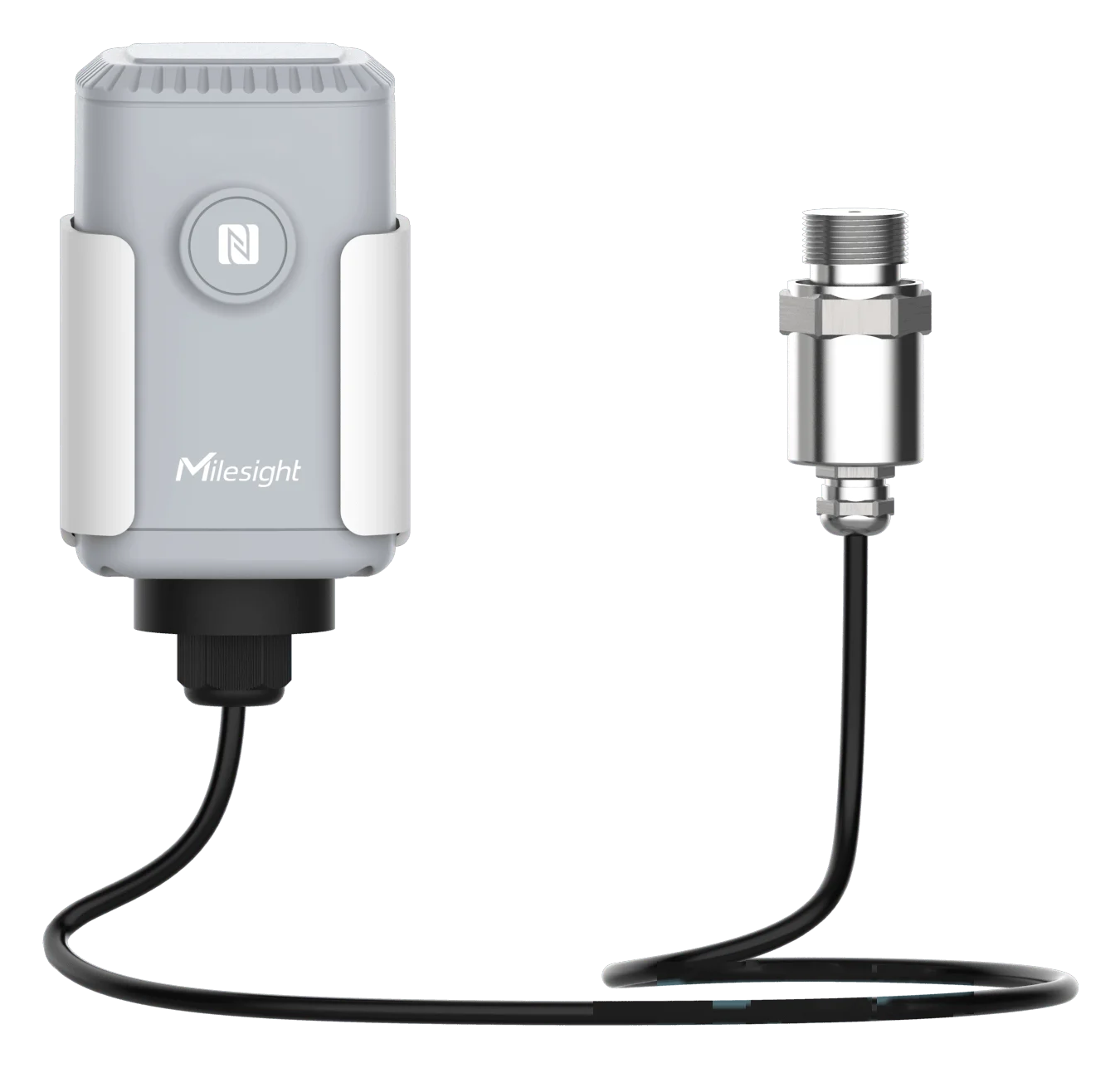
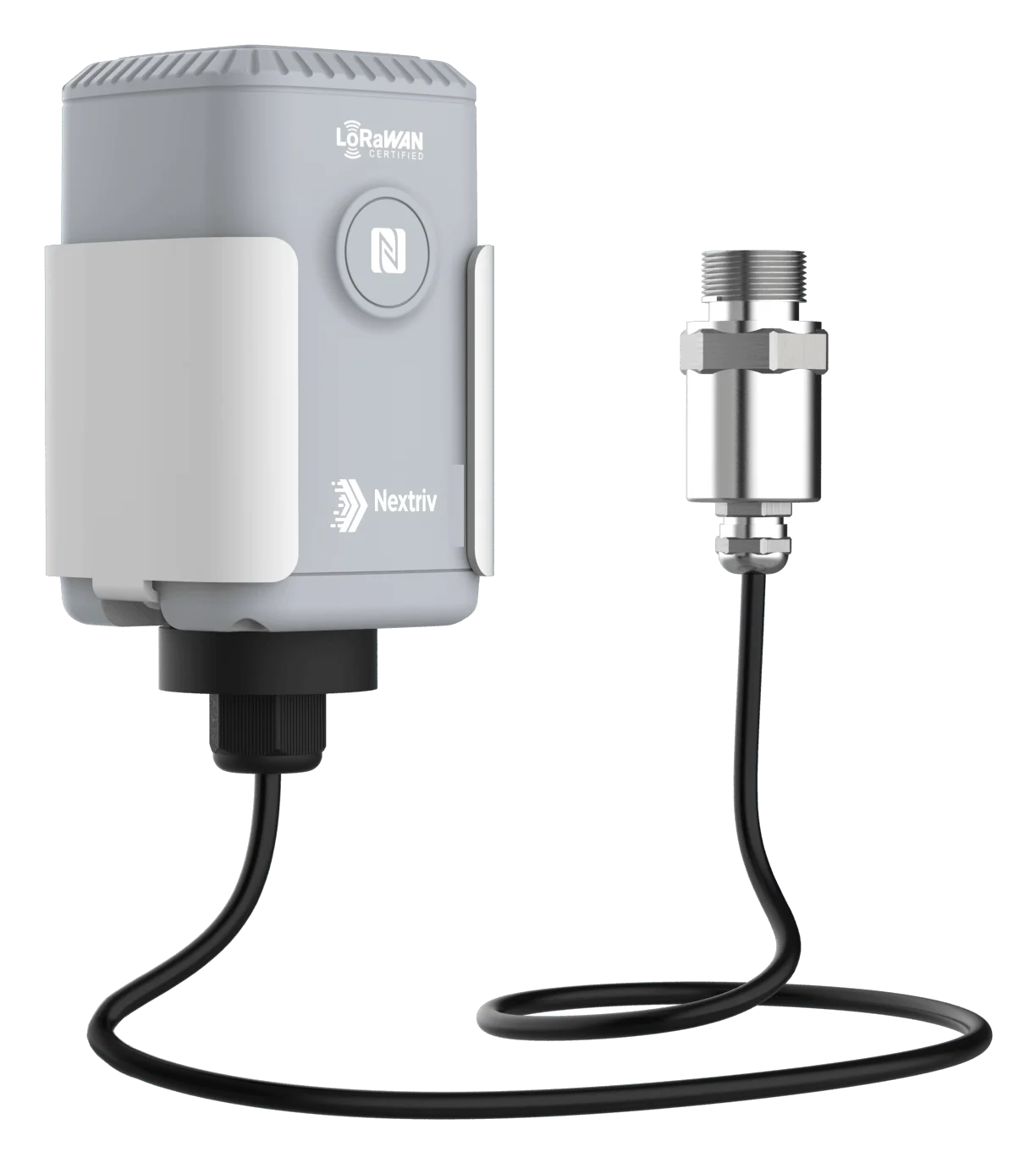
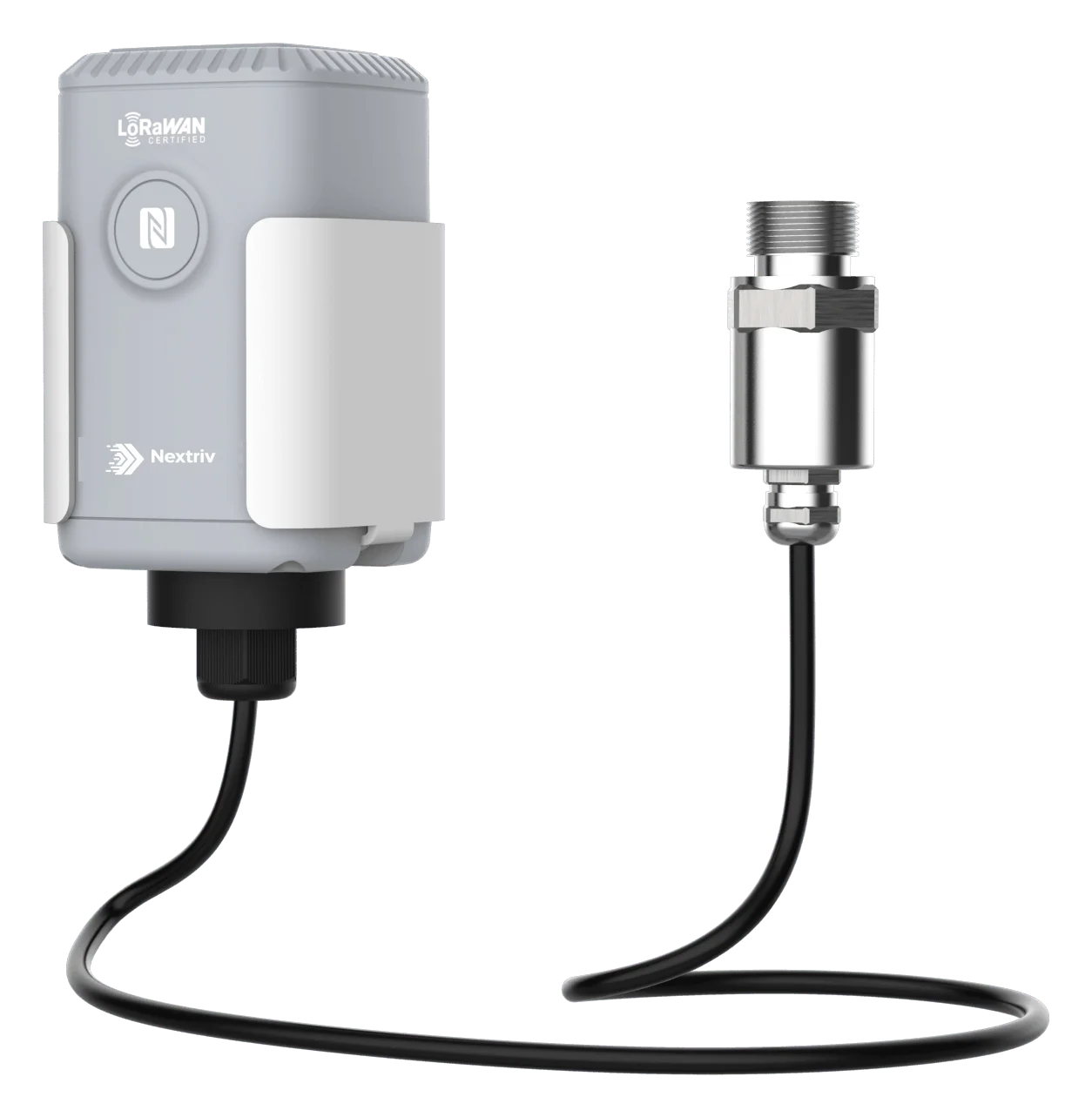
Wireless 0–16 bar pressure sensor for liquids and gases with a 316L stainless-steel transducer (G 1/2″ fitting) — supervising water mains, fire systems and compressed air without signal cabling.
€333net
VAT is added to the price.
Description
- 316L stainless steel, G 1/2″ fitting
- Accuracy ±0.5% of full scale
- Liquids and gases, 0–16 bar range
- Up to 10 years without mains power
- Immediate report when a threshold is crossed
What it's for
A pipeline doesn't warn you it's about to burst — but the pressure inside it almost always changes first. Nextriv Probe Pressure is a battery-powered guardian for your installations: a 316L stainless-steel transducer screwed into a standard G 1/2″ port, paired with a radio transmitter that reports liquid and gas pressure for years without a single metre of cabling. It was built to catch pressure anomalies in time — before they end in a ruptured pipe, a flood or downtime.
It is aimed at maintenance teams, water utilities and facility managers who today check pressure gauges on walk-rounds — that is, once per shift at best. The sensor turns those walk-rounds into continuous supervision: ±0.5% full-scale accuracy picks up even small deviations, and alarm thresholds send an immediate report when pressure leaves the allowed band.
Structurally, this is an industrial-grade device: resistant to shock, machine vibration and chemical corrosion, with broad media compatibility — from water through compressed air to technical gases. Long-term stability of ±0.3% of full scale per year and 150% overload capacity mean the measurement stays trustworthy for years and shrugs off water hammer.
The 0–16 bar range covers the vast majority of water, fire-protection, compressed-air and process-media installations — and the battery-powered design lets you put the measurement point exactly where it is needed, not where there happens to be power: in a water-main chamber, on a hydrant riser, at a node on the plant's perimeter.
Use cases
- Water distribution network: sensors at network nodes report the pressure profile. A sudden drop on one section is the signature of a leak — the crew heads to the failure before residents call about having no water.
- Fire-protection system: continuous pressure supervision of hydrant risers and sprinkler systems with an alarm on any drop below threshold. The facility manager has continuous, automatic proof of readiness — no clipboard walk-rounds.
- Compressor room: a pressure drop in the compressed-air network outside production hours reveals leaks that can cost thousands a year in energy. The sensor's trend shows the scale of the problem in black and white.
- Agricultural irrigation: a pressure differential across the filter growing day by day means the filter needs flushing; a drop at the end of the line means a damaged section. Two sensors instead of driving around the fields.
- Heat substation: supervise heating and hot-water circuits of multiple buildings from one screen — a drop in static pressure means lost system water and a risk of air locks in the installation.
- Machinery and process media: pressure supervision of cooling water, oils and gases where a burst hose means a stopped line. The alert reaches maintenance within seconds.
Key features
- 316L stainless-steel transducer with a G 1/2″ fitting — screws into typical measurement ports without adapters.
- Accuracy of ±0.5% of full scale and 0.01 bar resolution — even slow, subtle pressure changes are visible.
- Long-term stability of ±0.3% FS/year and 150% FS overload capacity — measurement resilient to water hammer and the passage of time.
- Liquids and gases in one device — from water through compressed air to technical media.
- Design resistant to shock, machine vibration and chemical corrosion; transducer IP65, transmitter IP67.
- Up to 10 years on a replaceable battery — installation supervision in places without power.
- Alarm thresholds with an immediate report; local buffer of approx. 1000 readings with retransmission after a connectivity outage.
- Configuration via NFC from a phone; transmitter mounting: wall, post, DIN rail (optional kit).
In the Nextriv system
Four thresholds per metric play first violin here: the lower band catches leaks and pump failures, the upper one blockages and overloads, while separating warning levels from critical ones filters minor fluctuations from real failures. Notifications via SMS, push, e-mail, Microsoft Teams or Discord reach maintenance within seconds, and escalation policies make sure an unacknowledged alarm goes up the chain.
The dashboard lays out pressure from multiple network points on one screen — with trends, sensor comparison and a list of offline devices. PDF reports and XLSX/CSV exports document fire-system readiness or network tightness for audits and the insurer.
Typical deployments
- Manufacturing and maintenance: compressed air, process media, machinery — solutions for manufacturing.
- Buildings and infrastructure: fire-protection systems, heat substations, booster stations — solutions for buildings.
- Agriculture: irrigation systems and pumping stations — solutions for agriculture.
Specification
| Measurement range | 0–1600 kPa (0–16 bar), gauge pressure |
|---|---|
| Accuracy | ±0.5% of full scale, resolution 1 kPa (0.01 bar) |
| Long-term stability | ±0.3% FS/year; overload capacity 150% FS |
| Transducer | 316L stainless steel, threaded G 1/2″ fitting, 1.5 m cable |
| Connectivity | Long-range radio — up to ~2 km in urban areas, ~15 km in open terrain |
| Local memory | approx. 1000 entries, retransmission after a connectivity outage |
| Power supply | 1 × 19,000 mAh lithium battery, replaceable |
| Battery life | up to 10 years (10-min reporting, 25 °C) |
| Ingress protection | transmitter IP67, transducer IP65 |
| Operating conditions | transducer −10…70 °C, transmitter −30…70 °C |
| Transmitter dimensions | 105.4 × 71 × 69.5 mm |
Files
- Download
Nextriv Probe Pressure — datasheet
pdfEN0.7 MBversion 1.0
Related products
Other devices from the same family.
Nextriv Probe PT100
SKU: NX-PR-PT100
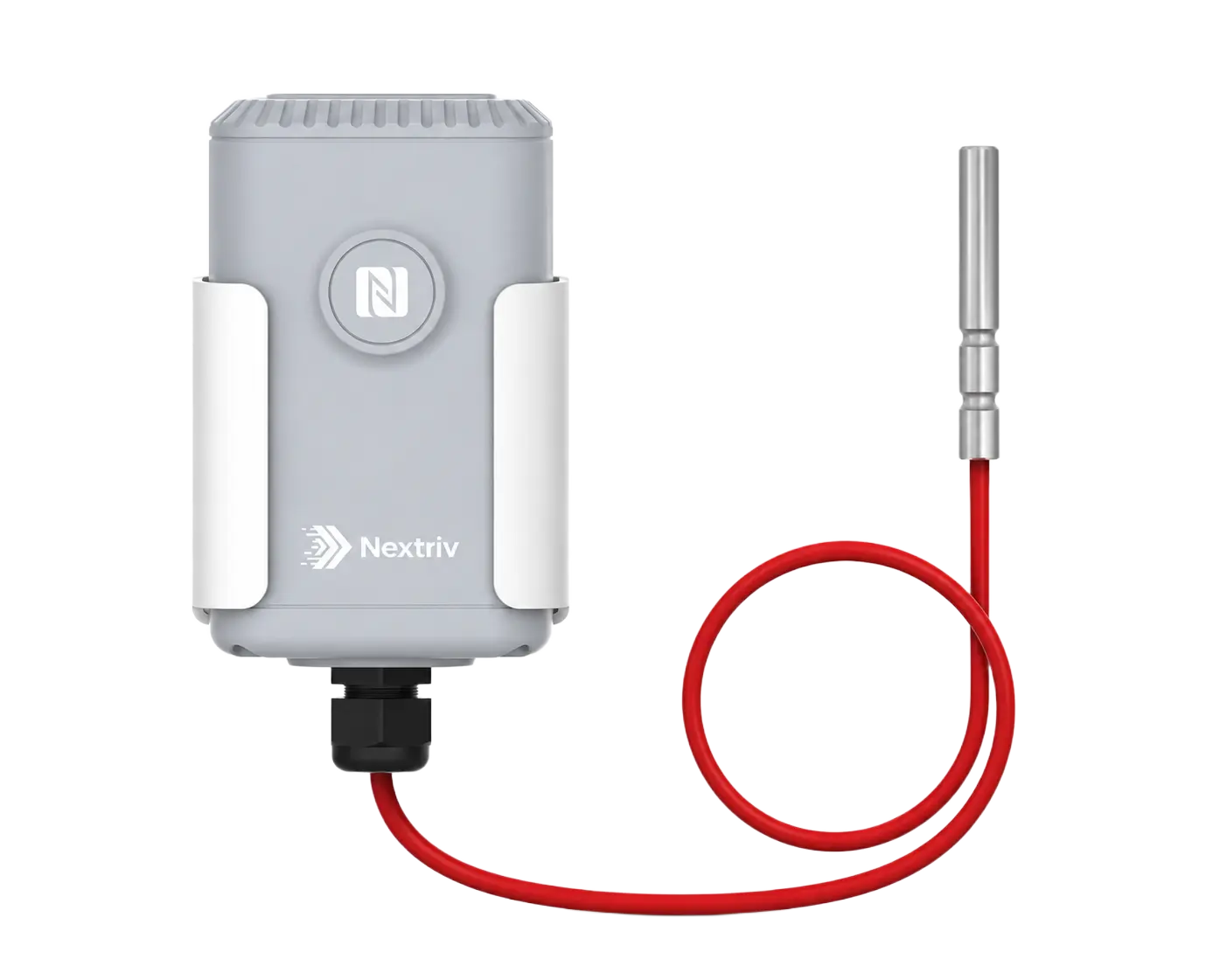
Industrial PT100 temperature probe with long-range radio transmission — range variants from −200 °C to +800 °C, ±0.5 °C accuracy, IP67 transmitter with a battery lasting years.
- Temperature
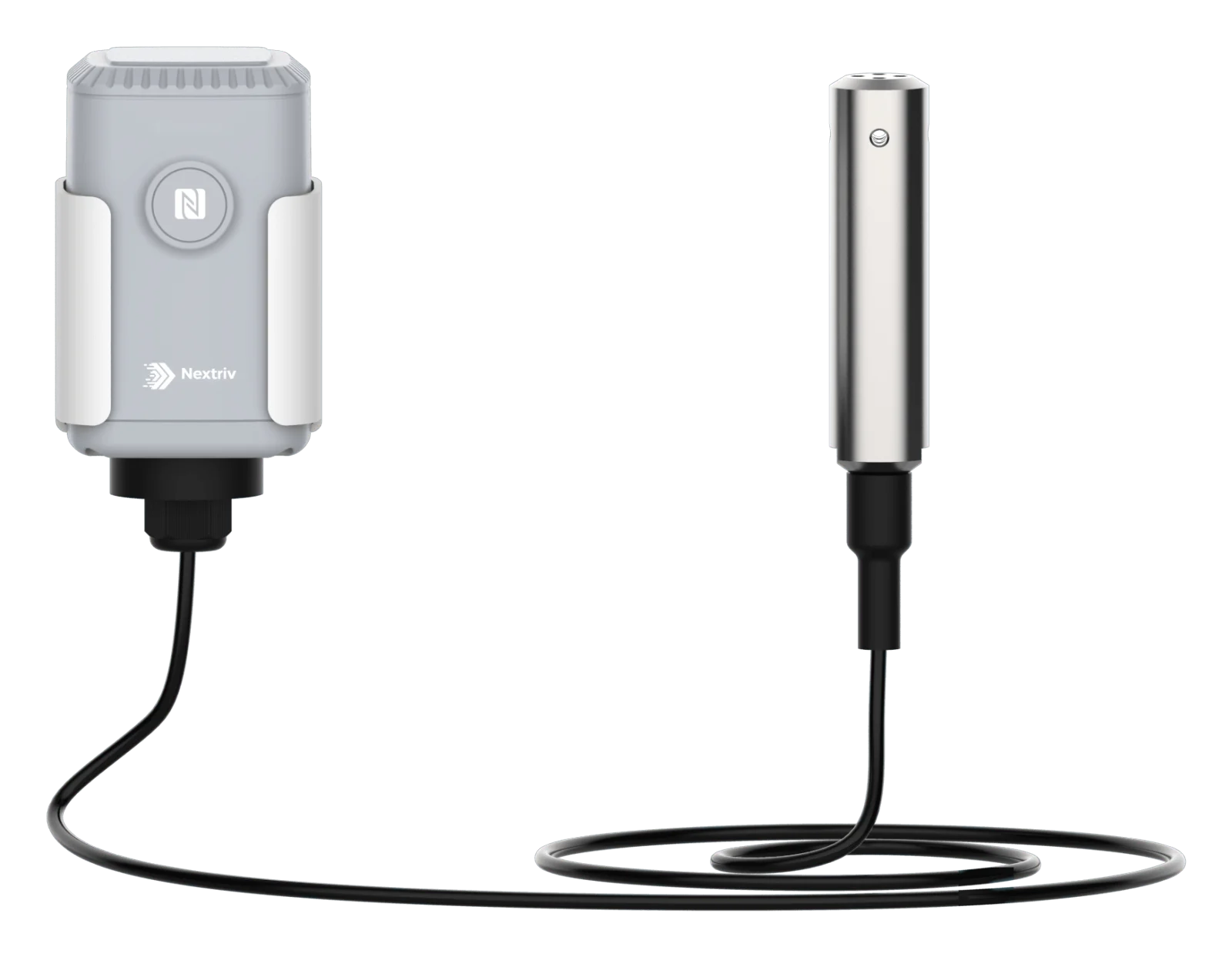
Nextriv Probe Liquid Level
SKU: NX-PR-LQI
Hydrostatic submersible probe for liquid level measurement in tanks, wells and open water — immune to foam, waves and wind. Standard ranges 0–3 m and 0–5 m, others made to order.
- Fill level
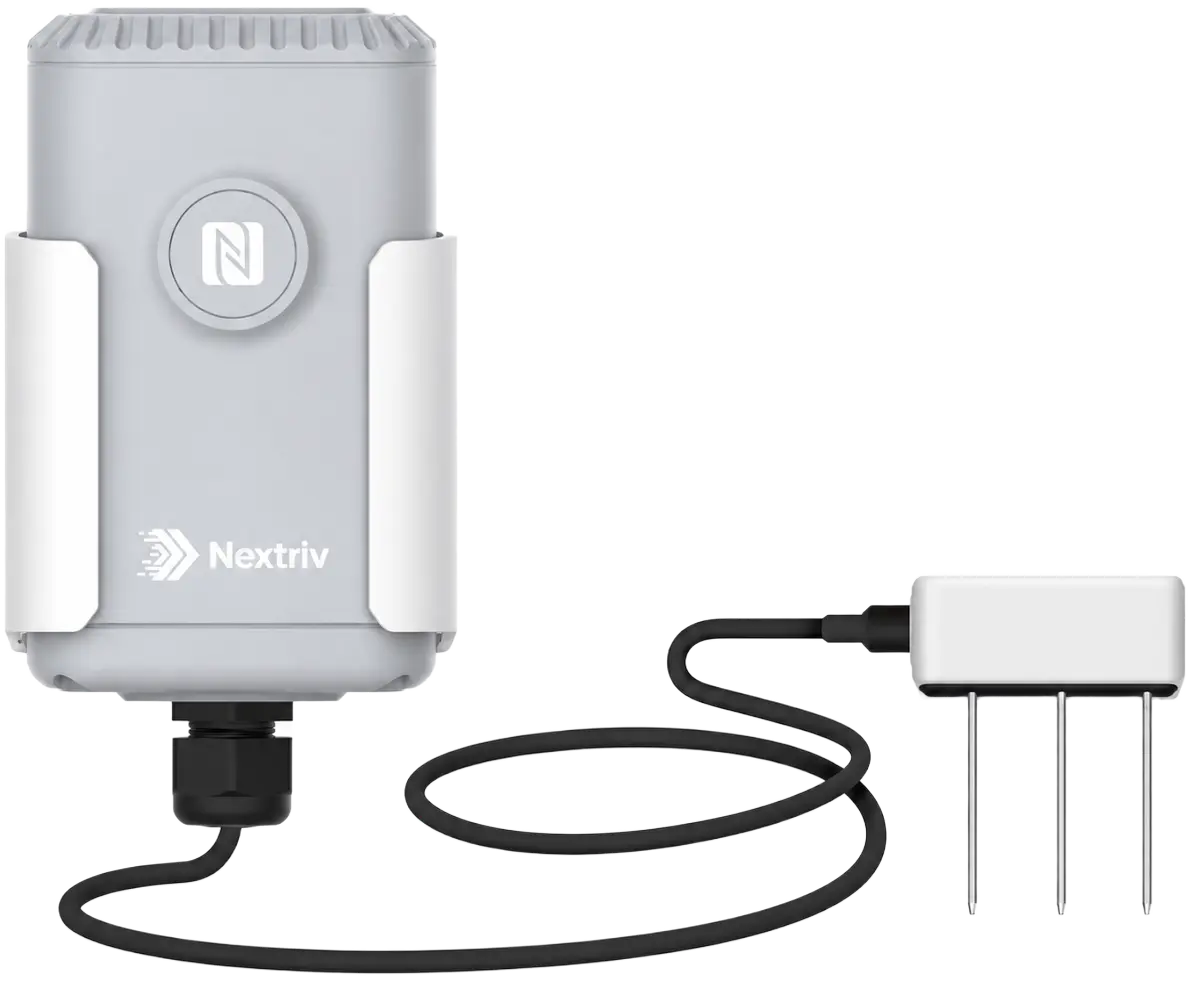
Nextriv Probe Soil
SKU: NX-PR-SOIL
3-in-1 soil probe: moisture, temperature and electrical conductivity (EC) in the root zone — precision irrigation and fertilisation control based on data, not gut feeling.
- Soil parameters
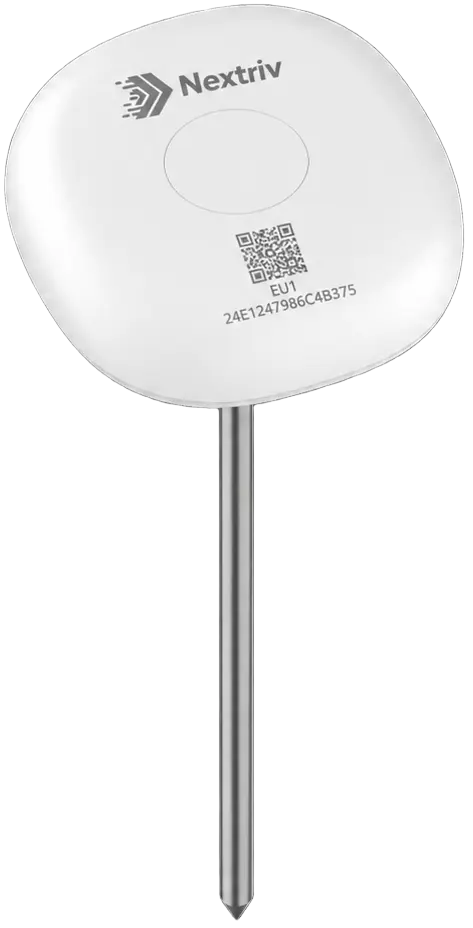
Nextriv Probe Food
SKU: NX-PR-FOOD
40 cm spike temperature probe driven into a heap, stack or bulk material — early detection of self-heating in grain, hay, tobacco and compost. Food-grade steel, IK10 impact-rated housing.
- Temperature
Not sure which set to choose?
Tell us about your facility and we'll match sensors and a gateway to the exact rooms you need to monitor — no unnecessary hardware.