
Probe measurement probes
Nextriv Probe Liquid Levelhydrostatic liquid level probe
SKU: NX-PR-LQI
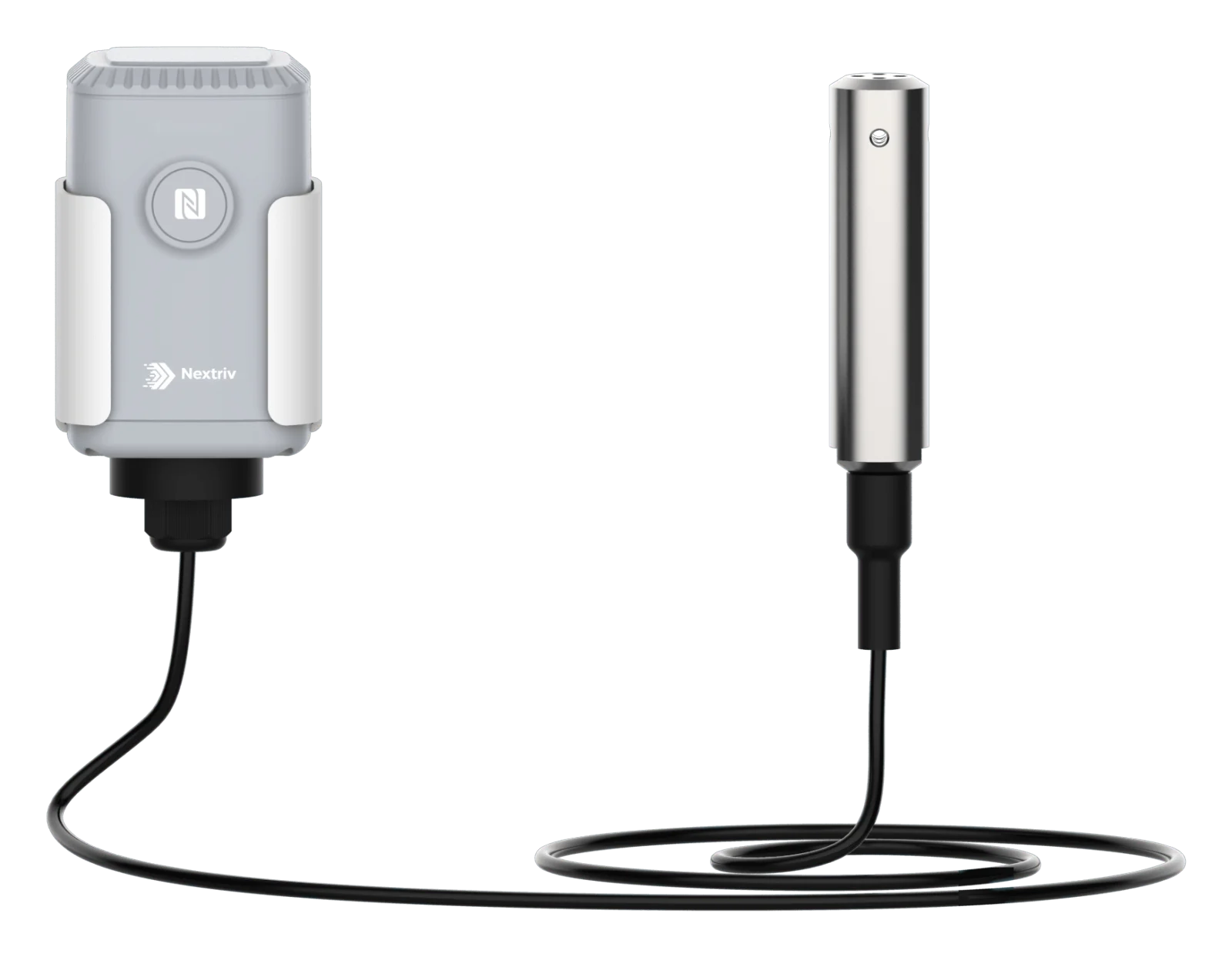
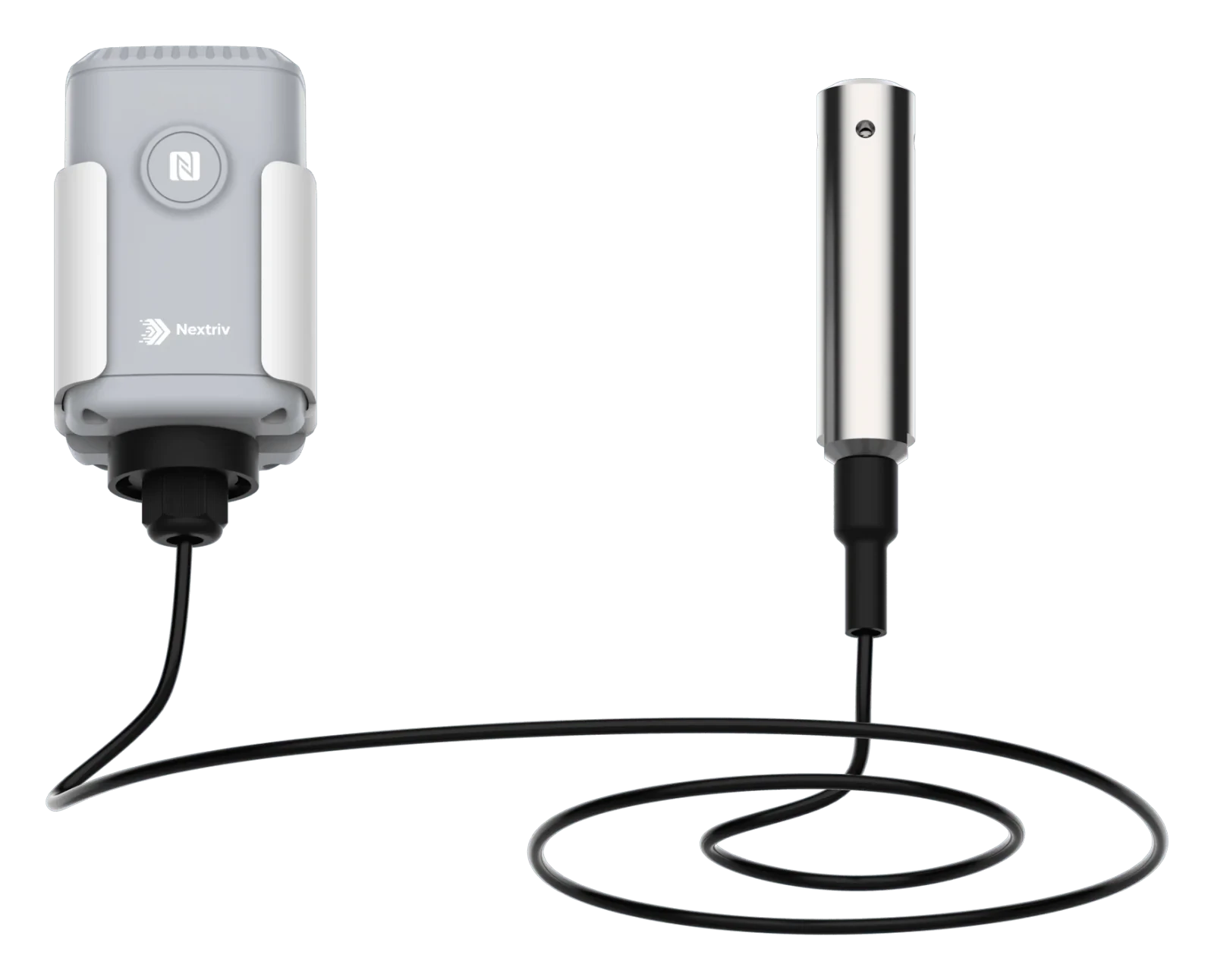
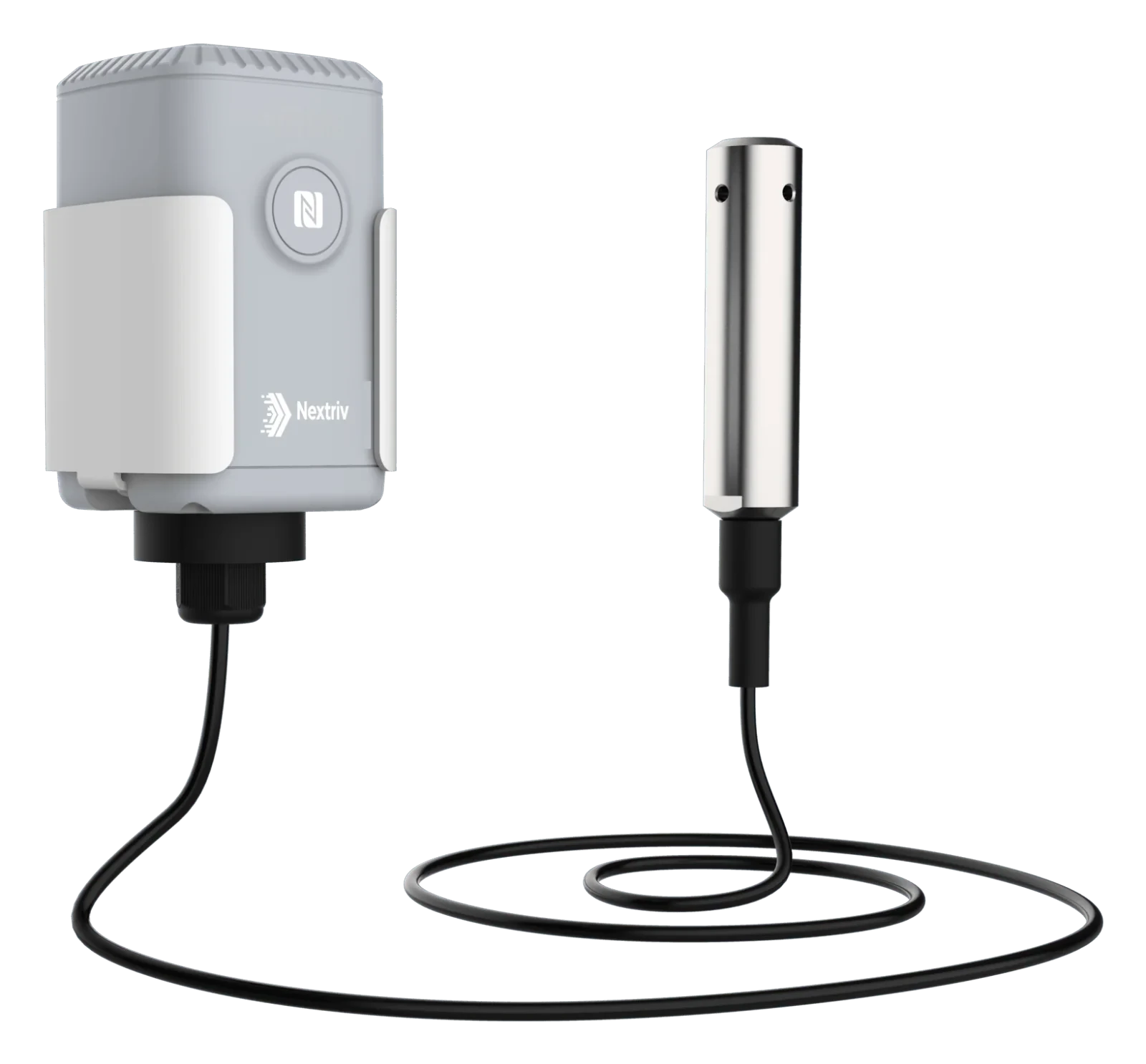
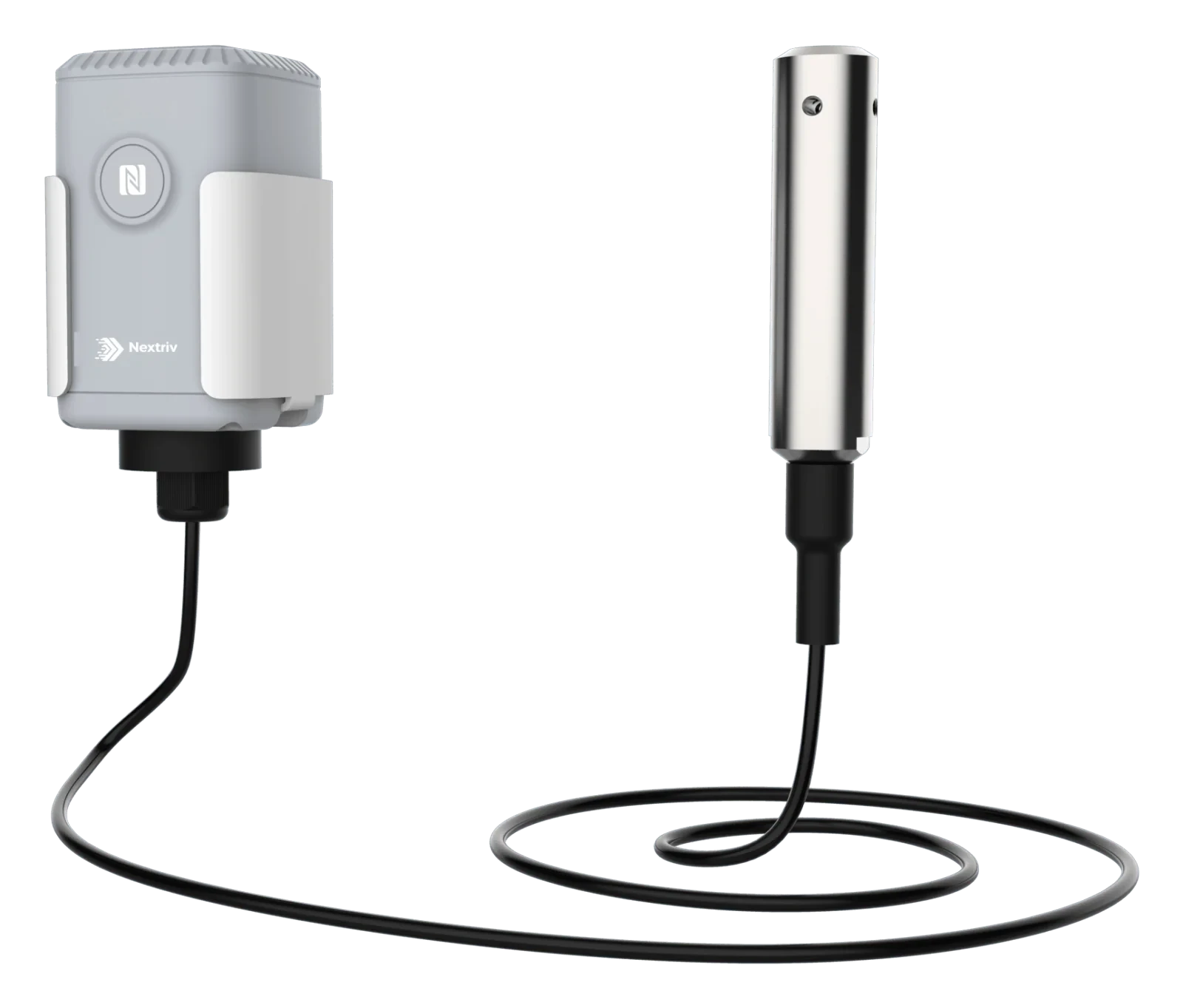
Hydrostatic submersible probe for liquid level measurement in tanks, wells and open water — immune to foam, waves and wind. Standard ranges 0–3 m and 0–5 m, others made to order.
€378net
VAT is added to the price.
Description
- Hydrostatic measurement immune to foam and waves
- IP68 stainless-steel probe
- Range tailored to your tank
- Up to 10 years on a single battery
- Temperature and atmospheric pressure compensation
What it's for
Measuring water level seems simple until you try doing it outdoors: waves, foam, wind and rain can fool any non-contact method. Nextriv Probe Liquid Level takes a different route — a hydrostatic probe rests near the bottom and measures the pressure of the liquid column above it. Nothing happening at the surface disturbs that measurement: not foam in the tank, not wind over the river, not a downpour. The vented design compensates for changes in atmospheric pressure, and temperature compensation keeps the reading stable from heatwave to frost.
This is a tool for water utilities, emergency services and maintenance teams: waterworks see the water table in deep wells without driving out to the field, cities get early warning of rising levels in retention reservoirs, and plants keep watch over process liquid reserves with min/max thresholds. All of it battery-powered and wireless — exactly where mains power or fibre never was and never will be.
The second distinguishing feature is made-to-measure tailoring: the measurement range and liquid type are configured at order time — from shallow tanks to considerable depths — for water and other non-aggressive liquids, with cable length matched to the measured column. One platform, very different tanks.
An accuracy of ±0.5% of full scale means, in practice, e.g. ±2.5 cm on a 5 m range — enough to control pumps and raise flood alarms, while the design stays simple and maintenance-free: stainless steel, full IP68 submersibility, a non-clogging build for long service without cleaning, and up to 10 years on a single battery.
Use cases
- Retention / flood-control reservoir: a probe near the bottom reports the water column regardless of waves and foam. A "rising faster than expected" rule wakes the response teams before the situation makes the news.
- Deep well: remote water-table readings show the intake's yield and the moment the pump starts running dry — no more driving around wells scattered across the municipality.
- River / storm channel: a measurement point at a culvert with a warning-level alarm. The battery-powered design and radio range measured in kilometres let you place points where there is no infrastructure at all.
- Fire-water tank at a plant: the required water reserve is monitored automatically, with an audit-ready history. A drop below the threshold is an alert to maintenance, not a surprise during an inspection.
- Irrigation tank on a farm: the water level is visible in the same app as other field measurements — irrigation can be planned on the actual reserve, not a hunch.
Key features
- Hydrostatic measurement immune to foam, waves, wind and rain — where non-contact methods can get it wrong.
- Fully submersible probe (IP68) with a stainless-steel body; non-clogging design for long service without cleaning.
- Vented design (measurement relative to atmosphere) + temperature compensation = a stable reading all year round.
- Range and liquid type configured at order time — 0–3 m and 0–5 m as standard, other variants made to order.
- Accuracy ±0.5% of full scale, long-term stability ≤±0.3% FS/year.
- Up to 10 years on a replaceable high-capacity battery — a "set and forget" measurement point.
- Local buffer of approx. 1000 readings with retransmission; min/max alarm thresholds with an immediate report.
- Configuration via NFC; transmitter mounts on a wall, post or DIN rail; probe cable length matched to the depth.
In the Nextriv system
Min/max thresholds across four levels separate everyday resource management from emergencies: a low-level warning schedules a refill, a critical minimum protects pumps from dry running, and the upper thresholds warn of overflow and rising water. Notifications arrive via SMS, push, e-mail, Microsoft Teams or Discord — with escalation when no one acknowledges the alarm within a set time.
The level trend on the dashboard shows what is really happening with the resource — intake seasonality, tank draw-down rate, how the catchment responds to rainfall — while PDF reports and XLSX/CSV exports document levels for audits and statutory reporting. A sensor that stops reporting is flagged as offline and raised before a data gap becomes a problem.
Typical deployments
- Agriculture: irrigation tanks and farm wells — solutions for agriculture.
- Manufacturing: fire-water tanks and process liquids — solutions for manufacturing.
- Buildings and infrastructure: retention, wells and facility utility tanks — solutions for buildings.
Specification
| Measurement ranges | 0–3 m and 0–5 m as standard (other variants made to order) |
|---|---|
| Accuracy | ±0.5% of full scale |
| Long-term stability | ≤±0.3% FS/year |
| Measurement method | hydrostatic (liquid column pressure), vented design, temperature compensation |
| Probe | fully submersible, stainless steel, IP68; dimensions 130 × Ø27 mm |
| Cable | length matched to the range (min. 1–1.5 m longer than the measured liquid column) |
| Connectivity | Long-range radio — up to ~2 km in urban areas, ~15 km in open terrain |
| Local memory | approx. 1000 entries, retransmission after a connectivity outage |
| Power supply | 1 × 19,000 mAh lithium battery; up to 10 years (10-min reporting, 25 °C) |
| Transmitter ingress protection | IP67 |
| Operating conditions | probe −20…70 °C, transmitter −30…70 °C |
Files
- Download
Nextriv Probe Liquid Level — datasheet
pdfEN0.7 MBversion 1.0
Related products
Other devices from the same family.
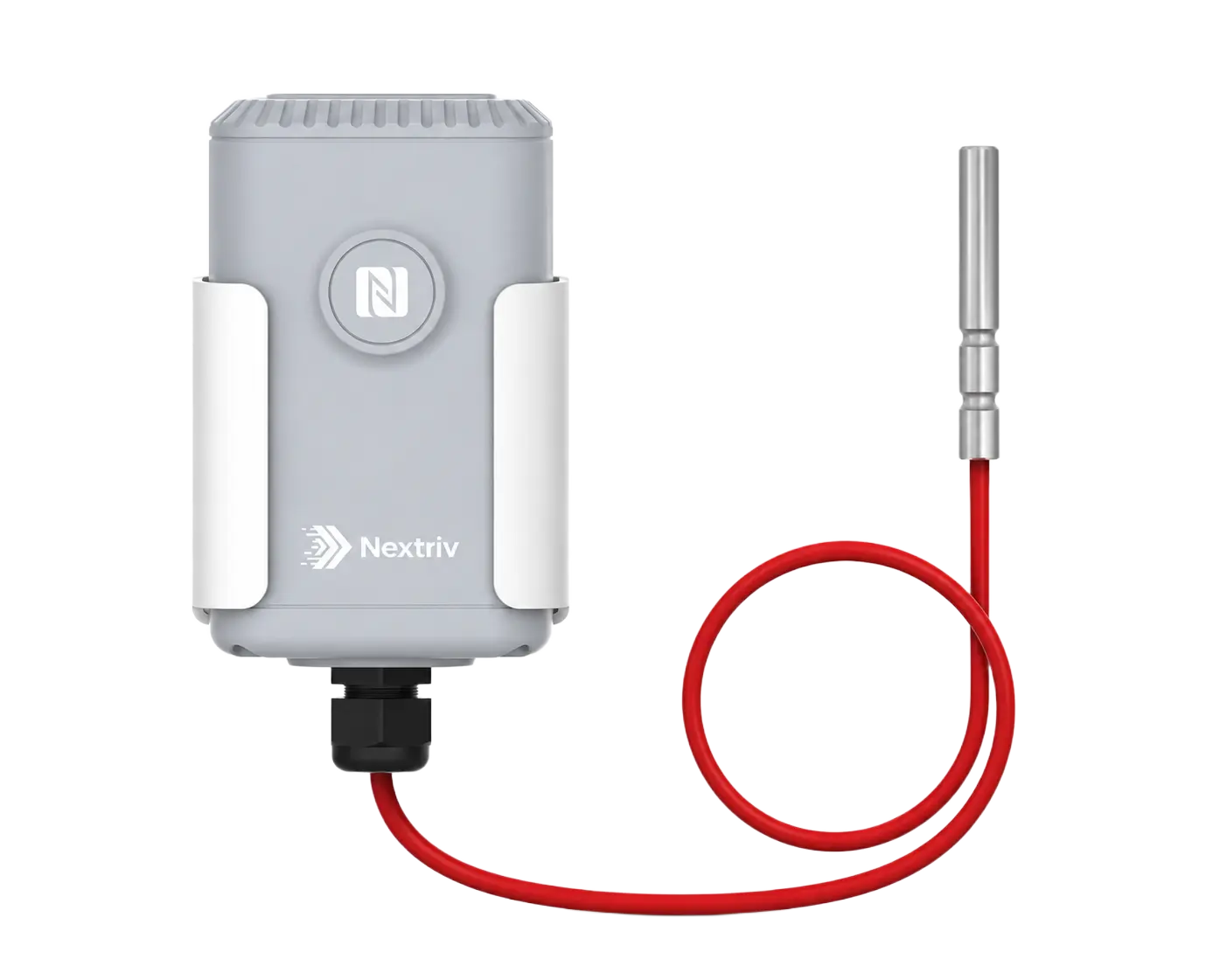
Nextriv Probe PT100
SKU: NX-PR-PT100
Industrial PT100 temperature probe with long-range radio transmission — range variants from −200 °C to +800 °C, ±0.5 °C accuracy, IP67 transmitter with a battery lasting years.
- Temperature
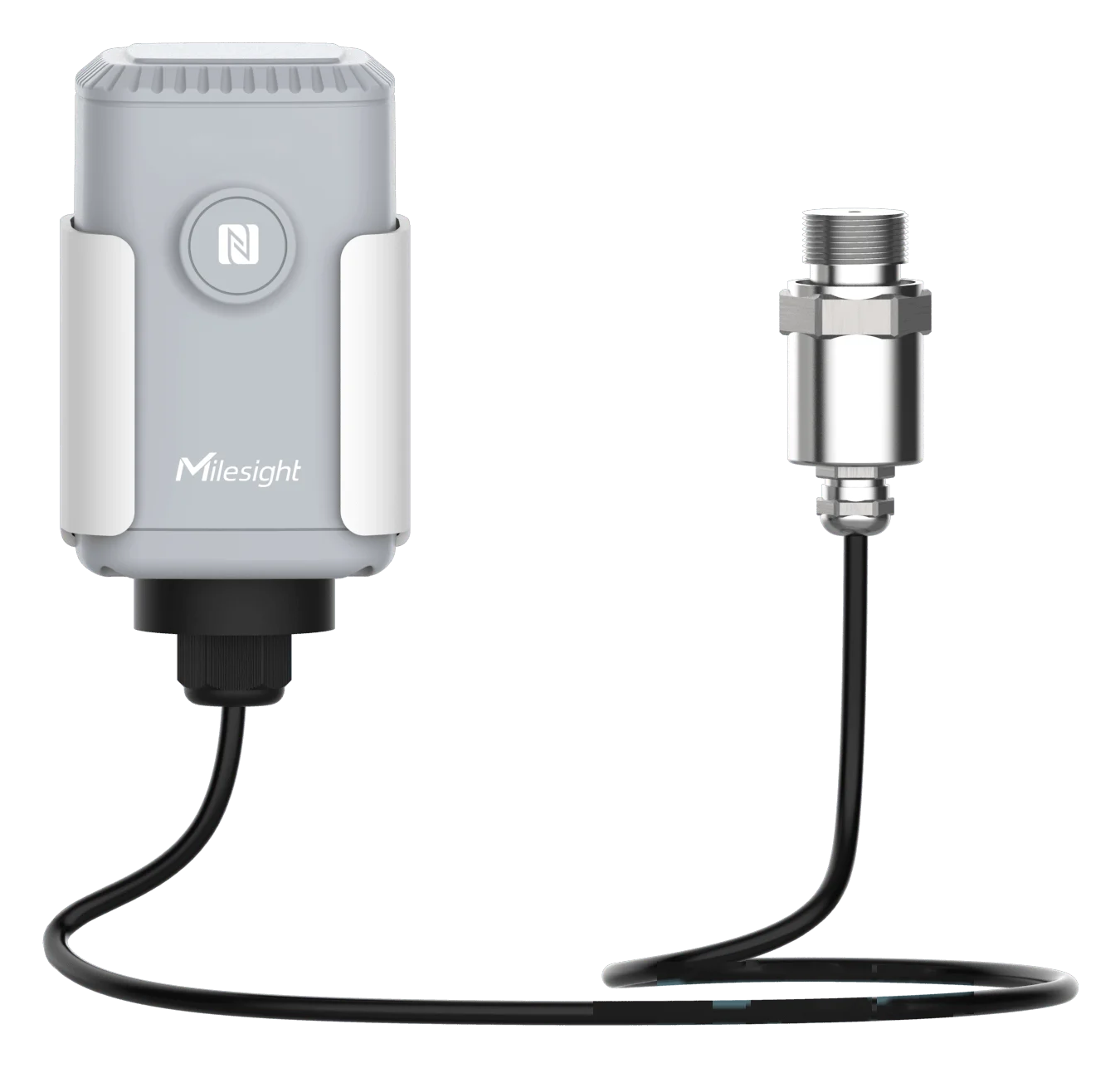
Nextriv Probe Pressure
SKU: NX-PR-PRES
Wireless 0–16 bar pressure sensor for liquids and gases with a 316L stainless-steel transducer (G 1/2″ fitting) — supervising water mains, fire systems and compressed air without signal cabling.
- Pressure
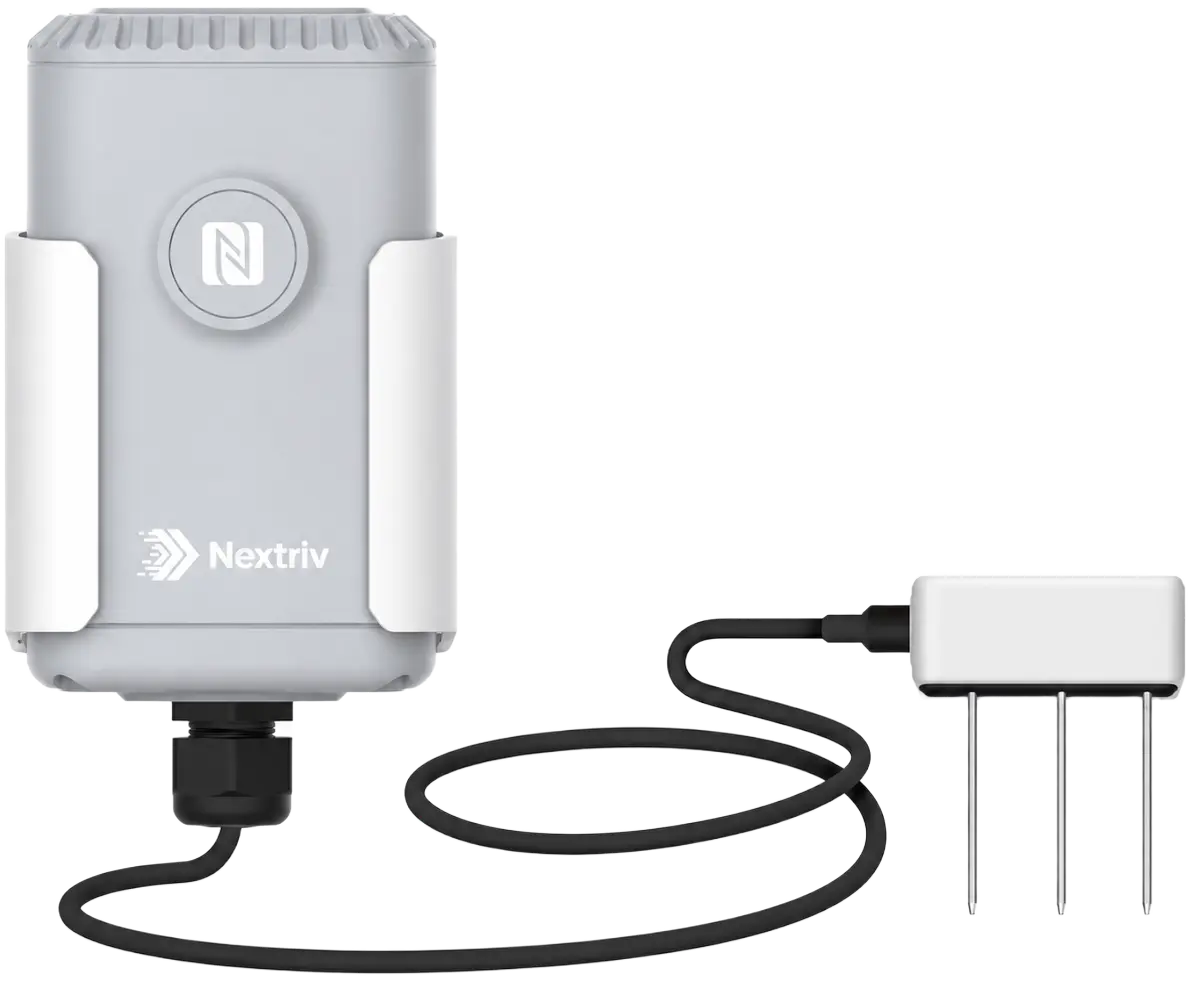
Nextriv Probe Soil
SKU: NX-PR-SOIL
3-in-1 soil probe: moisture, temperature and electrical conductivity (EC) in the root zone — precision irrigation and fertilisation control based on data, not gut feeling.
- Soil parameters
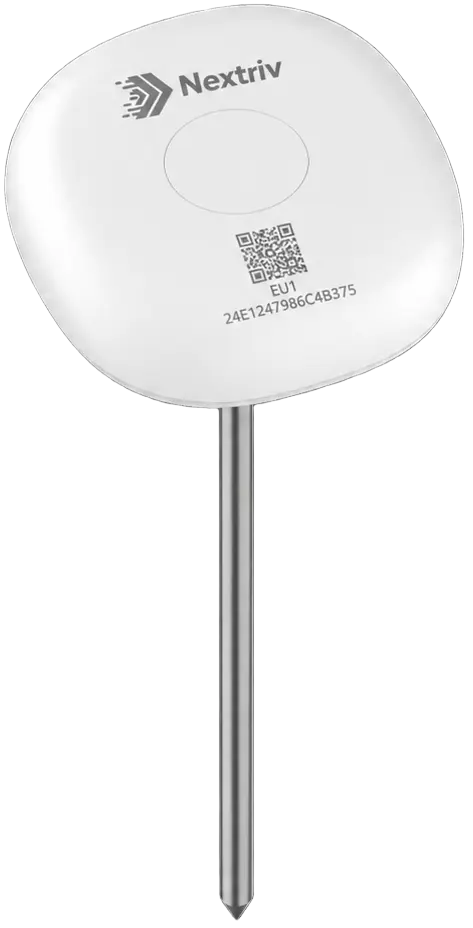
Nextriv Probe Food
SKU: NX-PR-FOOD
40 cm spike temperature probe driven into a heap, stack or bulk material — early detection of self-heating in grain, hay, tobacco and compost. Food-grade steel, IK10 impact-rated housing.
- Temperature
Not sure which set to choose?
Tell us about your facility and we'll match sensors and a gateway to the exact rooms you need to monitor — no unnecessary hardware.