
Industry solutions
Microclimate monitoring in livestock buildings
Ammonia, CO₂, temperature and humidity in poultry houses, piggeries and barns — with alarm escalation before the microclimate affects animal health.
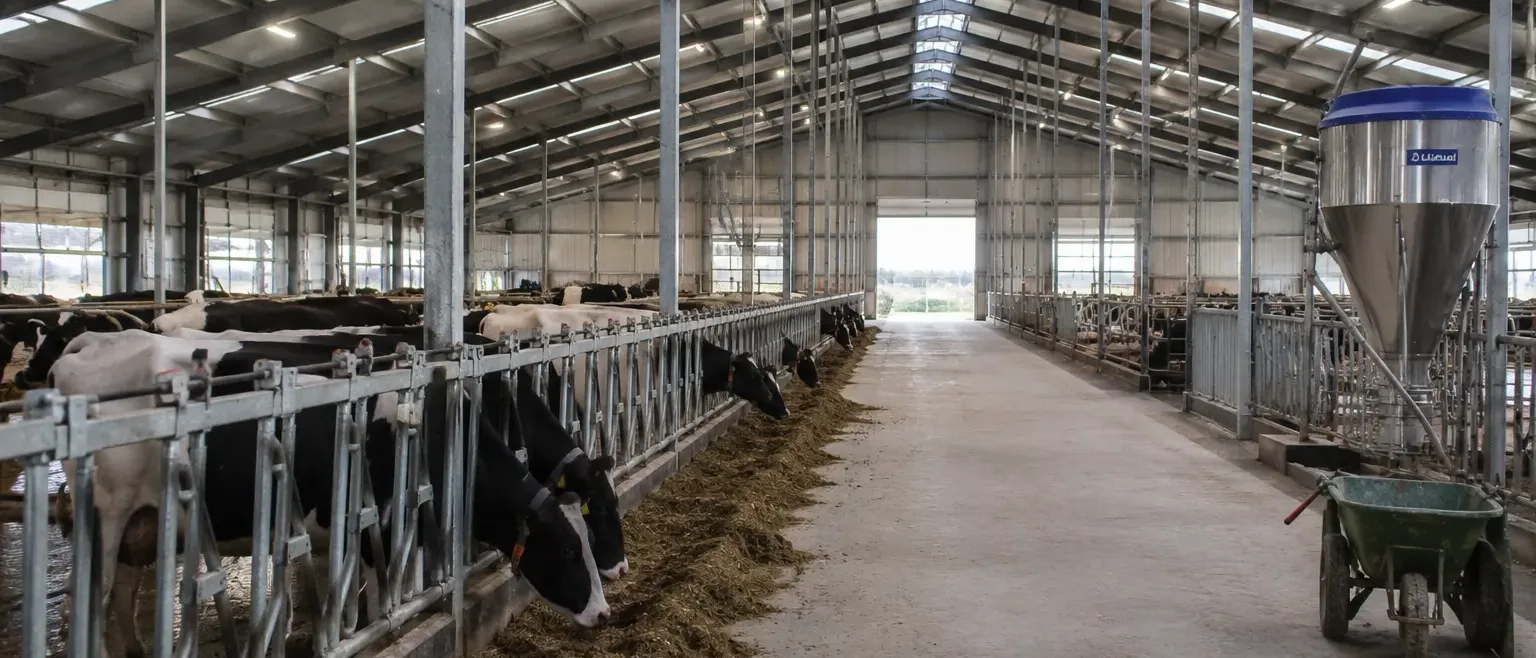
Sound familiar?
You can't smell ammonia until there's too much of it
Staff noses adapt to NH₃ within an hour. Animals don't — irritated airways mean weaker gains and higher mortality.
A ventilation failure works in minutes
In summer, the temperature in a fully stocked poultry house climbs several degrees in fifteen minutes. If the alarm doesn't reach the right person at night, you count losses in the morning.
Welfare has to be proven with records
Veterinary inspections and quality schemes expect microclimate documentation. Manual thermometer notes are laborious and easy to challenge.
Buildings far away, large stock, few people
Poultry houses and piggeries often stand kilometres from home. Every “just in case” walkthrough costs time — and still doesn't cover the night.
How Nextriv solves it
Ammonia and hydrogen sulphide measured, not sniffed
An NH₃ (0–10 ppm) and H₂S detector with 0.01 ppm resolution plus temperature and humidity in one device — an objective picture of the air in the animal zone, with a trend chart.
Microclimate where the animals are
Temperature and humidity sensors in a sealed IP67 enclosure (±0.2°C accuracy) withstand washing and moisture — you mount them in the animal zone, not under the ceiling.
CO₂ as a ventilation effectiveness test
Rising CO₂ is the fastest signal that ventilation can't keep up with stocking density. An industrial NDIR sensor (400–5000 ppm, IP65) works in harsh conditions.
Weather at the building, not from the region
A solar-powered weather station measures wind, temperature, humidity and pressure on site — context for ventilation and curtain decisions.
Escalation until someone reacts
The alert goes out via SMS, email and push; unacknowledged, it escalates to the next people in a set order. The in-app siren wakes people up better than a vibration.
Documentation writes itself
Every measurement stays in the history for up to 5 years, and PDF reports are generated automatically — ready for inspections and quality schemes.
Recommended products
Nextriv hardware picked for this industry — up and running with the platform in minutes.
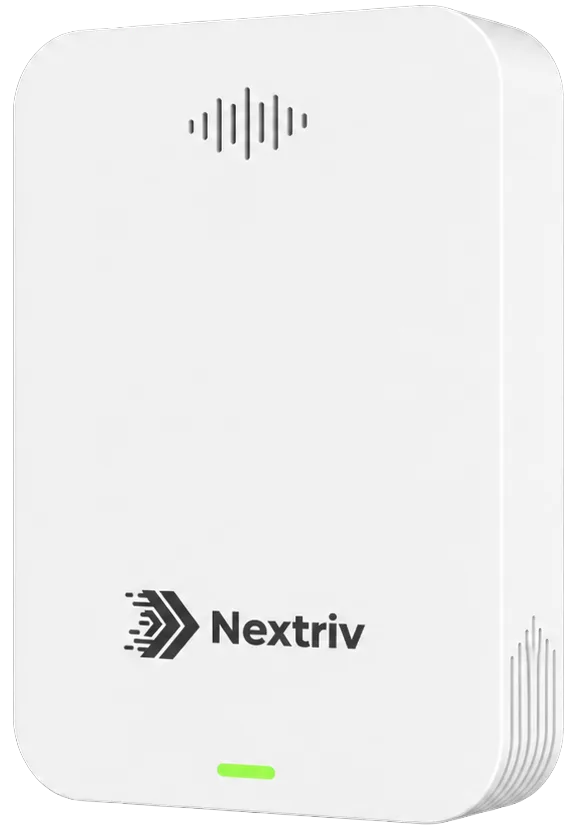
Nextriv Sense Gas
Ammonia (0–10 ppm) and hydrogen sulphide with ±5% accuracy plus temperature and humidity — four measurements in one device, with a local buzzer and LED indicator.
View product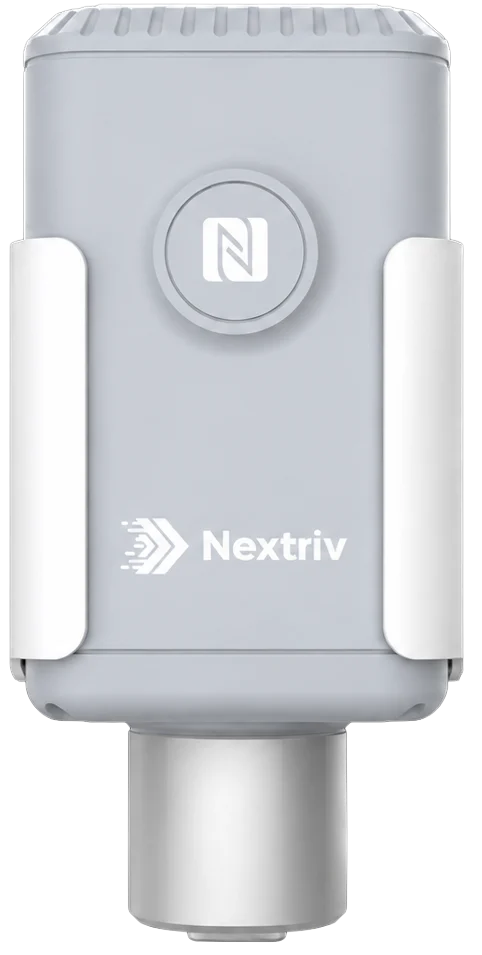
Nextriv Sense CO₂ Industrial
NDIR CO₂ up to 5000 ppm in an IP65 enclosure — a ventilation effectiveness indicator that withstands livestock building conditions.
View product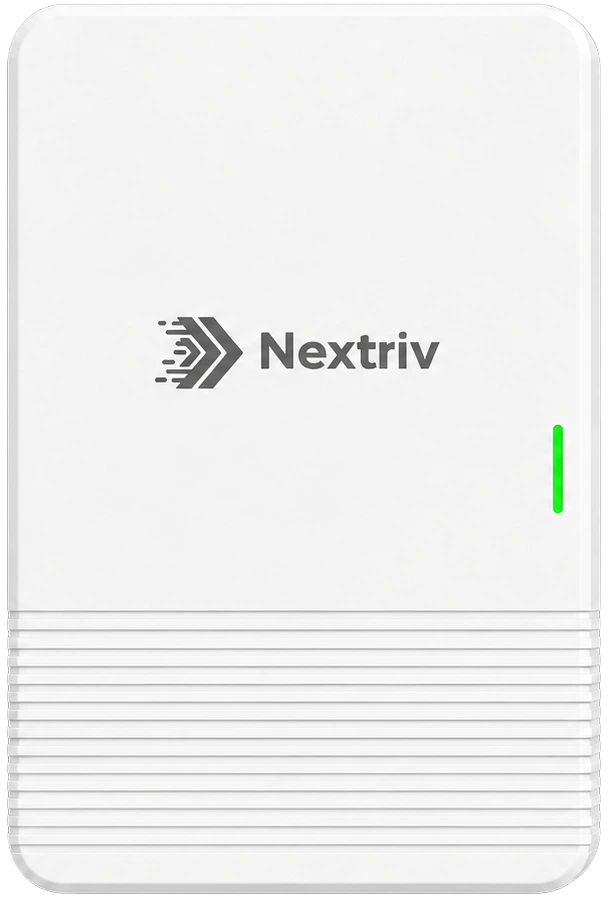
Nextriv Sense Industrial
Temperature (±0.2°C) and humidity in a sealed IP67 food-grade enclosure — survives washing and a humid, aggressive environment.
View product
Nextriv Weather Pro
A 6-in-1 weather station (wind, rainfall, temperature, humidity, pressure) with solar power — outdoor context for microclimate control.
View product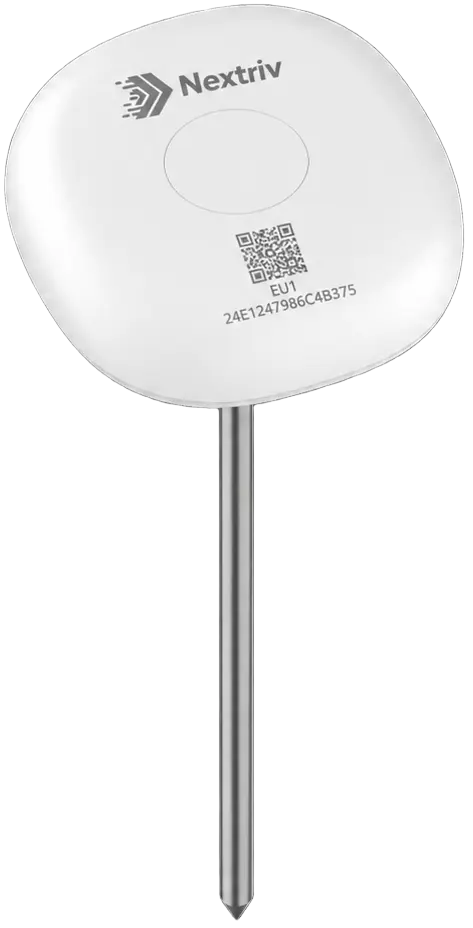
Nextriv Probe Food
A stainless-steel food probe for measuring the core temperature of warm feed and products before dispatch — essential for processes with HACCP requirements.
View product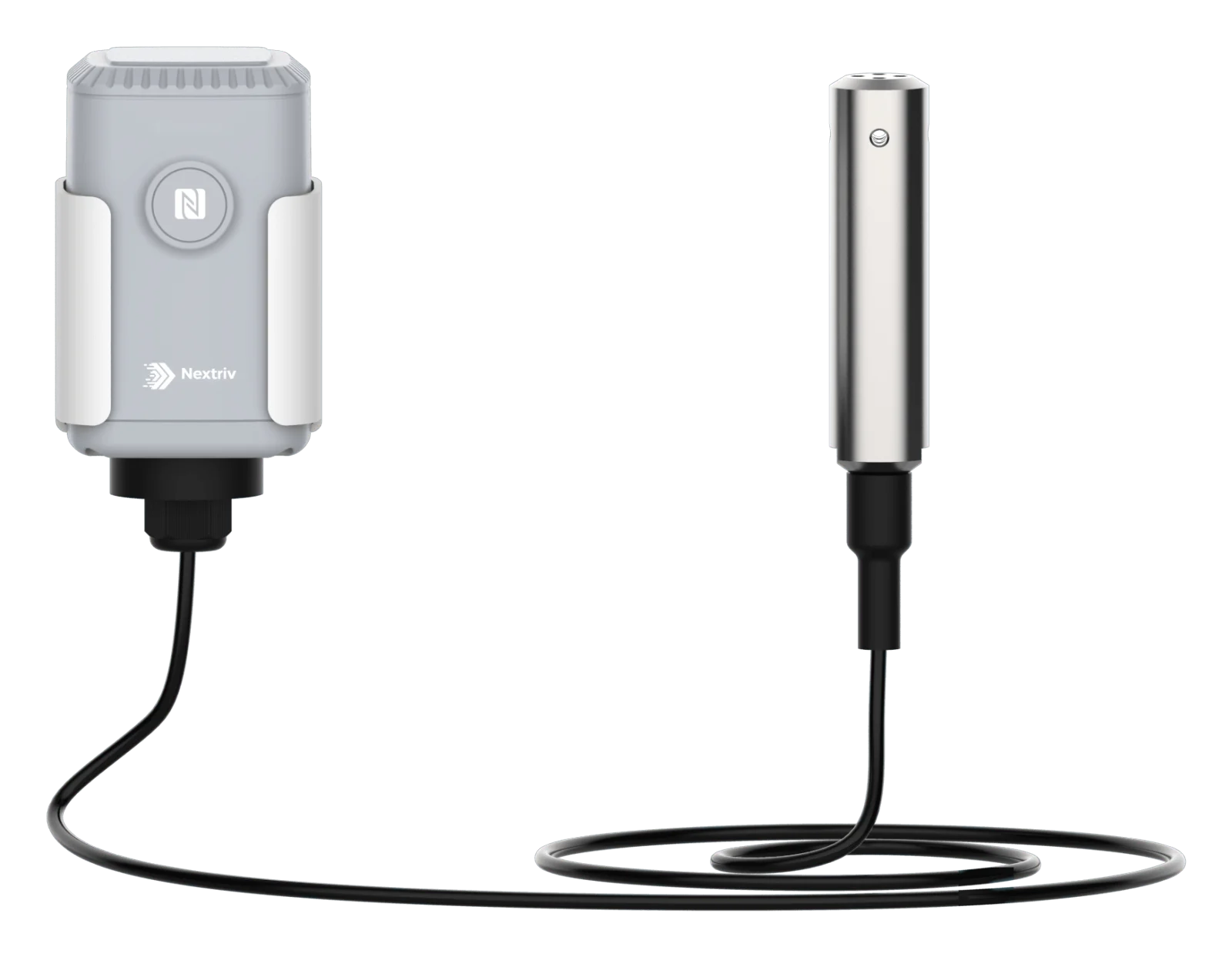
Nextriv Probe Liquid Level
A hydrostatic probe for livestock drinking water tanks and slurry tanks — continuous level readings with alerts when levels are too low or too high.
View productScenario: ammonia rising at night
Full stock, a winter night, air inlets nearly closed. The detector in the bird zone measures NH₃ every few minutes — and never gets used to the smell.
- If
The ammonia concentration in the bird zone exceeds 6 ppm — a warning threshold set with a wide margin below the 20 ppm limit of Directive 2007/43/EC.
- Then
The platform opens an event with an ALM code and sends a web push and email to the night shift staff.
- Escalation 1
No acknowledgement within 15 minutes — an SMS to the farm manager and a notification to the team channel (Teams or Discord).
- Escalation 2
NH₃ reaches 9 ppm (critical threshold) — the alert rises to critical severity: an in-app siren and SMS to the owner, and the entire event with reaction times stays in the history for the welfare audit.
Compliance and standards
Directive 2007/43/EC (broilers)
At higher stocking densities, NH₃ must not exceed 20 ppm and CO₂ must not exceed 3000 ppm measured at the chickens' head level. Continuous measurement helps maintain and document these values.
Directive 98/58/EC
General farm animal protection rules: air circulation, dust, temperature and humidity must not harm animals, and mechanical ventilation requires an alarm system. Nextriv acts as an independent supervision layer.
National animal housing regulations
Regulations define minimum housing conditions for each species. A timestamped measurement history is objective material for the veterinary inspectorate.
Welfare and quality schemes
Certifications and payments based on enhanced welfare require credible records. Automatic microclimate logging strengthens your documentation with no extra work.
Frequently asked questions
What ammonia concentration is acceptable in a poultry house?
Directive 2007/43/EC for broiler chickens requires NH₃ not to exceed 20 ppm and CO₂ not to exceed 3000 ppm at the birds' head level. The Nextriv Sense Gas detector measures ammonia in the 0–10 ppm range with 0.01 ppm resolution, operating in the early-warning zone — you get an alarm long before concentrations approach the limit.
Will the sensors survive conditions in a piggery or poultry house?
Sense Industrial temperature and humidity sensors have a sealed IP67 enclosure and withstand washing and constant moisture. The gas detector is mounted outside the direct splash zone — its electronics are protected by a moisture-proof coating, and the sensing modules are designed for continuous operation for over 3 years.
Will I find out about a ventilation failure at night?
Yes — indirectly, but within minutes. A ventilation failure immediately raises temperature, CO₂ and ammonia, and crossing the thresholds triggers alerts: SMS, email, push and the in-app siren. Unacknowledged alerts escalate to the next people. The platform also detects lost connectivity with a sensor or gateway and notifies you about that too.
How do I document the microclimate for a veterinary inspection?
Every measurement is recorded automatically, with history kept for up to 5 years. You can generate PDF reports with charts on demand, schedule automatic delivery and use signed reports (SHA-256 + QR verification code) that are hard to challenge during an inspection.
How much does monitoring one livestock building cost?
Starting is free: the FREE plan includes 10 sensors, 1 gateway, 5 alert rules and all notification channels — a typical poultry house or piggery fits entirely within it. Larger farms move to PRO (99 PLN net/30 days, excl. VAT) with no limits on sensors, gateways or locations.
Start monitoring today
FREE plan to start: 10 sensors, 1 gateway, alerts and PDF reports — no credit card required.