
Sense environmental sensors
Nextriv Sense Lux Prolight intensity sensor up to 100,000 lx
SKU: NX-SN-LUXP
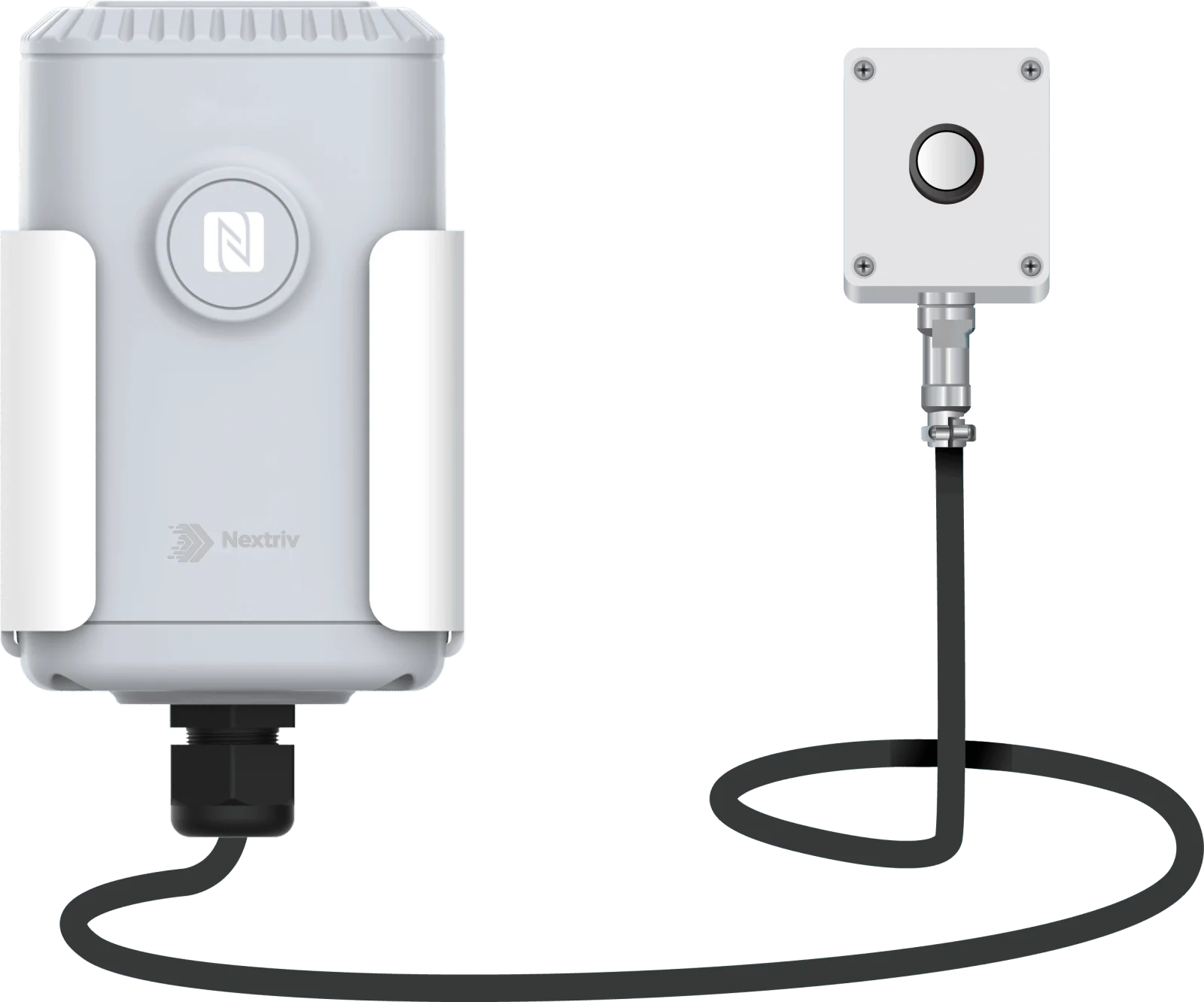
Outdoor light intensity sensor, 0–100,000 lx, with a light probe on a 3-metre cable — crop supplemental lighting, lighting automation and sunlight logging. Up to 10 years on one battery.
€287net
VAT is added to the price.
Description
- Full range of 0–100,000 lux
- Light probe on a 3-metre cable
- Measurement response in about a second
- Up to 10 years on a single battery
- 1,000-entry memory with retransmission
What it is for
In protected cultivation, light is currency: too little and plants stretch and weaken; too much and leaves scorch while the bills for shading and supplemental lighting climb. The trouble is that most light sensors are office devices that die outdoors after their first winter, and their measurement range cuts off right where full sunlight begins. Nextriv Sense Lux Pro was designed from the ground up for the field: it measures from darkness to full midday sun — 0–100,000 lux — with ±3% accuracy and a response of about a second, so it catches even passing cloud cover.
Its most distinctive trait is the two-part design: a transmitter in a rugged IP67 enclosure and a separate light probe in an aluminium head rated IP65, joined by a 3-metre cable. The electronics can be tucked under a structure or canopy while the probe goes exactly where the light that matters to the plants falls — at canopy height, by the growing bench, on a mast. And the part exposed to sun and water is metal, not plastic. You simply cannot achieve this placement of the measurement point with an integrated sensor.
The rest is handled by a "mount it and forget it" philosophy: a high-capacity battery lasts up to 10 years of reporting every 10 minutes, configuration is done with a phone over NFC or a computer over USB-C, and local memory for 1,000 entries with automatic retransmission guarantees that a momentary loss of connectivity will not cut a hole in the sunlight history. For agricultural research and supplemental-lighting accounting, that is the difference between data and anecdote.
Although its main market is protected cultivation, the sensor is just as good at controlling outdoor lighting, building illumination and automation scenarios — anywhere the decision should be driven by actual brightness rather than a rigid schedule.
Usage scenarios
- Tomato greenhouse: a probe suspended at the height of the plant tops measures the real light at the crop, not on the roof. When intensity drops below the threshold, the automation switches on supplemental lighting; when the sun blazes, the shading screens roll out.
- Flower nursery: varieties with different light requirements grow in separate bays. A sensor at each one lets you control the curtains independently instead of averaging conditions for the whole facility.
- Grounds manager / smart city: car park lighting and building illumination respond to actual brightness. On an overcast December morning the lights stay on longer; on a bright June evening they switch off earlier — and the difference shows up on the bill.
- Research institute: a months-long sunlight profile of experimental plots with one-second response and local memory. Data stays complete even through connectivity gaps, ready for publication.
- Open-field plantation: a probe on a mast at the field edge logs the season's light conditions. The agronomist correlates sunlight with yield and with decisions on treatment timing.
- Solar farm: comparing actual sunlight against energy yield helps catch panel degradation or soiling before the losses grow.
Key features
- Full 0–100,000 lx range with ±3% accuracy and 1 lx resolution — from darkroom to full sun, with no sensor saturation on the brightest days.
- Response in ~1 second — the sensor keeps up with the clouds, and shading automation reacts smoothly rather than in jumps.
- Two-part construction: transmitter + light probe on a 3-metre cable — electronics in a safe spot, the measurement point exactly where the crop grows.
- Probe in an aluminium head (IP65), transmitter IP67 — metal where it faces sun and water, the whole unit engineered for years of outdoor service.
- Up to 10 years on a single replaceable high-capacity battery — zero cabling and zero service visits.
- Local memory of 1,000 entries with retransmission and data recovery — a sunlight history without gaps.
- Two configuration paths: by phone over NFC in the field, or by computer over USB-C in the workshop.
- Threshold alarms with an immediate report once the set brightness is crossed.
- Three mounting options: wall, pole/mast (bracket included) or DIN rail (optional kit); operation from −30 to 70 °C.
In the Nextriv system
Four thresholds per metric let you build complete lighting logic in a single rule: "too dark — switch on supplemental lighting" as the lower warning threshold, "too bright — shade" as the upper one, with critical levels held in reserve. Notifications reach people through the channel they prefer — e-mail, SMS, push, Microsoft Teams, Discord or an audible alarm in the app — while the webhooks integration passes events to the facility's automation. A dashboard with trend charts and sensor comparison puts the sunlight of multiple bays or plots side by side on one screen.
Measurement history with aggregation into long-term charts and XLSX/CSV exports makes Sense Lux Pro a documentation tool: a light profile of the season, material for agronomic analysis, evidence in supplemental-lighting energy accounting. And if the sensor stops reporting, the platform marks it offline and notifies you before a gap forms in the data.
Typical deployments
- Agriculture and protected cultivation: supplemental lighting and shading driven by the real light at the plants — solutions for agriculture.
- Buildings and grounds: outdoor lighting and illumination automation based on actual brightness — solutions for buildings.
- Laboratories and research centres: sunlight logging on experimental plots with data continuity — solutions for laboratories.
Specification
| Light intensity | 0–100,000 lx |
|---|---|
| Accuracy | ±3% |
| Resolution / response time | 1 lx / approx. 1 s |
| Construction | transmitter + light probe on a 3 m cable |
| Connectivity | Long-range radio — up to ~2 km in urban areas, ~15 km in open terrain |
| Local memory | 1,000 entries, retransmission after a connectivity loss |
| Power | 1 × 19,000 mAh lithium battery |
| Battery life | up to 10 years (10-minute reporting, 25 °C) |
| Ingress protection | transmitter IP67, light probe IP65 |
| Operating conditions | transmitter −30…70 °C, probe −30…60 °C |
| Dimensions | transmitter 105.4 × 71 × 69.5 mm (~333 g), probe 64 × 58 × 34 mm |
Files
- Download
Nextriv Sense Lux Pro — datasheet
pdfEN0.7 MBversion 1.0
Related products
Other devices from the same family.
Nextriv Sense Display
SKU: NX-SN-DISP
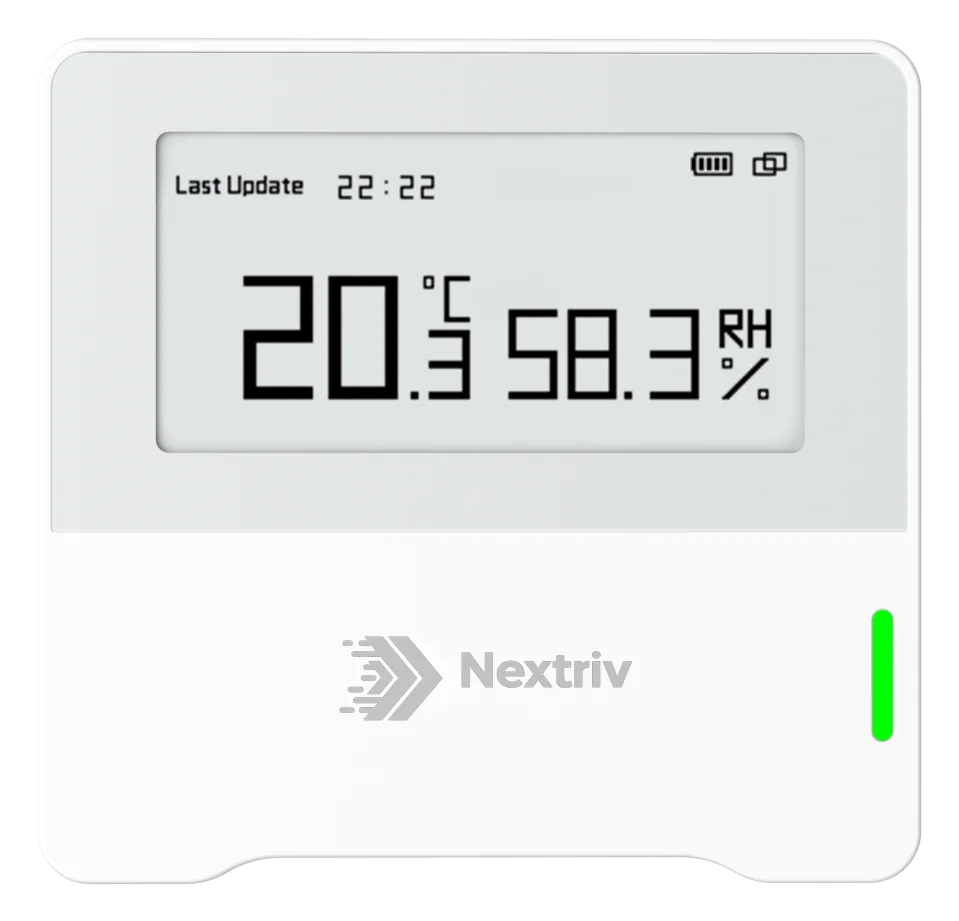
Temperature and humidity sensor with a 2.13″ e-ink display — readings on-site and in the Nextriv platform. Over 7 years on replaceable batteries.
- Temperature
- Humidity
Nextriv Sense CO₂
SKU: NX-SN-CO2
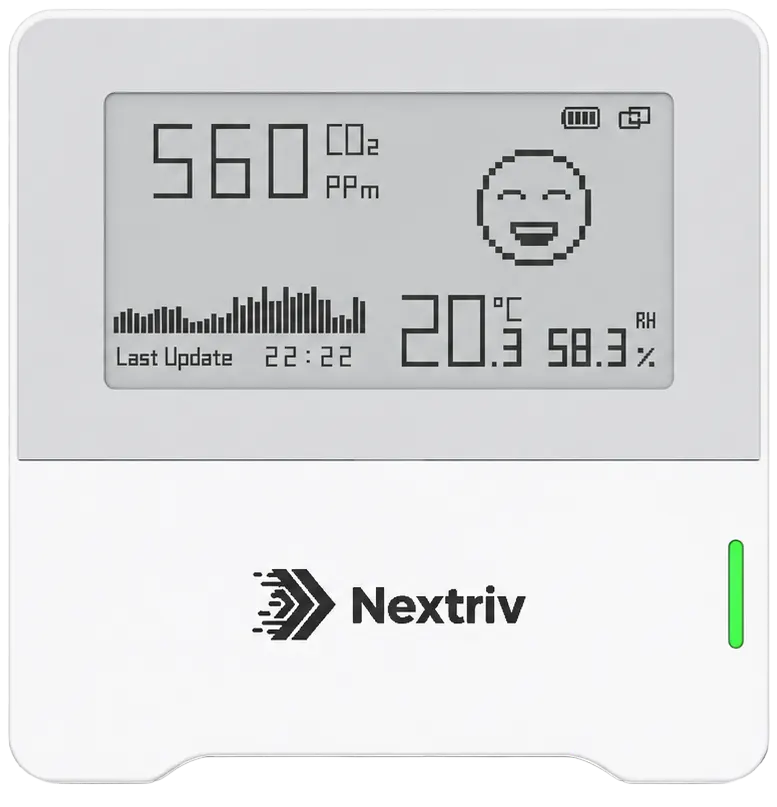
CO₂, temperature and humidity sensor with NDIR measurement and an e-ink display. Shows on the spot when to air the room — and sends the data to the Nextriv platform.
- Temperature
- Humidity
- CO₂
Nextriv Sense IAQ
SKU: NX-SN-AQ7
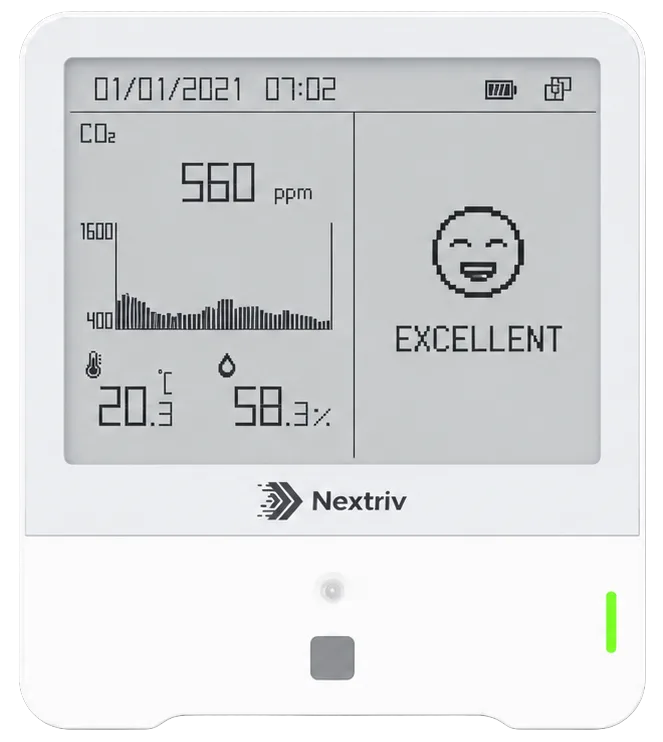
7-in-1 air quality station: temperature, humidity, CO₂, TVOC, pressure, light and occupancy — with a 4.2″ e-ink display and an 18,000-record buffer.
- Temperature
- Humidity
- CO₂
- TVOC
- +3
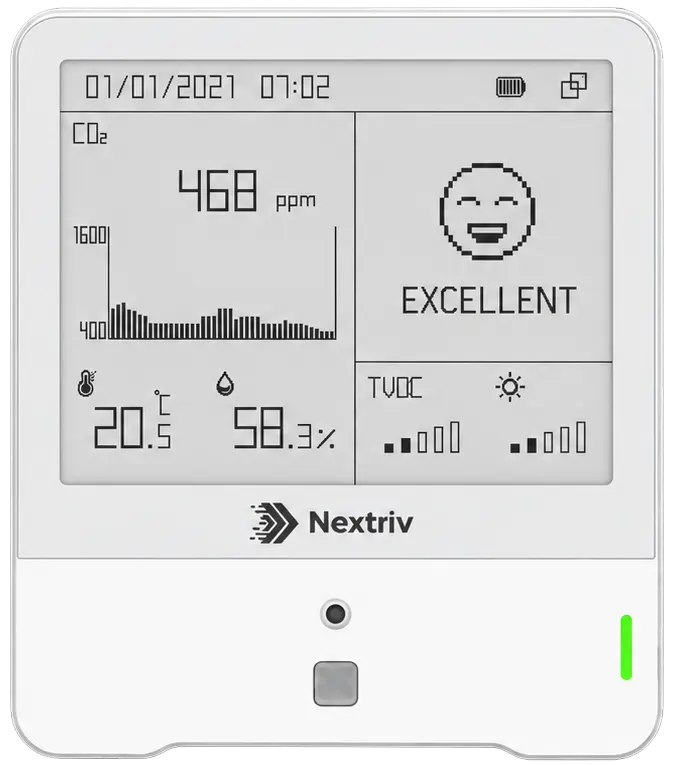
Nextriv Sense IAQ Comfort
SKU: NX-SN-AQ8C
8-in-1 climate monitoring with laser PM2.5/PM10 particulate measurement — the full picture of air health in facilities with elevated dust levels.
- Temperature
- Humidity
- CO₂
- TVOC
- +4
Not sure which set to choose?
Tell us about your facility and we'll match sensors and a gateway to the exact rooms you need to monitor — no unnecessary hardware.