
Sense environmental sensors
Nextriv Sense Leak Spotspot water leak sensor
SKU: NX-SN-WLS
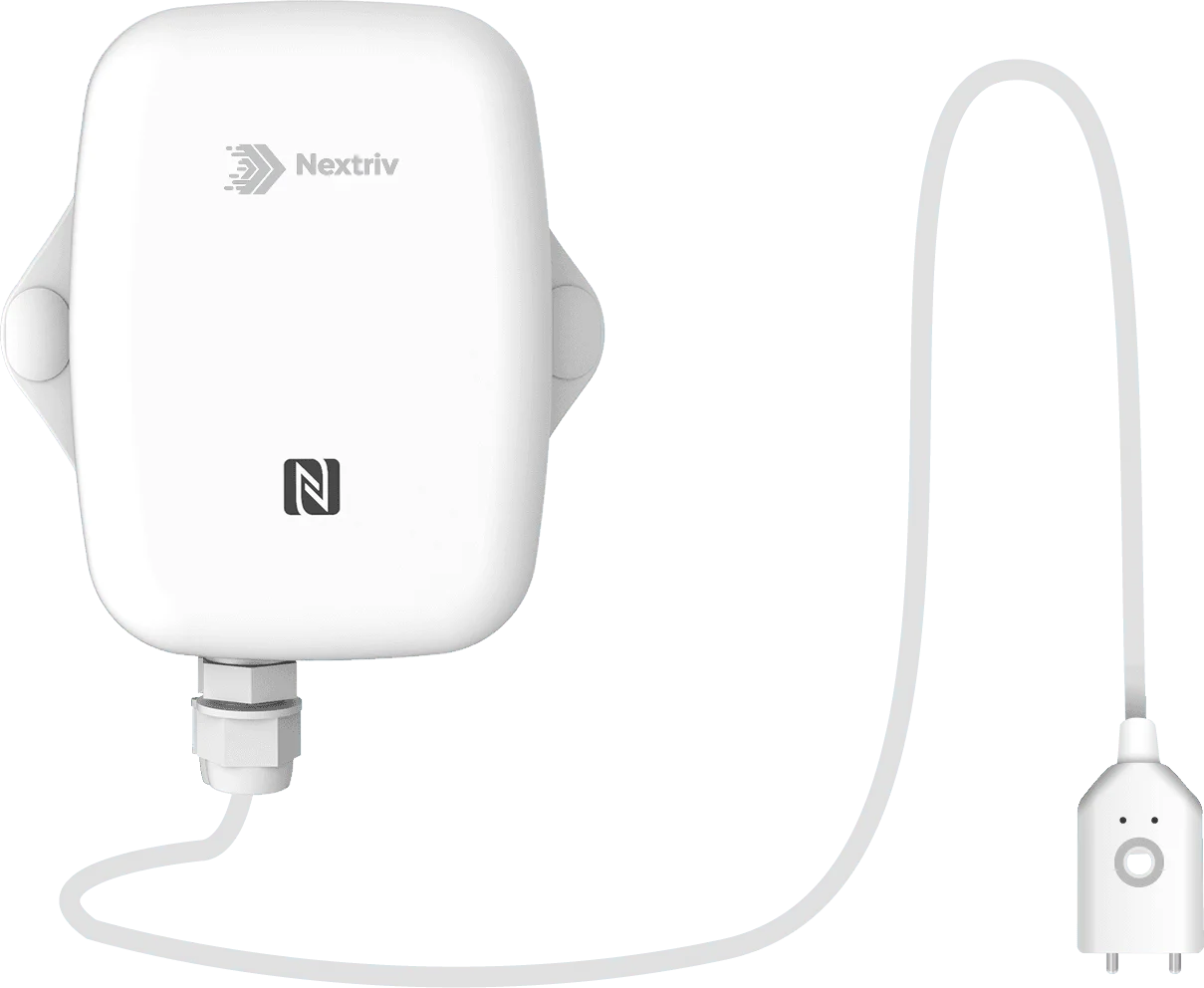
Spot water leak sensor with a stainless-steel probe — an alarm at the first drops. It also measures ambient temperature and humidity.
€105net
VAT is added to the price.
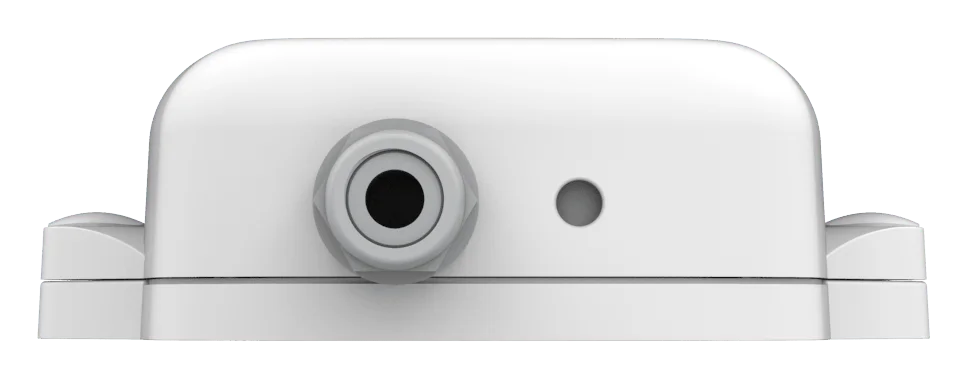
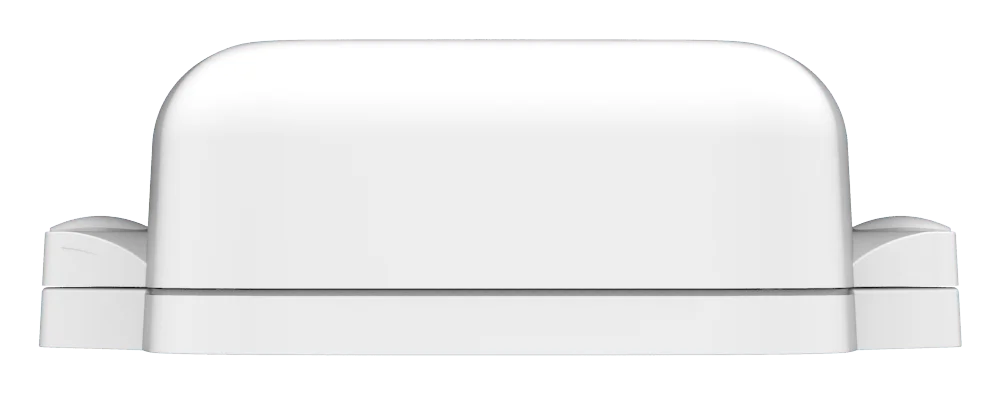
Description
- Alarm at the first drops of water
- 316 stainless-steel probe
- Three measurements from one installation
- Contact detection — no false alarms
- Can trigger a valve with no server involved
What it is for
Water damage is one of the most expensive and most "stupid" categories of property loss — because it almost always starts with a few drops in a predictable place: under a valve, by a boiler, in an air-conditioner drip tray. Nextriv Sense Leak Spot watches exactly those points. The measuring probe with a 316 stainless-steel head — a grade used in chemical and marine installations that won't corrode after years in damp conditions — lies at the point of risk, while the transmitter hangs higher up, connected by a 1.5 m cable. Approx. 5 mm of conductive liquid at the probe is enough to fire an alarm within seconds.
The product philosophy is simple: don't flood the operator with telemetry — say the one thing that matters: "there is water where it shouldn't be". Detection is contact-based: the alarm fires only on physical contact between the electrodes and the liquid, which practically eliminates false reports — a key trait in server rooms, where every alarm starts a procedure. The interval and number of repeats are configurable, and in direct device-to-device mode the leak signal can trigger an actuator — for example a shut-off valve — with no server involved. That turns the sensor from an "informer" into a component of real anti-flooding automation.
Along the way, Sense Leak Spot measures ambient temperature and humidity. That's no gimmick: in a service shaft, humidity rising week after week betrays a micro-leak long before water touches the probe, and the temperature measurement protects the installation from freezing. The local, tamper-proof log of approx. 2800 records and data backfill after a connectivity outage provide evidence for the insurer: when it was detected, how long it lasted, what the conditions were.
Good placement practice is simple: under precision air-conditioning units, at the lowest points of the floor, along water supply and return runs. The probe is mounted with the electrodes facing straight down — with screws or tape — and the flexible cable lets you tuck it into corners while keeping the transmitter in a good radio position. The -30…70 °C operating range also covers unheated basements and technical attics.
Usage scenarios
- Server room: the probe in the drip tray of the precision air-conditioning. The first drops of condensate raise an alarm before the moisture reaches the raised floor and its cabling — the difference between a service note and an outage.
- Hotel: sensors under the boilers and washbasins on each floor. A night-time leak in room 312 is a notification to reception at 3:14 a.m., not a complaint from the guest in 212 at 7:00 and a soaked ceiling.
- Office building: a probe by the water riser in the shaft plus continuous ambient humidity measurement. The portfolio manager sees all the properties in one panel, and configuring each sensor via NFC looks exactly the same.
- Shop and food-service back-of-house: a sensor by the dishwasher and the espresso machine; the alarm reaches the shift manager before the water soaks into the dry-goods store.
- Boiler room and heat substation: leak detection with simultaneous temperature measurement — one device watches both tightness and the freezing risk of an unheated room.
- Archive and museum: spot protection under the only water line in the collections zone; the tamper-proof event log as documentation for the insurer.
Key features
- A probe with a 316 stainless-steel head — chemical-grade corrosion resistance; a sensor that still works after years in damp conditions.
- Triggers at just approx. 5 mm of conductive liquid — an alarm at the "puddle" stage, not the "flood" stage.
- Contact detection — an alarm only on physical contact between the electrodes and the liquid, practically zero false reports.
- A 1.5 m probe cable (non-standard lengths to order) — the probe at the point of risk, the transmitter within radio reach.
- Three measurements from one installation: leak + temperature + ambient humidity.
- Configurable interval and number of alarm repeats — escalation tailored to the facility's procedures.
- Direct triggering of actuators (e.g. a shut-off valve) with no server involved.
- A tamper-proof log of approx. 2800 records + backfill after a connectivity outage — claims documentation with no gaps.
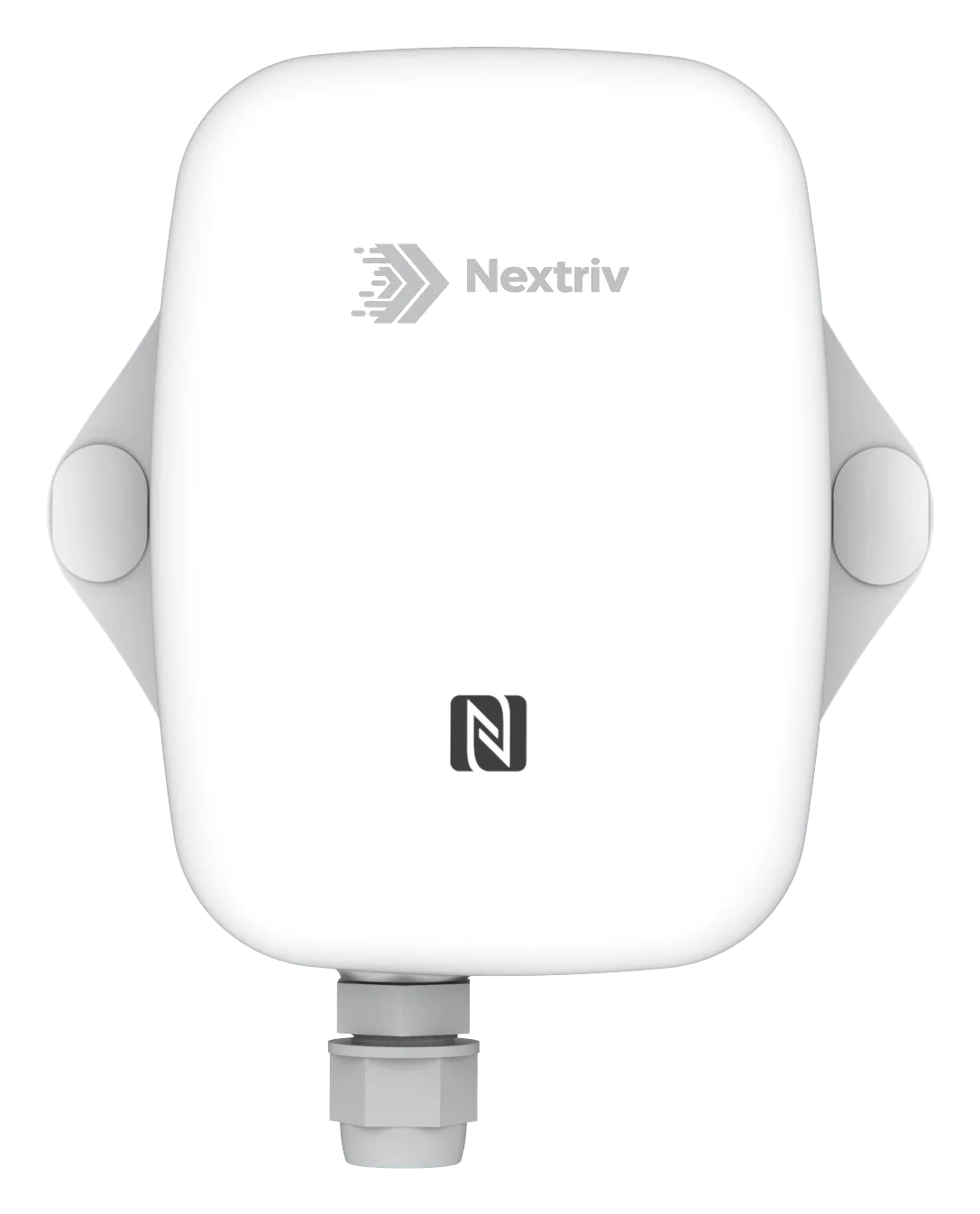
- UV-resistant IP67 enclosure; contactless NFC configuration; a replaceable battery for years of operation.
In the Nextriv system
A leak is an event that has to wake the right person — which is why the Nextriv platform sends notifications over six channels (e-mail, SMS, web push, Discord, MS Teams, in-app sound), and escalation policies pass an unacknowledged alarm to the next recipients: from the technician, through the facility manager, to the external service company. Every event has a code, a status and comments — after an incident, the full response timeline is visible.
Ambient temperature and humidity carry four alarm thresholds each, so the sensor will also warn of an unheated boiler room about to freeze. Dashboards gather all the risk points of a property portfolio on one screen, and PDF reports document events and conditions for the insurer. A sensor silent for longer than twice its reporting interval gets an offline status. A floor plan with markers shows which probe reported water — the technician runs to the right corner, not "somewhere in the basement" — and history reaching back up to 5 years lets you demonstrate continuous oversight of the zone.
Typical deployments
- Data centres: probes in the drip trays of precision air-conditioning and at the lowest points of the raised floor.
- Office buildings: the water risers, shafts and heat substations of an entire portfolio in one panel.
- Hotels: boilers, washbasins and floor service areas — an alarm before the water seeps into the room below.
- Retail: dishwashers, espresso machines and food-service back-of-house under constant watch, with identical configuration at every site.
Specification
| Leak detection | water and conductive liquids, triggers at a level of approx. 5 mm |
|---|---|
| Probe | 316 stainless-steel head on a 1.5 m cable (length configurable to order) |
| Temperature | -30…70 °C, ±0.3 °C (0…70 °C), ±0.6 °C (-30…0 °C) |
| Humidity | 0…100 % RH, ±3 % (10–90 % RH), ±5 % outside that range |
| Connectivity | Long-range radio — up to approx. 2 km urban / 15 km in open terrain |
| Power | 1× replaceable Li-SOCl₂ battery 4000 mAh (optionally 8000 mAh) |
| Battery life | over 10 years under favourable radio conditions; approx. 5.6 years at maximum range (EU868; 10-min interval + 24 alarm events/day) |
| Local buffer | approx. 2800 records + retransmission after a connectivity outage |
| Ingress protection | IP67, UV-resistant enclosure |
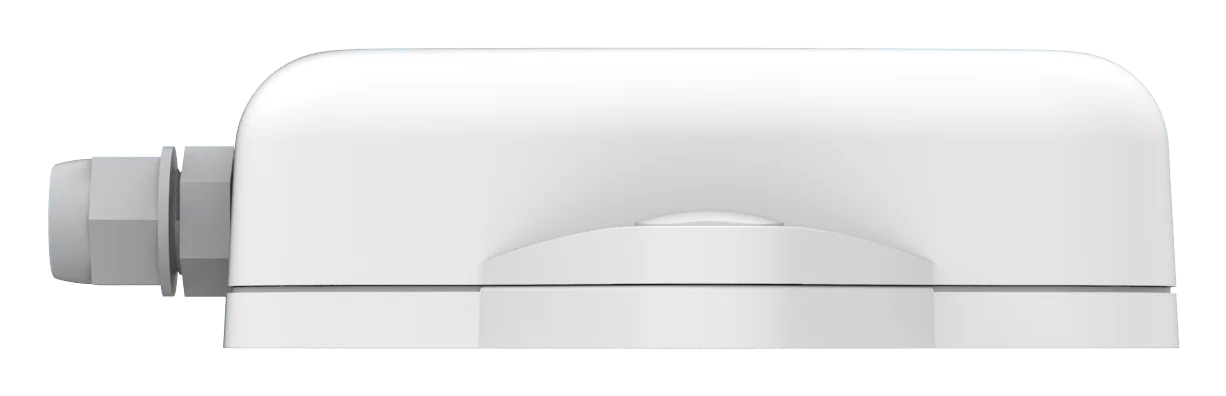
| Dimensions | transmitter 105.6 × 85.3 × 27 mm |
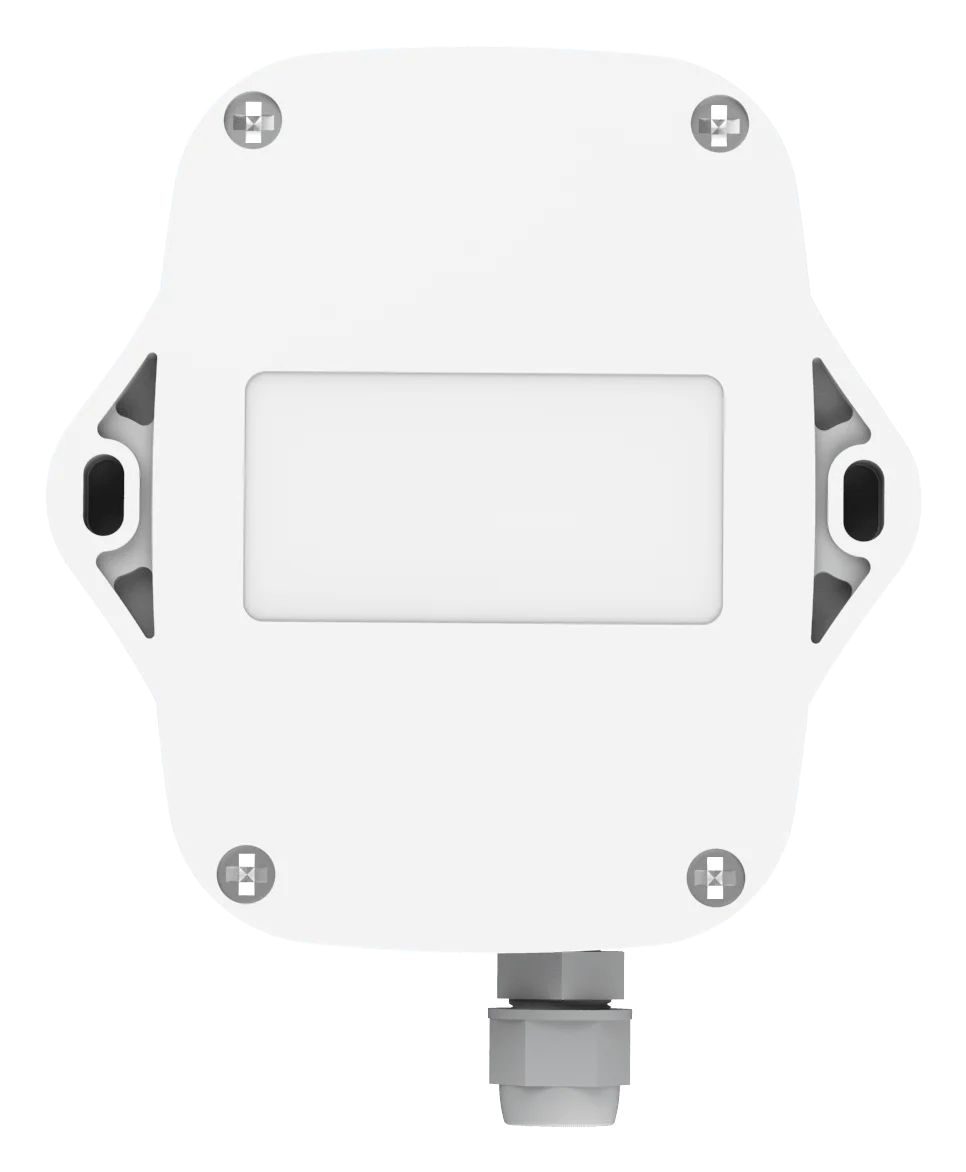
| Mounting | transmitter: screws, 3M tape or cable ties |
| Configuration | NFC; configurable intervals and alarm reporting frequency |
Files
- Download
Nextriv Sense Leak Spot — datasheet
pdfEN0.5 MBversion 1.0
Related products
Other devices from the same family.
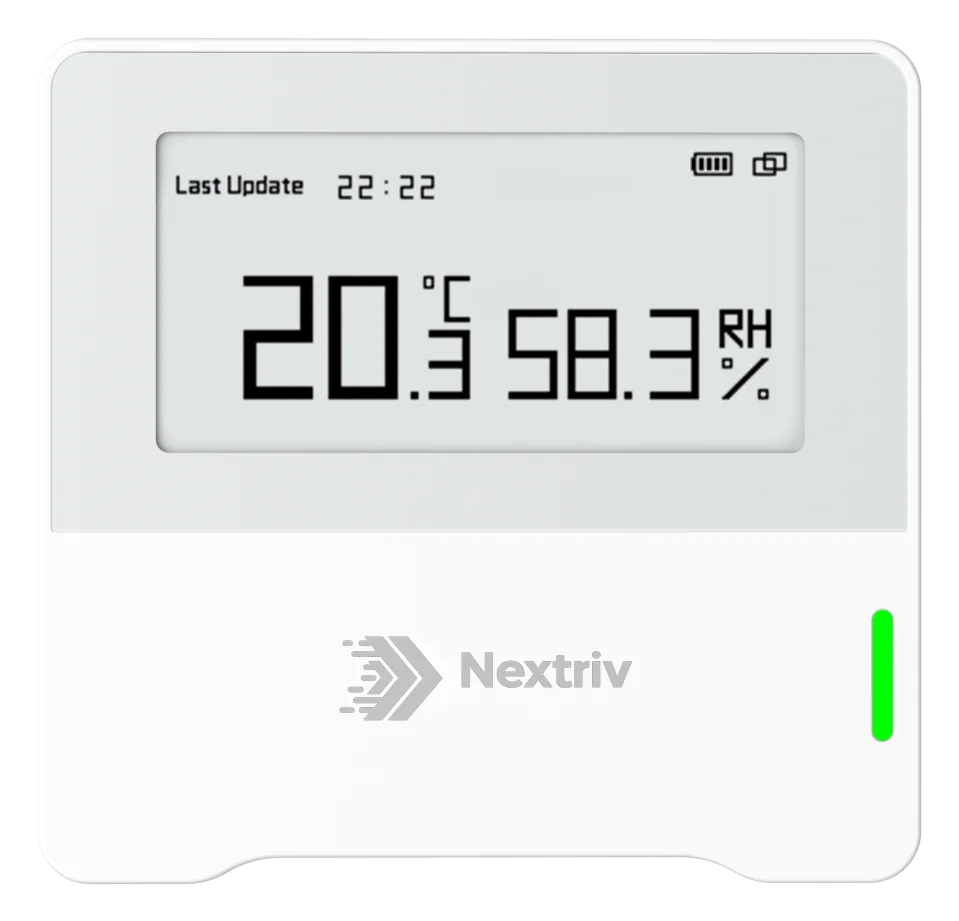
Nextriv Sense Display
SKU: NX-SN-DISP
Temperature and humidity sensor with a 2.13″ e-ink display — readings on-site and in the Nextriv platform. Over 7 years on replaceable batteries.
- Temperature
- Humidity
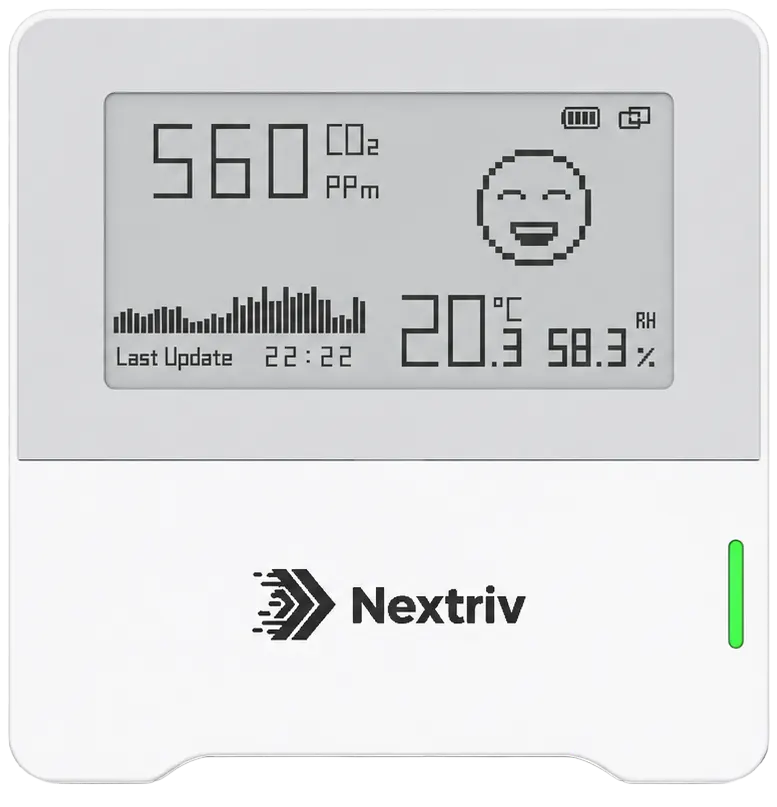
Nextriv Sense CO₂
SKU: NX-SN-CO2
CO₂, temperature and humidity sensor with NDIR measurement and an e-ink display. Shows on the spot when to air the room — and sends the data to the Nextriv platform.
- Temperature
- Humidity
- CO₂
Nextriv Sense IAQ
SKU: NX-SN-AQ7
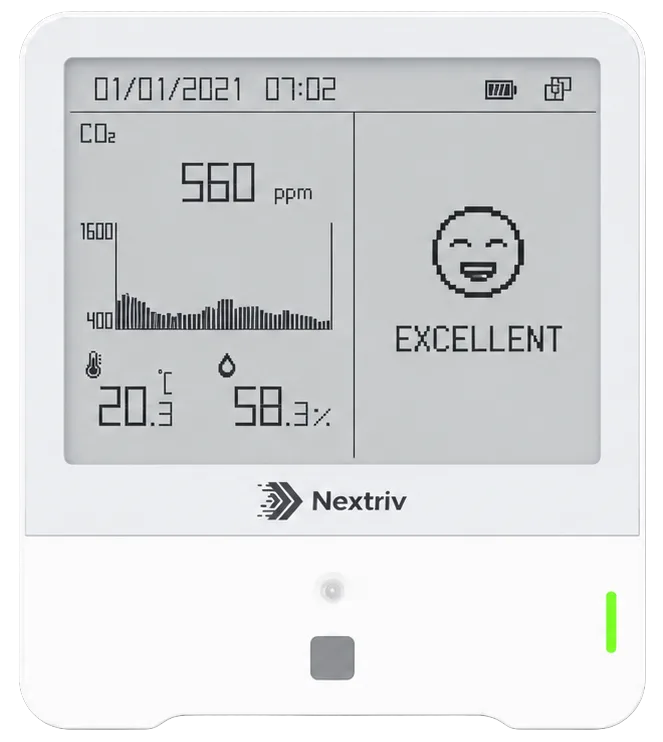
7-in-1 air quality station: temperature, humidity, CO₂, TVOC, pressure, light and occupancy — with a 4.2″ e-ink display and an 18,000-record buffer.
- Temperature
- Humidity
- CO₂
- TVOC
- +3
Nextriv Sense IAQ Comfort
SKU: NX-SN-AQ8C
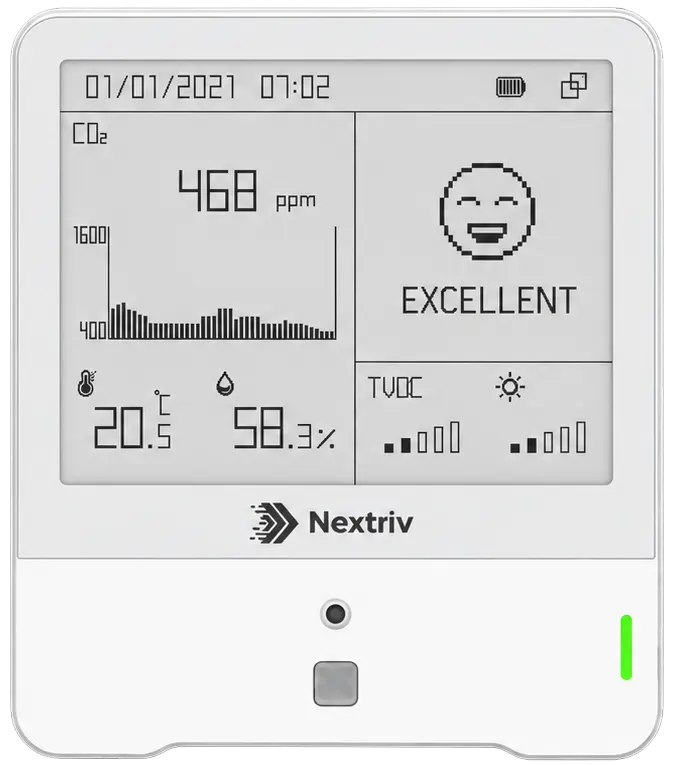
8-in-1 climate monitoring with laser PM2.5/PM10 particulate measurement — the full picture of air health in facilities with elevated dust levels.
- Temperature
- Humidity
- CO₂
- TVOC
- +4
Not sure which set to choose?
Tell us about your facility and we'll match sensors and a gateway to the exact rooms you need to monitor — no unnecessary hardware.