
Sense environmental sensors
Nextriv Sense NoiseSPL and Leq noise level sensor
SKU: NX-SN-NSE
Wireless noise level sensor reporting SPL, Leq and Lmax. It safeguards acoustic comfort and quiet-time policies — measuring only the sound level, never recording the content of conversations.
€100net
VAT is added to the price.


Description
- Measures noise, records nothing
- Three metrics: SPL, Leq and Lmax
- Local LED alarm when a threshold is crossed
- Up to 5 years on replaceable batteries
- Installs with no cables and no electrician
What it is for
Noise is the most commonly ignored comfort parameter — it shows up on no chart until someone measures it. Nextriv Sense Noise turns noise into an ordinary, measurable quantity: it hangs on the wall like a minimalist temperature sensor and reports the sound level in decibels — continuously, objectively and without involving people. Where "loud" used to be a matter of someone's opinion, there is now a number, a threshold and an alert.
The key argument is privacy by design: the device measures only the level of sound; it records nothing and recognises no conversation content. That means it can be hung legally and uncontroversially in a hotel room, a school classroom or a hospital ward — anywhere a recording microphone would be unacceptable. It is a comfort sensor, not a listening device — and that distinction is worth communicating openly to guests, patients and employees.
Beneath the minimalist housing sits solid acoustics. The sensor reports three metrics at once: the instantaneous level (SPL), the equivalent continuous level (Leq) and the maximum level (Lmax). You can choose the A-weighting curve — close to the perception of the human ear — or C for loud environments, and the fast 125 ms time constant captures impulsive noise: slams, impacts, short bangs. The 30–120 dB range covers everything from a whisper in a library to a concert hall.
There is also an element that works before any report exists: the built-in LED can act as a local "light reminder" once a threshold is crossed. In a library or classroom, its mere presence is often enough to bring the sound level down — without the teacher intervening and without waiting for a notification.
Usage scenarios
- Hotels and short-term rentals: the sensor in an apartment detects a loud party at 1 a.m. and alerts the staff before the neighbours call. Only the sound level is measured, so guests' privacy remains intact — something you can state explicitly in the house rules.
- School classroom and library: the LED on the sensor lights up once the threshold is crossed and the children police the "green" level themselves. Long-term data shows which rooms need acoustic treatment.
- Hospital, night ward: the quiet-hours policy stops being a declaration — the platform logs every exceedance with time and place, and staff respond to alerts instead of doing the rounds.
- Open-plan office: noise maps from several sensors show where focused work is genuinely possible. The facility manager relocates quiet zones and phone booths to where the data points, instead of guessing.
- Workshop and light manufacturing: monitoring the acoustic background at workstations, with an alert when levels approach values requiring hearing protection. The fast time constant catches short, impulsive bangs.
- Coworking space: quiet zones with an objective arbiter on the wall — the noise status can be displayed at reception next to desk availability.
Key features
- Three metrics at once: instantaneous level (SPL), equivalent continuous level (Leq) and maximum level (Lmax) — the complete set for acoustic comfort reports.
- Choice of A-weighting (quieter environments, perception close to the human ear) or C-weighting (loud environments).
- Fast 125 ms time constant for capturing impulsive noise with large fluctuations.
- Privacy by design: only the sound level is measured, zero recording, zero content — an argument that cannot be overstated in hotels, schools and healthcare.
- LED as a local threshold-exceedance alarm — an immediate corrective effect even before the platform sends out notifications.
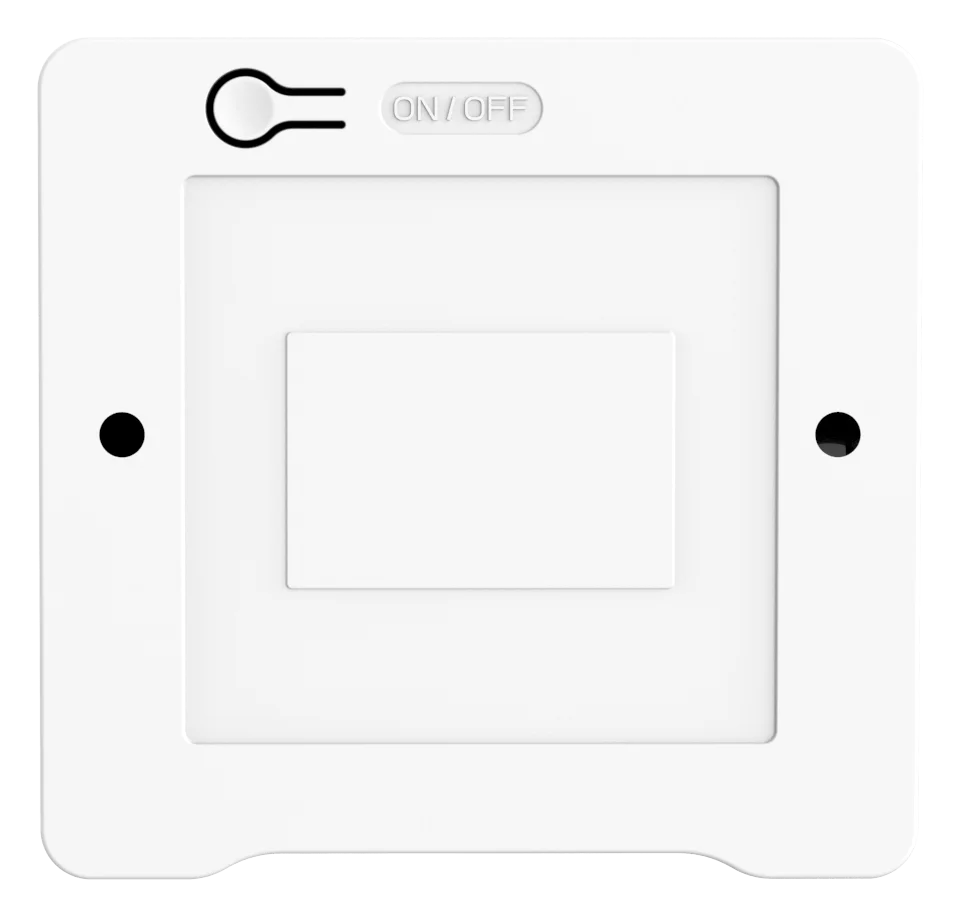
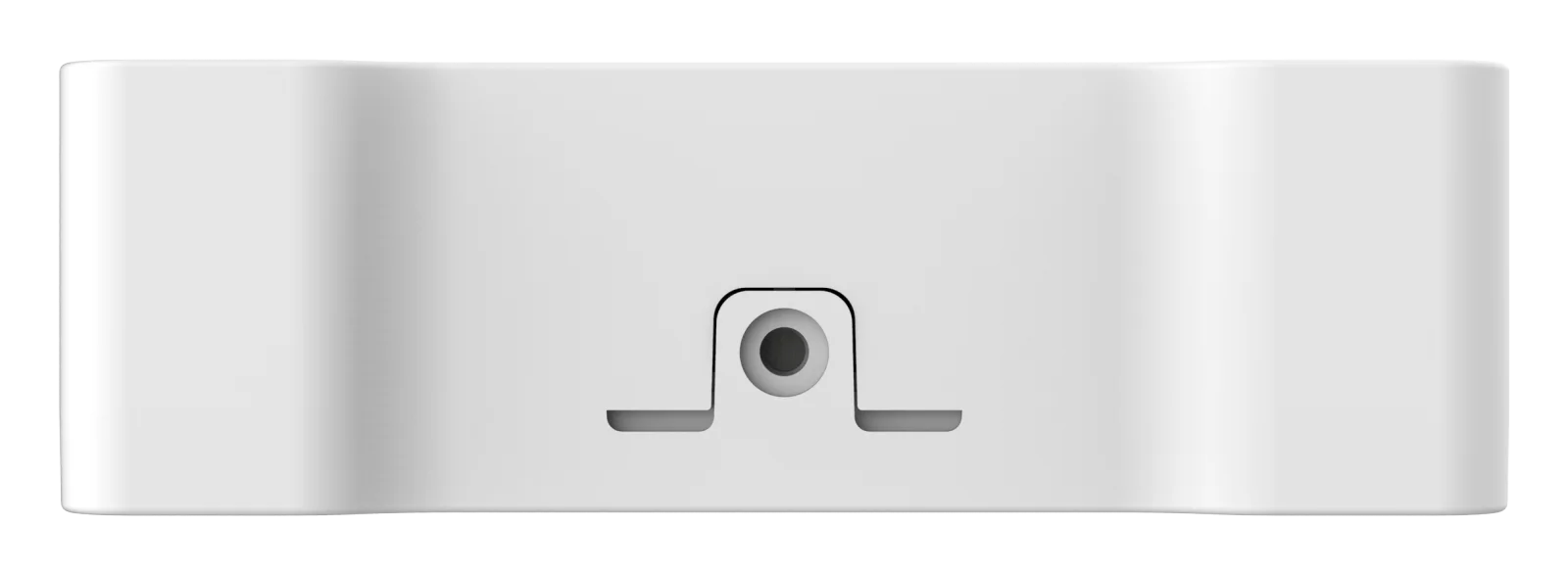
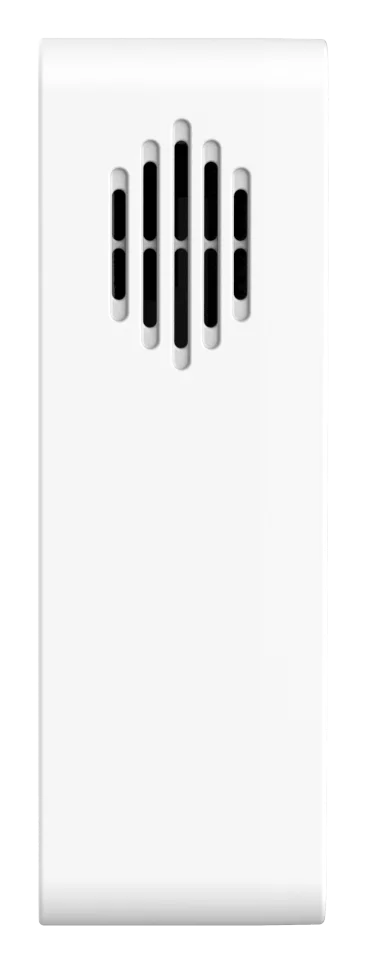
- Minimalist, flat housing (68 × 65 × 20.5 mm, 79 g) — it blends into the wall instead of looking like "measurement apparatus".
- NFC configuration from the mobile app: thresholds, intervals and weighting curves set by tapping a phone.
- Mounted with screws or 3M double-sided tape — no cabling, no electrician.
- Two replaceable lithium batteries — around 3.3–5 years of operation, or roughly 1.5–1.7 years with fast time weighting enabled.
- Long-range radio connectivity — sensors throughout the building report to a single gateway.
In the Nextriv system
SPL, Leq and Lmax levels land on Nextriv dashboards as first-class metrics — you can put them on trend charts, compare several rooms side by side, or pin them into a KPI widget on the reception screen. Each metric takes four thresholds: two warning and two critical (min/max), with severity levels from informational to critical. A night-time exceedance sends notifications through your chosen channels — e-mail, SMS, web push, MS Teams, Discord or an audible alarm in the app — while deduplication ensures one loud wedding does not generate a hundred separate alarms.
Every event has a code, a status history and comments, so the morning analysis of a night-time incident takes minutes. Months of measurement history feed PDF reports and XLSX/CSV exports — hard data for conversations about acoustic treatment, house rules or complaints.
Typical deployments
- Schools and libraries: noise control in classrooms and reading rooms with local LED signalling — see solutions for schools.
- Hotels and apartments: detecting loud parties without violating guests' privacy — more in the solutions for hospitality.
- Healthcare: safeguarding night-time quiet on wards with a documented exceedance history — check the solutions for healthcare.
- Offices and light industry: open-plan acoustic comfort and workstation background noise — details in the solutions for buildings and manufacturing.
Specification
| Measurement range | 30–120 dBA (A-weighting) / 35–120 dBC (C-weighting) |
|---|---|
| Accuracy | ±3 dB (at 0–45°C), 0.1 dB resolution |
| Frequency band | 30 Hz – 8 kHz |
| Reported values | instantaneous sound pressure level (SPL), equivalent continuous level (Leq), maximum level (Lmax) |
| Connectivity | Long-range radio, 868 MHz |
| Radio range | up to ~2 km in built-up areas, up to 15 km in open terrain |
| Power | 2 × replaceable Li-SOCl2 battery, 2700 mAh |
| Battery life | approx. 3.3–5 years (fast time weighting disabled) / approx. 1.5–1.7 years (enabled) — 10-min interval, 25°C |
| Operating conditions | -20…+60°C, humidity up to 95% non-condensing |
| Ingress protection | IP30 (indoor use) |
| Dimensions and weight | 68 × 65 × 20.5 mm, 79 g |
Related products
Other devices from the same family.
Nextriv Sense Display
SKU: NX-SN-DISP
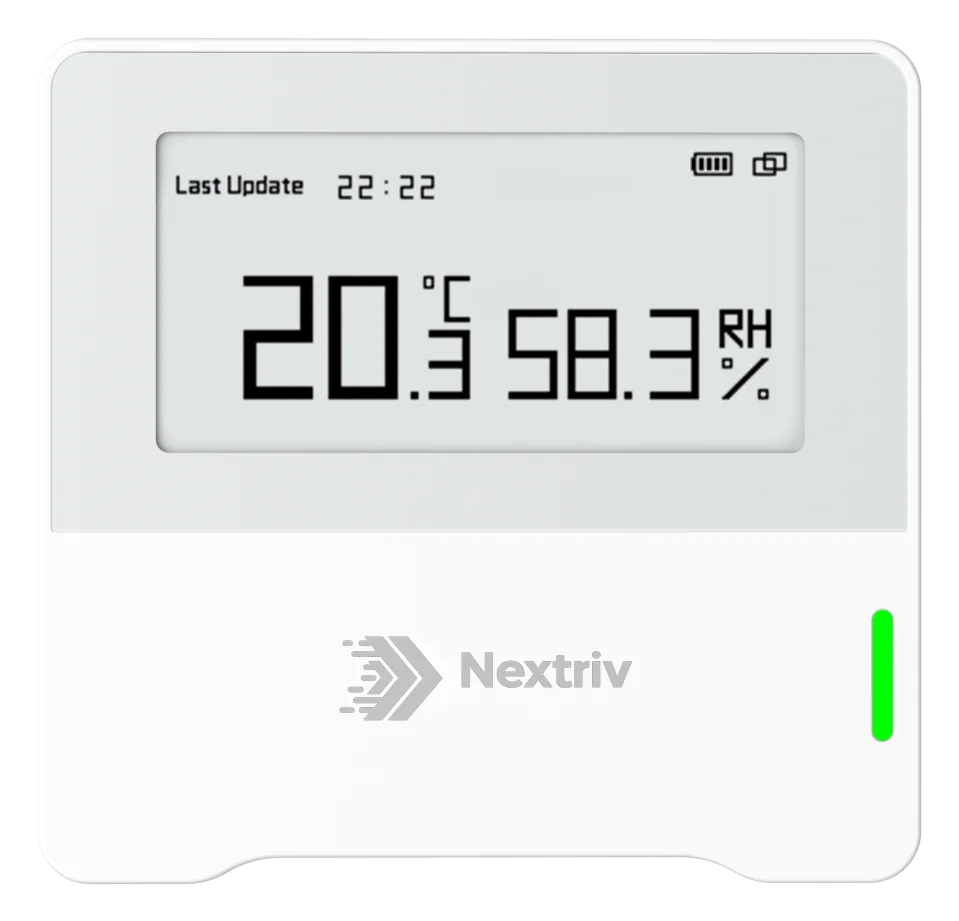
Temperature and humidity sensor with a 2.13″ e-ink display — readings on-site and in the Nextriv platform. Over 7 years on replaceable batteries.
- Temperature
- Humidity
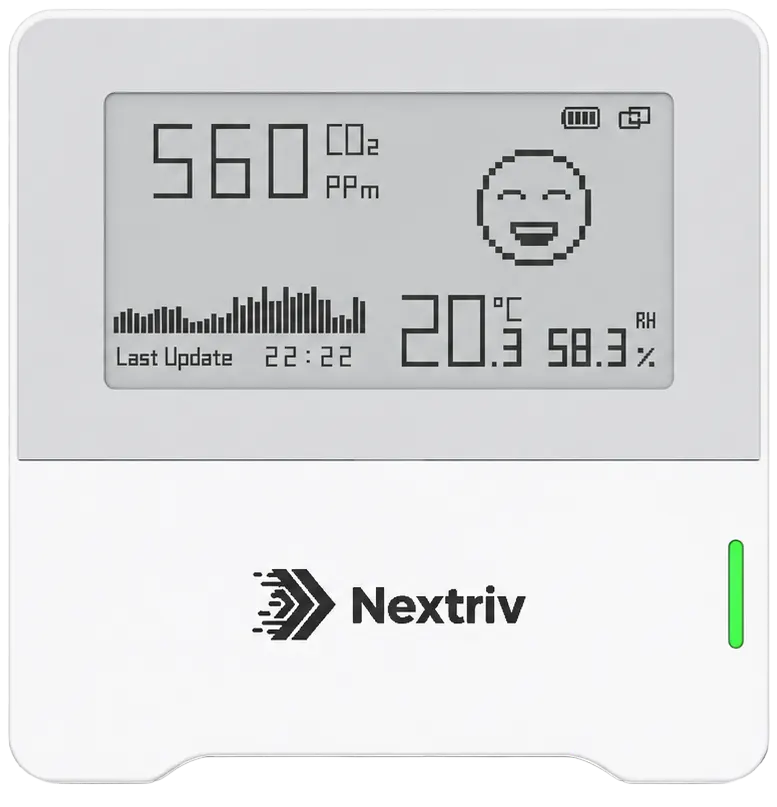
Nextriv Sense CO₂
SKU: NX-SN-CO2
CO₂, temperature and humidity sensor with NDIR measurement and an e-ink display. Shows on the spot when to air the room — and sends the data to the Nextriv platform.
- Temperature
- Humidity
- CO₂
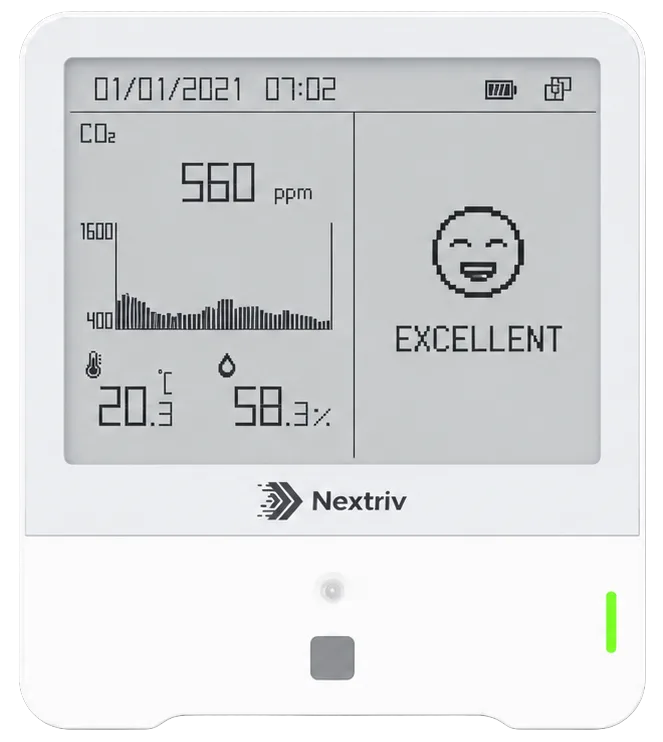
Nextriv Sense IAQ
SKU: NX-SN-AQ7
7-in-1 air quality station: temperature, humidity, CO₂, TVOC, pressure, light and occupancy — with a 4.2″ e-ink display and an 18,000-record buffer.
- Temperature
- Humidity
- CO₂
- TVOC
- +3
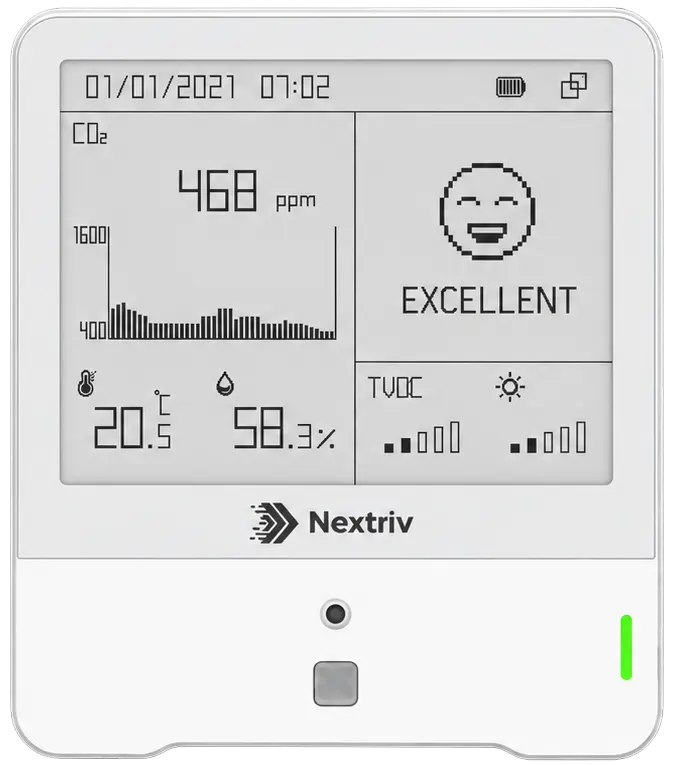
Nextriv Sense IAQ Comfort
SKU: NX-SN-AQ8C
8-in-1 climate monitoring with laser PM2.5/PM10 particulate measurement — the full picture of air health in facilities with elevated dust levels.
- Temperature
- Humidity
- CO₂
- TVOC
- +4
Not sure which set to choose?
Tell us about your facility and we'll match sensors and a gateway to the exact rooms you need to monitor — no unnecessary hardware.