
Sense environmental sensors
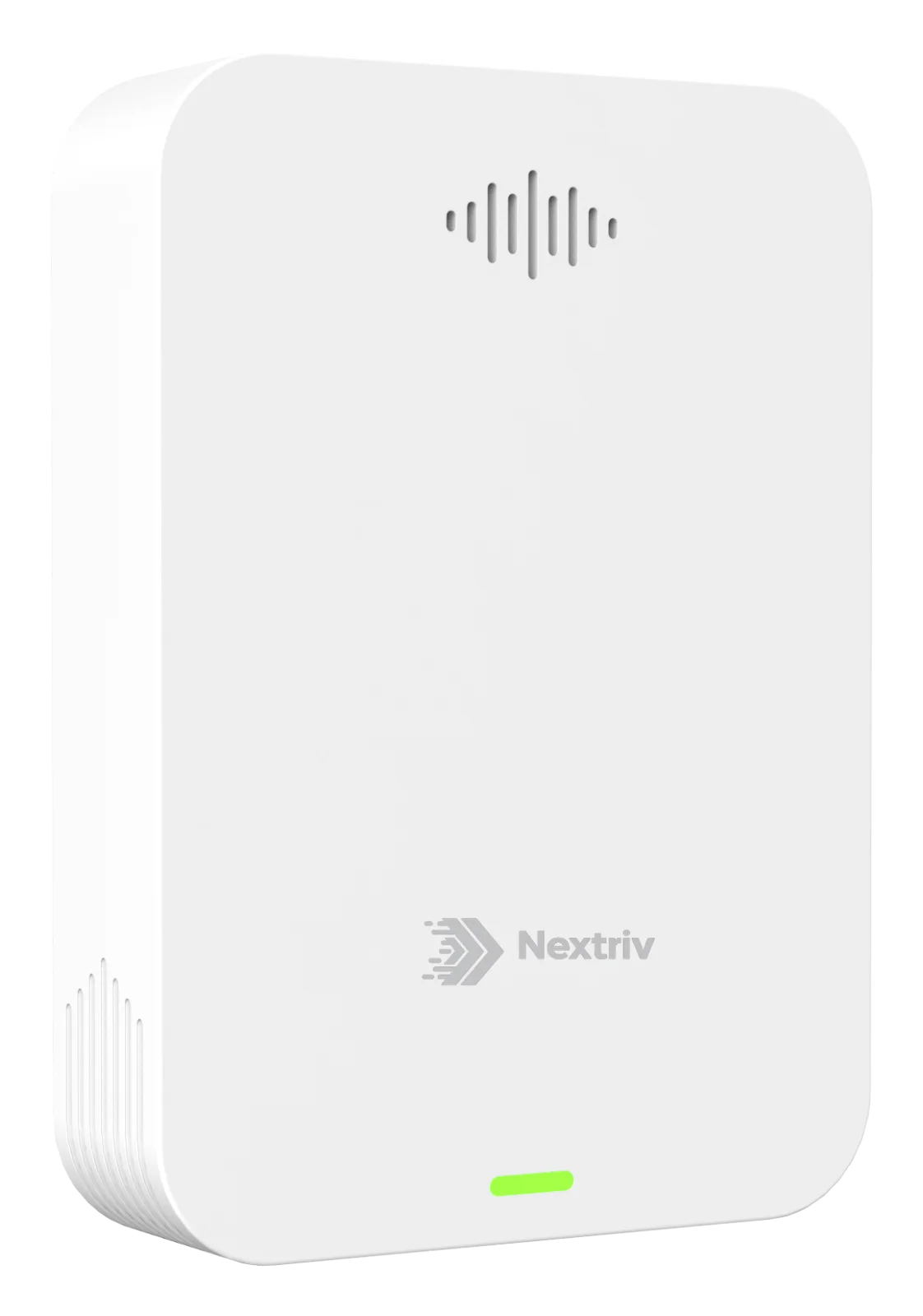
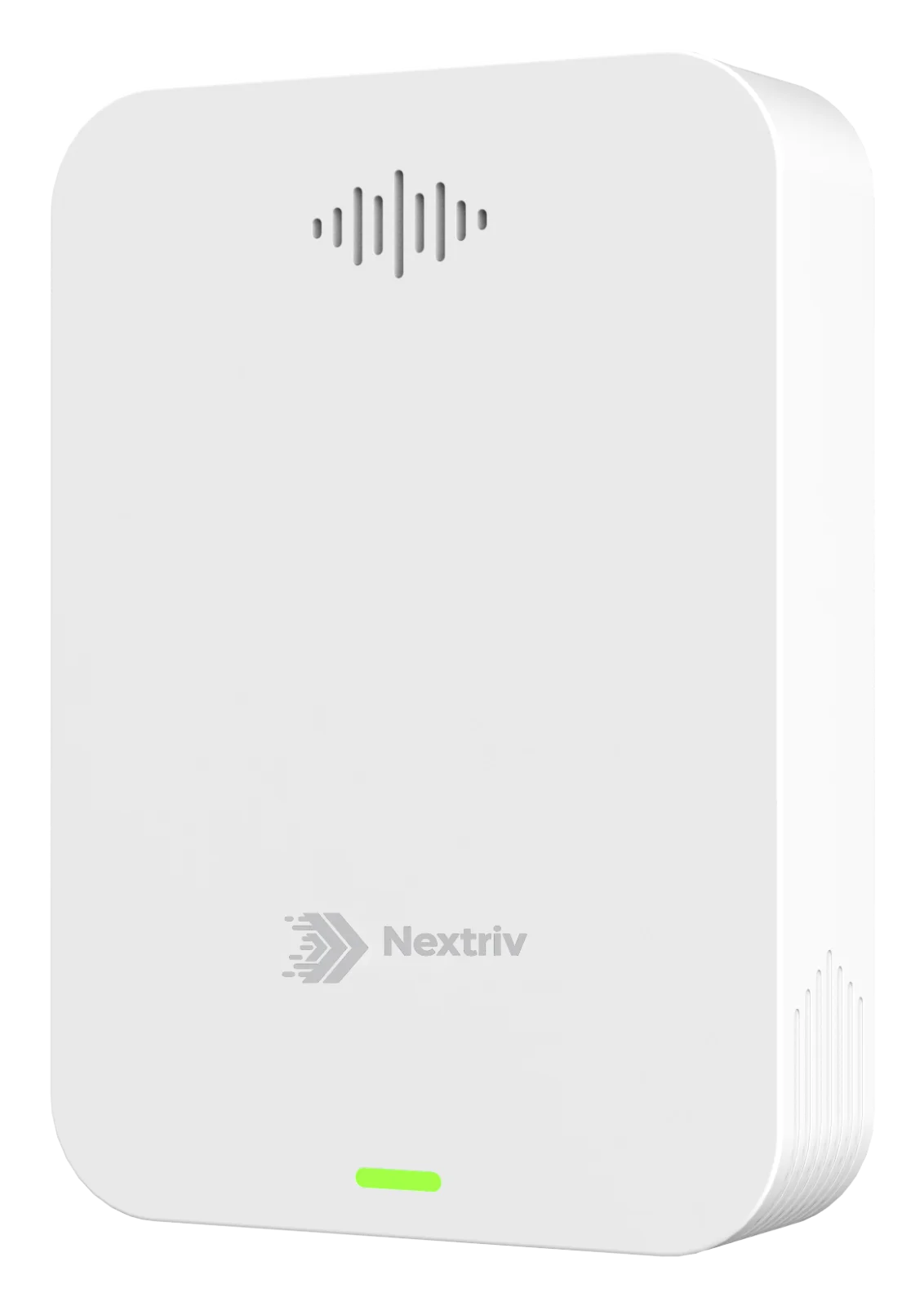
Nextriv Sense Gasammonia and hydrogen sulphide detector
SKU: NX-SN-GAS
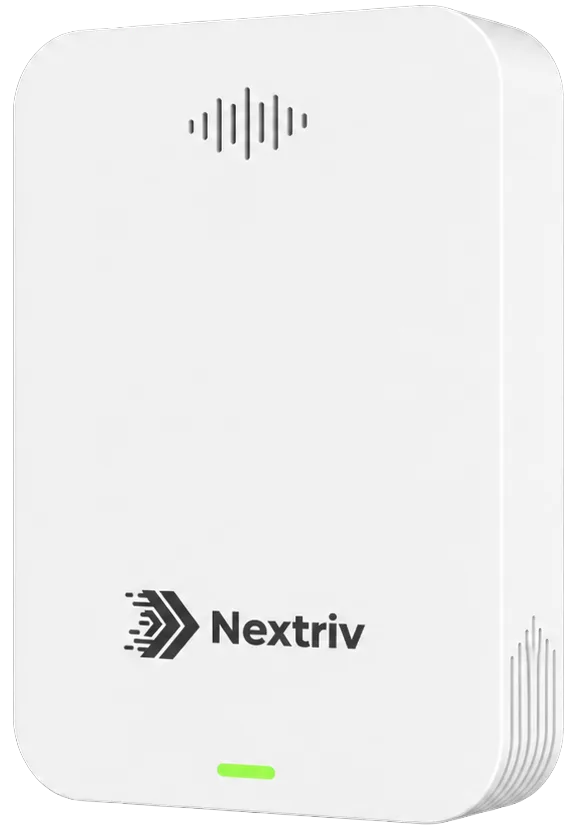
4-in-1 odour detector: ammonia (NH₃), hydrogen sulphide (H₂S), temperature and humidity — objective hygiene control for restrooms and utility rooms with a local alarm (buzzer + LED).
€533net
VAT is added to the price.
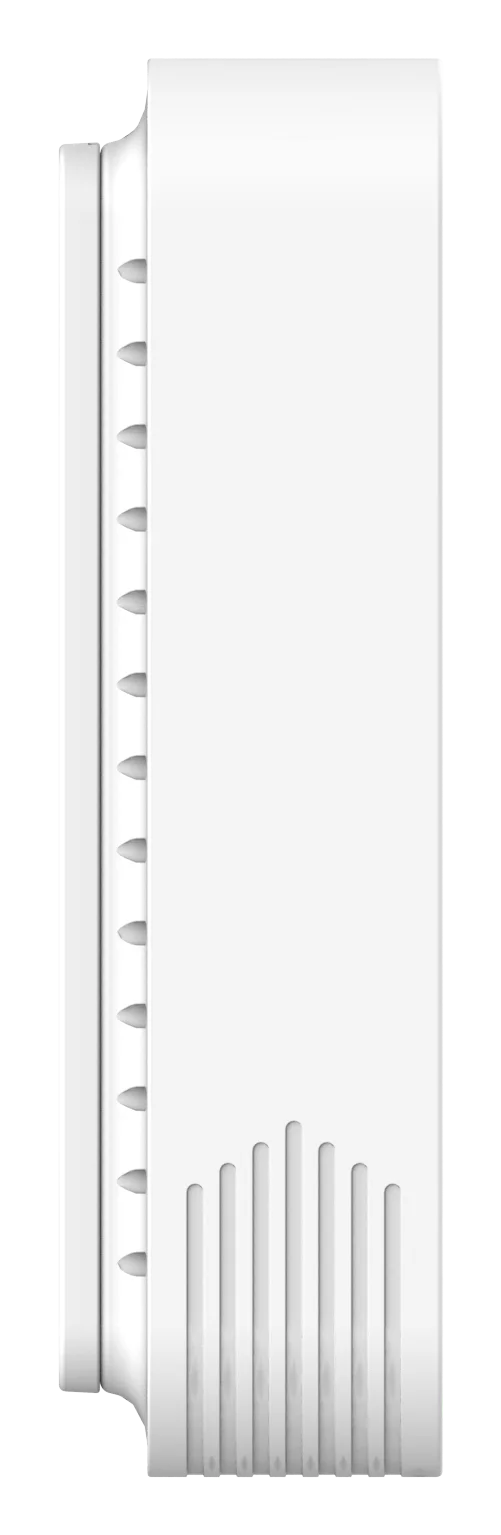
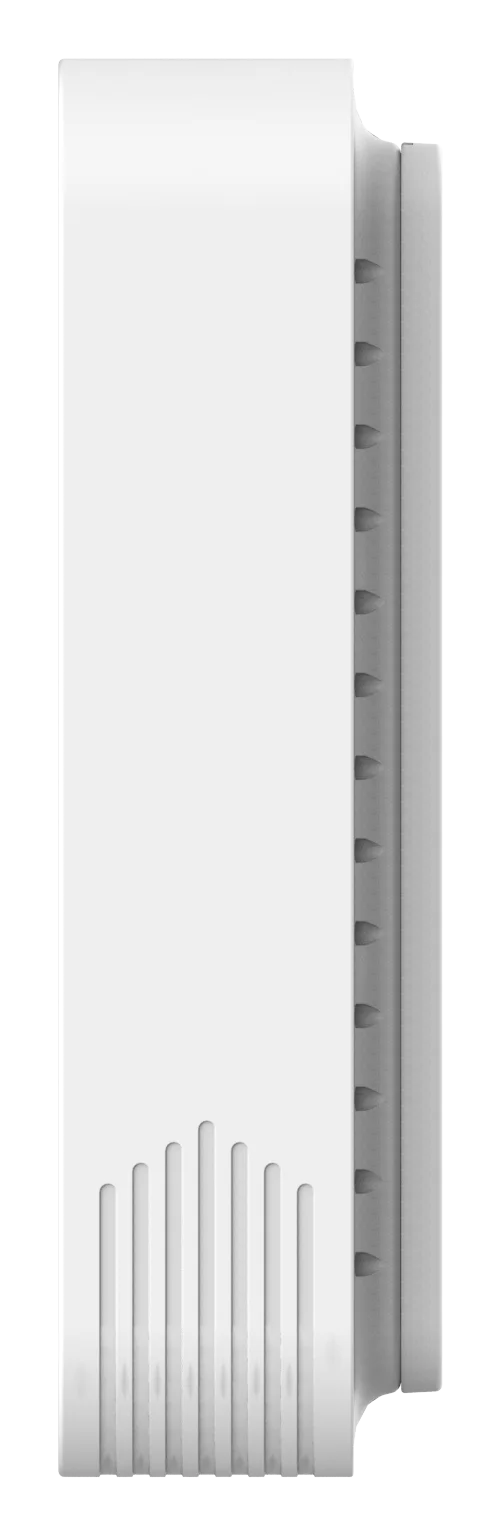
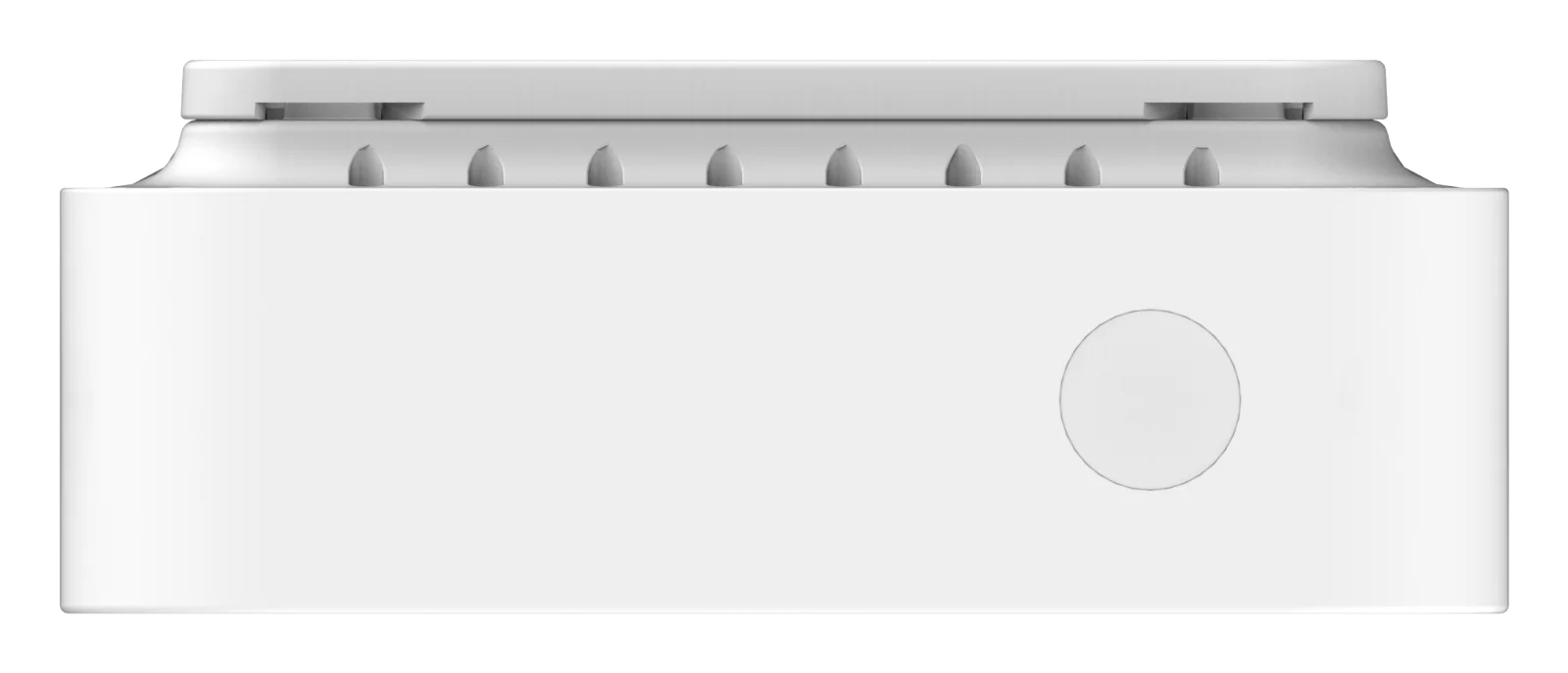
Description
- Odour turned into measurable numbers
- Ammonia and hydrogen sulphide from 0.01 ppm
- Local alarm: buzzer and colour LED
- Four parameters from a single device
- Around 3 years on replaceable batteries
What it is for
"Is this restroom clean?" — until now, the nose of the first unhappy visitor answered that question. Nextriv Sense Gas turns odour into a number: electrochemical sensors measure the concentration of ammonia and hydrogen sulphide — the two gases behind the typical "neglected washroom smell" — with a resolution of hundredths of a ppm, while also reporting temperature and humidity. Four parameters from one discreet device on the wall.
This tool changes how facility management works: cleaning stops being a rigid schedule and becomes a response to the actual state of the room. Rising gas concentrations create an automatic ticket for the cleaning crew, and the concentration trend over time becomes an objective indicator of service quality — harder evidence than any satisfaction survey. Sensor sensitivity also outruns human perception: the device reacts to odours before they become a discomfort for visitors.
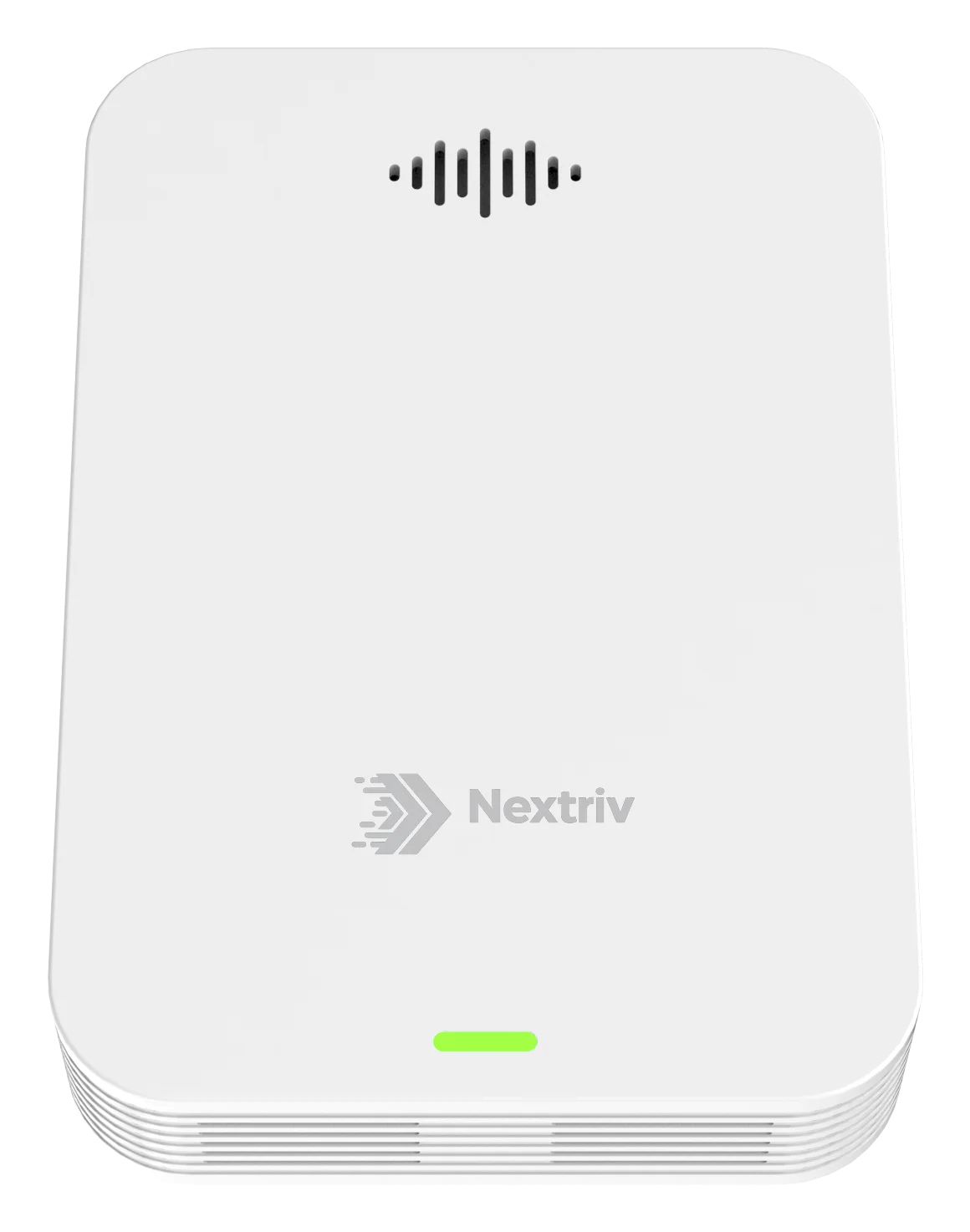
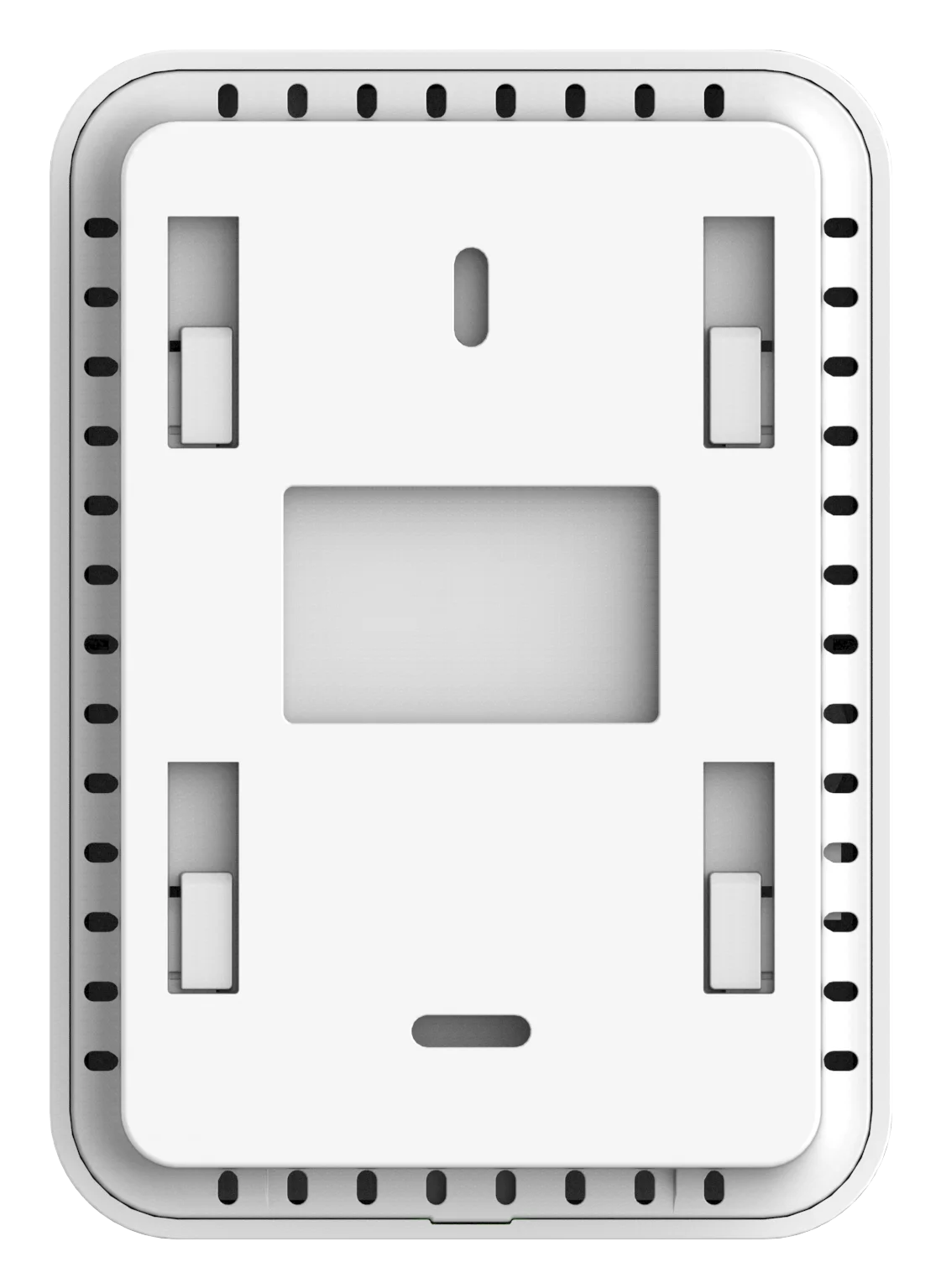
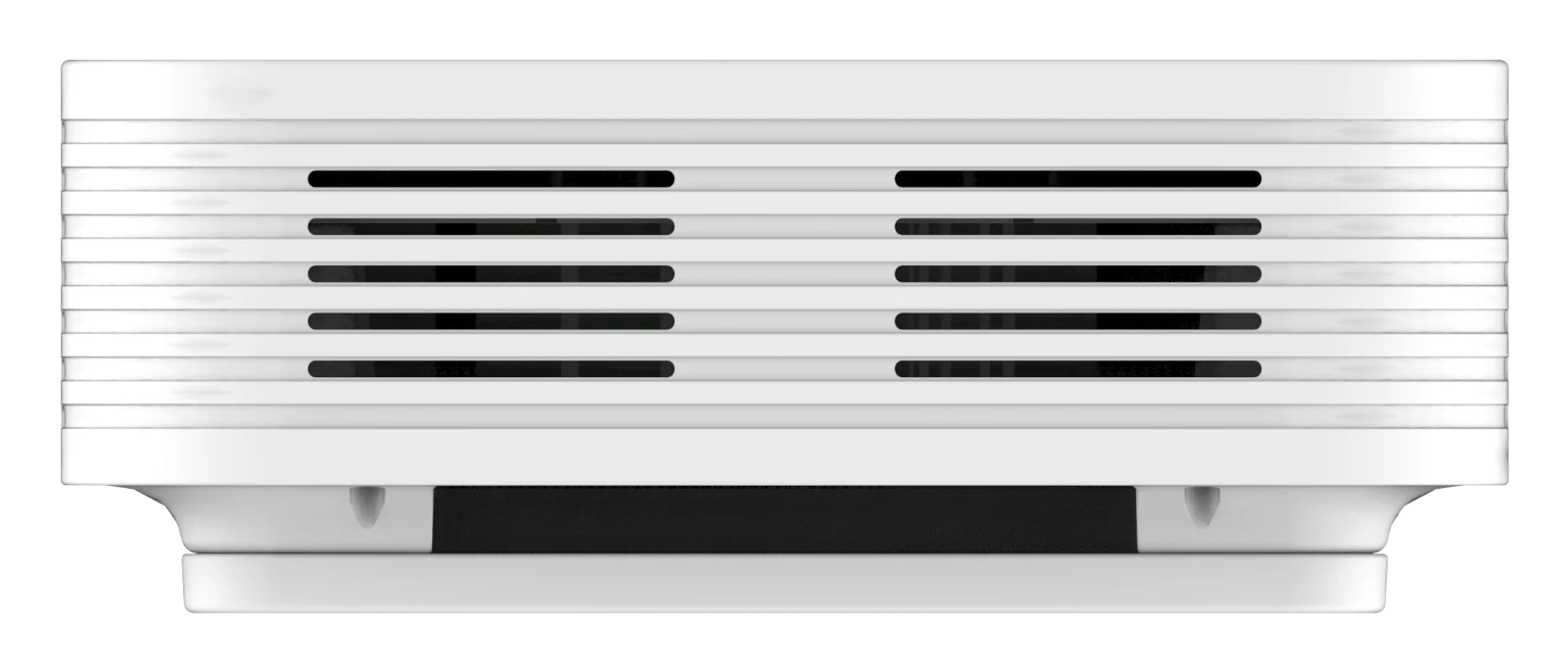
Structurally, the sensor is ready for washroom reality: electronics protected by a moisture-resistant coating, a flame-retardant enclosure, battery power with no wall chasing — important in finished and heritage buildings. On site, the built-in acoustic alarm and a multi-colour traffic-light LED communicate the air status to everyone — no app and no training required.
The same gases also indicate conditions in livestock buildings — ammonia directly affects animal health and growth — and in utility rooms and indoor waste rooms, where a building's common areas often notice the smell before anyone reacts.
Usage scenarios
- Shopping centre: sensors in the restrooms on every level. Tickets for the cleaning crew generate themselves, and the facility manager sees a ranking of the "toughest" locations and peak hours.
- Airport / railway station: thousands of users a day and zero tolerance for neglect. Data-driven cleaning cuts response time from hours to minutes, and the trend documents the SLA with the cleaning company.
- Class A office building: tenant comfort measured, not declared. The problem dies before anyone notices it — and before it lands in a satisfaction survey.
- Hotel and food service: back-of-house areas, locker rooms and guest restrooms under constant watch. The discreet device needs no cabling, so installation does not damage the finishes.
- Sports venue and school: locker rooms and sanitary facilities with spiky load (a match, a break, a tournament) — interventions when they are needed, not by the bell.
- Livestock building: ammonia concentration in a piggery or poultry house under continuous control. An alert on a threshold breach is the cue to step up ventilation before the animals suffer.
Key features
- Four parameters in one: ammonia (NH₃), hydrogen sulphide (H₂S), temperature and humidity — an objective measure of room hygiene.
- Sensitive electrochemical sensors: 0–10 ppm NH₃ and 0–5 ppm H₂S with 0.01 ppm resolution — reacting long before the threshold of human discomfort.
- Sensor module lifetime of over 3 years with drift below 1% per month — measurements stay credible across the whole life cycle.
- Local on-site alarm: built-in acoustic signal + traffic-light LED indicator (green/amber/red).
- Full-fledged climate measurement: temperature ±0.2 °C and humidity ±2% — one installation closes two topics.
- Alarm thresholds configurable to the specifics of the facility, with an immediate report on a breach.
- Moisture-protective electronics coating and a flame-retardant enclosure — reliable operation in steamed-up washrooms.
- A set of replaceable batteries (4 pcs) for approx. 3 years of operation despite the continuously running electrochemical sensors — service once in years, not once a quarter.
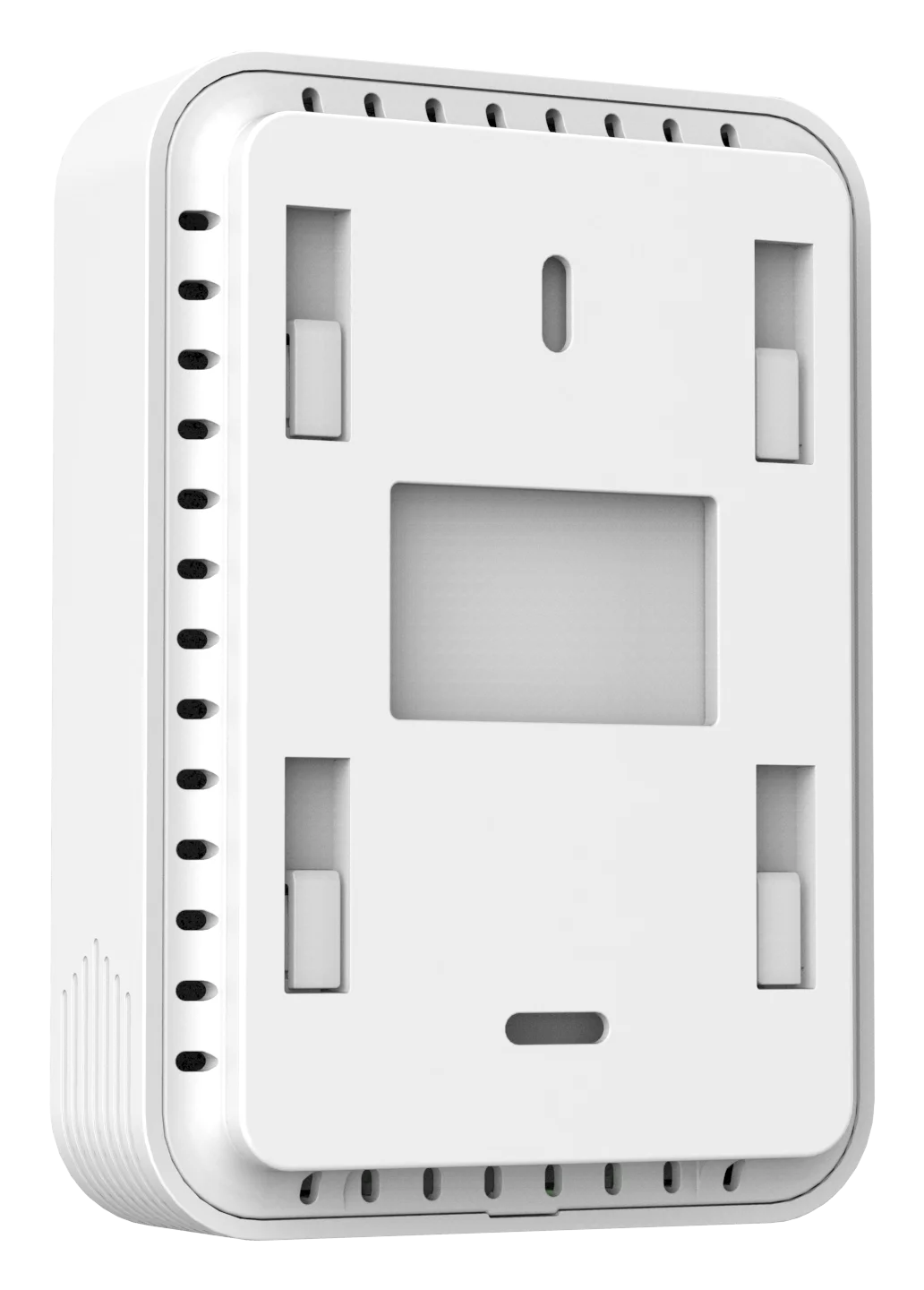
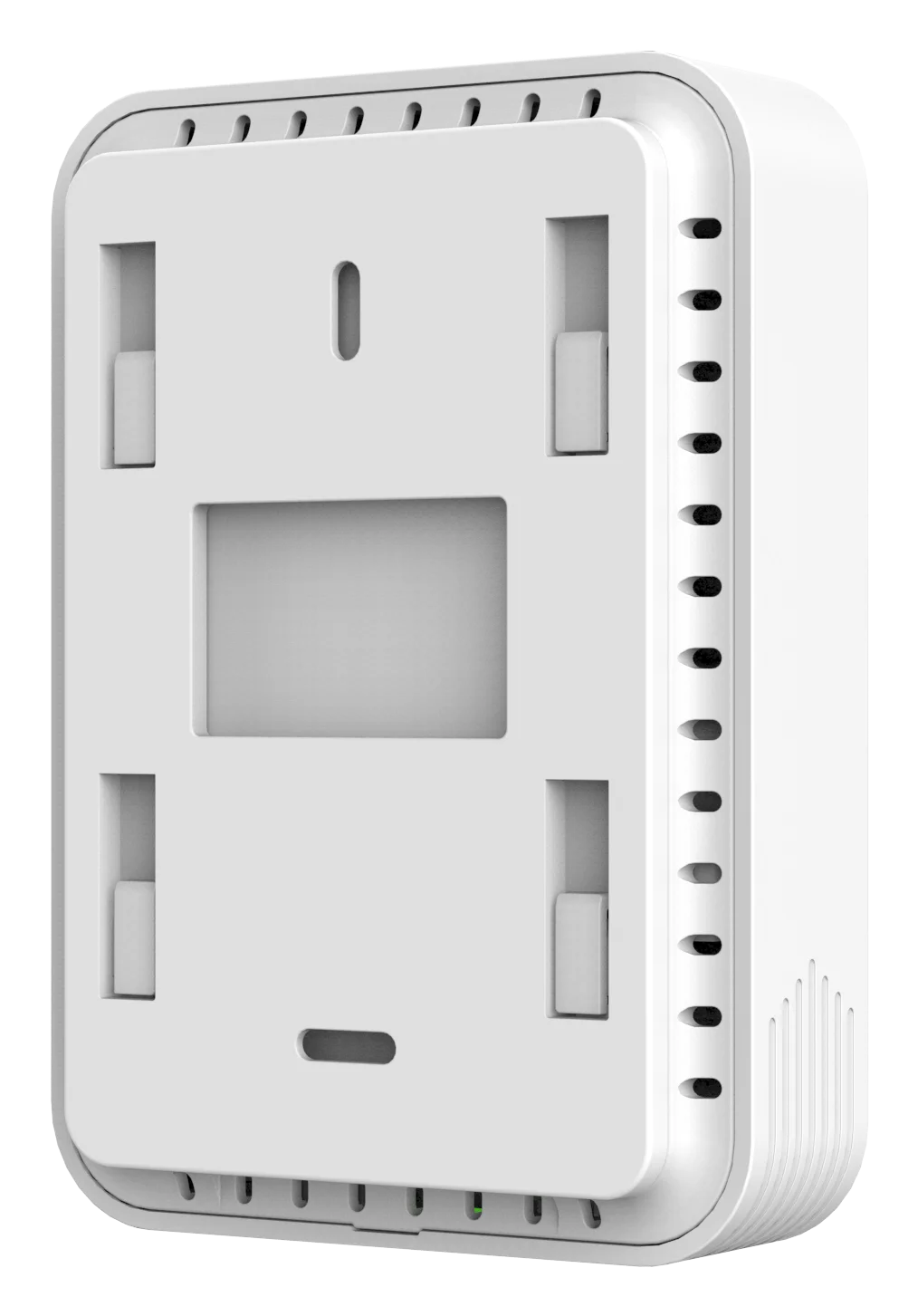
- NFC configuration from a phone; discreet wall mounting with no cabling.
In the Nextriv system
Warning and critical thresholds for each of the four parameters separate routine from intervention: a mild rise in concentration goes to the service task queue, while a critical-level breach goes straight to the crew's phones via SMS or push, with escalation if no one acknowledges. The webhooks integration can pass the event to a facility-management ticketing system or ventilation automation. Every event has a code, a status and comments — a full trail from detection to clean-up.
NH₃ and H₂S trends on the dashboard form a quality map: which restrooms, at which hours, how quickly handled. PDF reports and XLSX/CSV exports turn that into SLA settlement material. Paired with the Nextriv Sense Level supply sensor it forms a complete "smart restroom": clean, fresh and never out of paper.
Typical deployments
- Buildings and facility management: restrooms, indoor waste rooms and utility rooms — solutions for buildings.
- Retail and hotels: high-traffic guest zones — solutions for retail and for hotels.
- Schools and sports venues: sanitary facilities and locker rooms with spiky load — solutions for schools.
- Livestock buildings: ammonia under control for animal health — solutions for livestock buildings.
Specification
| Ammonia (NH₃) | 0–10 ppm, ±5% accuracy (up to 35 °C), 0.01 ppm resolution |
|---|---|
| Hydrogen sulphide (H₂S) | 0–5 ppm, ±5% accuracy (up to 35 °C), 0.01 ppm resolution |
| Temperature | −40…85 °C, ±0.2 °C accuracy |
| Humidity | 0–100% RH, ±2% accuracy |
| Gas module lifetime | over 3 years; drift <1%/month |
| Local alarm | built-in buzzer + multi-colour LED indicator |
| Connectivity | Long-range radio — up to ~2 km urban, ~15 km in open terrain |
| Power | 4 × 4000 mAh lithium battery, replaceable |
| Battery life | approx. 3 years (measure and report every 10 min, 25 °C) |
| Ingress protection | IP30 (indoor device) |
| Operating conditions | −40…55 °C (gas sensors recommended up to 35 °C) |
| Dimensions and weight | 120 × 85 × 32.5 mm, approx. 221 g (with batteries) |
Related products
Other devices from the same family.
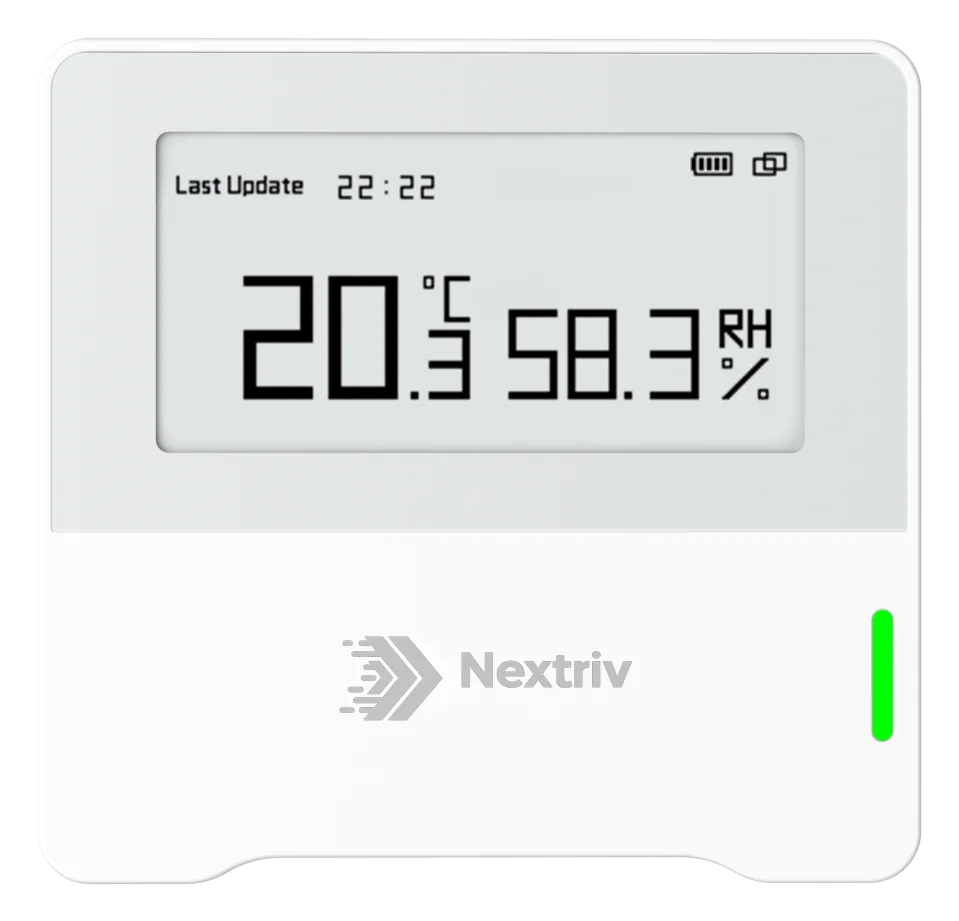
Nextriv Sense Display
SKU: NX-SN-DISP
Temperature and humidity sensor with a 2.13″ e-ink display — readings on-site and in the Nextriv platform. Over 7 years on replaceable batteries.
- Temperature
- Humidity
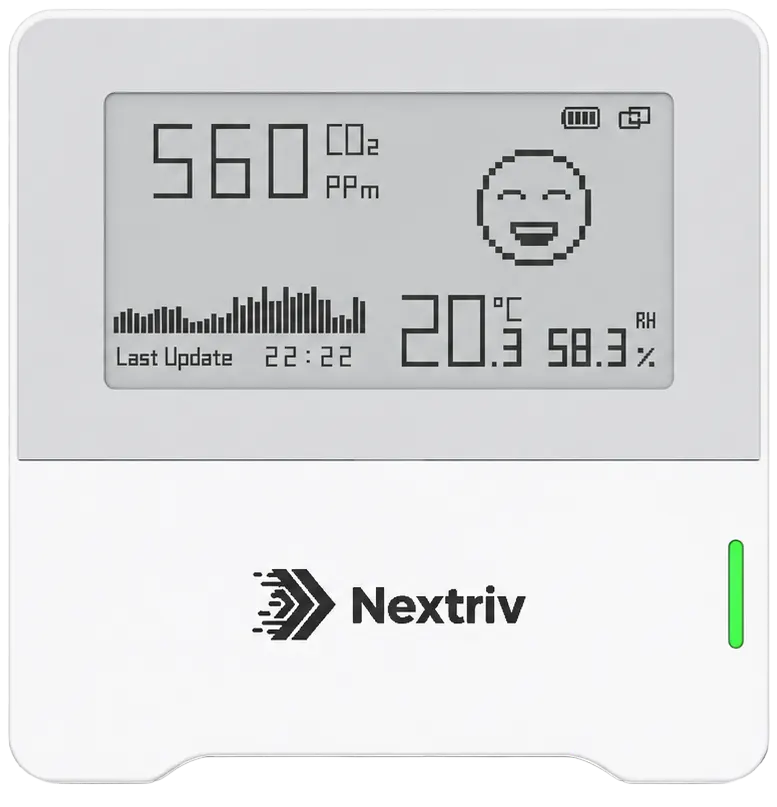
Nextriv Sense CO₂
SKU: NX-SN-CO2
CO₂, temperature and humidity sensor with NDIR measurement and an e-ink display. Shows on the spot when to air the room — and sends the data to the Nextriv platform.
- Temperature
- Humidity
- CO₂
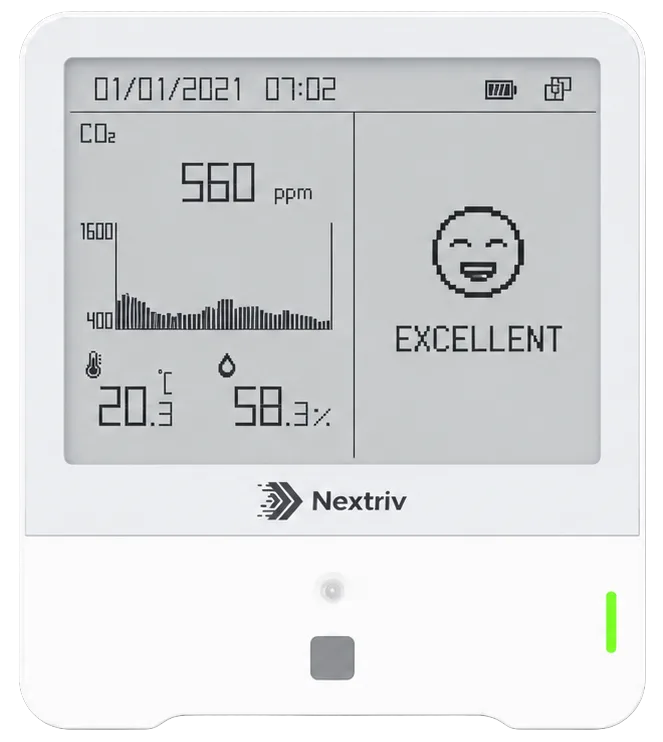
Nextriv Sense IAQ
SKU: NX-SN-AQ7
7-in-1 air quality station: temperature, humidity, CO₂, TVOC, pressure, light and occupancy — with a 4.2″ e-ink display and an 18,000-record buffer.
- Temperature
- Humidity
- CO₂
- TVOC
- +3
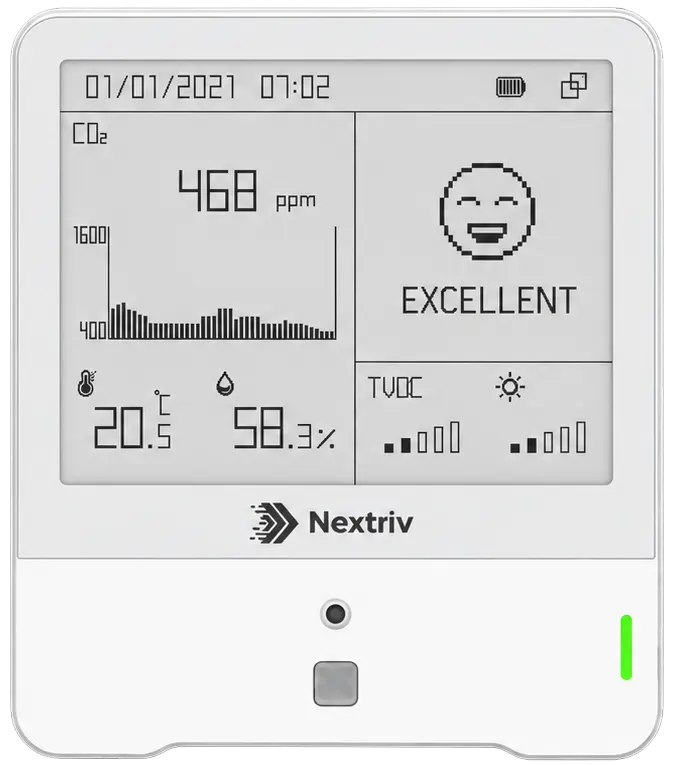
Nextriv Sense IAQ Comfort
SKU: NX-SN-AQ8C
8-in-1 climate monitoring with laser PM2.5/PM10 particulate measurement — the full picture of air health in facilities with elevated dust levels.
- Temperature
- Humidity
- CO₂
- TVOC
- +4
Not sure which set to choose?
Tell us about your facility and we'll match sensors and a gateway to the exact rooms you need to monitor — no unnecessary hardware.