
Sense environmental sensors
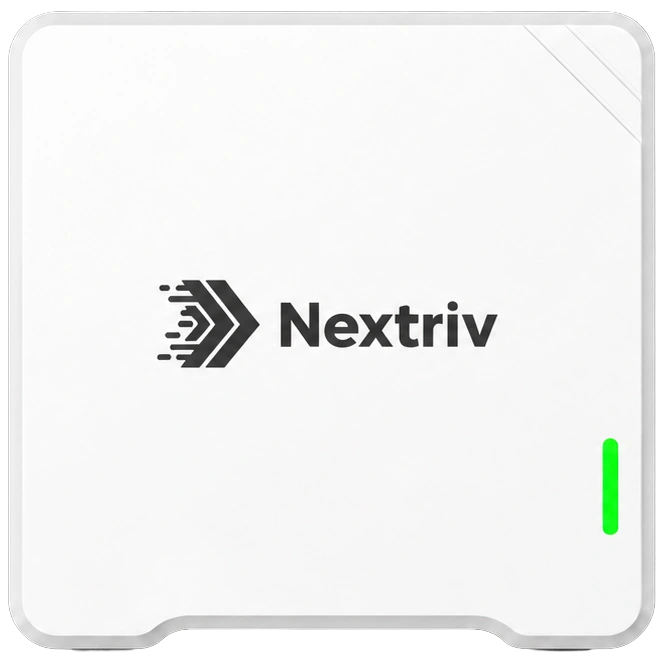
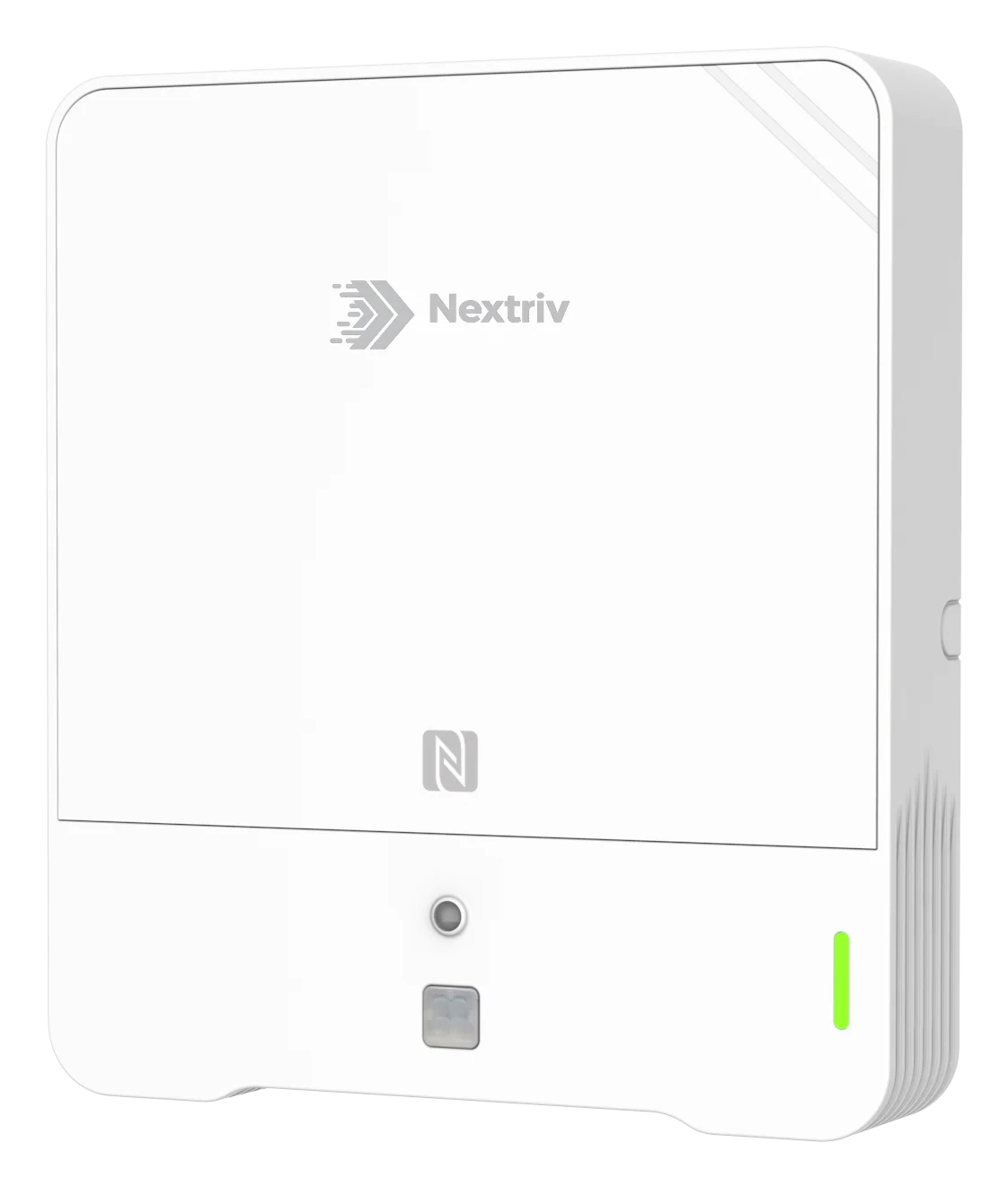
Nextriv Sense IAQ Lite 5-in-15-in-1 air quality sensor with CO₂
SKU: NX-SN-AQ5L
Affordable 5-in-1 sensor with CO₂ measurement (NDIR): air quality and room occupancy in a single device, approx. 6.3 years on batteries.
€331net
VAT is added to the price.
Description
- Full-grade CO₂ measurement at an economy price
- Around 6.3 years on replaceable batteries
- The complete data set for demand-controlled ventilation
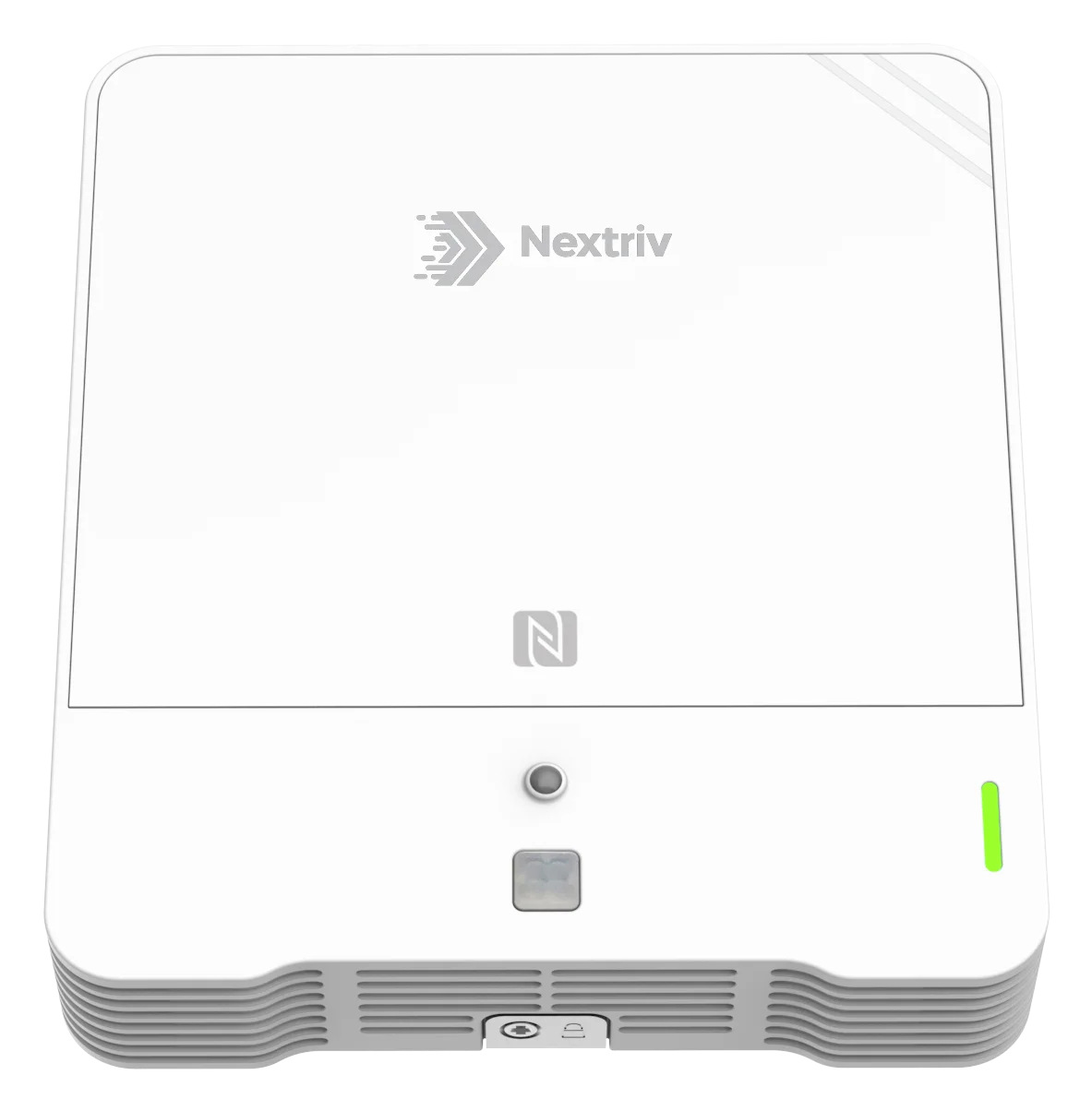
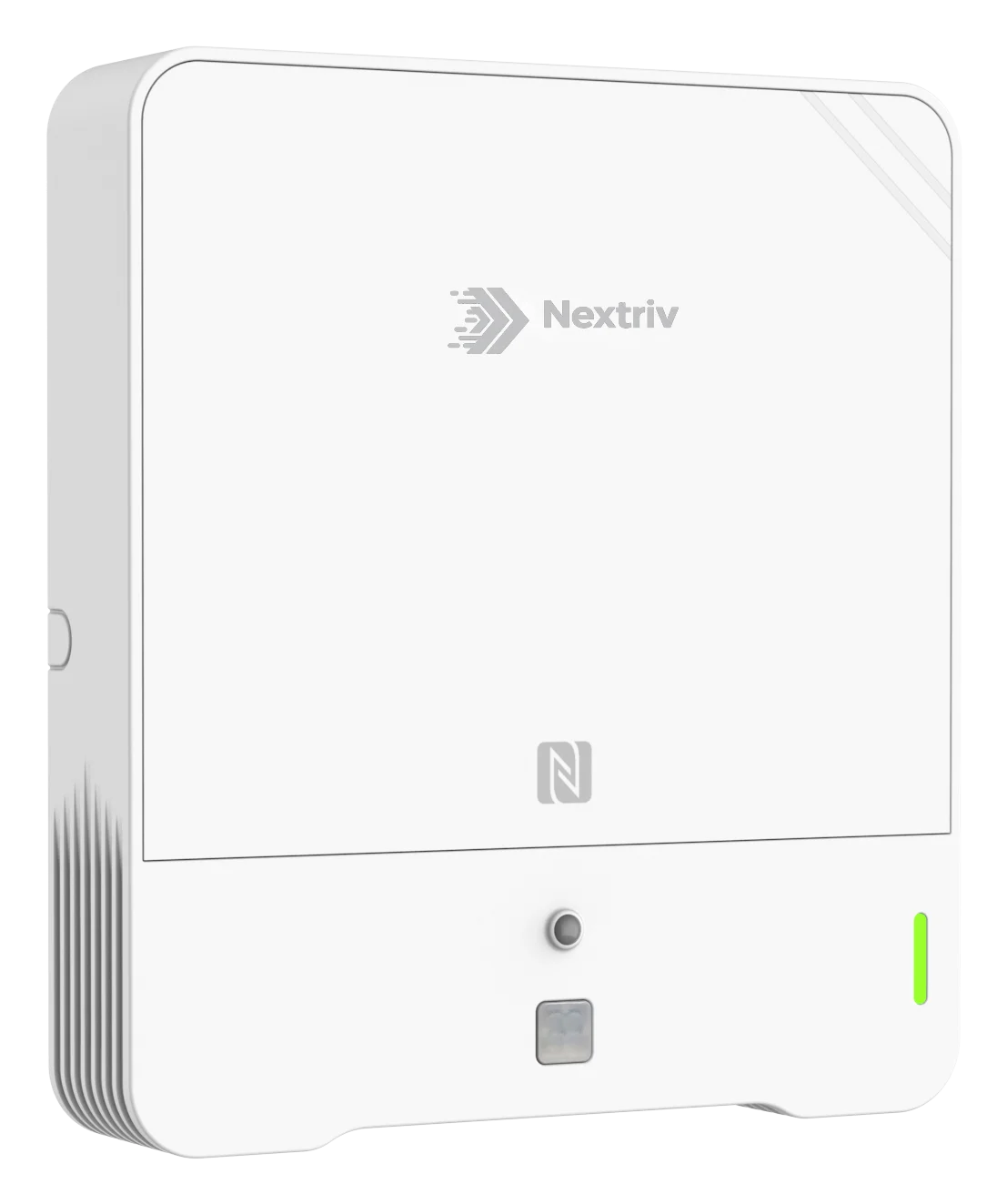
- No display — discreet and robust
- Data comparable with premium models
What it is for
"CO₂ in every classroom" stops being a postulate and becomes a budget line — and that is exactly the line Nextriv Sense IAQ Lite 5-in-1 was built for. It takes the economical platform of the 4-in-1 variant (temperature, humidity, light, motion) and adds full-grade optical CO₂ measurement using NDIR technology — the same one that works in the family's pricier models. No display, no superfluous extras: maximum data about the air and the use of the space, at a price that lets you think in hundreds of units, not dozens.
This device was designed with public institutions and multi-site organisations in mind: schools, clinics, government offices, multi-branch businesses. Places where full air quality stations are out of budget, yet the problem of stuffy rooms is real and daily. Around 6.3 years of operation on replaceable batteries — and up to around 11 years in favourable radio conditions — means the cost of maintaining the fleet across an entire school administration's term is practically zero.
There is also a bonus that integrators appreciate: the five parameters of this sensor are exactly the set needed for occupancy-driven, demand-controlled ventilation. CO₂ says "when to air out", motion says "whether it's worth it at all", and light and temperature round out the lighting and heating automation. Deployments of this class of solution translate into measurable energy savings.
Importantly, the CO₂ measurement path is identical to the higher models — data from the economy fleet is fully comparable with data from premium rooms. Light reported as a value or a 0–5 level and the motion sensor complete the picture of room usage — from reading-room attendance to the real living hours of a community room. The traffic-light LED communicates the air status on site, reporting intervals are changed remotely for whole groups of devices, and the local buffer backfills the history after every connectivity outage. A grant application then gets an attachment that cannot be argued with: a report with data, not an opinion.
Usage scenarios
- Municipality equipping its schools: an inexpensive CO₂ sensor in every classroom — the teacher gets a cue to air the room, the head office gets comfort reports, and the governing body gets proof that the money improved learning conditions.
- Multi-floor office: CO₂ and occupancy data drive zone ventilation — an empty wing of the building stops being ventilated "at full blast", which directly cuts the bills. In summer the same mechanism limits cooling of empty zones, so the savings work all year round.
- Clinic: waiting rooms monitored for stuffiness and overcrowding — a CO₂ threshold breach is an objective signal of "too many people, too little air".
- Government office and customer service hall: the comfort of visitors and staff in numbers; historical data supports decisions to modernise the ventilation of specific rooms, not the whole building blindly.
- Nursery chain: one sensor standard in every location — a central view of the conditions children spend their days in, without involving staff in any readings.
- Housing in support programmes: monitoring CO₂, temperature and humidity helps combine heating savings with a healthy microclimate — a scenario proven in European social projects on this sensor family.
Key features
- Full-grade optical CO₂ measurement (NDIR, with calibration support) in an economy-tier device — no compromise on the key parameter.
- Around 6.3 years on replaceable batteries reporting every 10 minutes — a fleet with no maintenance costs.
- Five parameters = the complete data set for demand-controlled ventilation and lighting automation.
- Direct device-to-device communication within the Nextriv network — simple control scenarios with no server.
- Traffic-light LED and a buzzer for threshold alarms — a CO₂ breach is heard and seen on site.
- Setup with a tap of a smartphone (NFC) or via USB-C; remote reconfiguration of entire fleets.
- Local buffer with retransmission — data continuity for reports.
- No display: discreet, resistant to "tinkering" and cheaper at the scale of hundreds of units.
- Consistent enclosure and mounting with the whole family — one installation and service process.
In the Nextriv system
The Nextriv platform gives the fleet its meaning: CO₂ in every room can carry four thresholds (e.g. warnings at 800 and 1000 ppm, critical alarms at 1200 and 1500 ppm), and notifications go out on the channels the team actually reads — e-mail, SMS, web push, Discord, MS Teams or an in-app sound. Notification rules filter events by location and severity, so the front office gets only its own floor while the administrator sees everything.
Dashboards (nearly 20 widget types) compare rooms and buildings on one screen, PDF reports also generate on a schedule, and XLSX/CSV exports go straight into official returns. The platform detects and recognises new sensors automatically — expanding the fleet by another site does not require a deployment project. Virtual sensors average CO₂ from many rooms into a building-level metric, compliance tables show which sites stay within comfort thresholds, and no transmission for twice the reporting interval means an offline status and a notification for the administrator. Measurement history reaches back up to 5 years — enough for a "before and after" comparison of a ventilation upgrade.
Typical deployments
- Schools: a CO₂ sensor in every classroom — an airing cue for the teacher, reports for the administration.
- Offices and buildings: CO₂ and occupancy data drive floor ventilation; empty zones stop consuming energy.
- Healthcare: waiting rooms monitored for stuffiness and overcrowding.
- Retail and hotels: customer and guest comfort at a low cost per measurement point.
Specification
| CO₂ (NDIR) | 400…5000 ppm, ±(30 ppm + 3 % of reading), 1 ppm resolution |
|---|---|
| Temperature | -20…60 °C, ±0.2 °C (0…60 °C), 0.1 °C resolution |
| Humidity | 0…100 % RH, ±2 % RH (at 25 °C), 0.5 % RH resolution |
| Light | 0…60,000 lx (value or level 0–5), ±30 % of reading |
| Motion (PIR) | vacant/triggered status |
| Connectivity | Long-range radio (~2 km urban / ~15 km open terrain), internal antenna |
| Power | 4× replaceable lithium battery (Li-SOCl₂) 2700 mAh or USB-C 5 V/1 A |
| Battery life | approx. 6.3 years (10-min interval, 25 °C); up to approx. 11 years in favourable radio conditions |
| Signalling | status LED (traffic lights) + alarm buzzer |
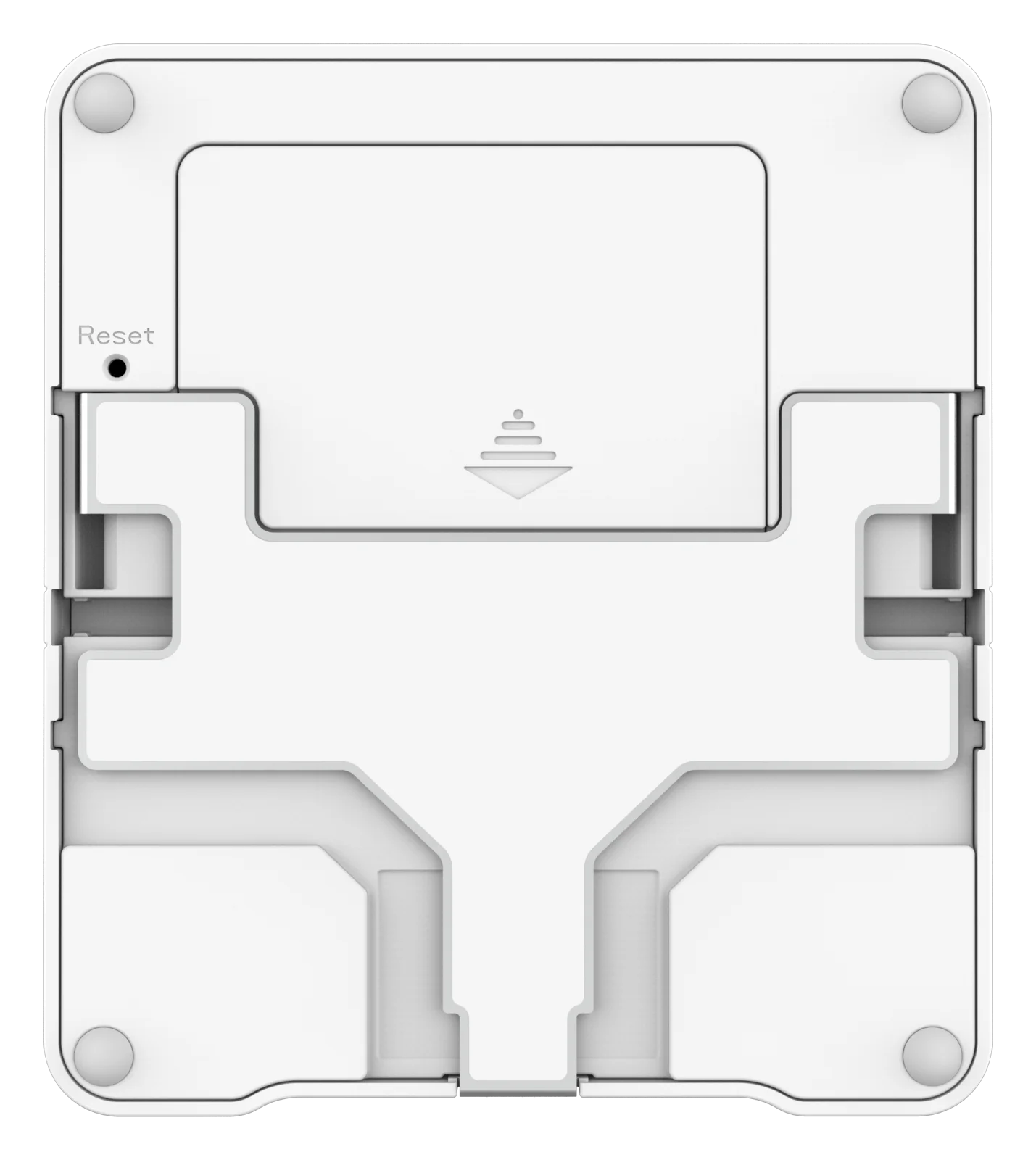
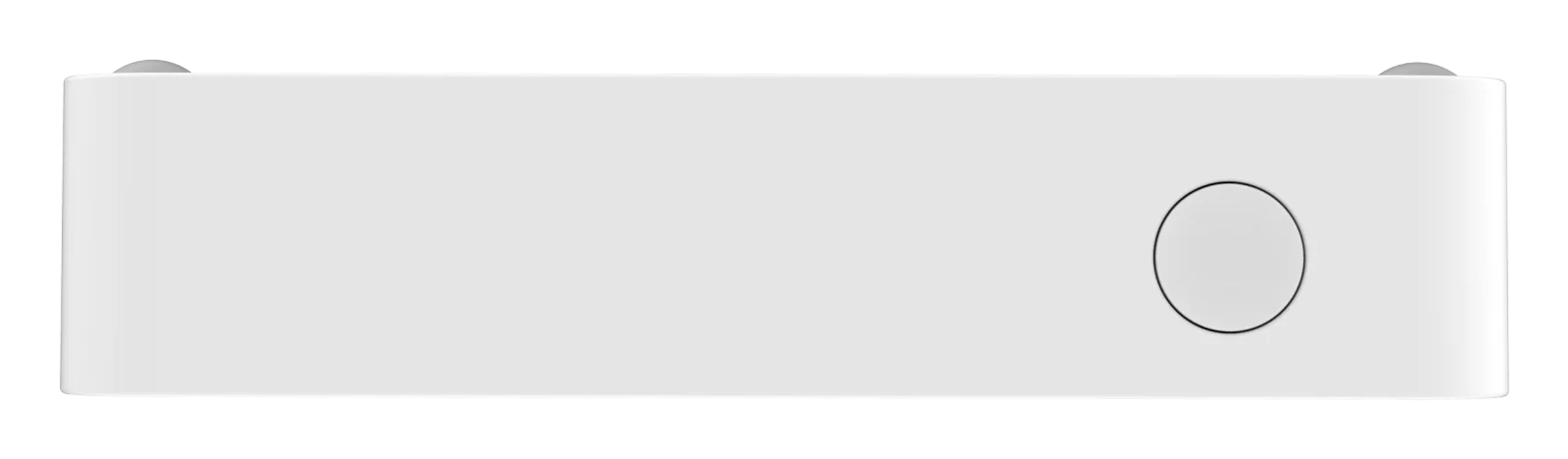
| Enclosure and dimensions | IP30 (indoor use), 100.8 × 114 × 22 mm, mounting via 3M tape or screws |
| Configuration | NFC from a smartphone, USB-C, remotely via downlink |
Files
- Download
Nextriv Sense IAQ Lite 5-in-1 — datasheet
pdfEN0.5 MBversion 1.0
Related products
Other devices from the same family.
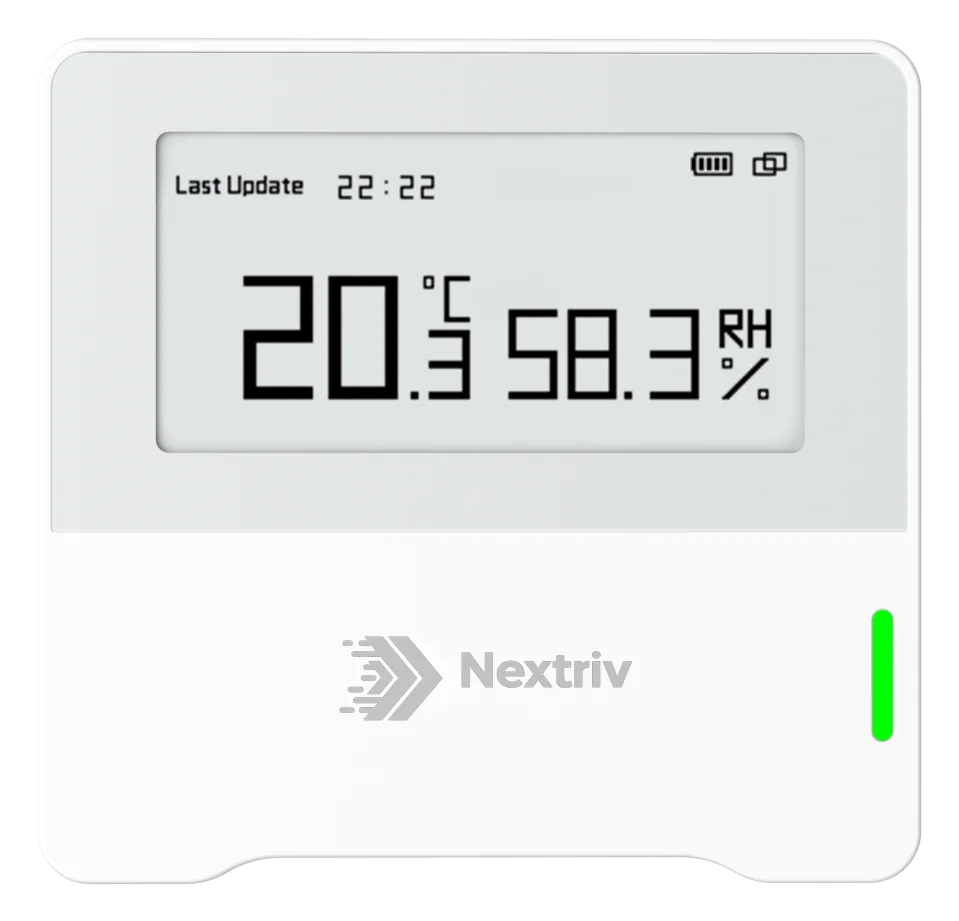
Nextriv Sense Display
SKU: NX-SN-DISP
Temperature and humidity sensor with a 2.13″ e-ink display — readings on-site and in the Nextriv platform. Over 7 years on replaceable batteries.
- Temperature
- Humidity
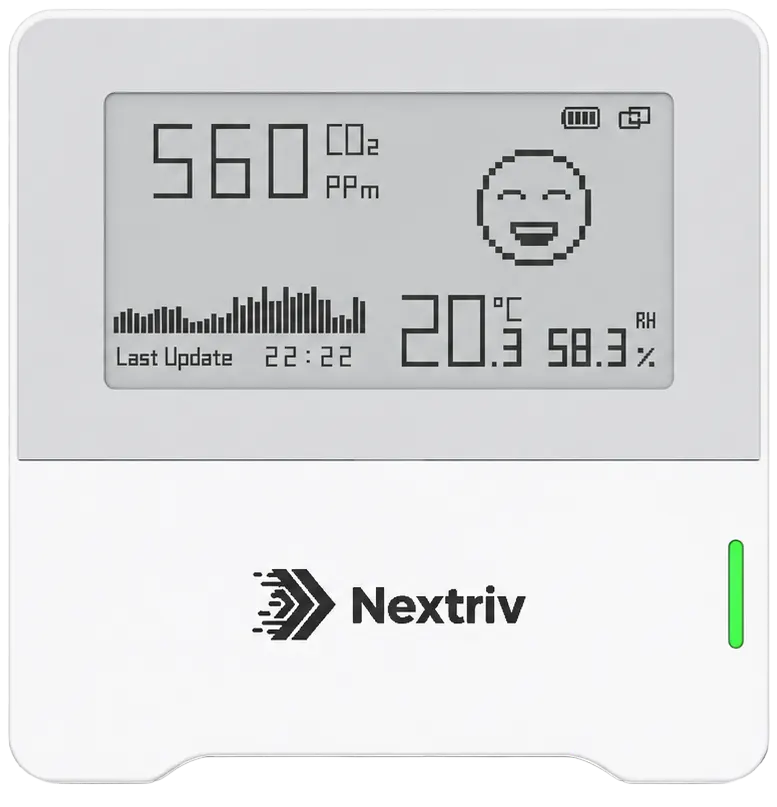
Nextriv Sense CO₂
SKU: NX-SN-CO2
CO₂, temperature and humidity sensor with NDIR measurement and an e-ink display. Shows on the spot when to air the room — and sends the data to the Nextriv platform.
- Temperature
- Humidity
- CO₂
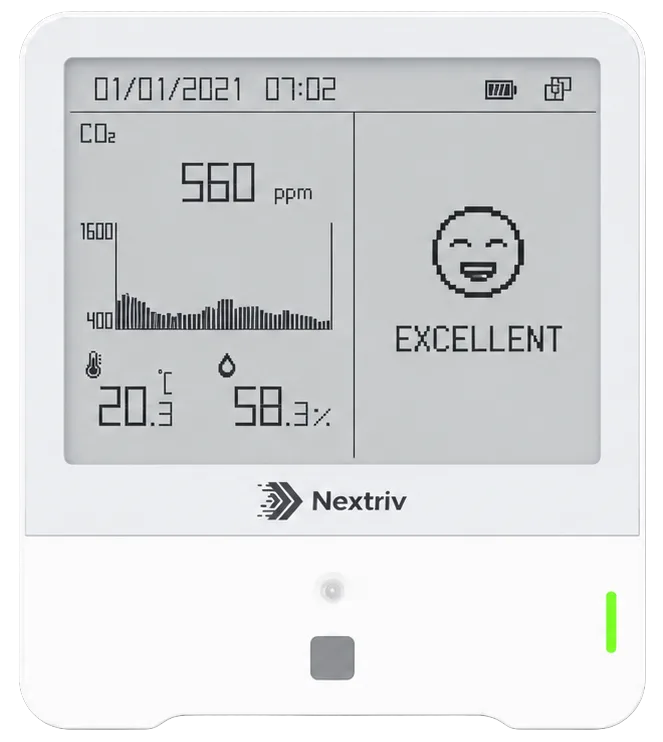
Nextriv Sense IAQ
SKU: NX-SN-AQ7
7-in-1 air quality station: temperature, humidity, CO₂, TVOC, pressure, light and occupancy — with a 4.2″ e-ink display and an 18,000-record buffer.
- Temperature
- Humidity
- CO₂
- TVOC
- +3
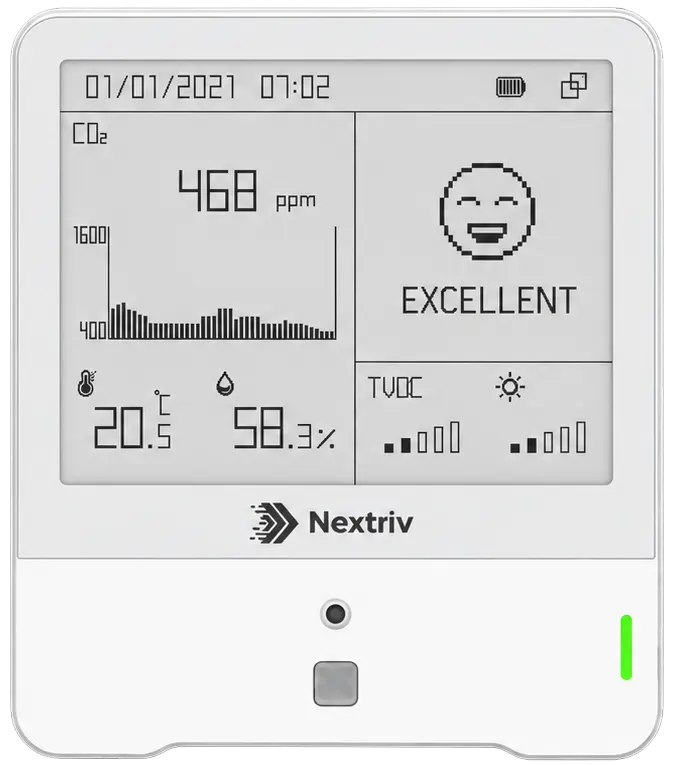
Nextriv Sense IAQ Comfort
SKU: NX-SN-AQ8C
8-in-1 climate monitoring with laser PM2.5/PM10 particulate measurement — the full picture of air health in facilities with elevated dust levels.
- Temperature
- Humidity
- CO₂
- TVOC
- +4
Not sure which set to choose?
Tell us about your facility and we'll match sensors and a gateway to the exact rooms you need to monitor — no unnecessary hardware.