
Hub gateways
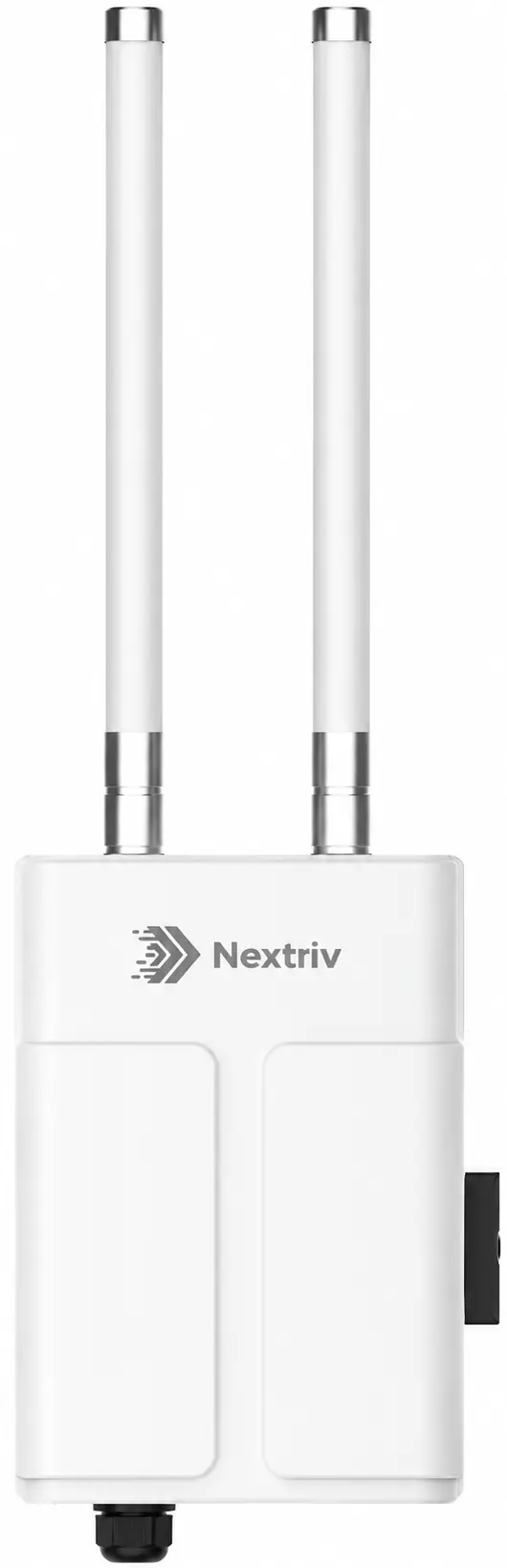
Nextriv Hub Outdooroutdoor IP67 radio gateway
SKU: NX-GW-OUT
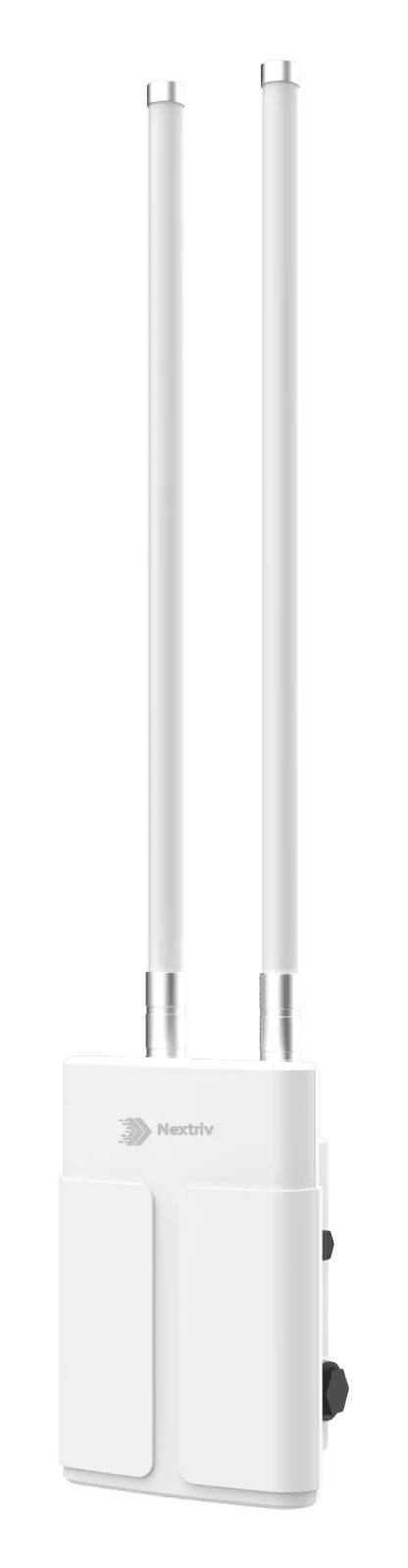
Fully outdoor IP67 radio gateway with a GNSS receiver and a range of up to 15 km line of sight. The foundation of a Nextriv network in open terrain: agriculture, industry, infrastructure.
€844net
VAT is added to the price.
Description
- Full outdoor: IP67, -40…+70°C
- Range up to 15 km line of sight
- Sends a power-loss alarm in time
- Automatic GNSS geolocation
- Lightning-protection accessories for mast installs
What it is for
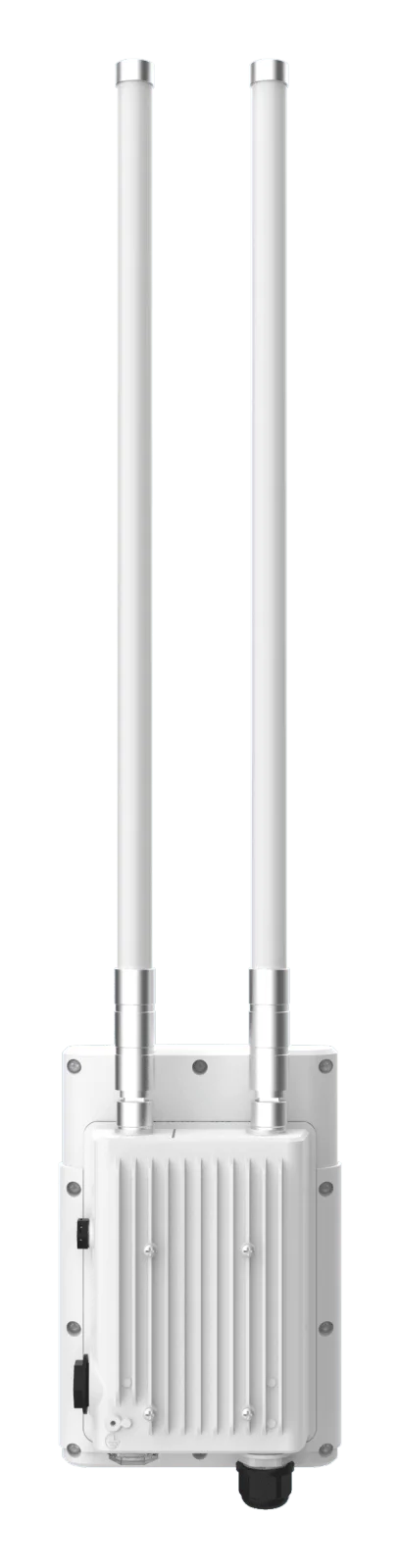
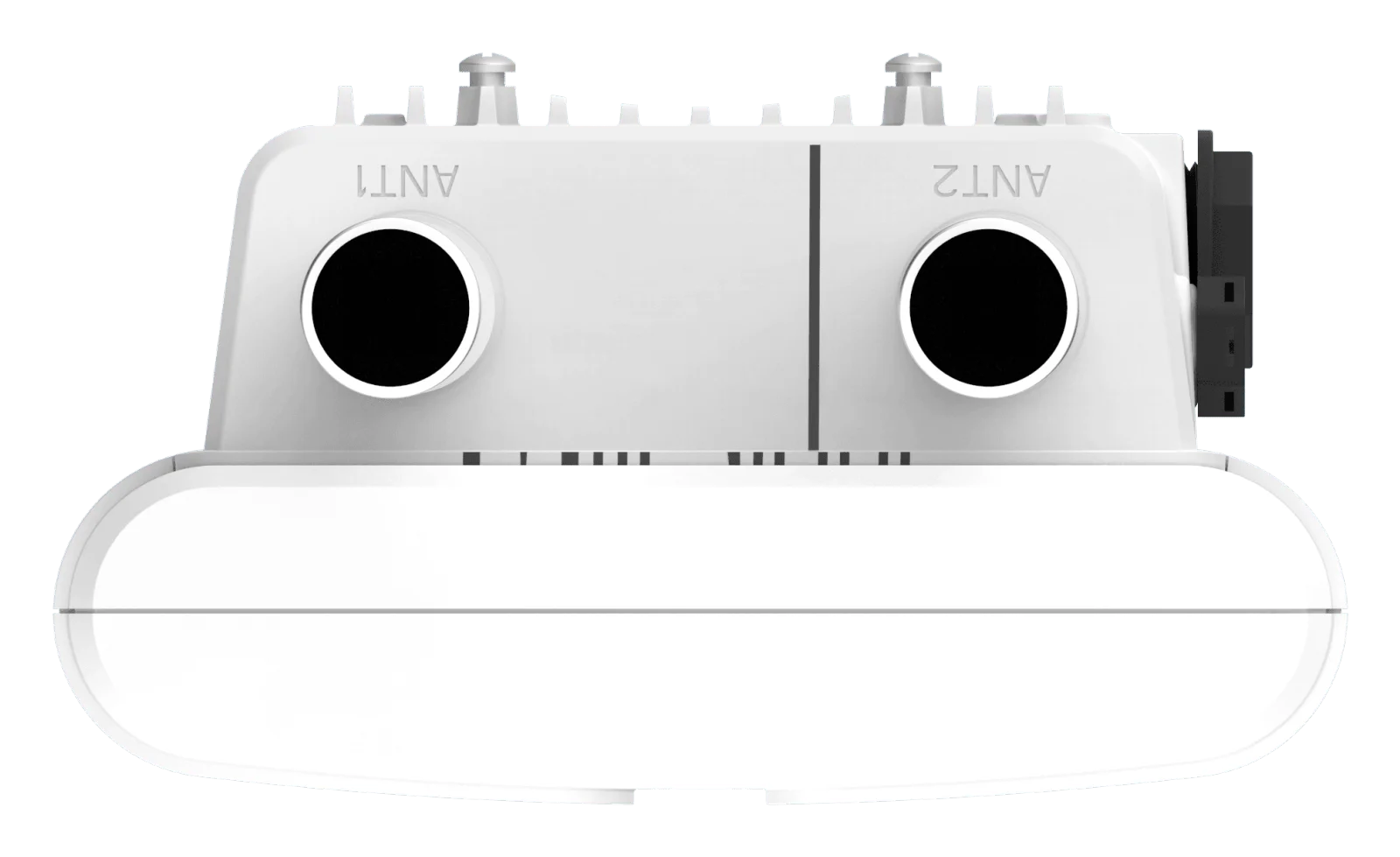
The Nextriv Hub Outdoor is a gateway you put on a mast and forget about for years. Its IP67-rated polycarbonate and die-cast aluminium housing shrugs off rain, dust, -40°C frost and +70°C heat, and two N-type antenna connectors let you run the signal out to high-gain antennas. It is the foundation of a Nextriv network in open terrain: one gateway on a chimney or mast covers a radius of up to 15 km line of sight and aggregates data from around 2,000 sensors. At municipality scale, that often means one or two gateways instead of dozens of points.
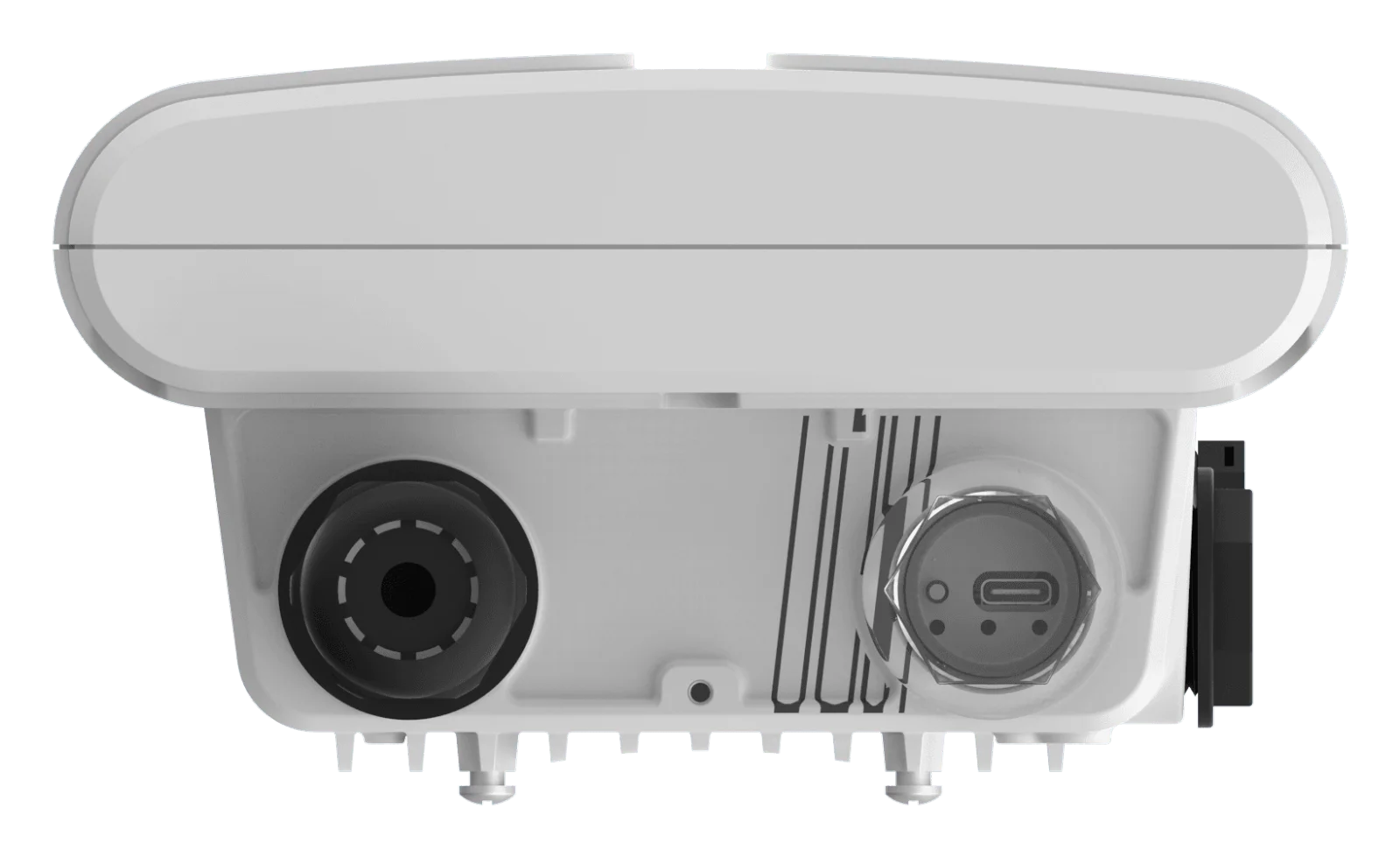
The design clearly anticipates failure scenarios. A built-in supercapacitor keeps the gateway running for about a minute after power is lost — exactly long enough to send a power-loss alarm before going dark. A power failure at a pumping station gets reported, not silently swallowed. On top of that comes triple backhaul with automatic failover: Gigabit Ethernet (PoE, with a cable gland and grommet), Wi-Fi and 4G with a SIM slot under the service cover.
The satellite navigation receiver (GPS/GLONASS) with 2.5 m accuracy geolocates the gateway automatically — with a fleet of dozens of units scattered across the terrain, the inventory takes care of itself, and the documentation of distributed installations falls into order without drive-arounds. For mast installations there are dedicated lightning-protection accessories: a PoE surge protector and an antenna lightning arrester — a complete, safe installation from a single source.
Under the housing runs the same "brain" as in the higher-end building gateways: a quad-core 64-bit processor, a built-in network server with codecs, multicast and over-the-air sensor updates, gateway fleet mode, plus a Python SDK and Node-RED for edge logic — for instance, pre-aggregating data before it goes out over 4G.
Usage scenarios
- Large-scale farm: a gateway on a mast by the silos covers several hundred hectares; soil sensors, weather stations and water meters report to the Nextriv platform — fewer trips, less water, measurable gains.
- Waterworks and district heating: distributed meters read at district scale from a single high point (chimney, water tower). The supercapacitor guarantees that a power failure is reported immediately.
- Municipality and smart city: river-level sensors, weather stations and environmental sensors come together through a few gateways on municipal buildings — a flood early-warning system at a fraction of the cost of classic telemetry.
- Industrial plant with grounds: one gateway on the hall roof joins the plant interior and the storage yard; sensors on cranes, tanks and gates report to maintenance, and GNSS keeps the installation documentation in order.
- Solar park and wind farm: a gateway at the transformer station collects environmental data from the whole site; 4G failover keeps the link alive when the fixed line goes down along with the weather.
- Port and logistics terminal: sensors on the quay and container yards in a harsh, salty environment — the IP67 housing and rugged construction are the price of entry here.
Key features
- Full IP67 outdoor build: polycarbonate + die-cast aluminium, operation at -40…+70°C — designed for the mast, not a "sealed-up office gateway".
- Supercapacitor sustaining operation for approx. 1 minute after power loss — the gateway has time to send a power-loss alarm.
- Built-in satellite navigation receiver (2.5 m accuracy, -161 dBm tracking sensitivity) — automatic geolocation and inventory of distributed gateways.
- Two N-Female antenna connectors with 60 cm antennas included; optional 130 cm antenna with 8 dBi gain — range up to 15 km line of sight.
- Triple backhaul with automatic failover: Gigabit Ethernet (PoE, injector included), Wi-Fi, 4G LTE.
- Dedicated lightning-protection accessories: PoE surge protector and antenna lightning arrester — a safe mast installation.
- Built-in network server with codecs, multicast, over-the-air sensor updates (FUOTA) and gateway fleet mode; MQTT(s), HTTP(s), BACnet and Modbus integrations.
- Quad-core 1.5 GHz processor (64-bit), 512 MB DDR4, 8 GB storage; watchdog, RTC clock, grounding screw.
- Listen-before-talk and a radio noise analyser — stable operation in crowded airspace, in line with band-sharing regulations.
- Remote servicing for every circumstance: web UI, SSH, SMS commands (when the data link is down), HTTP/MQTT API, diagnostics all the way to network traffic captures; Python SDK and Node-RED.
In the Nextriv system
For the Nextriv platform, the Hub Outdoor is both the aggregation point for a wide area — and an object of supervision in its own right. The gateway status widget shows the state of every gateway in the fleet; if one stops reporting for 15 minutes, the platform marks it offline and notifies the team over any of six channels: email, SMS, web push, MS Teams, Discord or an audible in-app alarm. Combined with the supercapacitor's power-loss alarm, this gives you a rare comfort: you know not only that the site went silent, but why.
Sensors in the field get the full platform: automatic discovery of new devices, four-threshold alerts on every metric, dashboards with nearly 20 widget types, PDF reports and XLSX/CSV exports. Data retransmission after connectivity gaps, on both the gateway and sensor side, closes the loop — measurement series from a field, a river or a quay stay complete.
Typical deployments
- Agriculture: a gateway on the farm mast, soil sensors and weather stations across hundreds of hectares — see our agriculture solutions.
- Livestock buildings: one high aggregation point for the climate in poultry and pig houses plus sensors in the surrounding fields — more in our livestock building solutions.
- Industry: the hall roof as the point joining the plant, the storage yard and the grounds — explore our manufacturing solutions.
- Warehouses and logistics: yards, ramps and scattered facilities under one mast-mounted gateway — details in our warehouse solutions.
Specification
| Ingress protection and construction | IP67, polycarbonate (UL94 V0) + aluminium — built for harsh outdoor conditions |
|---|---|
| Radio | 8 channels half/full-duplex, -140 dBm sensitivity, up to 27 dBm output; 868 MHz band (EU) |
| Capacity and range | approx. 2,000 devices; up to 15 km line of sight, approx. 2 km in built-up areas |
| GNSS | GPS/GLONASS/QZSS/SBAS, 2.5 m CEP positional accuracy — automatic gateway geolocation |
| Backhaul | Gigabit Ethernet (PoE), 2.4 GHz Wi-Fi, 4G LTE (SIM slot under the cover); WAN failover |
| Antennas | 2 × N-Female connector; 2 × 60 cm antenna included |
| Power backup | supercapacitor — the gateway has time to send a power-loss alarm |
| Integrations | MQTT(s), HTTP(s), BACnet, Modbus; network server with multicast, FUOTA and gateway fleet |
| Power supply | PoE 802.3af (injector included) or 6–12 V DC (M12 connector); typical draw 3.6 W |
| Housing | 240 × 164 × 90.9 mm, approx. 1.5 kg |
| Operating conditions | -40…+70°C, 0–95% humidity |
| Mounting | wall or mast/pole (bracket included), grounding screw |
Related products
Other devices from the same family.
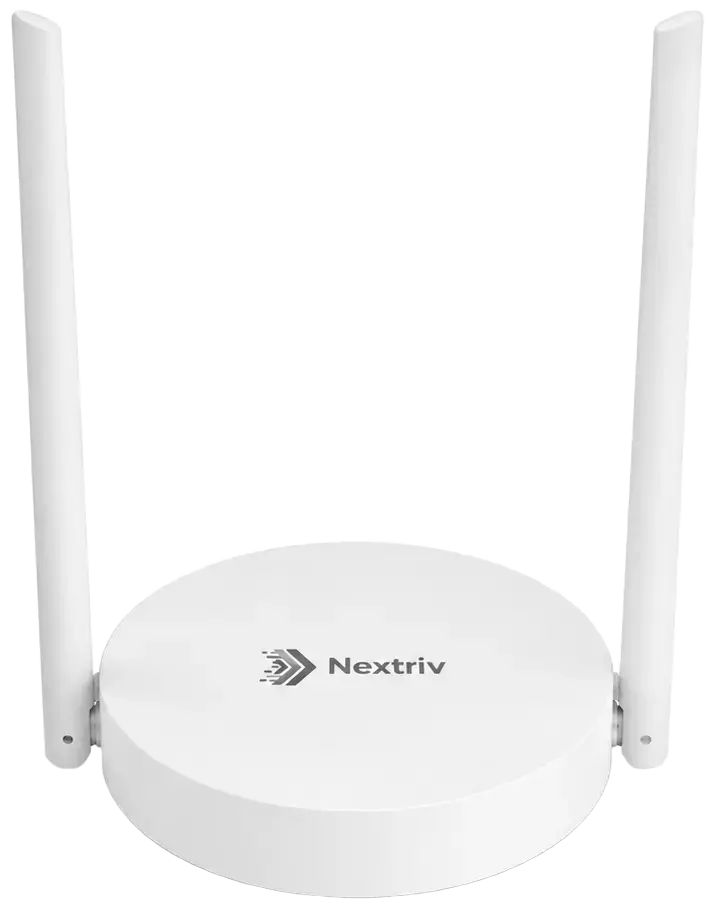
Nextriv Hub Mini
SKU: NX-GW-MINI
Lightweight 8-channel indoor radio gateway — the simplest way to start a Nextriv network. Discreet housing, USB-C or PoE power, optional 4G modem; handles up to approx. 2,000 devices.
€204 netView product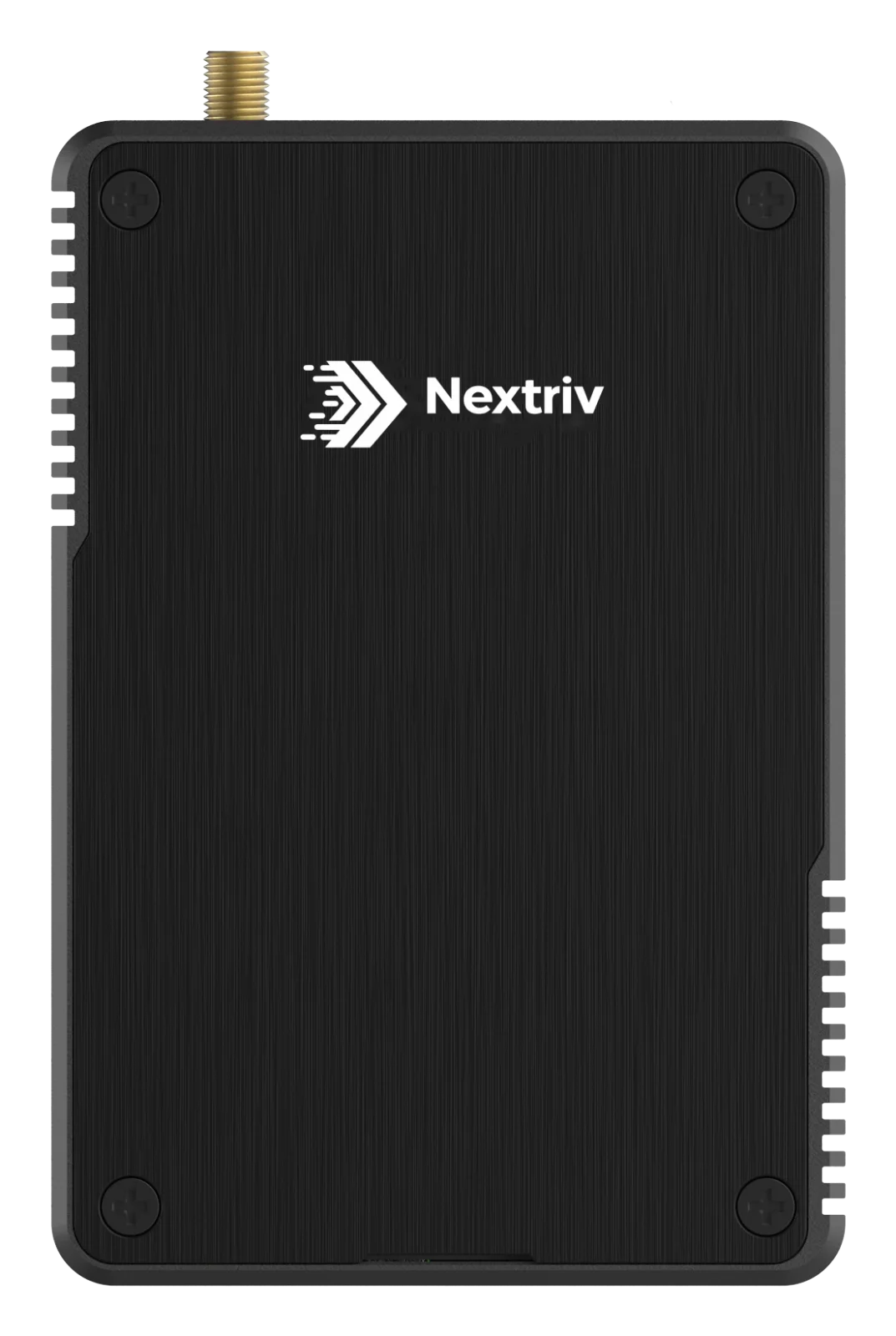
Nextriv Hub Compact
SKU: NX-GW-CPT
Industrial indoor radio gateway in a metal housing with DIN-rail mounting. Handles approx. 2,000 sensors and feeds data into your BMS over BACnet/IP and Modbus.
€422 netView product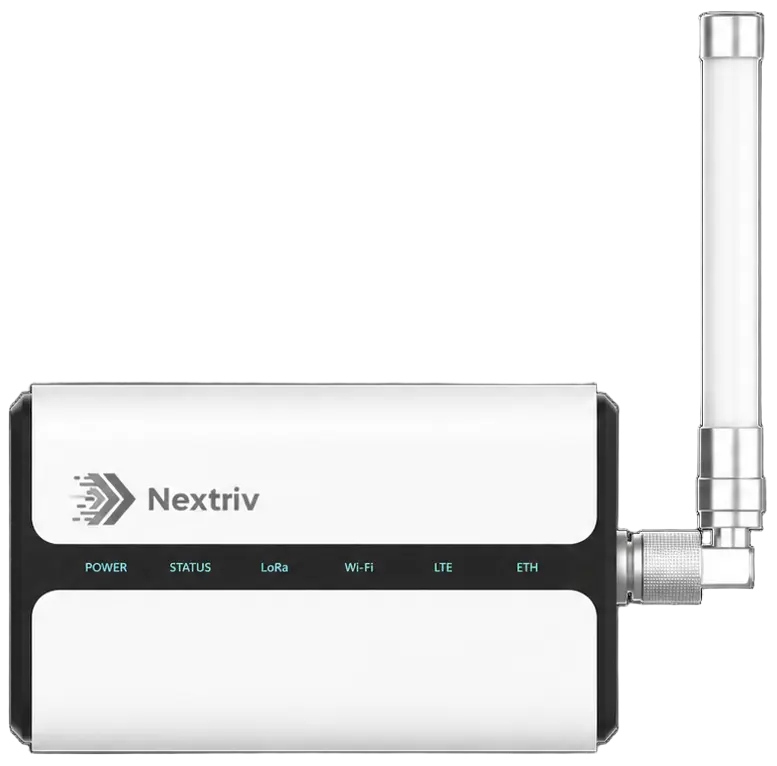
Nextriv Hub Pro
SKU: NX-GW-PRO
Semi-industrial radio gateway with IP65 ingress protection and a -40…+70°C operating range — for indoor and sheltered outdoor spots. Gigabit Ethernet with PoE, Wi-Fi and optional 4G with failover.
€511 netView product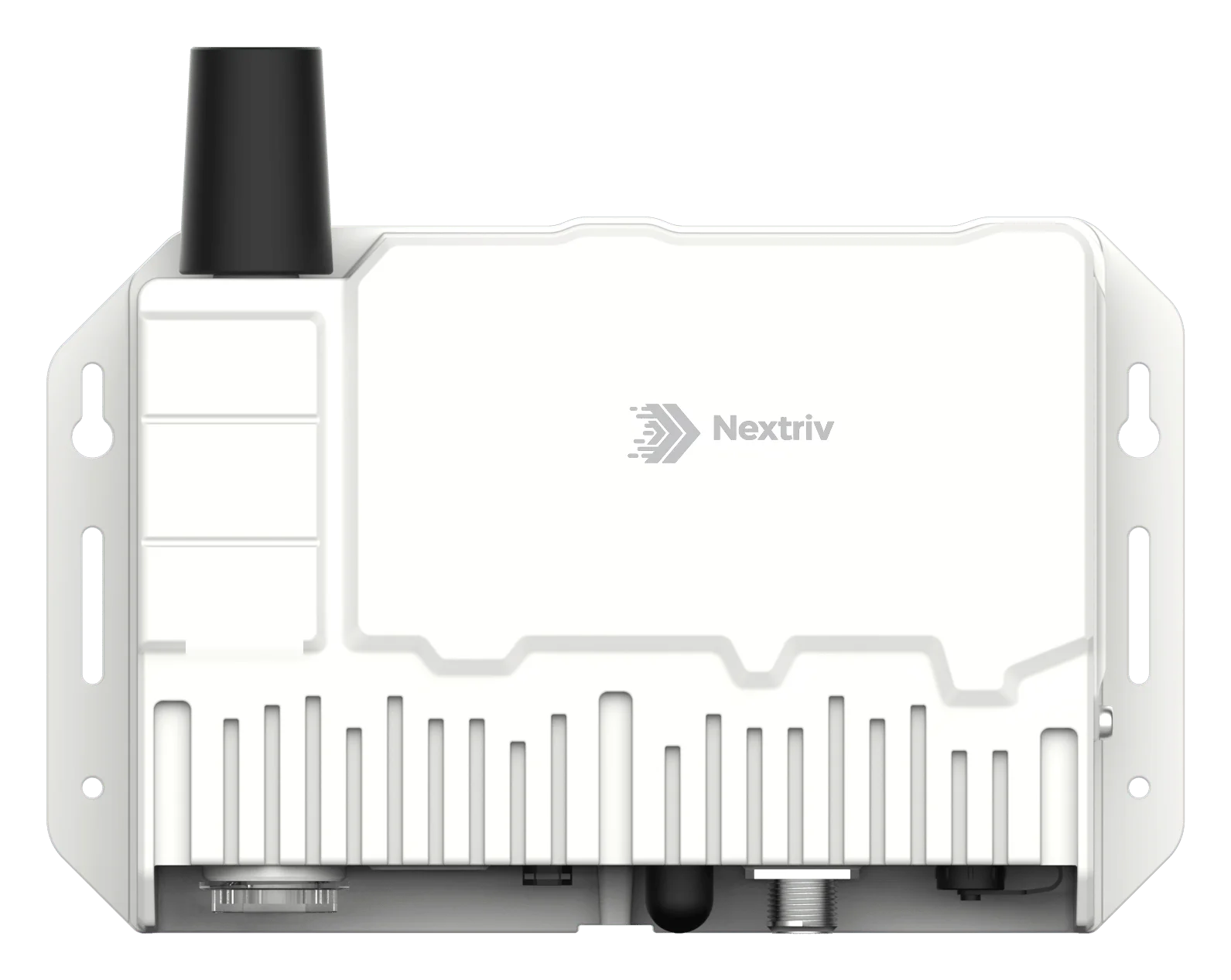
Nextriv Hub Solar
SKU: NX-GW-SLR
Autonomous radio gateway powered by a solar panel, transmitting over 4G — a Nextriv network where there is no mains power or Ethernet. A 25 Ah battery gives up to 4 days of operation without sun.
€933 netView product
Not sure which set to choose?
Tell us about your facility and we'll match sensors and a gateway to the exact rooms you need to monitor — no unnecessary hardware.