
Hub gateways
Nextriv Hub Minicompact indoor radio gateway
SKU: NX-GW-MINI
Lightweight 8-channel indoor radio gateway — the simplest way to start a Nextriv network. Discreet housing, USB-C or PoE power, optional 4G modem; handles up to approx. 2,000 devices.
€204net
VAT is added to the price.
Description
- Start a Nextriv network in an hour
- As discreet as a smoke detector
- Handles up to approx. 2,000 devices
- Ethernet and optional 4G with failover
- Powered by USB-C or PoE
What it is for
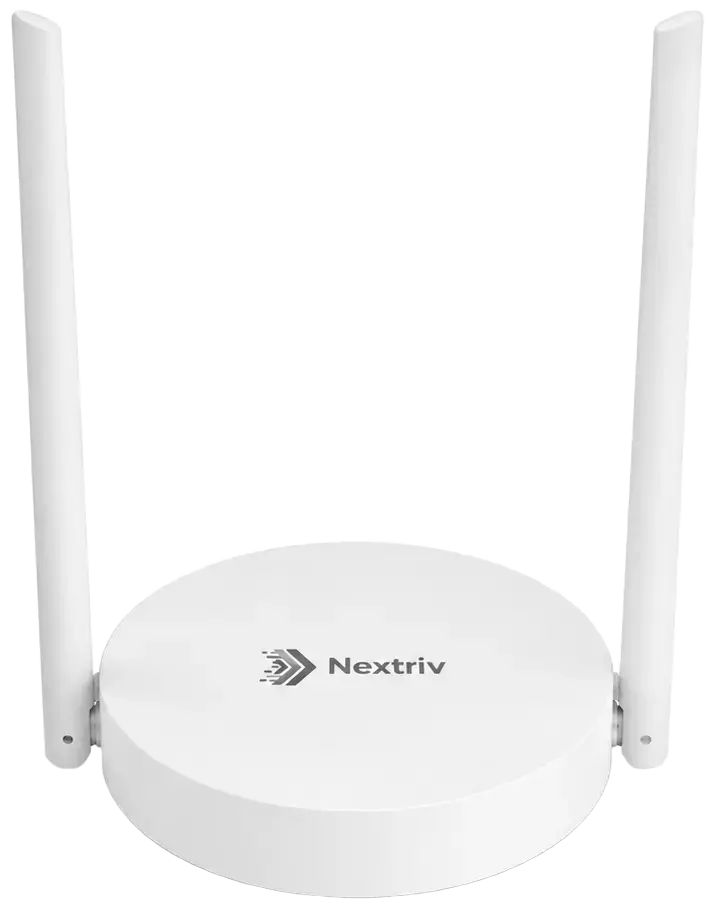
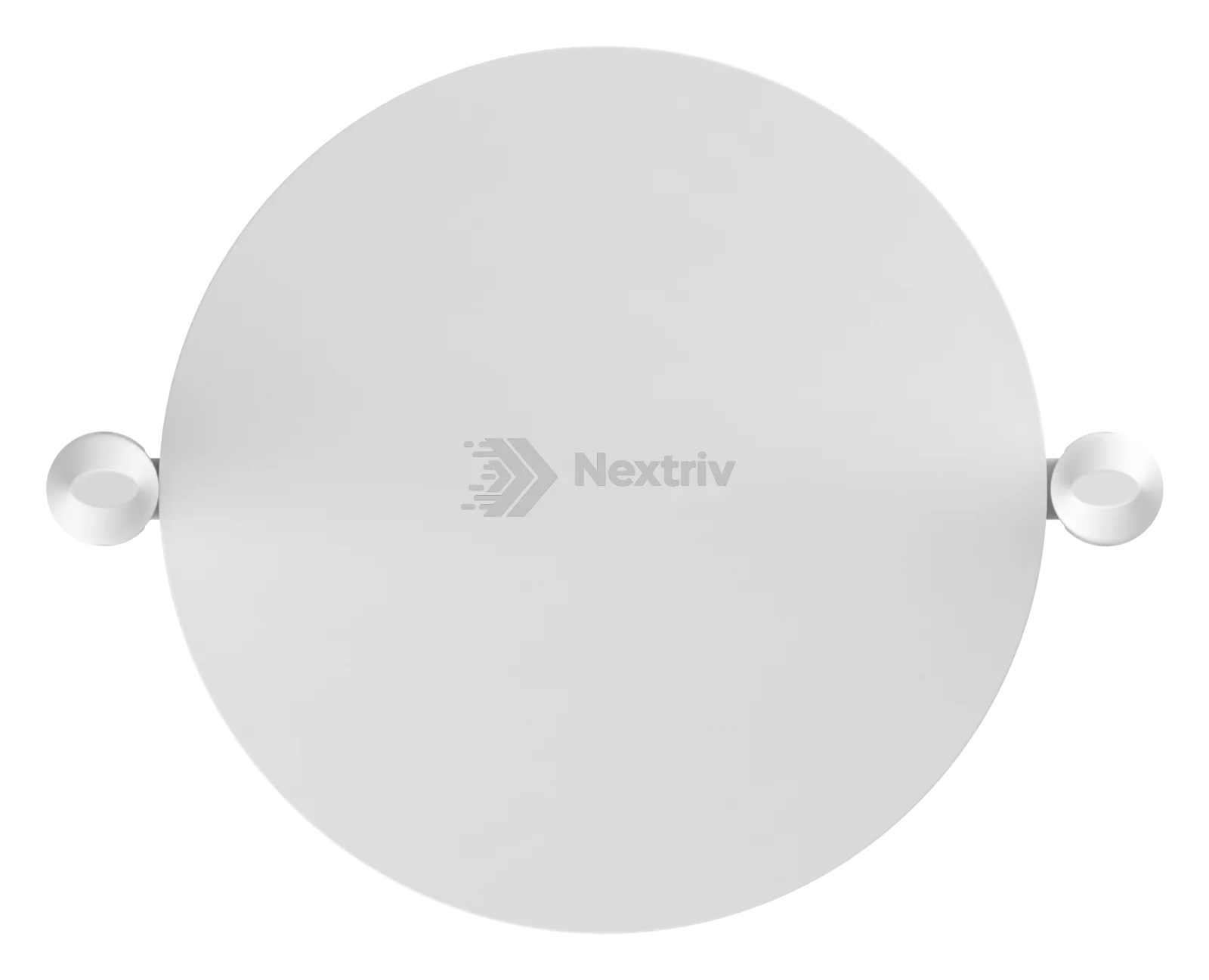
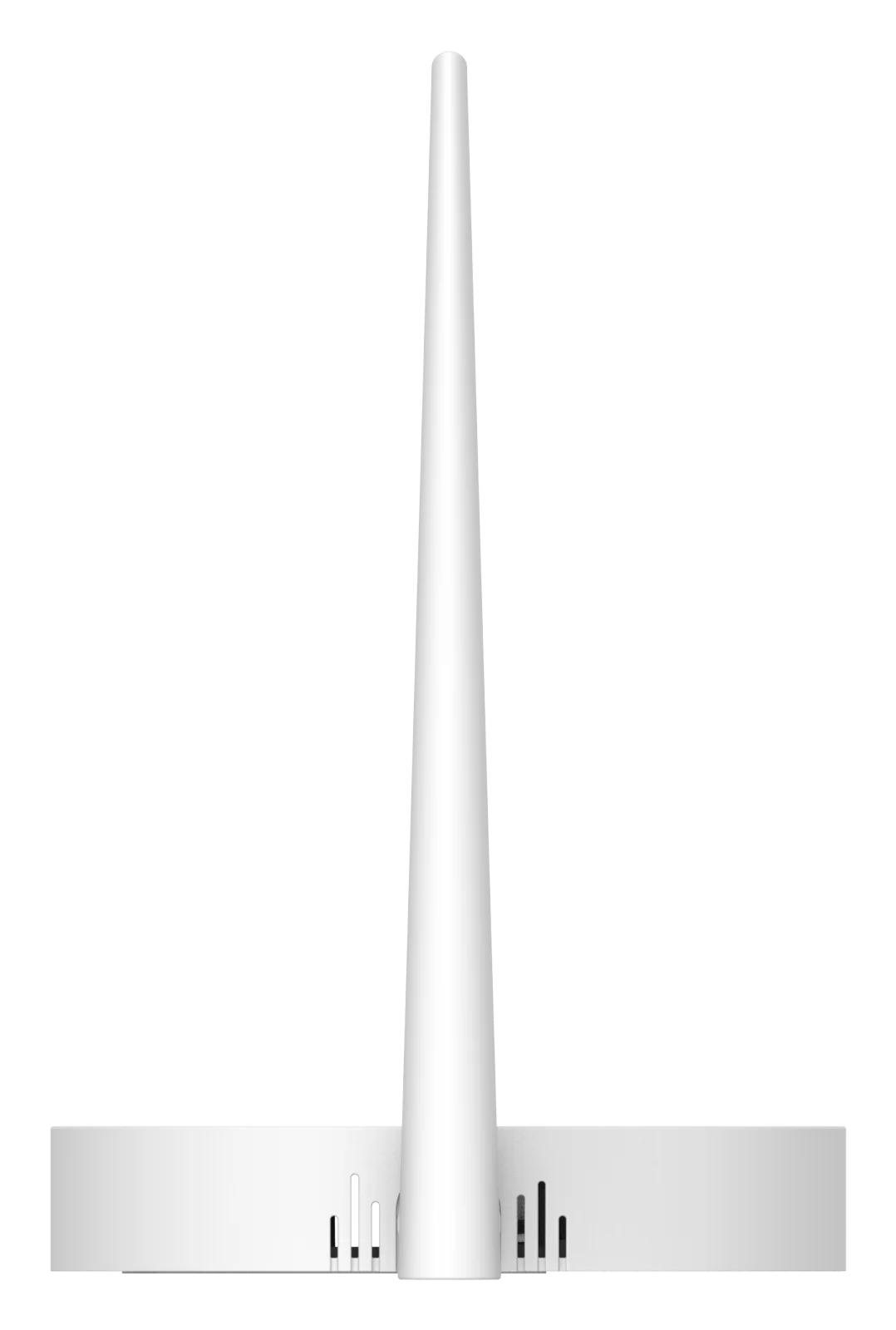
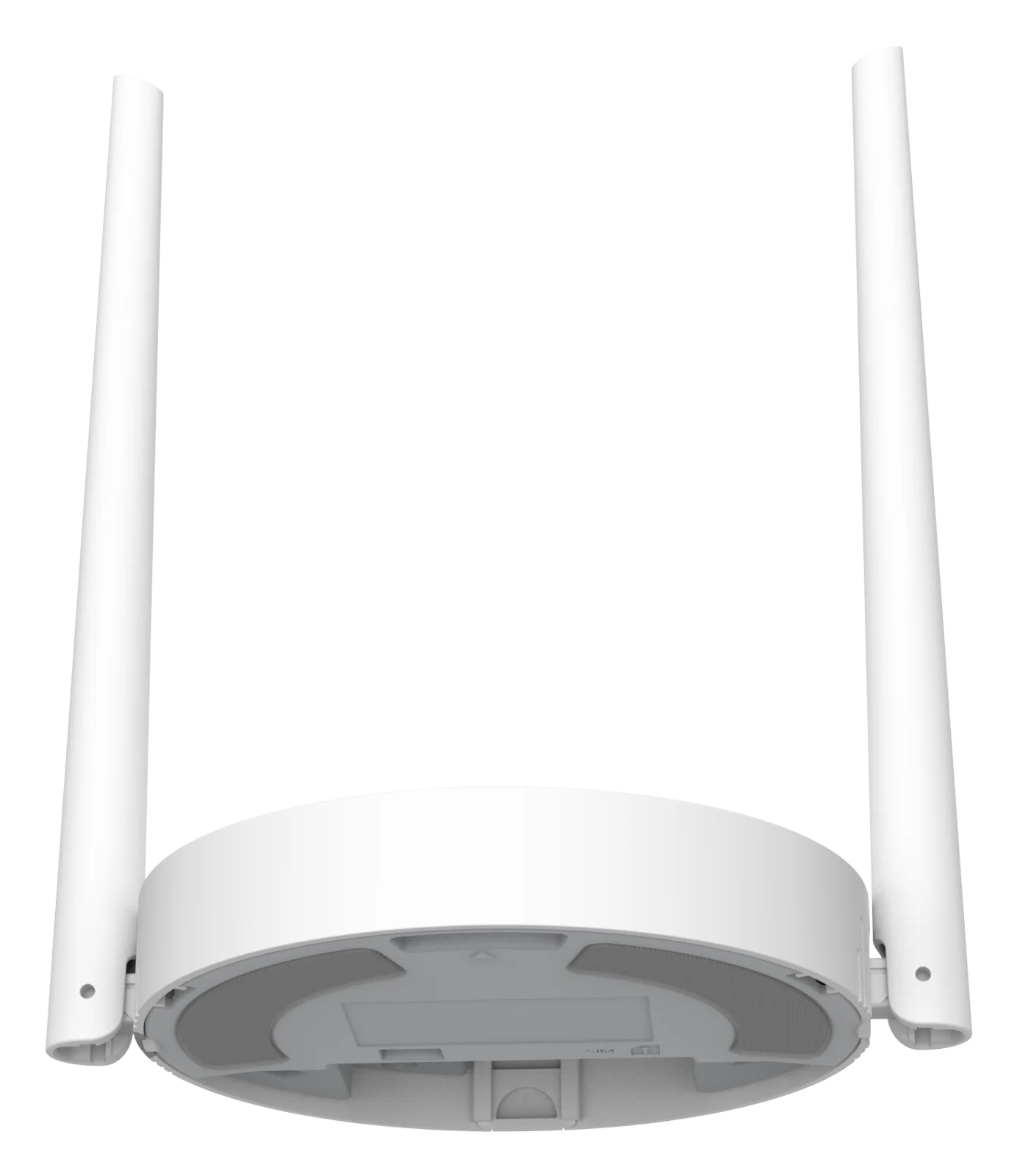
The gateway is the heart of every Nextriv installation: sensors send their measurements over long-range radio, the gateway receives them and securely forwards them to the cloud, where dashboards, alerts and reports take shape. The Hub Mini is that role in its smallest possible form — a white "saucer" 11.5 cm across and 140 grams light that looks like a smoke detector yet does the job of a fully fledged access point for up to around 2,000 devices. Small size, big connectivity.
It was built for deployments where a large gateway is overkill: a single office, one floor, a retail unit, a clinic — places with a dozen or so sensors, where each space still needs its own access point. Plug the Mini into a socket (or power it from a USB-C port or PoE via a splitter), the sensors register with the platform by themselves — and a typical pilot wraps up within an hour, with no involvement from IT.
The Hub Mini's second role is as a coverage "infill" in larger installations: basements, underground car parks and corners behind thick slabs where the main gateway's signal can't reach. Instead of over-engineering the network, you place a Mini exactly where the dead zone is — the cost per point is low enough that it stops being an investment decision.
Despite its size, the Mini has a built-in network server for smaller deployments (up to 20 devices) with MQTT integration, and the cellular-modem variant needs no wired network at all: a power socket is enough, and the data flows over 4G — with automatic switching between Ethernet and the cellular link when both are available.
Usage scenarios
- Office pilot: the admin team plugs the Mini into a socket, sticks up a few climate sensors and an hour later is looking at the first data in the Nextriv platform. The expansion decision is made on the company's own data, not a sales brochure.
- Office building's underground car park: two levels below ground, the main gateway's signal dies. A Mini on the garage ceiling picks up the leak and air-quality sensors — the dead zone disappears for a fraction of the cost of a large gateway.
- Retail chain: every store gets its own gateway the size of a smoke detector — discreet on the ceiling, invisible to customers. Head office sees the temperature of refrigerated counters in every store on a single dashboard.
- Site without internet: a pumping station on the edge of town — the 4G modem variant sends data over the cellular network, and when the link plays up it switches automatically between Ethernet and 4G.
- Show apartment and premium smart home: the developer installs a Mini in the model apartment; climate and window-opening sensors report to the platform, and the whole setup vanishes from sight — ceiling-mounted like an ordinary detector.
- Backyard greenhouse and small growing operation: a gateway on the utility room wall serves a weather station and soil sensors within a radius of hundreds of metres.
Key features
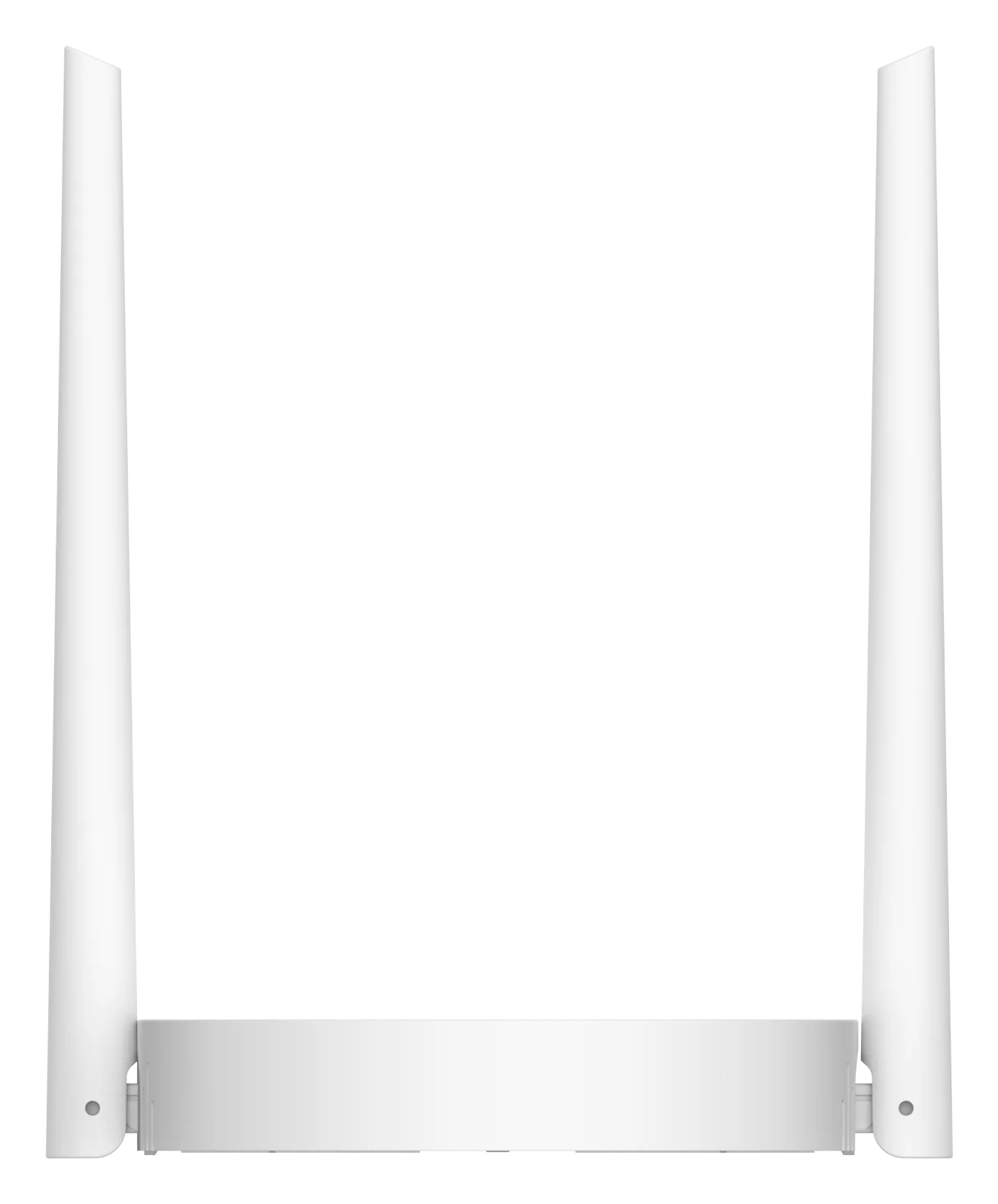
- The smallest gateway in the line-up: Ø115 × 21 mm, 140 g — mounts on a desk, wall or ceiling; mounting kit included.
- As discreet as a smoke detector — won't spoil the ceiling of a class A office or a retail unit.
- Capacity out of proportion to its size: a modern radio chipset, 8 channels, up to around 2,000 devices.
- Built-in network server (up to 20 devices) with MQTT integration — a small system runs with no additional infrastructure at all.
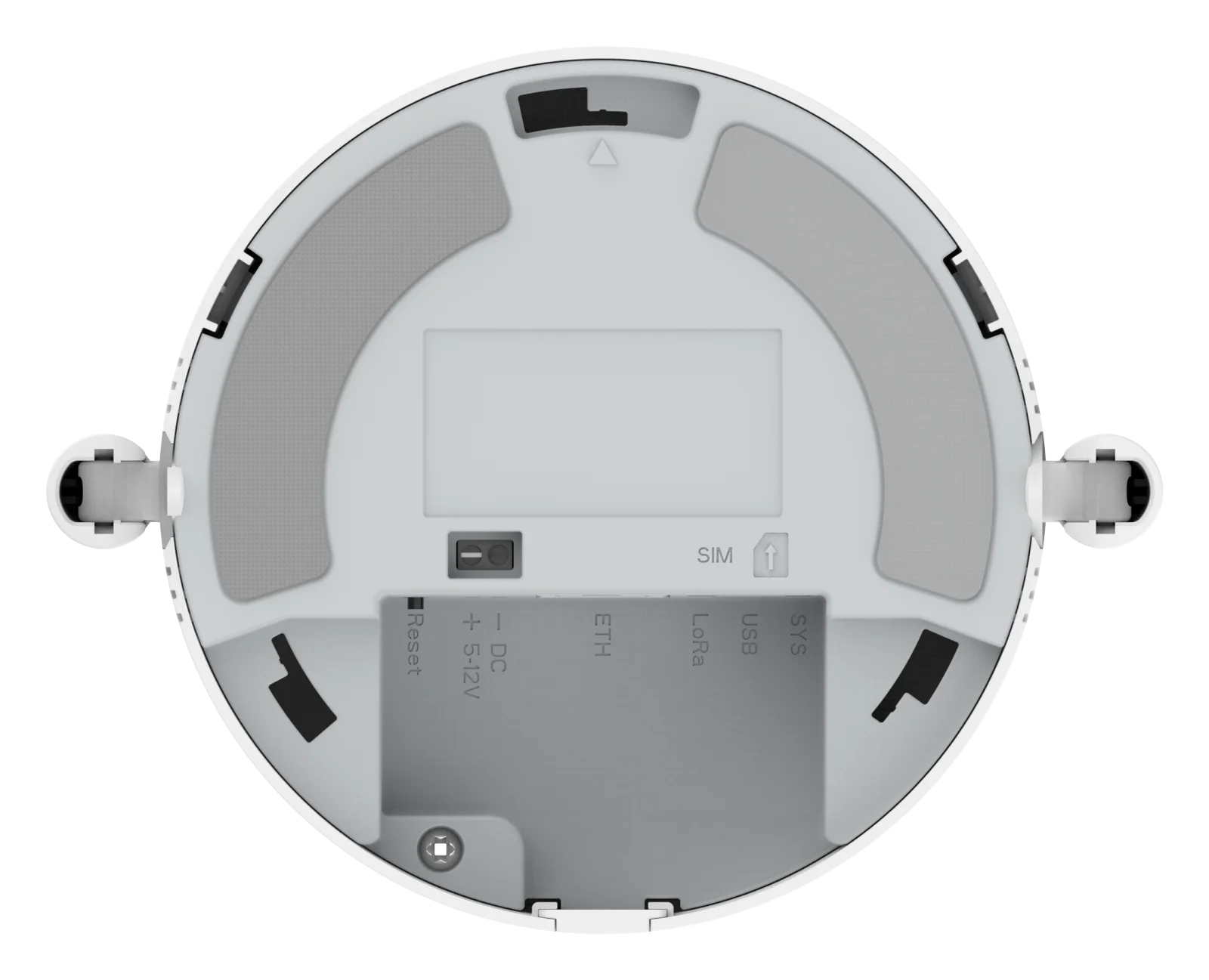
- Two uplinks with automatic switching: Ethernet + optional 4G LTE Cat 1 modem (micro SIM card) — a backup link out of the box.
- Three ways to power it: USB-C 5 V, DC cable or PoE via splitter — something is always at hand; power draw from approx. 1.3 W.
- -140 dBm radio sensitivity and range up to 2 km in built-up areas and 15 km line of sight — one Mini covers a mid-sized building.
- Configuration over Wi-Fi from a phone or laptop; automatic remote configuration on first start-up (zero-touch provisioning).
- Packet filtering, data retransmission after connectivity gaps, watchdog and VPN client — grown-up gateway features in miniature.
- Remote management and firmware updates via the web panel and API.
In the Nextriv system
Once the Mini is on the network, the platform does the rest: Nextriv sensors are discovered automatically (usually 30–180 seconds after power-up), with model auto-detection and metadata — battery status, reporting interval, time zone. The gateway's own status appears on a dedicated dashboard widget, and if it stops reporting for 15 minutes the platform marks it offline and sends a notification — before anyone notices the data gap.
Data from sensors connected through the Mini is indistinguishable from the rest of the system: the same dashboards with nearly 20 widget types, the same four-threshold alerts per metric, the same PDF reports and XLSX/CSV exports. A single-gateway pilot then scales smoothly — you add more gateways and locations without changing anything in the sensors' configuration.
Typical deployments
- Offices and coworking spaces: a climate-monitoring pilot up and running within an hour, no cabling — more in our smart building solutions.
- Retail: a discreet gateway in every store of the chain, refrigerated counters and cold rooms supervised from head office — see our retail solutions.
- Schools: a teaching building covered with CO₂ and temperature sensors from a single gateway in the corridor — explore our school solutions.
- Plants and larger sites: coverage infill in basements and garages alongside the more powerful Nextriv gateways — details in our manufacturing solutions.
Specification
| Radio | 8 radio channels (half-duplex), -140 dBm sensitivity, up to 27 dBm output, 868 MHz band (EU) |
|---|---|
| Capacity | approx. 2,000 class A/B/C devices (depending on uplink/downlink traffic) |
| Built-in network server | up to 20 devices + MQTT API — start without an external server |
| Backhaul | 10/100 Ethernet (RJ45); optional 4G LTE Cat 1 (micro SIM) with automatic link switching |
| Range | up to approx. 2 km in built-up areas, up to 15 km line of sight |
| Power supply | USB-C 5 V/2 A, 5–12 V DC or PoE 802.3af via splitter (optional) |
| Power draw | typically 1.3 W |
| Housing | Ø115 × 21 mm, 140 g, PC+ABS, IP30 (indoor use) |
| Operating conditions | -20…+50°C, 0–95% humidity, non-condensing |
| Mounting | desk, wall or ceiling (mounting kit included) |
Related products
Other devices from the same family.
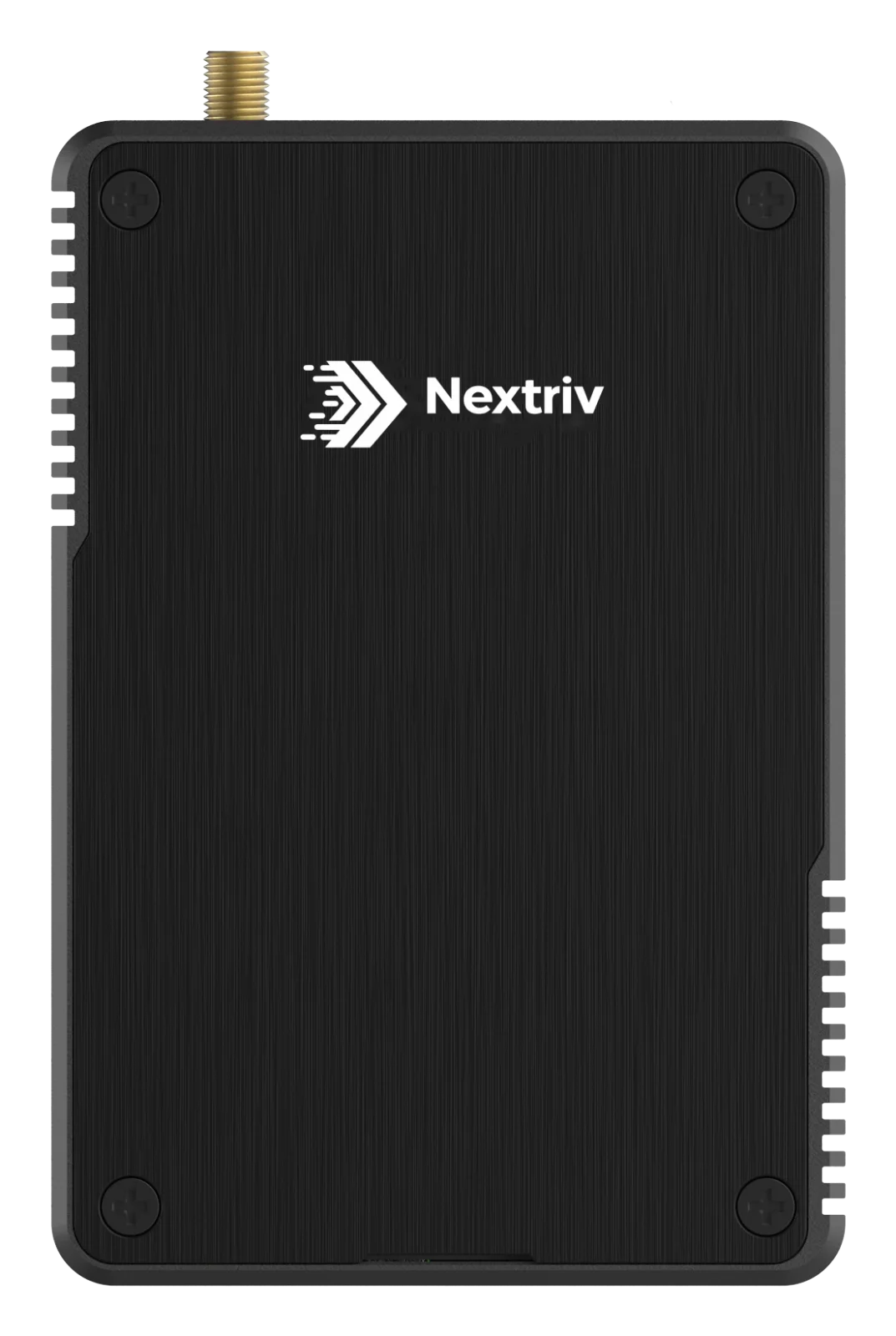
Nextriv Hub Compact
SKU: NX-GW-CPT
Industrial indoor radio gateway in a metal housing with DIN-rail mounting. Handles approx. 2,000 sensors and feeds data into your BMS over BACnet/IP and Modbus.
€422 netView product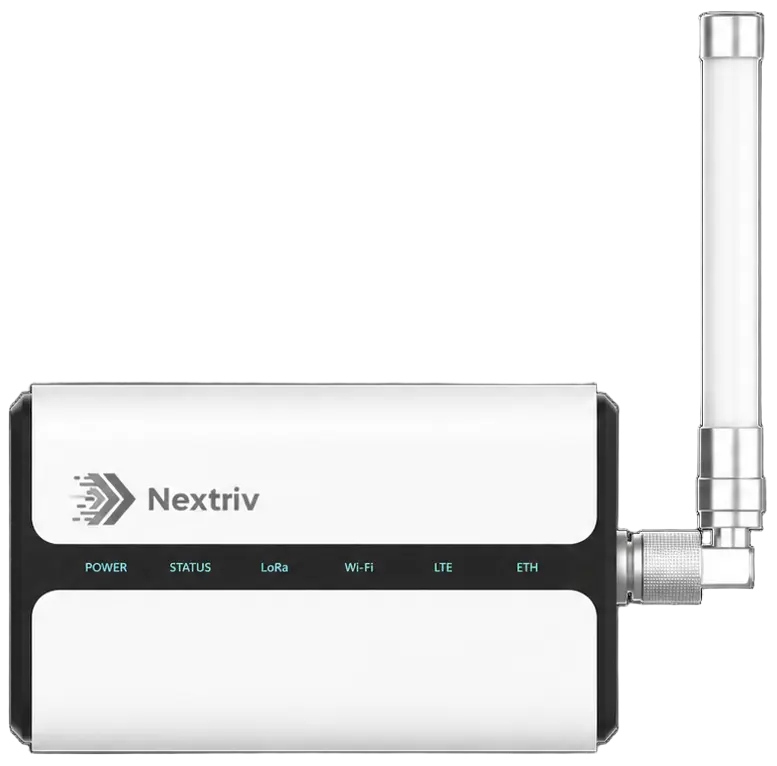
Nextriv Hub Pro
SKU: NX-GW-PRO
Semi-industrial radio gateway with IP65 ingress protection and a -40…+70°C operating range — for indoor and sheltered outdoor spots. Gigabit Ethernet with PoE, Wi-Fi and optional 4G with failover.
€511 netView product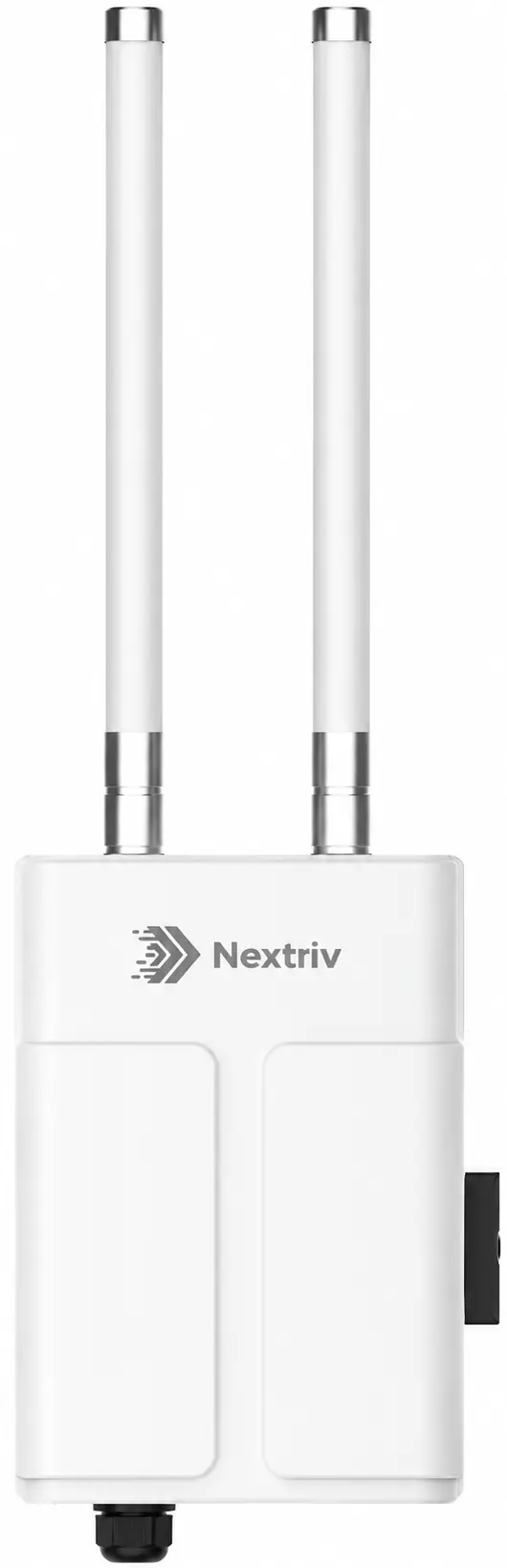
Nextriv Hub Outdoor
SKU: NX-GW-OUT
Fully outdoor IP67 radio gateway with a GNSS receiver and a range of up to 15 km line of sight. The foundation of a Nextriv network in open terrain: agriculture, industry, infrastructure.
€844 netView product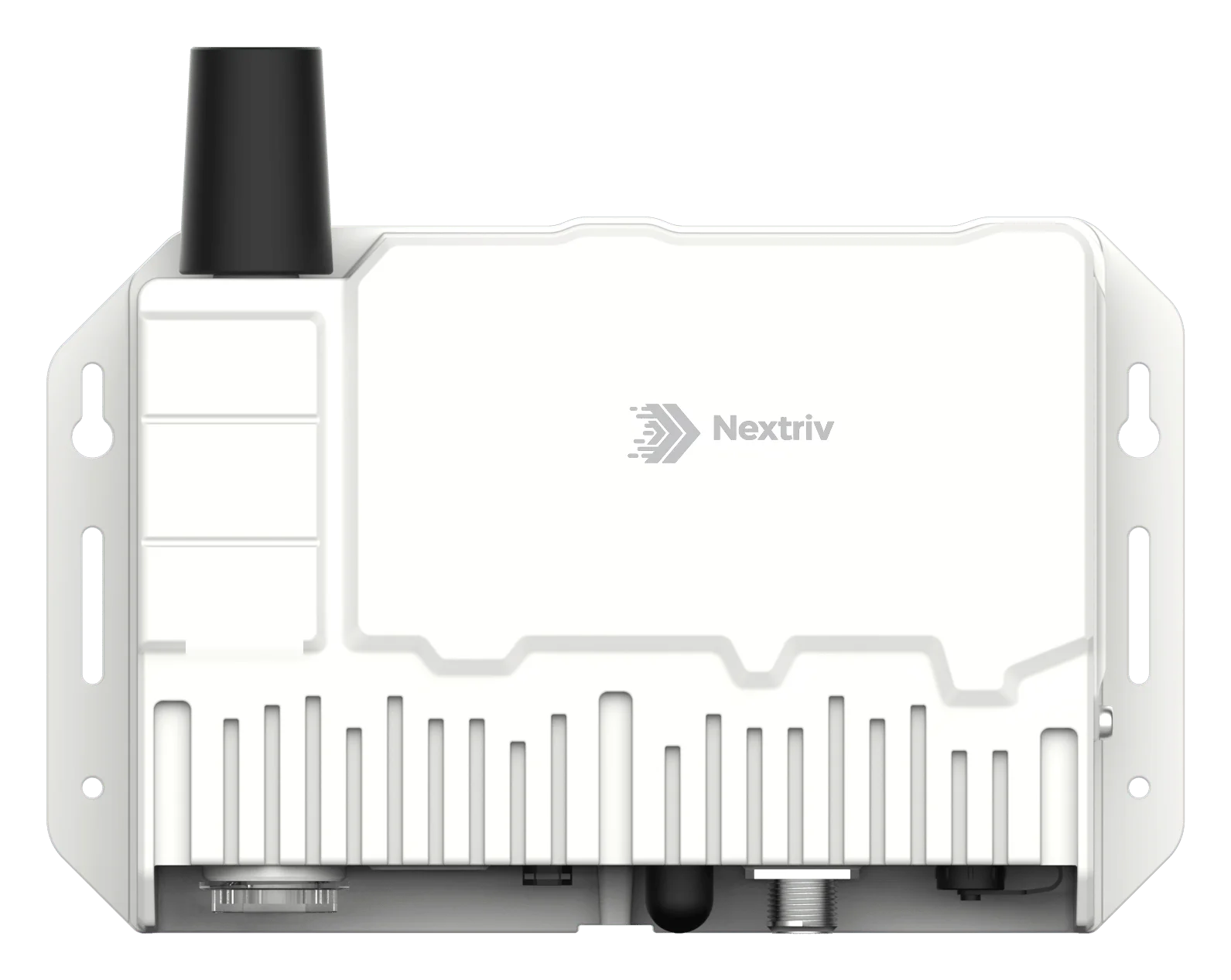
Nextriv Hub Solar
SKU: NX-GW-SLR
Autonomous radio gateway powered by a solar panel, transmitting over 4G — a Nextriv network where there is no mains power or Ethernet. A 25 Ah battery gives up to 4 days of operation without sun.
€933 netView product
Not sure which set to choose?
Tell us about your facility and we'll match sensors and a gateway to the exact rooms you need to monitor — no unnecessary hardware.