
Sense environmental sensors
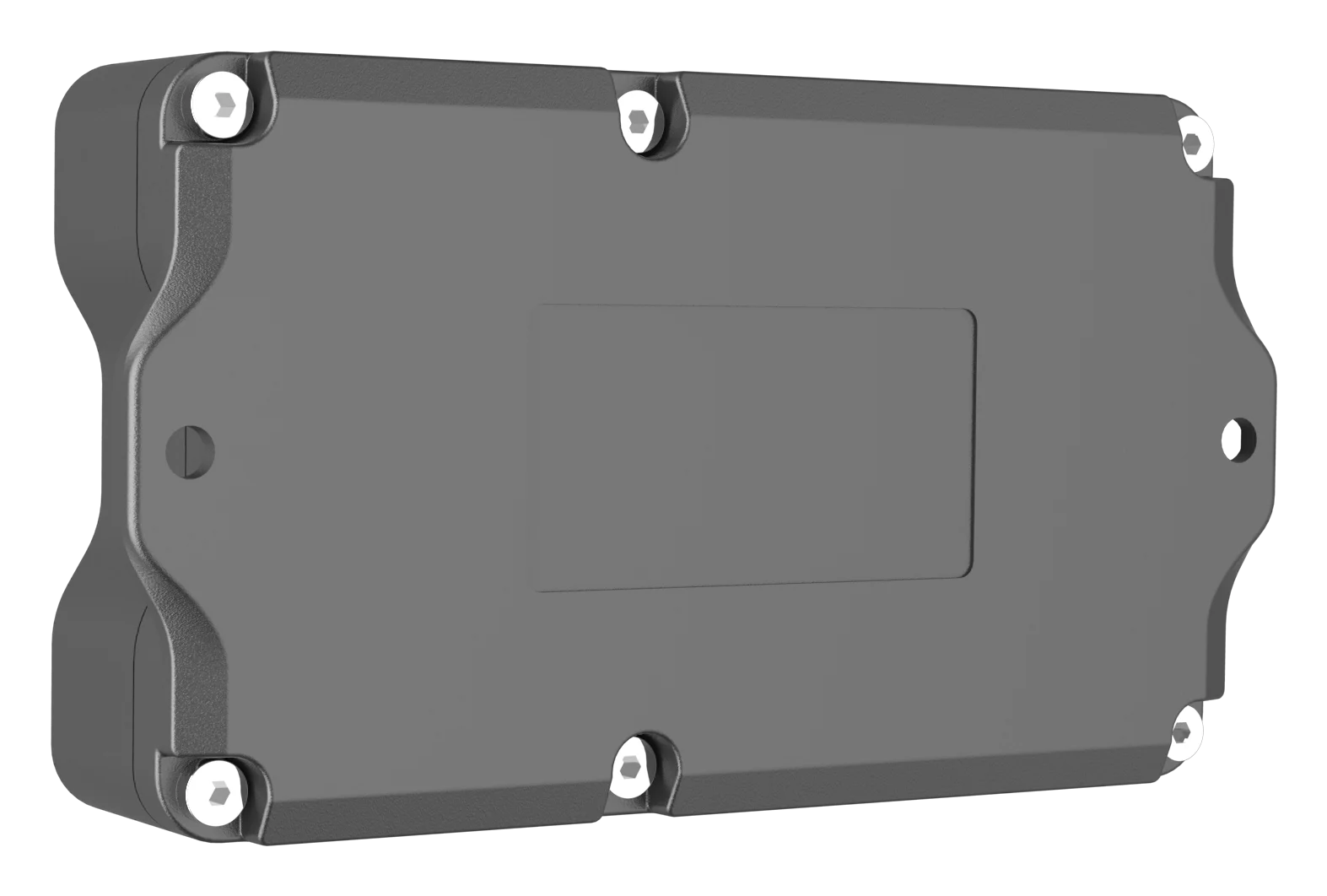
Nextriv Sense Wastelaser fill-level sensor for waste bins
SKU: NX-SN-WST
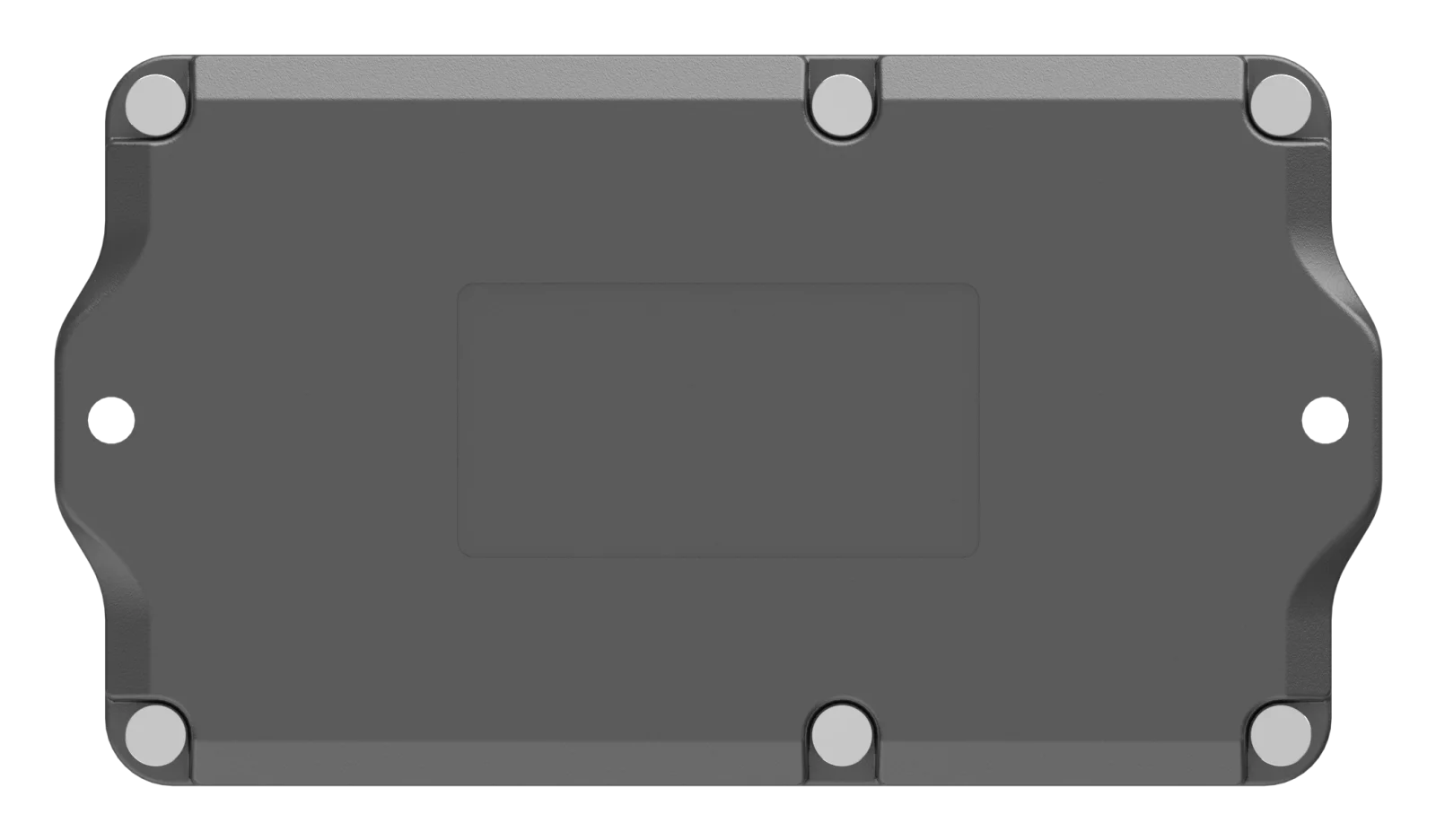
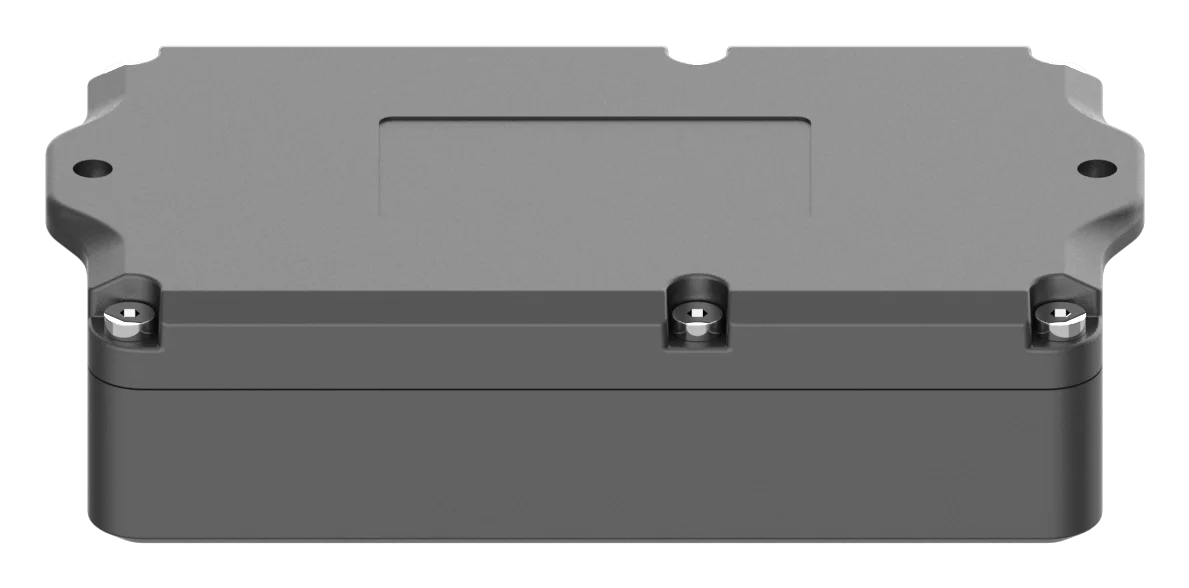
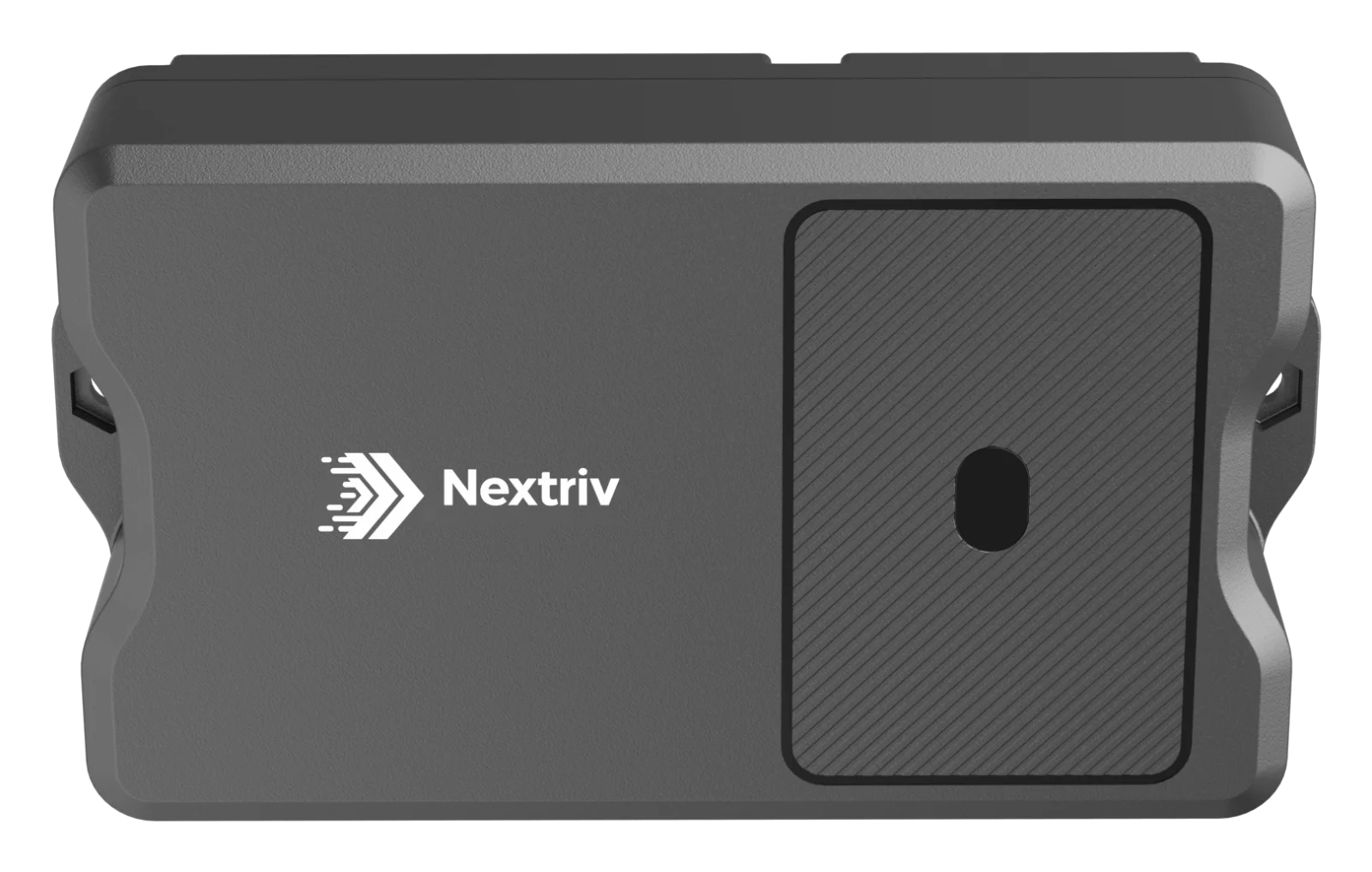
Laser (ToF) fill-level sensor for small and medium waste bins — narrow ~27° measurement cone, ±2 cm accuracy, detection of lid tilt and smouldering waste.
€240net
VAT is added to the price.

Description
- A ToF laser built for small bins
- ±2 cm accuracy, summer and winter
- Detects tilt, an open lid and smouldering
- Around 10 years on replaceable batteries
- Invisible mounting under the bin lid
What it is for
Most fill-level sensors were designed with large containers in mind — in a small street or office bin, their dead zone can "eat" half the container. Nextriv Sense Waste reverses that logic: it is a sensor specialised precisely in small and medium bins, built around laser time-of-flight (ToF) measurement. A narrow measurement cone of ~27° and a practically zero dead zone mean the device "sees" the bottom of even a small container and never mistakes the bin wall for its contents.
For cleaning companies and managers of public spaces, that means the end of two costly habits: emptying bins "to be safe" on a rigid schedule, and firefighting when an overflowing bin damages the image of a site. The service team gets an alert only when the bin actually needs emptying — with ±2 cm accuracy, however irregularly the waste has settled. And film, cardboard or glass do not disturb the reading the way they can scatter an ultrasonic wave.
Sense Waste is also a "3-in-1" sensor: besides the level, it watches the container's position — the accelerometer detects toppling and an open lid — and the temperature inside, where a thermistor with a range up to 125 °C raises the alarm for smouldering waste. The classic scenario: a cigarette butt tossed into a bin at the railway station. An open lid, in turn, is not just an aesthetic issue — it leads to overflow, littering around the container and attracts pests, so monitoring it is a matter of public health, not just logistics.
Two factory operating modes, configuration by phone over NFC, IP67 sealing and roughly a decade on replaceable batteries round out the design of a device that installs under the bin lid in a few minutes — and is then left untouched for years.
Usage scenarios
- City park: dozens of bins along the paths report their fill level, and the grounds crew empties only those above the threshold. In high season the number of rounds drops, yet overflowing bins by the entrances disappear.
- Shopping centre, food court: at lunchtime the bins by the food court fill up within an hour; in the evening they sit empty. The service responds to data, not to the clock — visitors never see overflowing trays.
- Office building and campus: recycling points on each floor report in by themselves. The cleaning company is paid for the outcome (zero overflows), not for the number of rounds.
- Railway station: a bin someone has flicked a cigarette butt into raises a temperature alarm within tens of seconds. Security reacts before there is smoke and panic on the platform.
- Public space at night: a bin knocked over by wind or vandals reports its tilt. In the morning the crew drives straight to it instead of discovering the problem through a resident's complaint.
- Restrooms and break rooms: compact bins for paper towels and hygiene waste — the laser's narrow beam copes where ultrasonic measurement has no room left to work.
Key features
- A ToF laser instead of ultrasound — point measurement with a ~27° field of view and practically no dead zone; made for small and medium containers.
- ±2 cm accuracy across the whole −20 to 70 °C range — a trustworthy fill percentage in summer and winter alike.
- A "3-in-1" sensor: level + position (tilt, lid status) + temperature with a waste-burning alarm.
- Two factory operating modes (standard / container) — the device arrives configured for its scenario.
- NFC configuration from the mobile app — switching on, off and changing settings with a phone held to it, no dismantling the housing.
- IP67, a conformal coating on the board and an extra moisture-protection layer — the sensor endures bin washing, rain and waste fumes.
- Around 10 years on two replaceable batteries — the upkeep cost of a bin fleet close to zero.
- Screw-mounted to the underside of the lid — invisible to users and out of reach of accidental damage.
- Flame-retardant ABS+PC housing (UL94 V0); CE, FCC, RoHS certified.
In the Nextriv system
Four alarm thresholds per metric let you separate routine logistics from emergencies: the fill warning level goes into the service crew's work plan, the critical one goes straight to the foreman's phone, and a temperature spike triggers a top-severity waste-burning alarm. Notifications arrive via e-mail, SMS, push, Microsoft Teams, Discord or an audible alarm in the app; events carry codes, statuses and comments, so you can see who responded and when.
On the dashboard, the bin fleet falls into a clear picture: a table with fill percentages, fill-rate trends per location and a list of offline devices. PDF reports and XLSX/CSV exports document service quality — hard data for SLA settlements with the cleaning company. For large containers and car parks, the same platform supports its ultrasonic sibling: Nextriv Sense Range.
Typical deployments
- Buildings and facility management: bins in the common areas of office buildings and housing estates — solutions for buildings.
- Retail: arcades, food courts and shopping centre back-of-house — solutions for retail.
- Food service: kitchen waste and guest areas under fill and temperature control — solutions for food service.
- Hotels: discreet monitoring of bins in lobbies, conference areas and spas — solutions for hospitality.
Specification
| Measurement range | 2–350 cm (ToF laser) |
|---|---|
| Accuracy | ±2 cm (−20…70 °C) |
| Resolution / field of view | 1 mm / approx. 27° |
| Temperature measurement | −40…125 °C, 0.1 °C resolution |
| Position status | normal / tilted (3-axis accelerometer) |
| Connectivity | Long-range radio — up to ~2 km in urban areas, ~15 km in open terrain |
| Power | 2 × 9000 mAh lithium battery, replaceable |
| Battery life | approx. 10 years (standard/container mode) |
| Ingress protection | IP67 |
| Operating conditions | −30…70 °C |
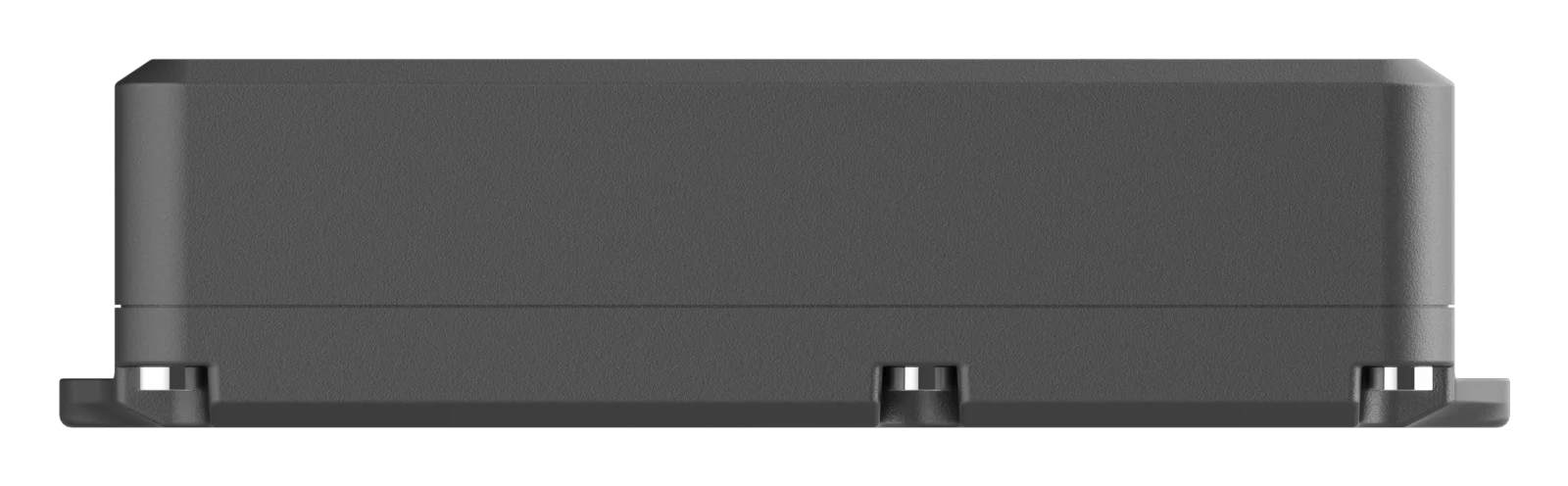
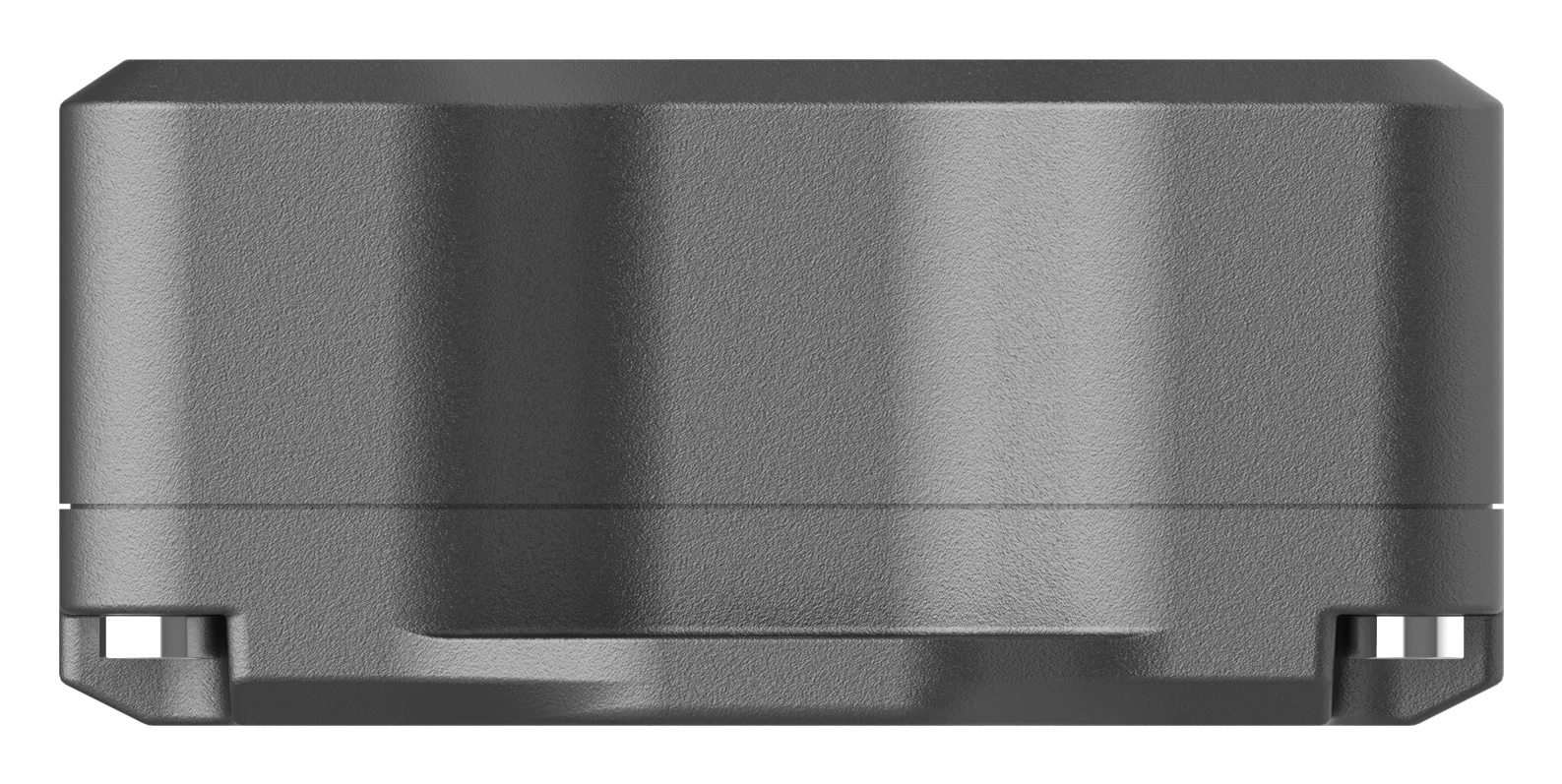
| Dimensions and weight | 118 × 65 × 30 mm, approx. 208 g (with batteries) |
| Certifications | CE, FCC, RoHS |
Related products
Other devices from the same family.
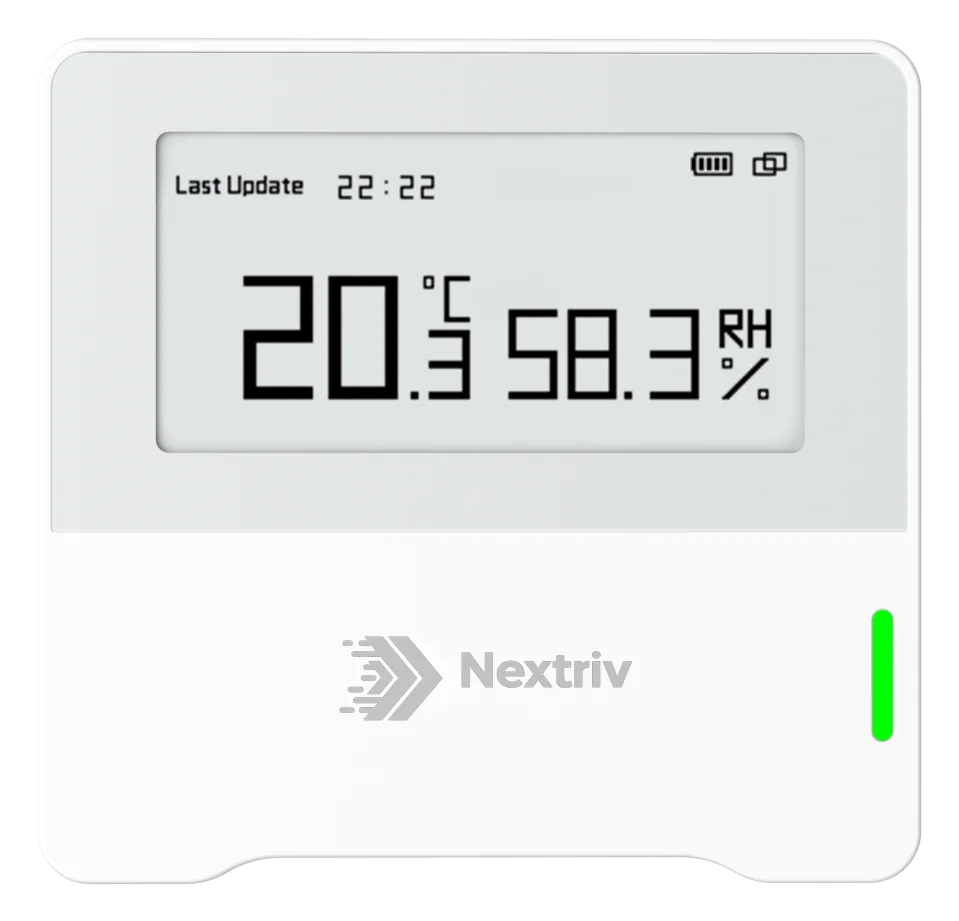
Nextriv Sense Display
SKU: NX-SN-DISP
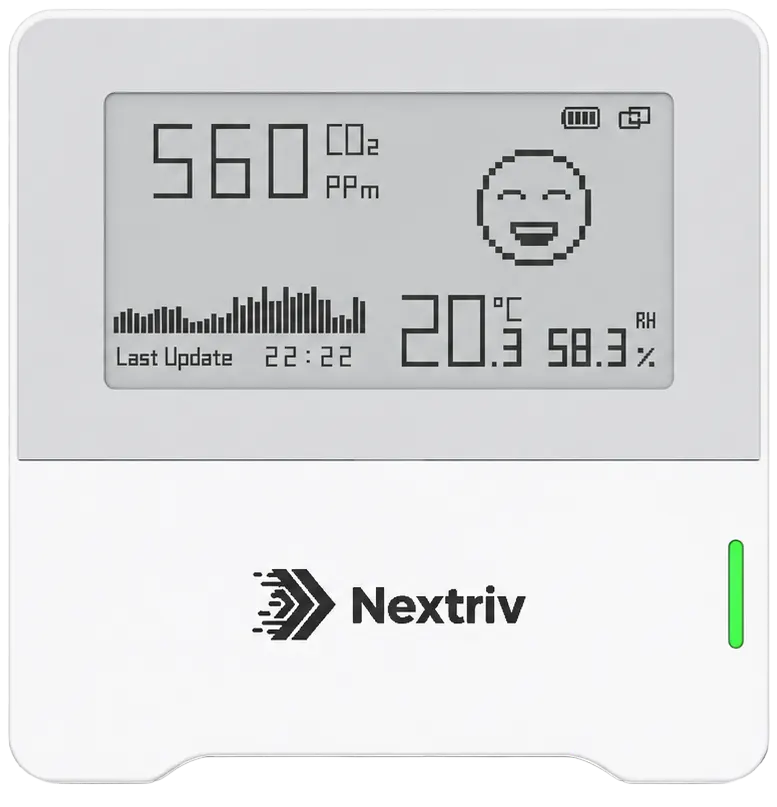
Temperature and humidity sensor with a 2.13″ e-ink display — readings on-site and in the Nextriv platform. Over 7 years on replaceable batteries.
- Temperature
- Humidity
Nextriv Sense CO₂
SKU: NX-SN-CO2
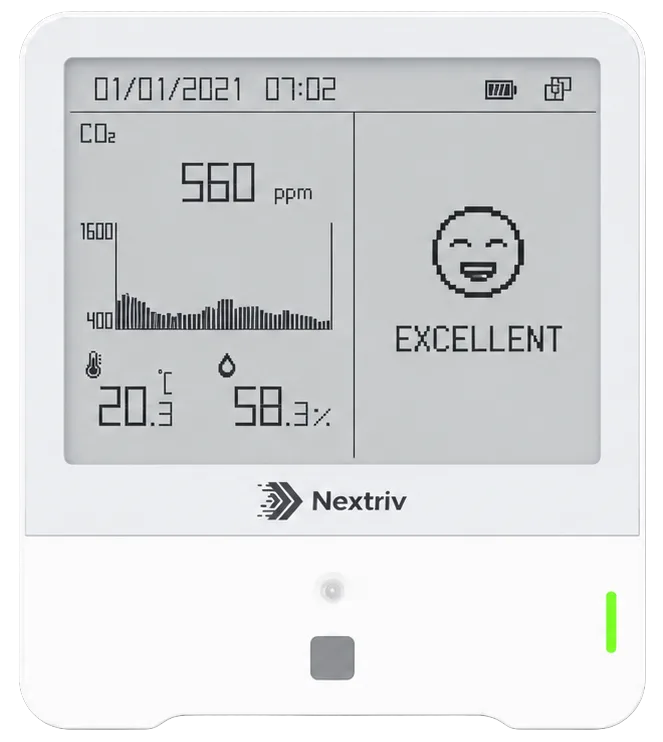
CO₂, temperature and humidity sensor with NDIR measurement and an e-ink display. Shows on the spot when to air the room — and sends the data to the Nextriv platform.
- Temperature
- Humidity
- CO₂
Nextriv Sense IAQ
SKU: NX-SN-AQ7
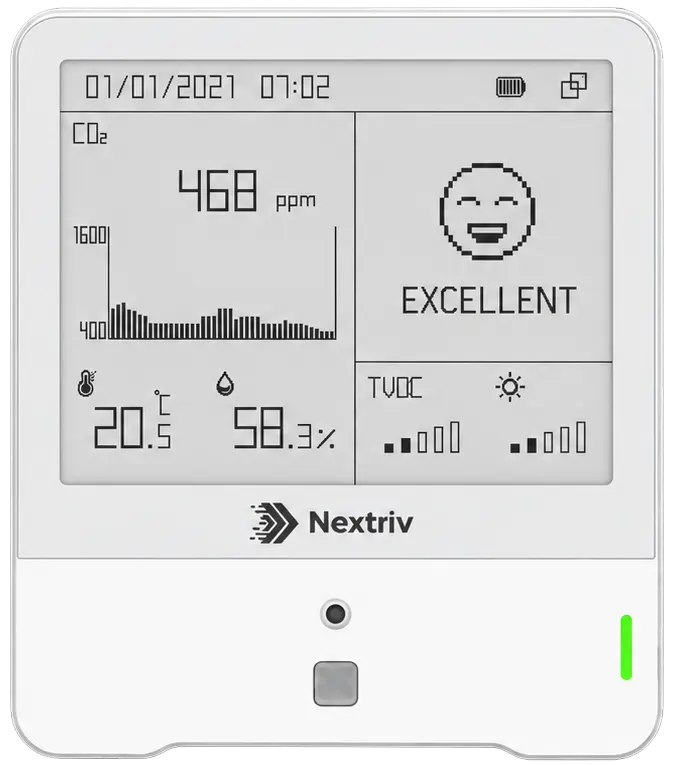
7-in-1 air quality station: temperature, humidity, CO₂, TVOC, pressure, light and occupancy — with a 4.2″ e-ink display and an 18,000-record buffer.
- Temperature
- Humidity
- CO₂
- TVOC
- +3
Nextriv Sense IAQ Comfort
SKU: NX-SN-AQ8C
8-in-1 climate monitoring with laser PM2.5/PM10 particulate measurement — the full picture of air health in facilities with elevated dust levels.
- Temperature
- Humidity
- CO₂
- TVOC
- +4
Not sure which set to choose?
Tell us about your facility and we'll match sensors and a gateway to the exact rooms you need to monitor — no unnecessary hardware.