
Sense environmental sensors
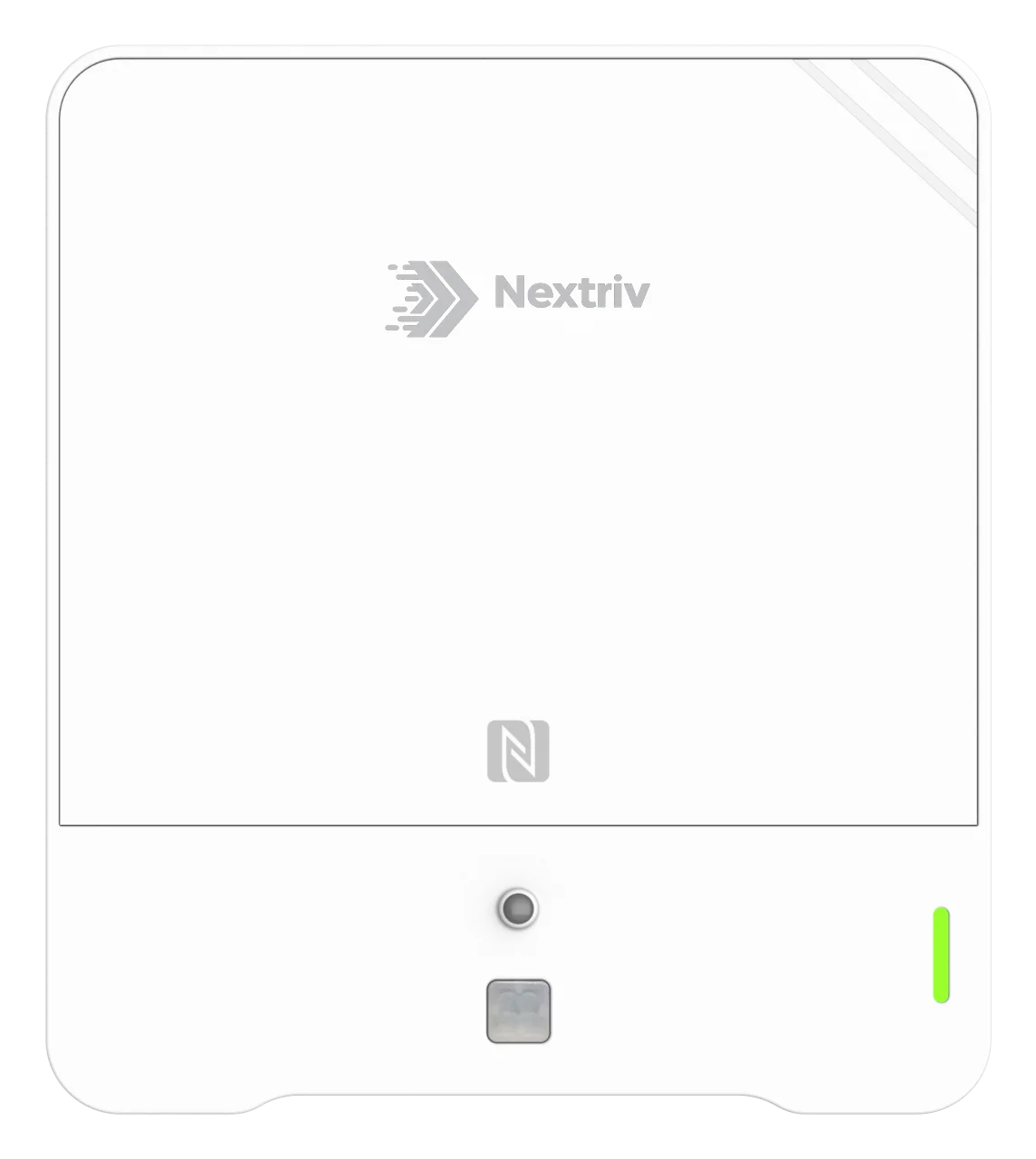
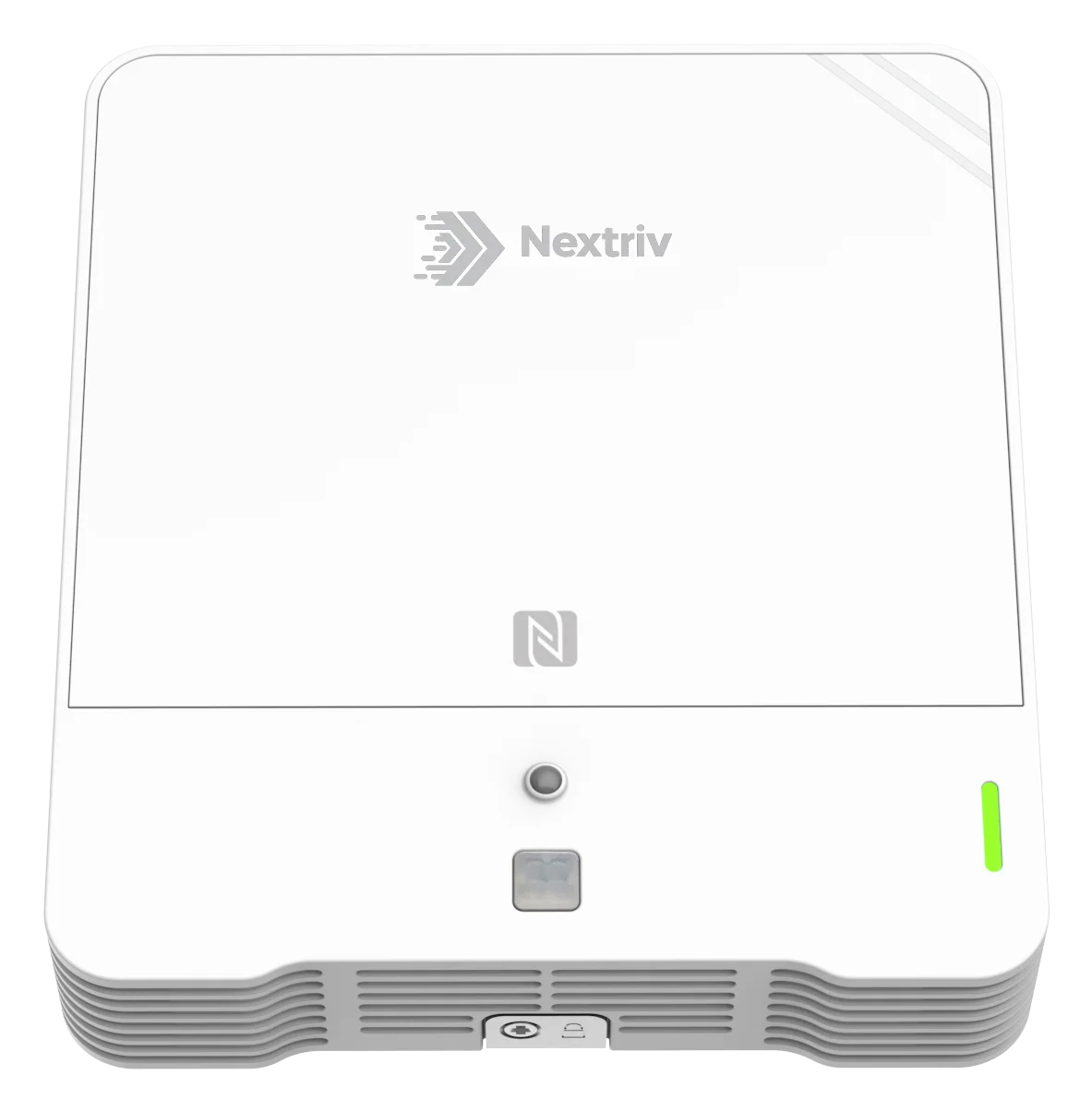
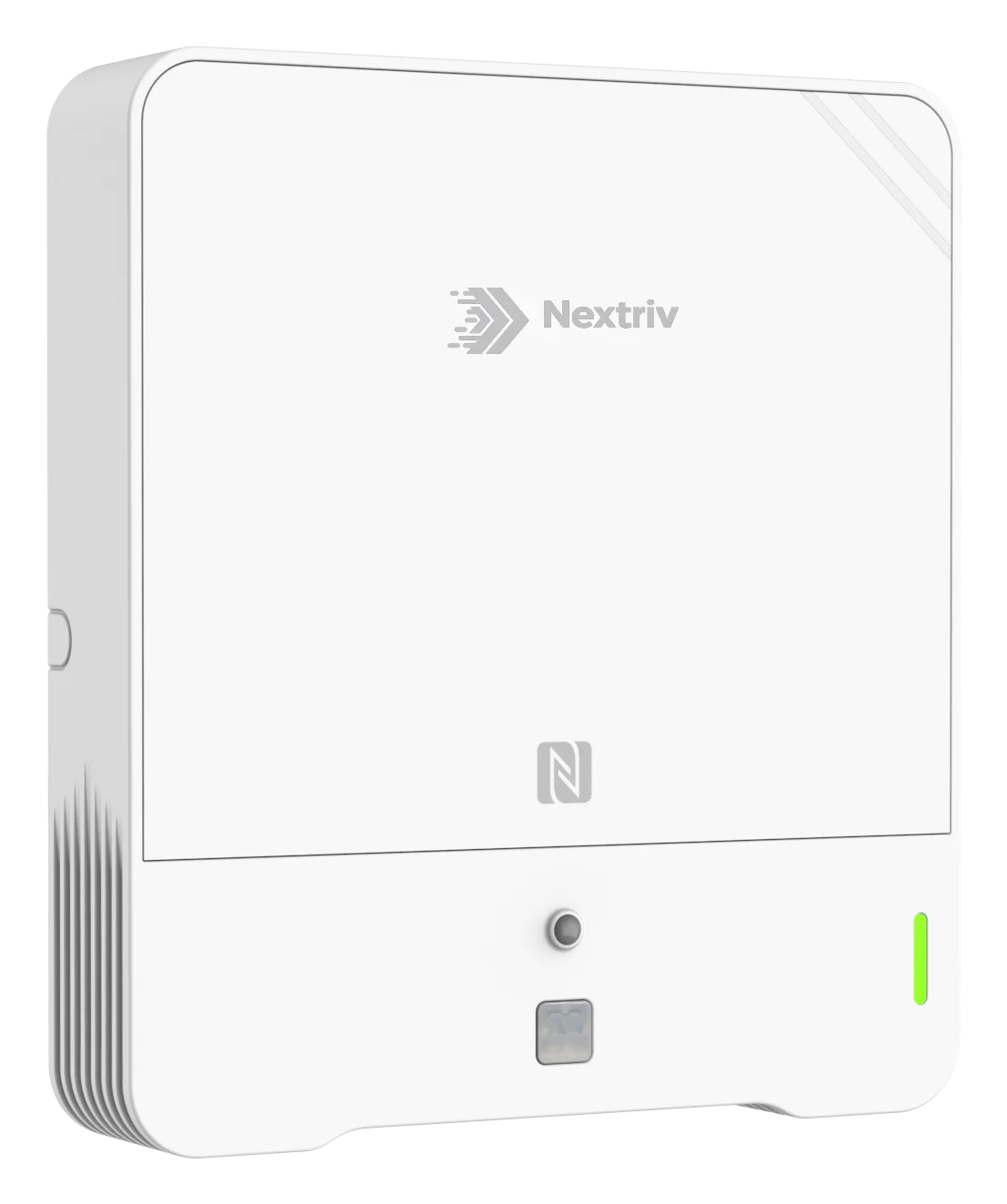
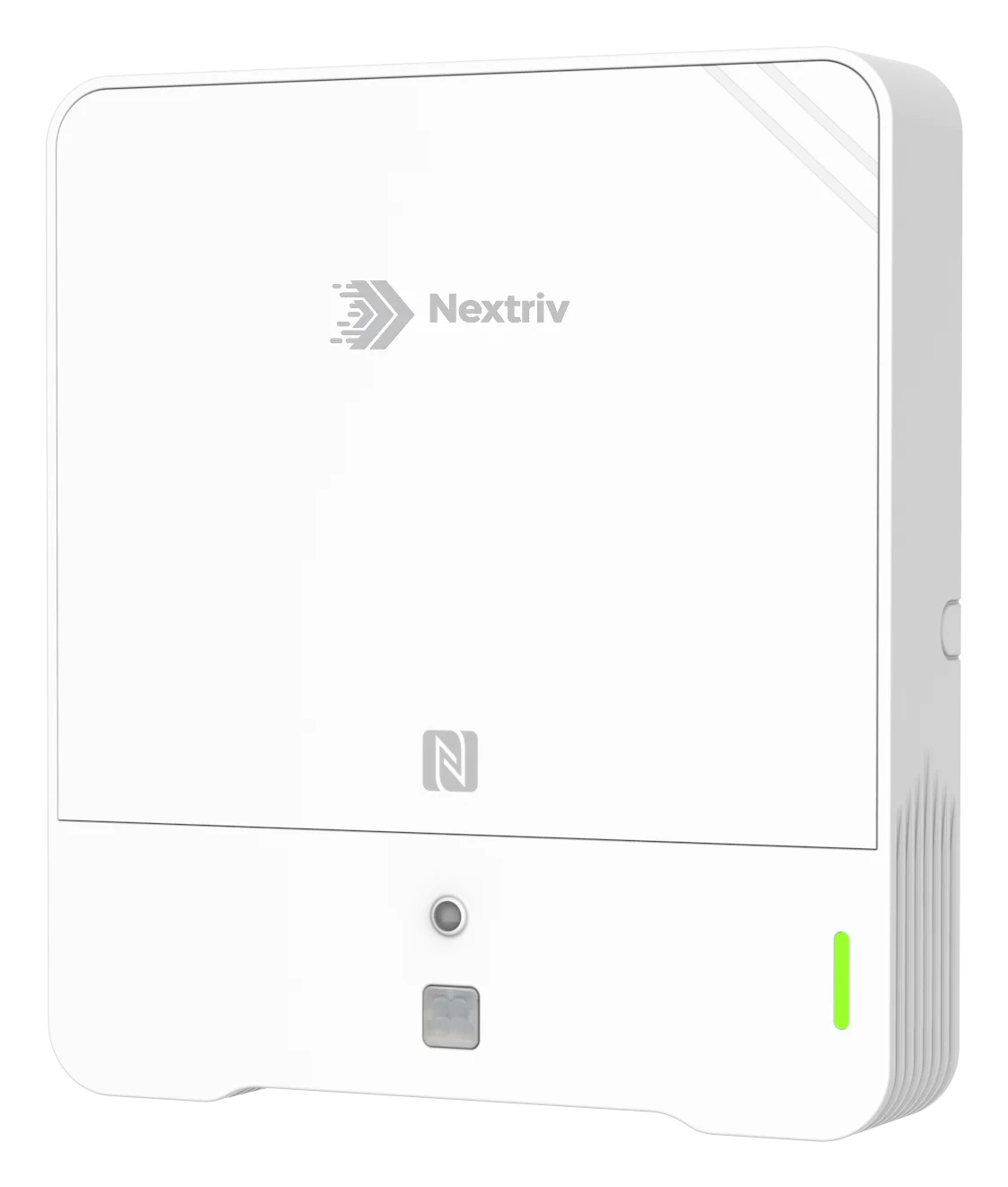
Nextriv Sense IAQ Lite 4-in-14-in-1 climate and occupancy sensor
SKU: NX-SN-AQ4L
Economical 4-in-1 sensor: temperature, humidity, light and occupancy. Approx. 7.5 to 14 years on batteries — built for mass roll-outs.
€160net
VAT is added to the price.
Description
- Comfort and occupancy in one device
- At least 7.5 years on replaceable batteries
- Priced for deployment at scale
- Light control with no server involved
- Accuracy on par with full IAQ stations
What it is for
Not every room needs a measuring station costing hundreds more — but almost every room benefits from knowing whether it is comfortable and whether anyone uses it at all. Nextriv Sense IAQ Lite 4-in-1 answers the question "how do we monitor the whole building, not just the three most important rooms": temperature, humidity, light and human occupancy in a device designed for mass roll-outs — no display, but at least 7.5 years of battery life, and up to 14 depending on the radio link configuration.
This sensor bridges two worlds: comfort (is it warm and dry?) and space analytics (does anyone come here, and when?). For a manager of an office portfolio, the answer to the second question is often worth more than the first — data on the real utilisation of rooms and zones is a hard argument when renegotiating a lease or giving up a floor. Scale makes the difference here: the biggest return on this data is reported by property portfolios that monitor many buildings at once — only then is it clear which floors and zones actually work.
Despite its budget positioning, the device inherits the family's grown-up features: setup with a tap of a smartphone, a local buffer with retransmission, and direct device-to-device communication within the Nextriv network — the motion sensor can, for example, trigger a lighting relay with no server involved, with a delay imperceptible to a human.
Accuracy isn't a "budget compromise" either: ±0.2 °C and ±2 % RH is the class of the family's full-size sensors. Light measurement up to 60,000 lux is reported as a value or a readable 0–5 level — enough to detect a hall lit all night or workstations that are too dark. The reporting interval can be changed remotely, for whole groups of devices at once, and at network scale consistency counts too: an identical enclosure, the same mounting process and one NFC setup procedure at every site. If the gateway drops off the network for a while, the local buffer backfills the history once it returns.
Usage scenarios
- Office portfolio: dozens of sensors in meeting rooms, common zones and at desks — after a quarter, the facility manager knows which floors live and which only cost money. Hard data instead of impressions for space decisions, and tenants get the same numbers in a comfort report — a strong argument in negotiations.
- Retail chain: one device standard in every store — head office compares comfort and customer traffic across locations on a shared dashboard.
- School: classroom comfort plus automatic detection of empty rooms — heating and lighting stop working for nobody.
- Coworking space: the occupancy sensor controls zone lighting through direct communication with a relay — it works even when the server is briefly unavailable.
- Hotel: housekeeping gets a signal showing which rooms were actually used — cleaning goes where it's needed, not everywhere in turn.
- Light warehouse and back-of-house: light measurement detects forgotten halls glowing all night; temperature watches over frost-sensitive goods.
Key features
- Price and battery built for mass scale: approx. 7.5 to as much as 14 years of operation reporting every 10 minutes — mount it and forget it for years.
- No display = no cost that nobody in a corridor or warehouse would read anyway.
- Four parameters key to automation: temperature, humidity, light, motion — comfort and occupancy in one.
- Direct device-to-device communication within the Nextriv network — controlling lights and relays without the cloud, with minimal latency.
- Traffic-light LED and a buzzer for threshold alarms — signalling on site.
- Setup with a tap of a smartphone (NFC) or via USB-C; fleet-wide remote reconfiguration.
- Local measurement buffer with retransmission — gap-free history.
- Energy saving when there is no motion in the room.
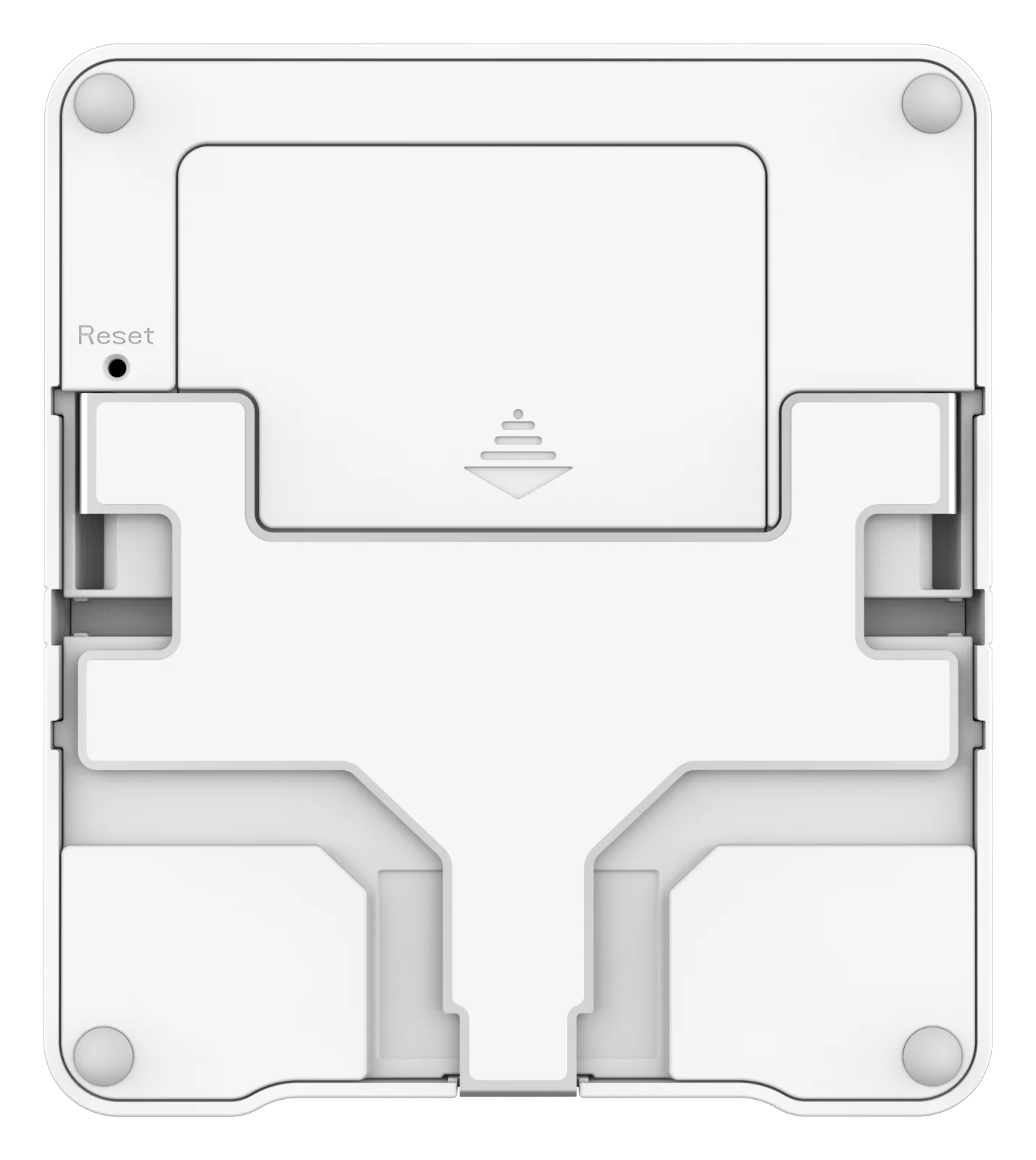
- The same enclosure and mounting as the entire series — a consistent fleet, one installation process.
- Flexible power: replaceable batteries or wired USB-C power.
In the Nextriv system
With mass roll-outs, the start matters: the Nextriv platform detects new sensors automatically and recognises the model from the data on its own — commissioning a hundred devices is a series of phone taps, not weeks of configuration. Every metric gets four alarm thresholds (two warning, two critical), and notifications go out over six channels — from e-mail to MS Teams and Discord. If one of the dozens of points goes silent for twice its reporting interval, the platform flags it as offline and shows it on the list.
Dashboards with nearly 20 widget types put comfort next to occupancy — sensor tables, zone comparisons, multi-series charts. PDF reports and XLSX/CSV exports turn a quarter of measurements into a board-level argument. Measurement history reaches back up to 5 years. Virtual sensors average the readings of many points into a floor- or building-level metric — comparisons make themselves — and selected readings can be shown on a public no-login view, e.g. a reception screen with common-zone comfort. Scheduled recurring reports land in the manager's inbox without being asked.
Typical deployments
- Office buildings: dozens of sensors in rooms and zones — real space utilisation in data, lease costs under control.
- Schools: classroom comfort monitoring plus automatic empty-room detection in one device.
- Retail chains: one sensor standard across the whole chain — comparable data on comfort and customer traffic.
- Hotels and healthcare: discreet monitoring of rooms and waiting areas without touching the decor.
Specification
| Temperature | -20…60 °C, ±0.2 °C (0…60 °C), 0.1 °C resolution |
|---|---|
| Humidity | 0…100 % RH, ±2 % RH (at 25 °C), 0.5 % RH resolution |
| Light | 0…60,000 lx (value or level 0–5), ±30 % of reading |
| Motion (PIR) | vacant/triggered status |
| Connectivity | Long-range radio (~2 km urban / ~15 km open terrain), internal antenna |
| Power | 4× replaceable lithium battery (Li-SOCl₂) 2700 mAh or USB-C 5 V/1 A |
| Battery life | approx. 7.5 to approx. 14 years (EU868, depending on the radio link configuration) — 10-min interval, 25 °C |
| Signalling | status LED (traffic lights) + alarm buzzer |
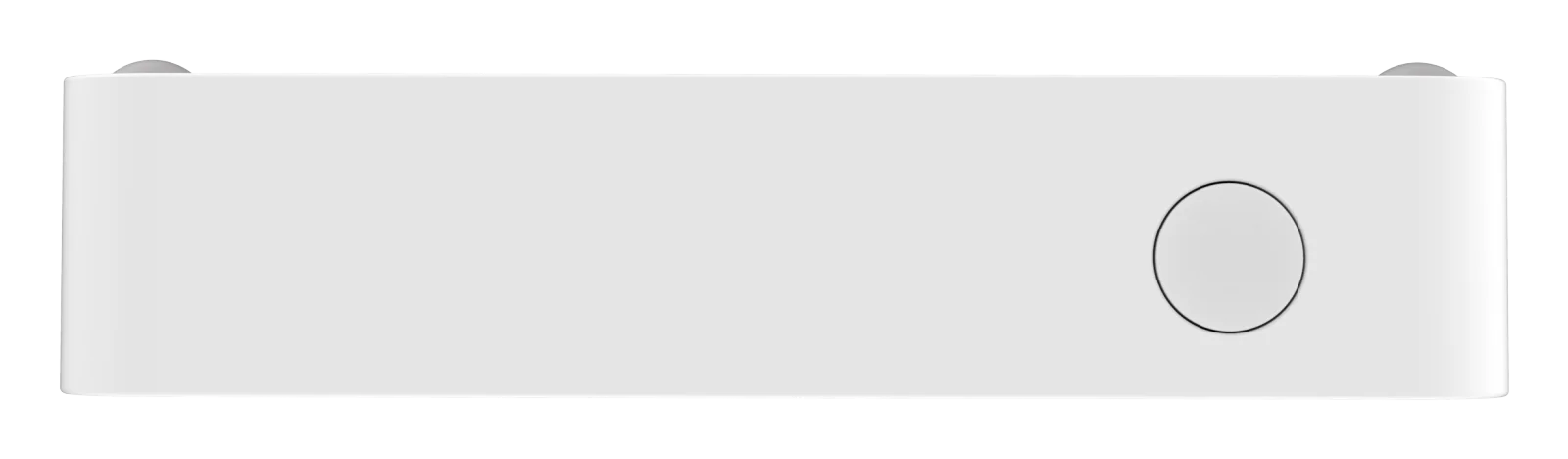
| Enclosure and dimensions | IP30 (indoor use), 100.8 × 114 × 22 mm, mounting via 3M tape or screws |
| Configuration | NFC from a smartphone, USB-C, remotely via downlink |
Files
- Download
Nextriv Sense IAQ Lite 4-in-1 — datasheet
pdfEN0.4 MBversion 1.0
Related products
Other devices from the same family.
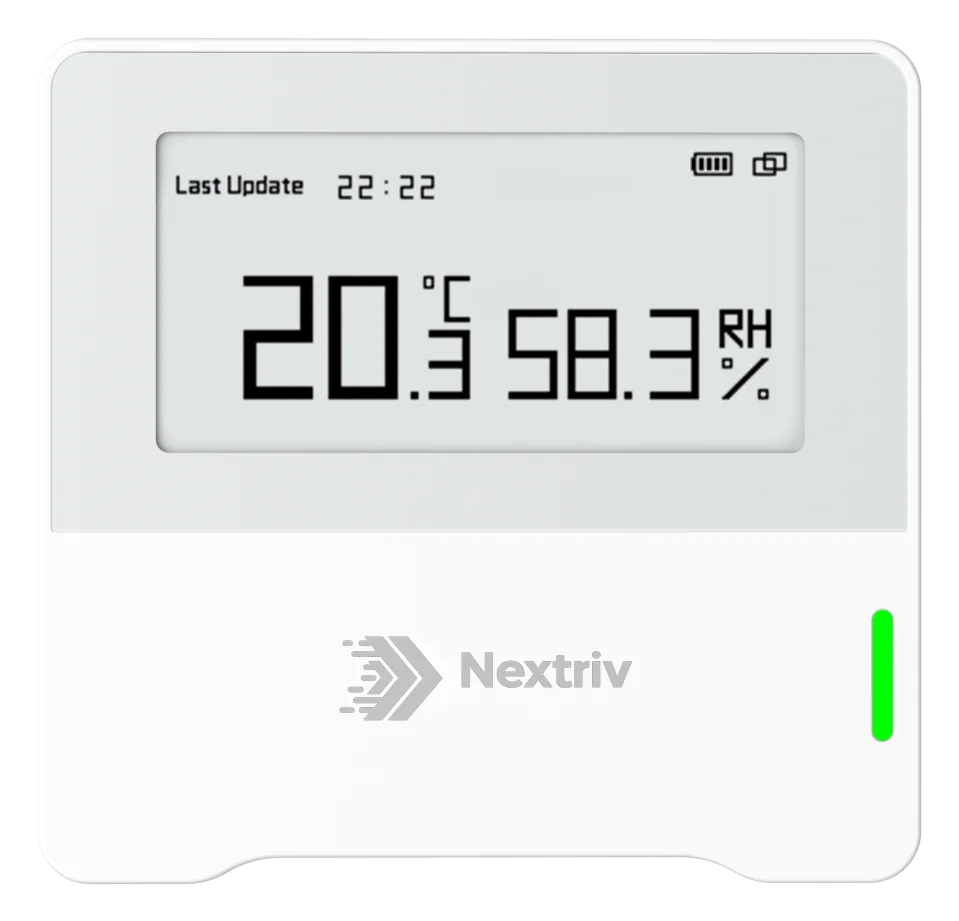
Nextriv Sense Display
SKU: NX-SN-DISP
Temperature and humidity sensor with a 2.13″ e-ink display — readings on-site and in the Nextriv platform. Over 7 years on replaceable batteries.
- Temperature
- Humidity
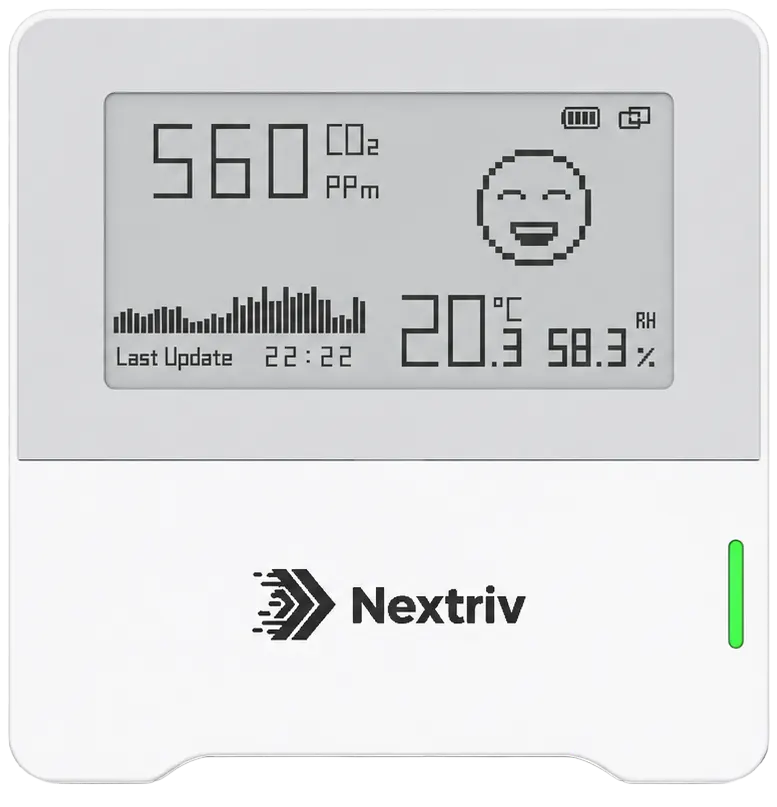
Nextriv Sense CO₂
SKU: NX-SN-CO2
CO₂, temperature and humidity sensor with NDIR measurement and an e-ink display. Shows on the spot when to air the room — and sends the data to the Nextriv platform.
- Temperature
- Humidity
- CO₂
Nextriv Sense IAQ
SKU: NX-SN-AQ7
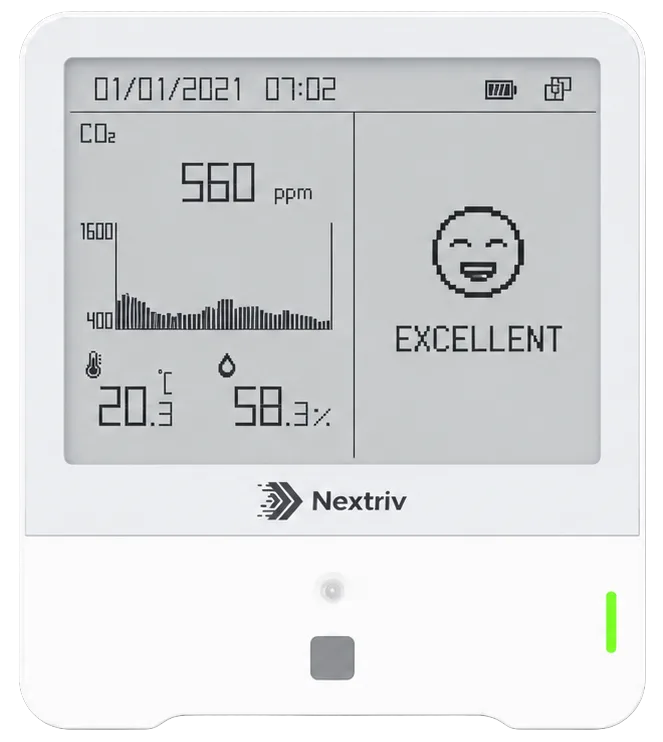
7-in-1 air quality station: temperature, humidity, CO₂, TVOC, pressure, light and occupancy — with a 4.2″ e-ink display and an 18,000-record buffer.
- Temperature
- Humidity
- CO₂
- TVOC
- +3
Nextriv Sense IAQ Comfort
SKU: NX-SN-AQ8C
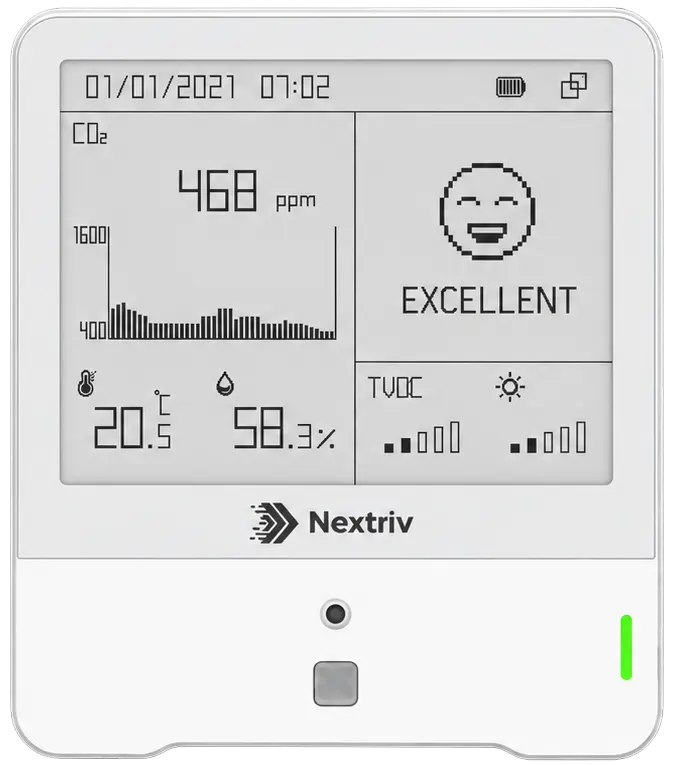
8-in-1 climate monitoring with laser PM2.5/PM10 particulate measurement — the full picture of air health in facilities with elevated dust levels.
- Temperature
- Humidity
- CO₂
- TVOC
- +4
Not sure which set to choose?
Tell us about your facility and we'll match sensors and a gateway to the exact rooms you need to monitor — no unnecessary hardware.